Benin Thread Rolling Machine Market Growth Rate Analysis (2025 - 2031)
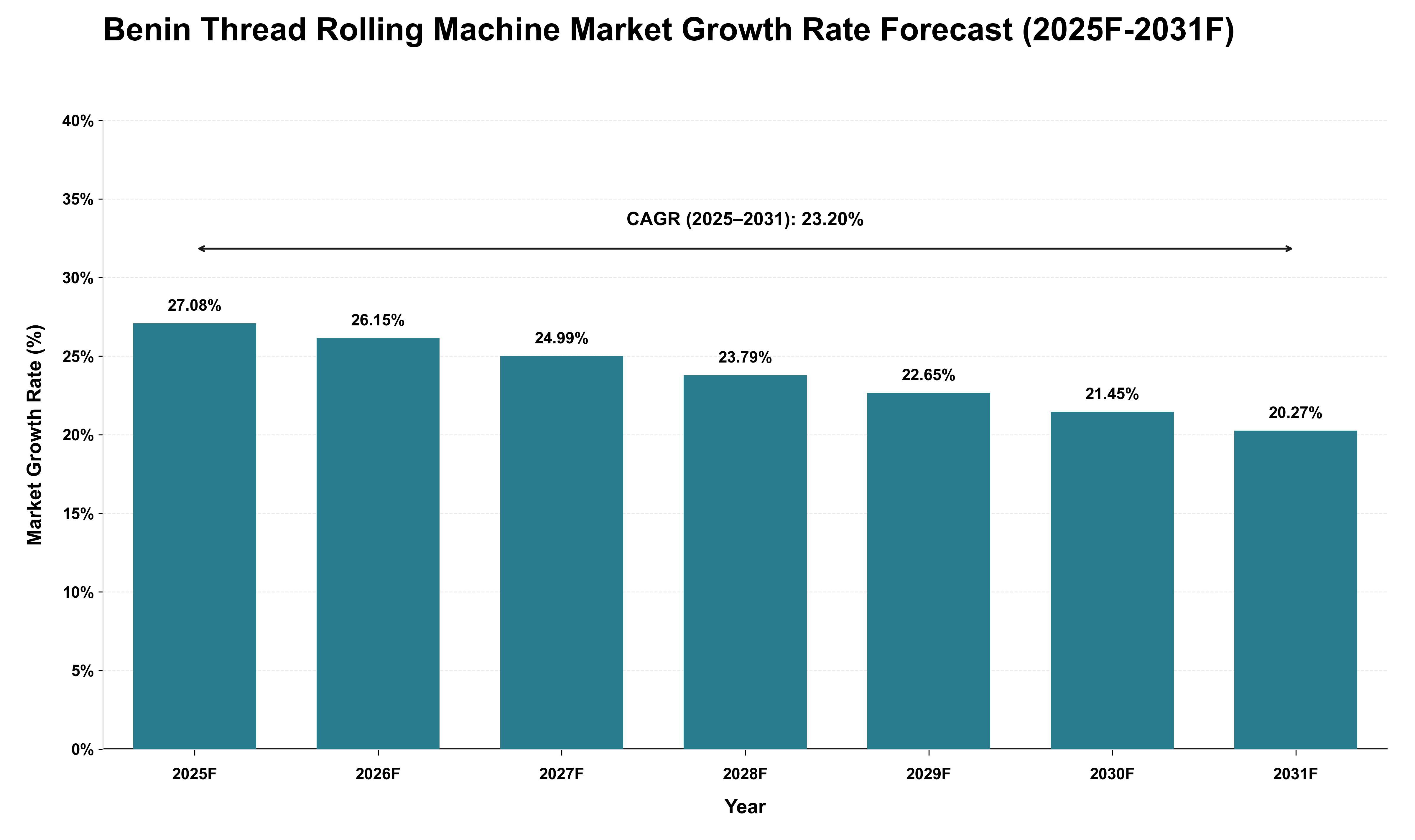
The Benin thread rolling machine market will experience robust growth driven by increasing industrialization and a rising demand for precision-engineered components across various sectors, including automotive and construction. The projected CAGR of 23.20% reflects a significant shift in end-use demand as manufacturers seek to enhance production efficiency and reduce operational costs. As local industries expand, the reliance on imported machinery will likely decrease, fostering domestic production capabilities. This trend will be further supported by anticipated investments in infrastructure and manufacturing technology, which will create a favorable environment for thread rolling machine adoption. The annual growth rates indicate a gradual decline over the forecast period, suggesting that while initial demand surges may be strong due to pent-up needs, subsequent years will see adjustments as supply chains stabilize and production scales up to meet evolving market requirements.
Key Highlights of the Report:
- Benin Thread Rolling Machine Market Outlook
- Market Size of Benin Thread Rolling Machine Market, 2024
- Forecast of Benin Thread Rolling Machine Market, 2031
- Historical Data and Forecast of Benin Thread Rolling Machine Revenues & Volume for the Period 2021-2031
- Benin Thread Rolling Machine Market Trend Evolution
- Benin Thread Rolling Machine Market Drivers and Challenges
- Benin Thread Rolling Machine Price Trends
- Benin Thread Rolling Machine Porter`s Five Forces
- Benin Thread Rolling Machine Industry Life Cycle
- Historical Data and Forecast of Benin Thread Rolling Machine Market Revenues & Volume By Type for the Period 2021-2031
- Historical Data and Forecast of Benin Thread Rolling Machine Market Revenues & Volume By Two Axis Thread Rolling Machine for the Period 2021-2031
- Historical Data and Forecast of Benin Thread Rolling Machine Market Revenues & Volume By Three Axis Thread Rolling Machine for the Period 2021-2031
- Historical Data and Forecast of Benin Thread Rolling Machine Market Revenues & Volume By Application for the Period 2021-2031
- Historical Data and Forecast of Benin Thread Rolling Machine Market Revenues & Volume By Construction for the Period 2021-2031
- Historical Data and Forecast of Benin Thread Rolling Machine Market Revenues & Volume By Industrial for the Period 2021-2031
- Historical Data and Forecast of Benin Thread Rolling Machine Market Revenues & Volume By Others for the Period 2021-2031
- Benin Thread Rolling Machine Import Export Trade Statistics
- Market Opportunity Assessment By Type
- Market Opportunity Assessment By Application
- Benin Thread Rolling Machine Top Companies Market Share
- Benin Thread Rolling Machine Competitive Benchmarking By Technical and Operational Parameters
- Benin Thread Rolling Machine Company Profiles
- Benin Thread Rolling Machine Key Strategic Recommendations






































