Bosnia and Herzegovina Canned Tuna Market Size Growth Rate
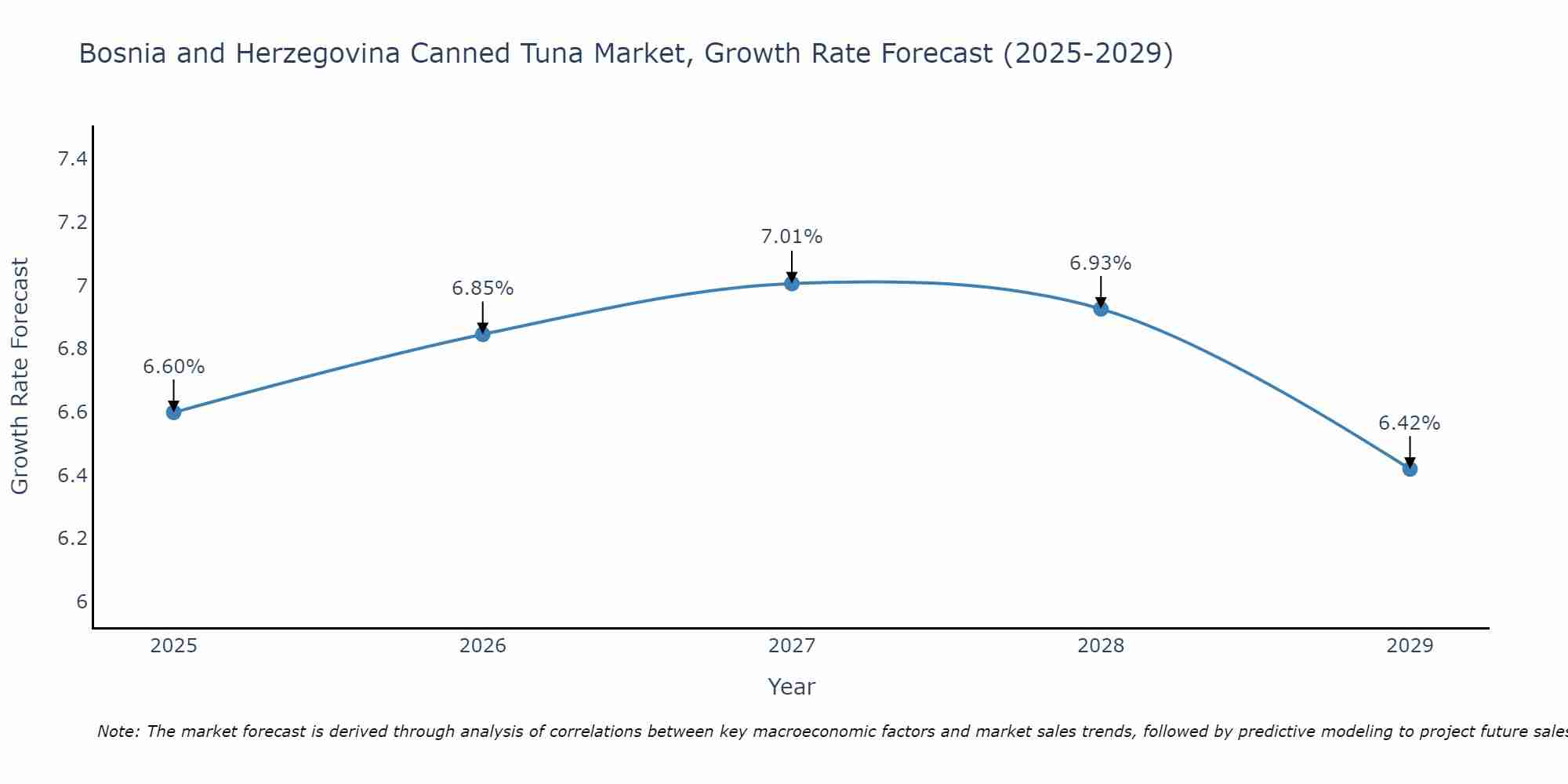
The Bosnia and Herzegovina Canned Tuna Market is projected to witness mixed growth rate patterns during 2025 to 2029. Growth accelerates to 7.01% in 2027, following an initial rate of 6.60%, before easing to 6.42% at the end of the period.
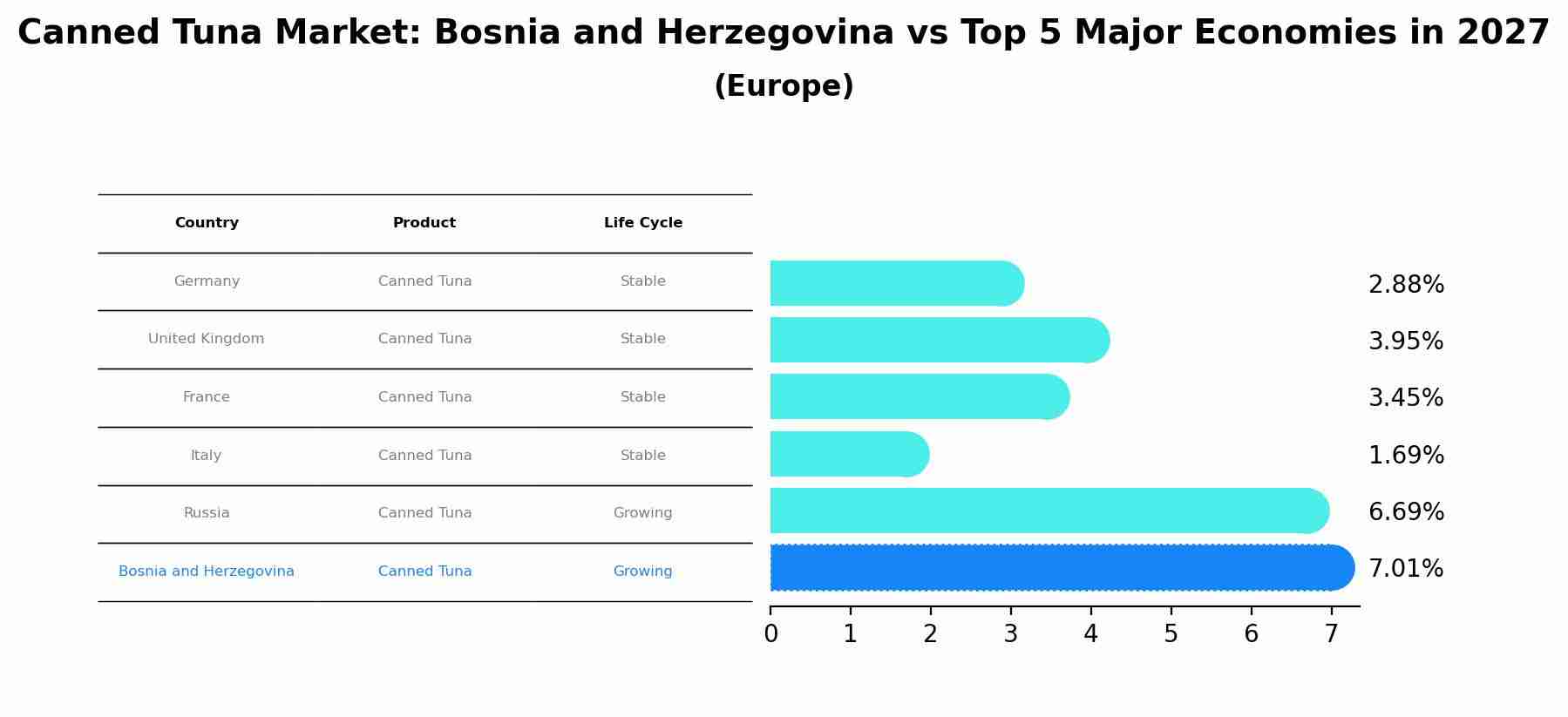
Canned Tuna Market: Bosnia and Herzegovina vs Top 5 Major Economies in 2027 (Europe)
By 2027, Bosnia and Herzegovina's Canned Tuna market is forecasted to achieve a growing growth rate of 7.01%, with Germany leading the Europe region, followed by United Kingdom, France, Italy and Russia.
Bosnia and Herzegovina Canned Tuna Market Overview
The canned tuna market in Bosnia and Herzegovina is influenced by its popularity as a convenient and protein-rich food product. Canned tuna is a staple in many households due to its long shelf life and versatility in various dishes. Market growth is supported by increasing consumer demand for ready-to-eat and nutritious foods. Challenges include competition from fresh tuna and concerns over sustainability and sourcing practices. The market is expected to grow with the rising preference for convenient and healthy food options.
Drivers of the market
The canned tuna market in Bosnia and Herzegovina is influenced by the convenience, affordability, and long shelf life of canned tuna products. Canned tuna is a popular choice for quick and easy meals, appealing to consumers looking for convenient protein sources. The rising demand for seafood and the growth in the retail and foodservice sectors support market growth. Additionally, the availability of various canned tuna products, such as chunk, flakes, and albacore, caters to diverse consumer preferences.
Challenges of the market
In the canned tuna market, challenges include fluctuations in raw material prices and supply chain disruptions, which can affect production costs and pricing. Regulatory compliance related to food safety, quality, and labeling is critical and can add to operational costs. The market also faces competition from both local and international brands, which can influence market share and profitability. Additionally, there are concerns about sustainable sourcing and environmental impact, which can affect market dynamics.
Government Policy of the market
Government policies related to seafood safety and fishing regulations impact the canned tuna market in Bosnia and Herzegovina. Regulations that ensure the quality and safety of canned tuna products drive market growth. Policies promoting sustainable fishing practices and supporting local food processing industries influence market dynamics. Trade policies affecting the import of canned tuna also play a role.
Key Highlights of the Report:
- Bosnia and Herzegovina Canned Tuna Market Outlook
- Market Size of Bosnia and Herzegovina Canned Tuna Market, 2024
- Forecast of Bosnia and Herzegovina Canned Tuna Market, 2031
- Historical Data and Forecast of Bosnia and Herzegovina Canned Tuna Revenues & Volume for the Period 2021-2031
- Bosnia and Herzegovina Canned Tuna Market Trend Evolution
- Bosnia and Herzegovina Canned Tuna Market Drivers and Challenges
- Bosnia and Herzegovina Canned Tuna Price Trends
- Bosnia and Herzegovina Canned Tuna Porter`s Five Forces
- Bosnia and Herzegovina Canned Tuna Industry Life Cycle
- Historical Data and Forecast of Bosnia and Herzegovina Canned Tuna Market Revenues & Volume By Product for the Period 2021-2031
- Historical Data and Forecast of Bosnia and Herzegovina Canned Tuna Market Revenues & Volume By Skipjack for the Period 2021-2031
- Historical Data and Forecast of Bosnia and Herzegovina Canned Tuna Market Revenues & Volume By Yellowfin for the Period 2021-2031
- Historical Data and Forecast of Bosnia and Herzegovina Canned Tuna Market Revenues & Volume By Others for the Period 2021-2031
- Historical Data and Forecast of Bosnia and Herzegovina Canned Tuna Market Revenues & Volume By Distribution Channel for the Period 2021-2031
- Historical Data and Forecast of Bosnia and Herzegovina Canned Tuna Market Revenues & Volume By Hypermarket & Supermarket for the Period 2021-2031
- Historical Data and Forecast of Bosnia and Herzegovina Canned Tuna Market Revenues & Volume By Specialty Stores for the Period 2021-2031
- Historical Data and Forecast of Bosnia and Herzegovina Canned Tuna Market Revenues & Volume By Online for the Period 2021-2031
- Bosnia and Herzegovina Canned Tuna Import Export Trade Statistics
- Market Opportunity Assessment By Product
- Market Opportunity Assessment By Distribution Channel
- Bosnia and Herzegovina Canned Tuna Top Companies Market Share
- Bosnia and Herzegovina Canned Tuna Competitive Benchmarking By Technical and Operational Parameters
- Bosnia and Herzegovina Canned Tuna Company Profiles
- Bosnia and Herzegovina Canned Tuna Key Strategic Recommendations






































