Bosnia and Herzegovina Construction Glass Market Size Growth Rate
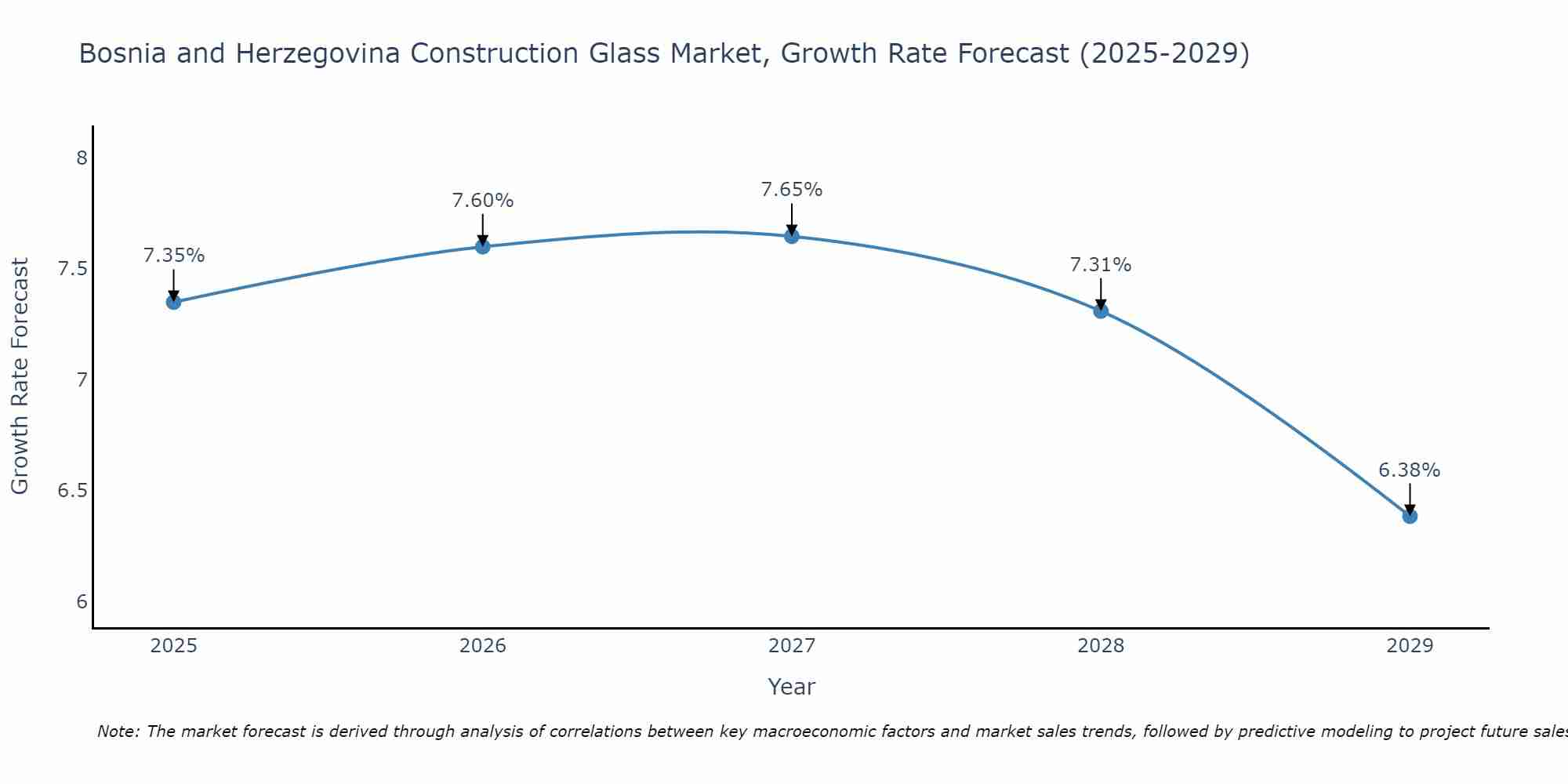
The Bosnia and Herzegovina Construction Glass Market is projected to witness mixed growth rate patterns during 2025 to 2029. Starting at 7.35% in 2025, the market peaks at 7.65% in 2027, and settles at 6.38% by 2029.
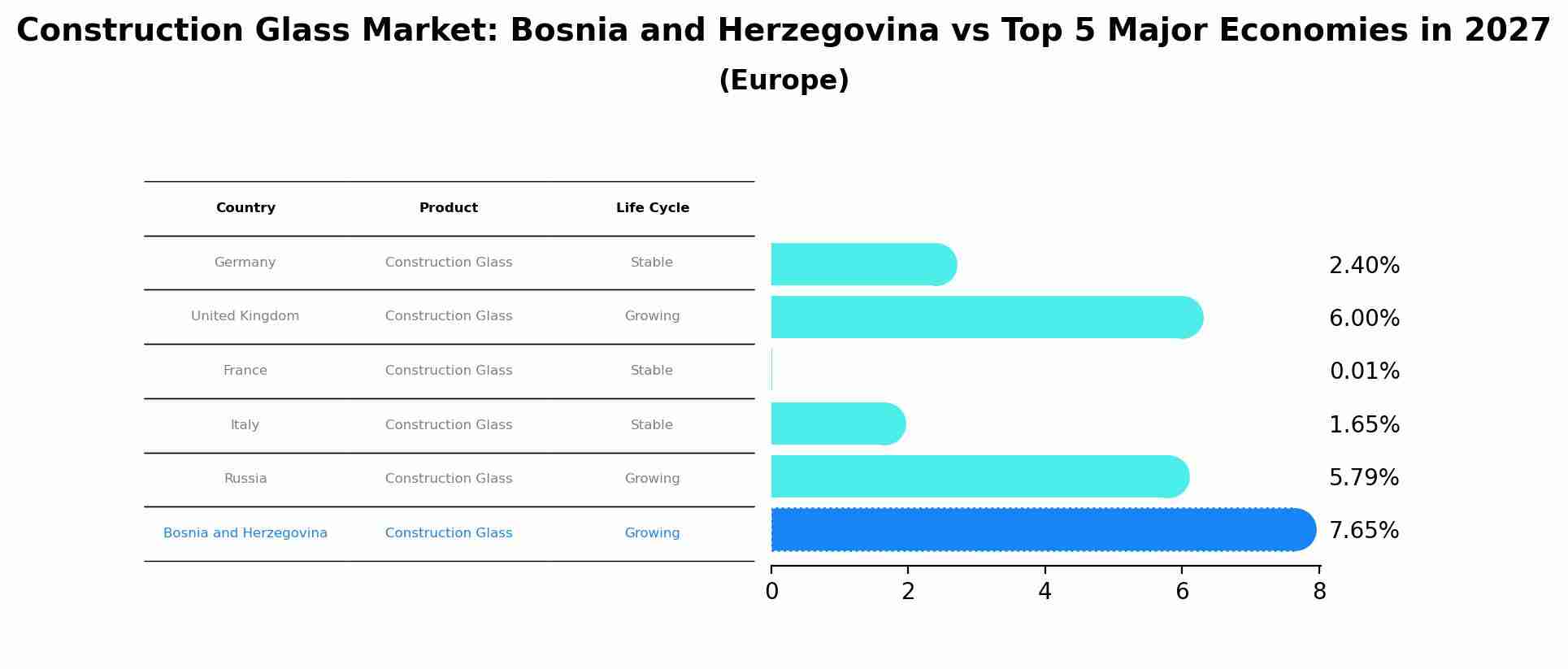
Construction Glass Market: Bosnia and Herzegovina vs Top 5 Major Economies in 2027 (Europe)
In the Europe region, the Construction Glass market in Bosnia and Herzegovina is projected to expand at a growing growth rate of 7.65% by 2027. The largest economy is Germany, followed by United Kingdom, France, Italy and Russia.
Bosnia and Herzegovina Construction Glass Market Overview
The construction glass market involves products such as safety glass, insulating glass, and decorative glass used in building projects. Demand is driven by architectural trends towards more glass facades and energy-efficient buildings. Key challenges include meeting stringent building codes and managing costs associated with high-quality glass production.
Drivers of the market
The construction glass market in Bosnia and Herzegovina benefits from the rising demand for aesthetically pleasing and energy-efficient building materials. The trend towards modern architectural designs, increased focus on natural light, and the need for thermal and acoustic insulation drive the use of specialized construction glass. Technological advancements in glass manufacturing and the growing emphasis on green building practices further contribute to the market`s growth.
Challenges of the market
In the construction glass market, challenges include the high cost of production and the need for specialized processing techniques. The market also faces issues related to regulatory compliance and certification requirements. Fluctuations in demand for construction projects can affect market stability, and competition from international suppliers can impact local manufacturers.
Government Policy of the market
The construction glass market is governed by policies aimed at ensuring the safety and energy efficiency of glass used in buildings. The Bosnian government requires that construction glass meets specific standards for thermal insulation and impact resistance. There are also regulations to promote the use of energy-efficient glazing solutions and support the development of innovative glass technologies.
Key Highlights of the Report:
- Bosnia and Herzegovina Construction Glass Market Outlook
- Market Size of Bosnia and Herzegovina Construction Glass Market, 2024
- Forecast of Bosnia and Herzegovina Construction Glass Market, 2031
- Historical Data and Forecast of Bosnia and Herzegovina Construction Glass Revenues & Volume for the Period 2021-2031
- Bosnia and Herzegovina Construction Glass Market Trend Evolution
- Bosnia and Herzegovina Construction Glass Market Drivers and Challenges
- Bosnia and Herzegovina Construction Glass Price Trends
- Bosnia and Herzegovina Construction Glass Porter`s Five Forces
- Bosnia and Herzegovina Construction Glass Industry Life Cycle
- Historical Data and Forecast of Bosnia and Herzegovina Construction Glass Market Revenues & Volume By Chemical Composition for the Period 2021-2031
- Historical Data and Forecast of Bosnia and Herzegovina Construction Glass Market Revenues & Volume By Soda-lime for the Period 2021-2031
- Historical Data and Forecast of Bosnia and Herzegovina Construction Glass Market Revenues & Volume By Potash-lime for the Period 2021-2031
- Historical Data and Forecast of Bosnia and Herzegovina Construction Glass Market Revenues & Volume By Potash-lead for the Period 2021-2031
- Historical Data and Forecast of Bosnia and Herzegovina Construction Glass Market Revenues & Volume By Type for the Period 2021-2031
- Historical Data and Forecast of Bosnia and Herzegovina Construction Glass Market Revenues & Volume By Low-e Glass for the Period 2021-2031
- Historical Data and Forecast of Bosnia and Herzegovina Construction Glass Market Revenues & Volume By Special Glass for the Period 2021-2031
- Historical Data and Forecast of Bosnia and Herzegovina Construction Glass Market Revenues & Volume By Manufacturing Process for the Period 2021-2031
- Historical Data and Forecast of Bosnia and Herzegovina Construction Glass Market Revenues & Volume By Float Process for the Period 2021-2031
- Historical Data and Forecast of Bosnia and Herzegovina Construction Glass Market Revenues & Volume By Rolled/sheet Process for the Period 2021-2031
- Historical Data and Forecast of Bosnia and Herzegovina Construction Glass Market Revenues & Volume By Application for the Period 2021-2031
- Historical Data and Forecast of Bosnia and Herzegovina Construction Glass Market Revenues & Volume By Residential for the Period 2021-2031
- Historical Data and Forecast of Bosnia and Herzegovina Construction Glass Market Revenues & Volume By Commercial for the Period 2021-2031
- Historical Data and Forecast of Bosnia and Herzegovina Construction Glass Market Revenues & Volume By Others for the Period 2021-2031
- Bosnia and Herzegovina Construction Glass Import Export Trade Statistics
- Market Opportunity Assessment By Chemical Composition
- Market Opportunity Assessment By Type
- Market Opportunity Assessment By Manufacturing Process
- Market Opportunity Assessment By Application
- Bosnia and Herzegovina Construction Glass Top Companies Market Share
- Bosnia and Herzegovina Construction Glass Competitive Benchmarking By Technical and Operational Parameters
- Bosnia and Herzegovina Construction Glass Company Profiles
- Bosnia and Herzegovina Construction Glass Key Strategic Recommendations






































