Botswana Flexible Intermediate Bulk Container Market Growth Rate Analysis (2025 - 2031)
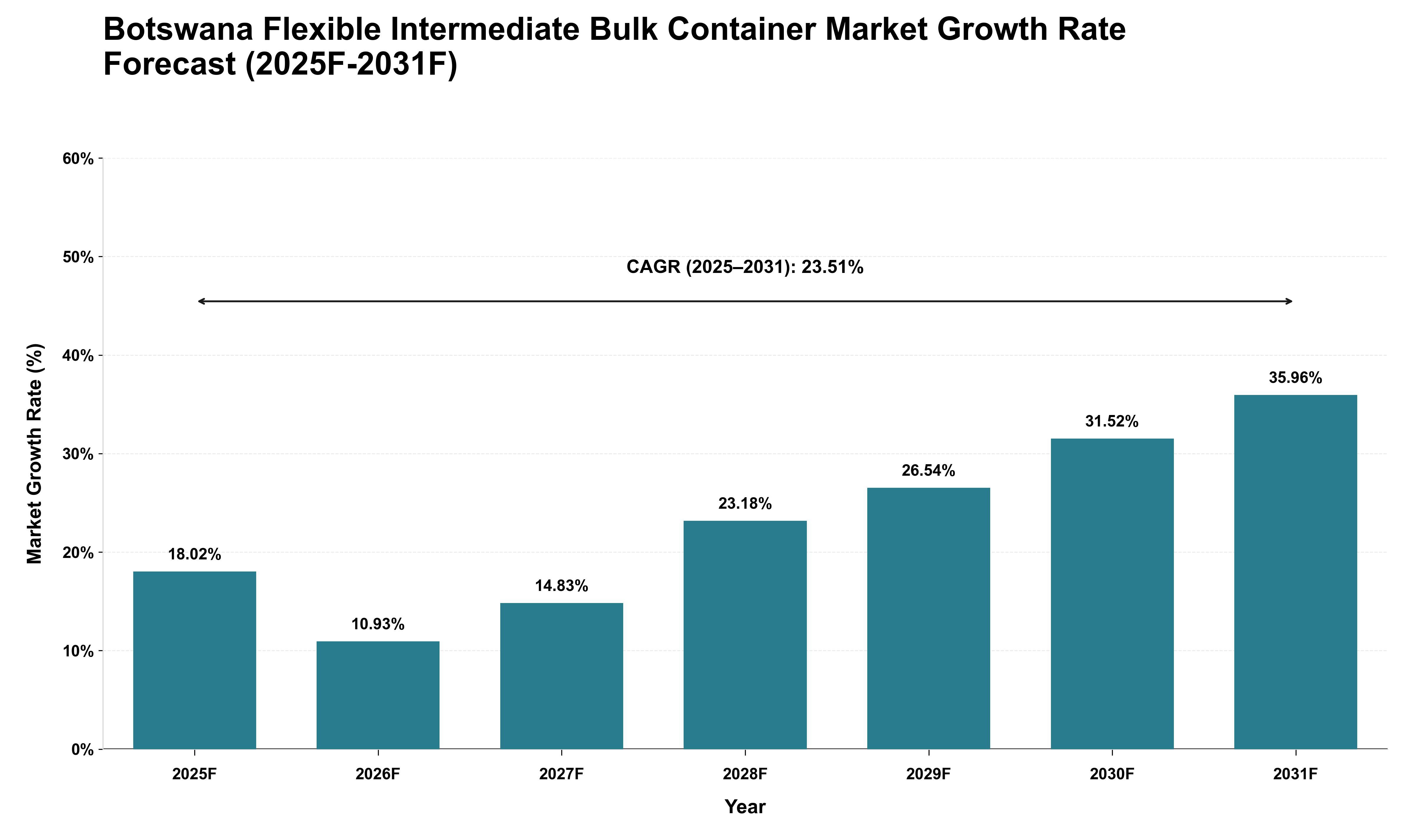
The Botswana Flexible Intermediate Bulk Container market will experience robust growth driven by increasing demand for efficient packaging solutions across various industries, particularly in agriculture and mining. As global supply chains evolve, the need for cost-effective and sustainable transport options will propel the market forward, with a projected CAGR of 23.51% from 2025 to 2031. The annual growth rates will reflect this trajectory, peaking at 35.96% in 2031 as technological advancements in material science enhance product performance and reduce costs. Additionally, import dependencies on high-quality flexible containers will likely stimulate local production initiatives, fostering innovation and competition within the sector. Cyclical trends associated with economic recovery phases will further amplify demand as businesses seek to optimize logistics and reduce waste through superior packaging solutions, ensuring a dynamic market environment throughout the forecast period.
Key Highlights of the Report:
- Botswana Flexible Intermediate Bulk Container Market Outlook
- Market Size of Botswana Flexible Intermediate Bulk Container Market, 2025
- Forecast of Botswana Flexible Intermediate Bulk Container Market, 2032
- Historical Data and Forecast of Botswana Flexible Intermediate Bulk Container Revenues & Volume for the Period 2022-2032F
- Botswana Flexible Intermediate Bulk Container Market Trend Evolution
- Botswana Flexible Intermediate Bulk Container Market Drivers and Challenges
- Botswana Flexible Intermediate Bulk Container Price Trends
- Botswana Flexible Intermediate Bulk Container Porter`s Five Forces
- Botswana Flexible Intermediate Bulk Container Industry Life Cycle
- Historical Data and Forecast of Botswana Flexible Intermediate Bulk Container Market Revenues & Volume By Product for the Period 2022-2032F
- Historical Data and Forecast of Botswana Flexible Intermediate Bulk Container Market Revenues & Volume By Type A for the Period 2022-2032F
- Historical Data and Forecast of Botswana Flexible Intermediate Bulk Container Market Revenues & Volume By Type B for the Period 2022-2032F
- Historical Data and Forecast of Botswana Flexible Intermediate Bulk Container Market Revenues & Volume By Type C for the Period 2022-2032F
- Historical Data and Forecast of Botswana Flexible Intermediate Bulk Container Market Revenues & Volume By Type D for the Period 2022-2032F
- Historical Data and Forecast of Botswana Flexible Intermediate Bulk Container Market Revenues & Volume By End-Use for the Period 2022-2032F
- Historical Data and Forecast of Botswana Flexible Intermediate Bulk Container Market Revenues & Volume By Food for the Period 2022-2032F
- Historical Data and Forecast of Botswana Flexible Intermediate Bulk Container Market Revenues & Volume By Chemical for the Period 2022-2032F
- Historical Data and Forecast of Botswana Flexible Intermediate Bulk Container Market Revenues & Volume By Pharmaceuticals for the Period 2022-2032F
- Historical Data and Forecast of Botswana Flexible Intermediate Bulk Container Market Revenues & Volume By Others for the Period 2022-2032F
- Botswana Flexible Intermediate Bulk Container Import Export Trade Statistics
- Market Opportunity Assessment By Product
- Market Opportunity Assessment By End-Use
- Botswana Flexible Intermediate Bulk Container Top Companies Market Share
- Botswana Flexible Intermediate Bulk Container Competitive Benchmarking By Technical and Operational Parameters
- Botswana Flexible Intermediate Bulk Container Company Profiles
- Botswana Flexible Intermediate Bulk Container Key Strategic Recommendations






































