Botswana Perchloroethylene Market Growth Rate Analysis (2025 - 2031)
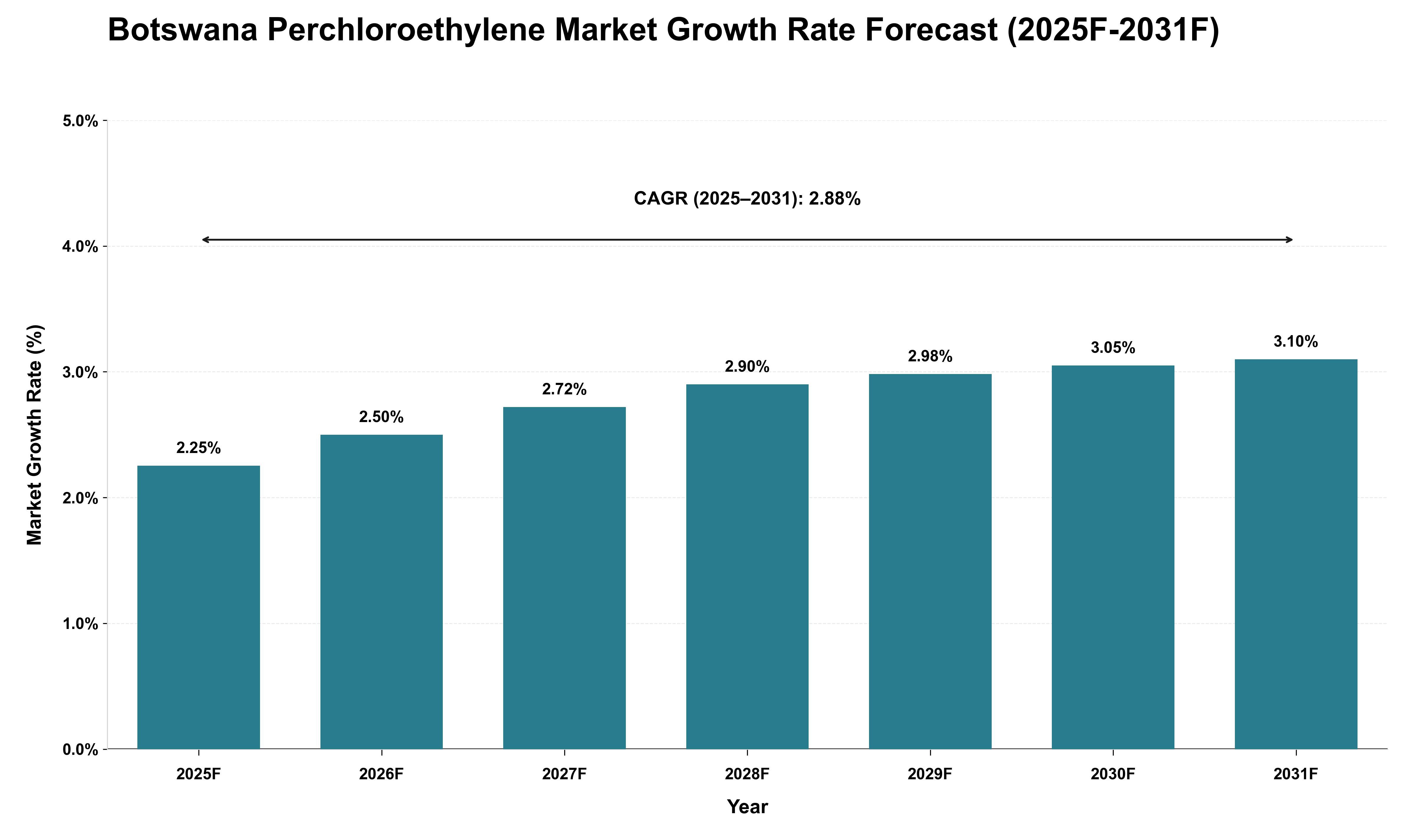
The Botswana perchloroethylene market will experience a gradual increase in growth rates, reflecting broader structural transitions in supply chain dynamics and input costs. As the forecast period progresses, the anticipated CAGR of 2.88% will be driven by rising demand for perchloroethylene in dry cleaning and industrial applications, alongside potential shifts in import dependencies due to fluctuating global supply chains. The initial growth rate of 2.25% in 2025 will likely be influenced by stabilizing raw material costs and improved logistics, which are expected to enhance availability. By 2031, as growth reaches 3.10%, the market will benefit from increased efficiency in production processes and a more resilient supply chain framework that mitigates disruptions. This trajectory indicates a responsive adaptation to global economic conditions, ensuring that input costs remain manageable while meeting evolving domestic demand for perchloroethylene products.
Key Highlights of the Report:
- Botswana Perchloroethylene Market Outlook
- Market Size of Botswana Perchloroethylene Market, 2024
- Forecast of Botswana Perchloroethylene Market, 2031
- Historical Data and Forecast of Botswana Perchloroethylene Revenues & Volume for the Period 2021-2031
- Botswana Perchloroethylene Market Trend Evolution
- Botswana Perchloroethylene Market Drivers and Challenges
- Botswana Perchloroethylene Price Trends
- Botswana Perchloroethylene Porter`s Five Forces
- Botswana Perchloroethylene Industry Life Cycle
- Historical Data and Forecast of Botswana Perchloroethylene Market Revenues & Volume By Type for the Period 2021-2031
- Historical Data and Forecast of Botswana Perchloroethylene Market Revenues & Volume By Ethylene Oxychlorination for the Period 2021-2031
- Historical Data and Forecast of Botswana Perchloroethylene Market Revenues & Volume By Acetylene Method for the Period 2021-2031
- Historical Data and Forecast of Botswana Perchloroethylene Market Revenues & Volume By Ethylene Direct Chlorination for the Period 2021-2031
- Historical Data and Forecast of Botswana Perchloroethylene Market Revenues & Volume By End-use for the Period 2021-2031
- Historical Data and Forecast of Botswana Perchloroethylene Market Revenues & Volume By Dry Cleaning Agent for the Period 2021-2031
- Historical Data and Forecast of Botswana Perchloroethylene Market Revenues & Volume By Solvent for the Period 2021-2031
- Historical Data and Forecast of Botswana Perchloroethylene Market Revenues & Volume By Others for the Period 2021-2031
- Botswana Perchloroethylene Import Export Trade Statistics
- Market Opportunity Assessment By Type
- Market Opportunity Assessment By End-use
- Botswana Perchloroethylene Top Companies Market Share
- Botswana Perchloroethylene Competitive Benchmarking By Technical and Operational Parameters
- Botswana Perchloroethylene Company Profiles
- Botswana Perchloroethylene Key Strategic Recommendations






































