Botswana Textile Waste Market Growth Rate Analysis (2025 - 2031)
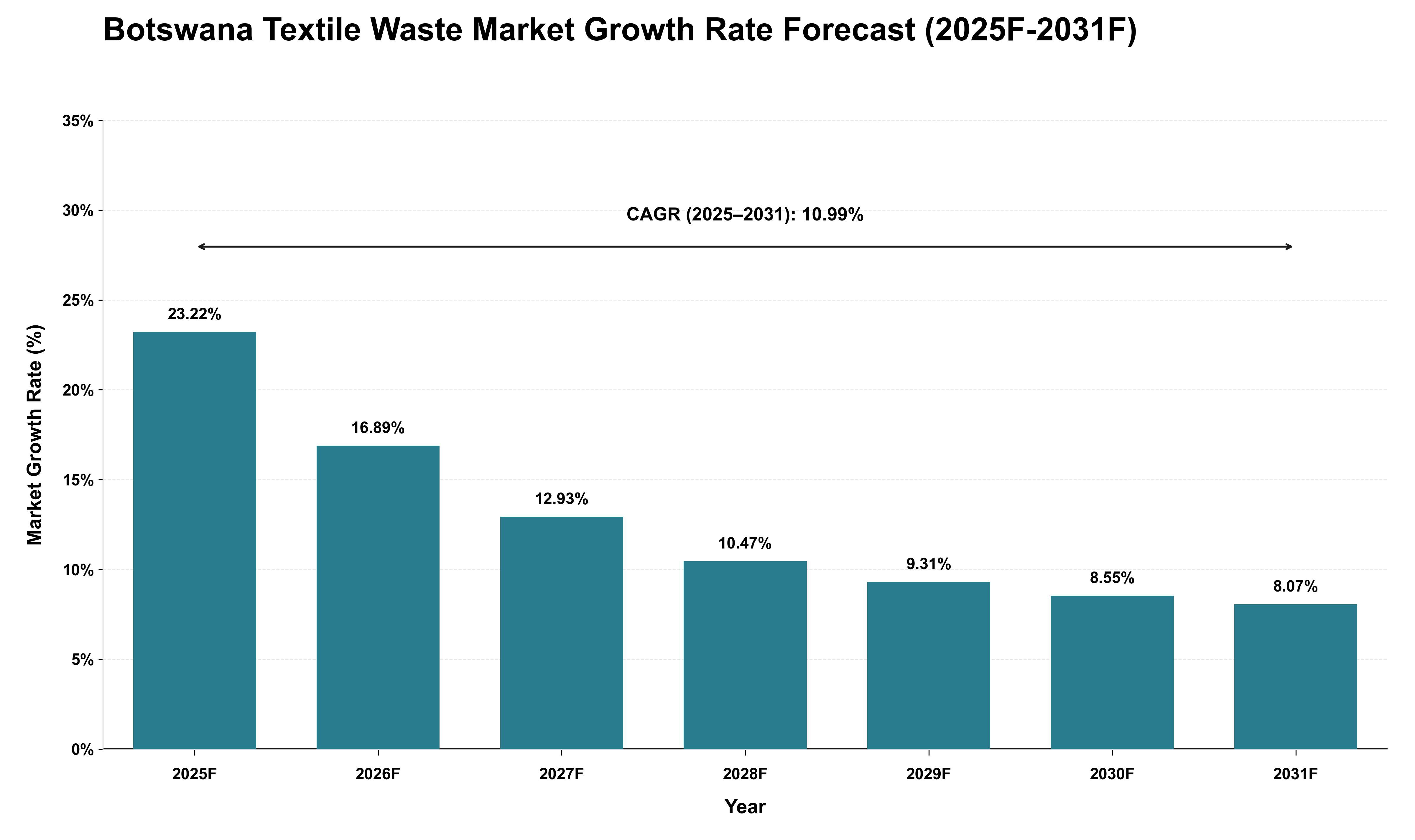
The Botswana textile waste market will experience significant growth driven by evolving raw material availability and pricing dynamics. As global demand for sustainable practices intensifies, the reliance on recycled textile materials will increase, fostering a robust market environment with a projected CAGR of 10.99% from 2025 to 2031. The initial surge of 23.22% in 2025 will likely be propelled by heightened awareness and regulatory support for waste management initiatives, while subsequent years will see a gradual deceleration in growth rates, reflecting the natural adjustment to supply chain capacities and import dependencies. The anticipated fluctuations in raw material prices, influenced by global supply chain disruptions and shifts in consumer preferences towards eco-friendly products, will further shape market trajectories. By 2031, the sector is expected to stabilize around an 8.07% growth rate as it adapts to these macroeconomic pressures and evolving industry standards.
Key Highlights of the Report:
- Botswana Textile Waste Market Outlook
- Market Size of Botswana Textile Waste Market, 2024
- Forecast of Botswana Textile Waste Market, 2031
- Historical Data and Forecast of Botswana Textile Waste Revenues & Volume for the Period 2021-2031
- Botswana Textile Waste Market Trend Evolution
- Botswana Textile Waste Market Drivers and Challenges
- Botswana Textile Waste Price Trends
- Botswana Textile Waste Porter`s Five Forces
- Botswana Textile Waste Industry Life Cycle
- Historical Data and Forecast of Botswana Textile Waste Market Revenues & Volume By Solution Types for the Period 2021-2031
- Historical Data and Forecast of Botswana Textile Waste Market Revenues & Volume By Source Reduction Solutions for the Period 2021-2031
- Historical Data and Forecast of Botswana Textile Waste Market Revenues & Volume By Landfills Solutions for the Period 2021-2031
- Historical Data and Forecast of Botswana Textile Waste Market Revenues & Volume By Recycling Solutions for the Period 2021-2031
- Historical Data and Forecast of Botswana Textile Waste Market Revenues & Volume By Incineration Solutions for the Period 2021-2031
- Historical Data and Forecast of Botswana Textile Waste Market Revenues & Volume By Product Types for the Period 2021-2031
- Historical Data and Forecast of Botswana Textile Waste Market Revenues & Volume By Spinning waste for the Period 2021-2031
- Historical Data and Forecast of Botswana Textile Waste Market Revenues & Volume By Weaving waste for the Period 2021-2031
- Historical Data and Forecast of Botswana Textile Waste Market Revenues & Volume By Knitting waste for the Period 2021-2031
- Historical Data and Forecast of Botswana Textile Waste Market Revenues & Volume By Dyeing waste for the Period 2021-2031
- Historical Data and Forecast of Botswana Textile Waste Market Revenues & Volume By Clothing waste for the Period 2021-2031
- Historical Data and Forecast of Botswana Textile Waste Market Revenues & Volume By Consumer waste for the Period 2021-2031
- Botswana Textile Waste Import Export Trade Statistics
- Market Opportunity Assessment By Solution Types
- Market Opportunity Assessment By Product Types
- Botswana Textile Waste Top Companies Market Share
- Botswana Textile Waste Competitive Benchmarking By Technical and Operational Parameters
- Botswana Textile Waste Company Profiles
- Botswana Textile Waste Key Strategic Recommendations






































