Brazil Cloud Compliance Market Size & Growth Rate (2026-2032)
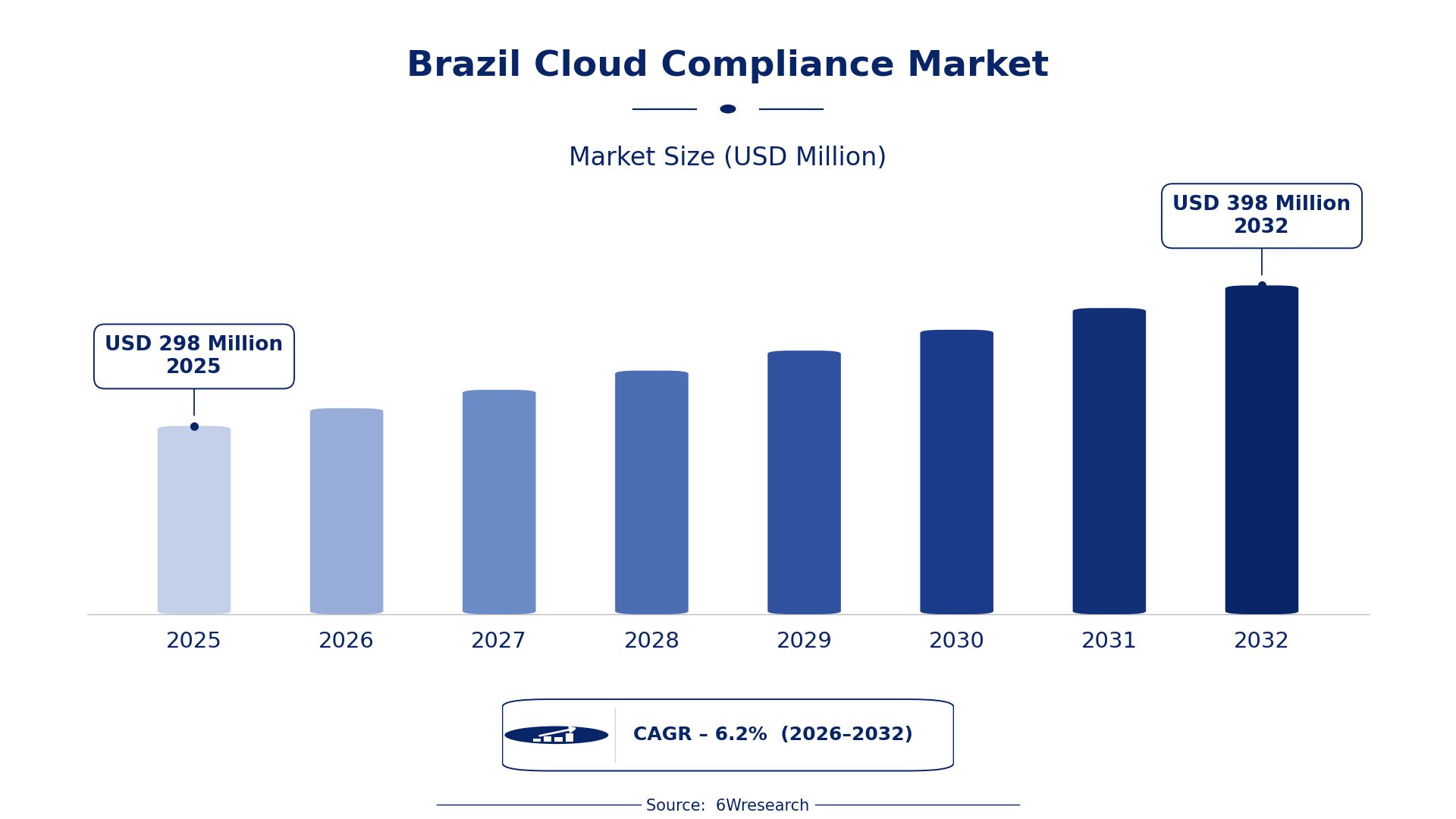
The Brazil Cloud Compliance Market was estimated at USD 298 Million in 2025 and is projected to reach USD 398 Million by 2032, growing at a CAGR of 6.2% from 2026 to 2032.
Brazil Cloud Compliance Market Synopsis
The Brazil Cloud Compliance Market is rapidly adapting to a landscape defined by stringent regulatory requirements and the necessity for robust data protection mechanisms. As Brazilian businesses migrate to cloud solutions, compliance with local and international regulations such as LGPD and GDPR has become non-negotiable for maintaining consumer trust and avoiding hefty fines.
Organizations are increasingly investing in cloud compliance solutions to address the complexities associated with data security, privacy, and industry-specific regulations. This shift not only mitigates risks but also enhances operational efficiency, making compliance a strategic priority for businesses of all sizes.
Brazil Cloud Compliance Market Year-wise Growth Rate and Key Drivers
This graph illustrates the annual growth rates of the Brazil Cloud Compliance Market from 2021 to 2032, highlighting a steady upward trajectory and projected expansion over the forecast period.
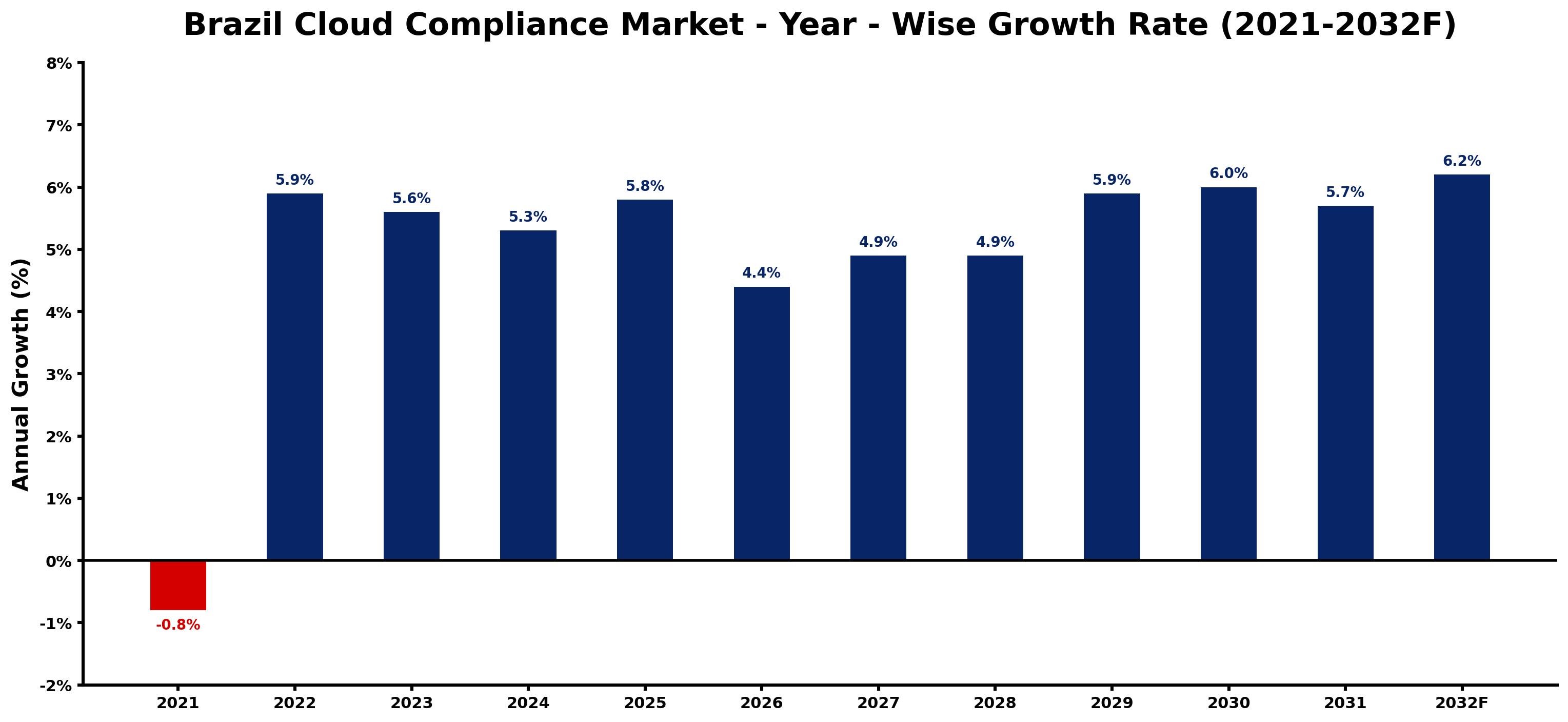
The table below presents the year‑wise growth rates along with the key drivers influencing the market
| Year | Growth Rate | Major Drivers |
| 2021 | -0.8% | ANAC's new data protection regulations delaying compliance projects. |
| 2022 | 5.9% | Brazil's LGPD enforcement driving demand for compliance solutions. |
| 2023 | 5.6% | Cloud adoption among SMBs enhanced by tax incentives. |
| 2024 | 5.3% | Increase in remote workforce necessitating robust data protection. |
| 2025 | 5.8% | Growth in e-commerce driving stringent data handling policies. |
| 2026 | 4.4% | Government initiatives promoting digital security best practices. |
| 2027 | 4.9% | Corporate liabilities encouraging investments in compliance frameworks. |
| 2028 | 4.9% | Regulatory audits pushing companies towards Cloud compliance measures. |
| 2029 | 5.9% | Cyber incidents prompting reevaluation of compliance strategies. |
| 2030 | 6.0% | Rising public awareness of data rights amplifying compliance needs. |
| 2031 | 5.7% | International partnerships boosting compliance demands in cloud services. |
| 2032 | 6.2% | Innovation in data privacy tech spurring compliance investments. |
Note: Market size estimations and growth projections presented in this report are based on 6Wresearch's proprietary forecasting methodology, utilizing the latest available industry data, government publications, and primary research inputs.
Brazil Cloud Compliance Market Key Takeaways
Below are some of the specific key takeaways from the market, including:
- Compliance solutions are essential for organizations to meet evolving data privacy regulations.
- Investment in cloud compliance tools is driven by a focus on data protection and audit readiness.
- The market is increasingly influenced by government policies promoting cybersecurity and data privacy.
- Ongoing challenges include the complexity of regulatory frameworks and the need for continuous monitoring.
- Companies are looking for scalable compliance solutions that can adapt to changing legal landscapes.
Evaluation of Restraints in Brazil Cloud Compliance Market
Despite the promising growth prospects, several restraints hinder the progress of the Brazil Cloud Compliance Market. The intricate web of local and international regulations creates confusion among organizations, leading to a reluctance to fully embrace cloud technologies. Many businesses struggle with audit readiness, as preparing for regulatory inquiries demands substantial time and resource investment. This not only strains operational capacities but also discourages smaller firms from adopting comprehensive compliance frameworks. The lack of standardized compliance solutions further complicates the landscape, as businesses often find themselves navigating a patchwork of requirements that vary by industry and geography.
Brazil Cloud Compliance Market Trends
One prominent trend is the growing integration of artificial intelligence in compliance solutions, enabling automated monitoring and reporting. Companies are increasingly relying on AI to streamline compliance processes, reduce human error, and enhance efficiency. Another trend is the rising demand for compliance-as-a-service models, which allow organizations to access expert resources without the need for in-house capabilities. This trend is particularly appealing to smaller businesses that may lack the expertise or budget to maintain comprehensive compliance teams.
Additionally, there is a noticeable shift towards adopting multi-cloud strategies, which require adaptable compliance solutions capable of ensuring adherence across various platforms. As organizations diversify their cloud environments, the need for unified compliance frameworks becomes critical.
Brazil Cloud Compliance Market Opportunities
The market presents numerous growth opportunities, particularly for service providers offering tailored compliance solutions. Businesses are keen to invest in tools that not only ensure regulatory adherence but also enhance operational efficiency. There's a burgeoning demand for educational resources and training programs that help organizations understand and implement compliance protocols effectively.
on top of that, the increasing emphasis on data privacy legislation globally will drive Brazilian firms to adopt more sophisticated compliance measures, presenting opportunities for innovation in compliance technology. Partnerships between technology providers and regulatory agencies can further foster a conducive environment for compliance-related advancements.
Government Initiatives in the Brazil Cloud Compliance Market
Government policies are shaping the Brazil Cloud Compliance Market, emphasizing the importance of data privacy and cybersecurity. Regulatory bodies are actively working to create frameworks that not only enforce compliance but also provide guidance to businesses navigating these complex requirements. As Brazil strengthens its data protection laws, the need for compliant cloud solutions becomes increasingly critical.
- A regulatory framework introduced in 2023 mandating compliance with LGPD for all cloud service providers.
- Ongoing initiatives aimed at enhancing public awareness regarding data privacy and security practices.
- A planned public-private partnership expected to launch in 2026 to develop industry-specific compliance guidelines.
- Recently completed audits of cloud service providers to ensure adherence to national cybersecurity standards.
- A forthcoming initiative focused on supporting small and medium enterprises (SMEs) in achieving compliance by 2027.
Future Insights of the Brazil Cloud Compliance Market
Looking ahead, the Brazil Cloud Compliance Market is expected to evolve rapidly, driven by technological advancements and regulatory changes. As businesses increasingly rely on cloud solutions, the demand for compliant frameworks will intensify. Organizations will prioritize agility and adaptability in their compliance strategies to keep pace with both local and international regulations. The shift towards digital transformation will further necessitate a strong compliance posture, ensuring that companies not only meet current requirements but are also prepared for future legislative developments.
Brazil Cloud Compliance Market Latest Developments
Recent activity in the Brazil Cloud Compliance Market reflects a growing urgency for organizations to align with regulatory standards. Developments over the past year highlight a trend towards increased collaboration between regulatory agencies and cloud service providers, aiming for a streamlined compliance process. As firms adapt to the changing regulatory environment, the focus on compliance innovation is becoming more pronounced.
- A major technology vendor launched a new cloud compliance solution in early 2025, aimed at automating data privacy processes.
- An initiative that began in mid-2025 is currently underway, providing resources and guidance to firms navigating LGPD compliance.
- New partnerships between cloud service providers and cybersecurity firms were formed in Q1 2025 to enhance compliance capabilities.
- A rollout expected to begin in late 2026 focuses on integrating compliance solutions into existing cloud services offered to SMEs.
- By mid-2026, a national training program for compliance professionals is set to commence, addressing skill gaps in the workforce.
Brazil Cloud Compliance Market - Key Attractiveness of the Report
- 10 Years of Market Numbers
- Historical Data Starting from 2022 to 2025
- Base Year: 2025
- Forecast Data until 2032
- Key Performance Indicators Impacting the Market
- Major Upcoming Developments and Projects
Key Highlights of the Report:
- Brazil Cloud Compliance Market Outlook
- Market Size of Brazil Cloud Compliance Market, 2025
- Forecast of Brazil Cloud Compliance Market, 2032
- Historical Data and Forecast of Brazil Cloud Compliance Revenues & Volume for the Period 2022-2032F
- Brazil Cloud Compliance Market Trend Evolution
- Brazil Cloud Compliance Market Drivers and Challenges
- Brazil Cloud Compliance Price Trends
- Brazil Cloud Compliance Porter's Five Forces
- Brazil Cloud Compliance Industry Life Cycle
- Historical Data and Forecast of Brazil Cloud Compliance Market Revenues & Volume By Component for the Period 2022-2032F
- Historical Data and Forecast of Brazil Cloud Compliance Market Revenues & Volume By Software for the Period 2022-2032F
- Historical Data and Forecast of Brazil Cloud Compliance Market Revenues & Volume By Services for the Period 2022-2032F
- Historical Data and Forecast of Brazil Cloud Compliance Market Revenues & Volume By Cloud Model for the Period 2022-2032F
- Historical Data and Forecast of Brazil Cloud Compliance Market Revenues & Volume By Infrastructure-as-a-Service (IaaS) for the Period 2022-2032F
- Historical Data and Forecast of Brazil Cloud Compliance Market Revenues & Volume By Platform-as-a-Service (PaaS) for the Period 2022-2032F
- Historical Data and Forecast of Brazil Cloud Compliance Market Revenues & Volume By Software-as-a-Service (SaaS) for the Period 2022-2032F
- Historical Data and Forecast of Brazil Cloud Compliance Market Revenues & Volume By Application for the Period 2022-2032F
- Historical Data and Forecast of Brazil Cloud Compliance Market Revenues & Volume By Audit and Compliance Management for the Period 2022-2032F
- Historical Data and Forecast of Brazil Cloud Compliance Market Revenues & Volume By Threat Detection and Remediation for the Period 2022-2032F
- Historical Data and Forecast of Brazil Cloud Compliance Market Revenues & Volume By Activity Monitoring and Analytics for the Period 2022-2032F
- Historical Data and Forecast of Brazil Cloud Compliance Market Revenues & Volume By Visibility and Risk Assessment for the Period 2022-2032F
- Historical Data and Forecast of Brazil Cloud Compliance Market Revenues & Volume By Other Applications for the Period 2022-2032F
- Historical Data and Forecast of Brazil Cloud Compliance Market Revenues & Volume By Organization Size for the Period 2022-2032F
- Historical Data and Forecast of Brazil Cloud Compliance Market Revenues & Volume By Large Enterprises for the Period 2022-2032F
- Historical Data and Forecast of Brazil Cloud Compliance Market Revenues & Volume By Small and Medium-sized Enterprises (SMEs) for the Period 2022-2032F
- Historical Data and Forecast of Brazil Cloud Compliance Market Revenues & Volume By Vertical for the Period 2022-2032F
- Historical Data and Forecast of Brazil Cloud Compliance Market Revenues & Volume By Banking, Financial Services, and Insurance (BFSI) for the Period 2022-2032F
- Historical Data and Forecast of Brazil Cloud Compliance Market Revenues & Volume By Government for the Period 2022-2032F
- Historical Data and Forecast of Brazil Cloud Compliance Market Revenues & Volume By Healthcare for the Period 2022-2032F
- Historical Data and Forecast of Brazil Cloud Compliance Market Revenues & Volume By IT and ITeS for the Period 2022-2032F
- Historical Data and Forecast of Brazil Cloud Compliance Market Revenues & Volume By Retail and eCommerce for the Period 2022-2032F
- Historical Data and Forecast of Brazil Cloud Compliance Market Revenues & Volume By Manufacturing for the Period 2022-2032F
- Brazil Cloud Compliance Import Export Trade Statistics
- Market Opportunity Assessment By Component
- Market Opportunity Assessment By Cloud Model
- Market Opportunity Assessment By Application
- Market Opportunity Assessment By Organization Size
- Market Opportunity Assessment By Vertical
- Brazil Cloud Compliance Top Companies Market Share
- Brazil Cloud Compliance Competitive Benchmarking By Technical and Operational Parameters
- Brazil Cloud Compliance Company Profiles
- Brazil Cloud Compliance Key Strategic Recommendations






































