Brazil Cloud Database and DBaaS Market Size & Growth Rate (2026-2032)
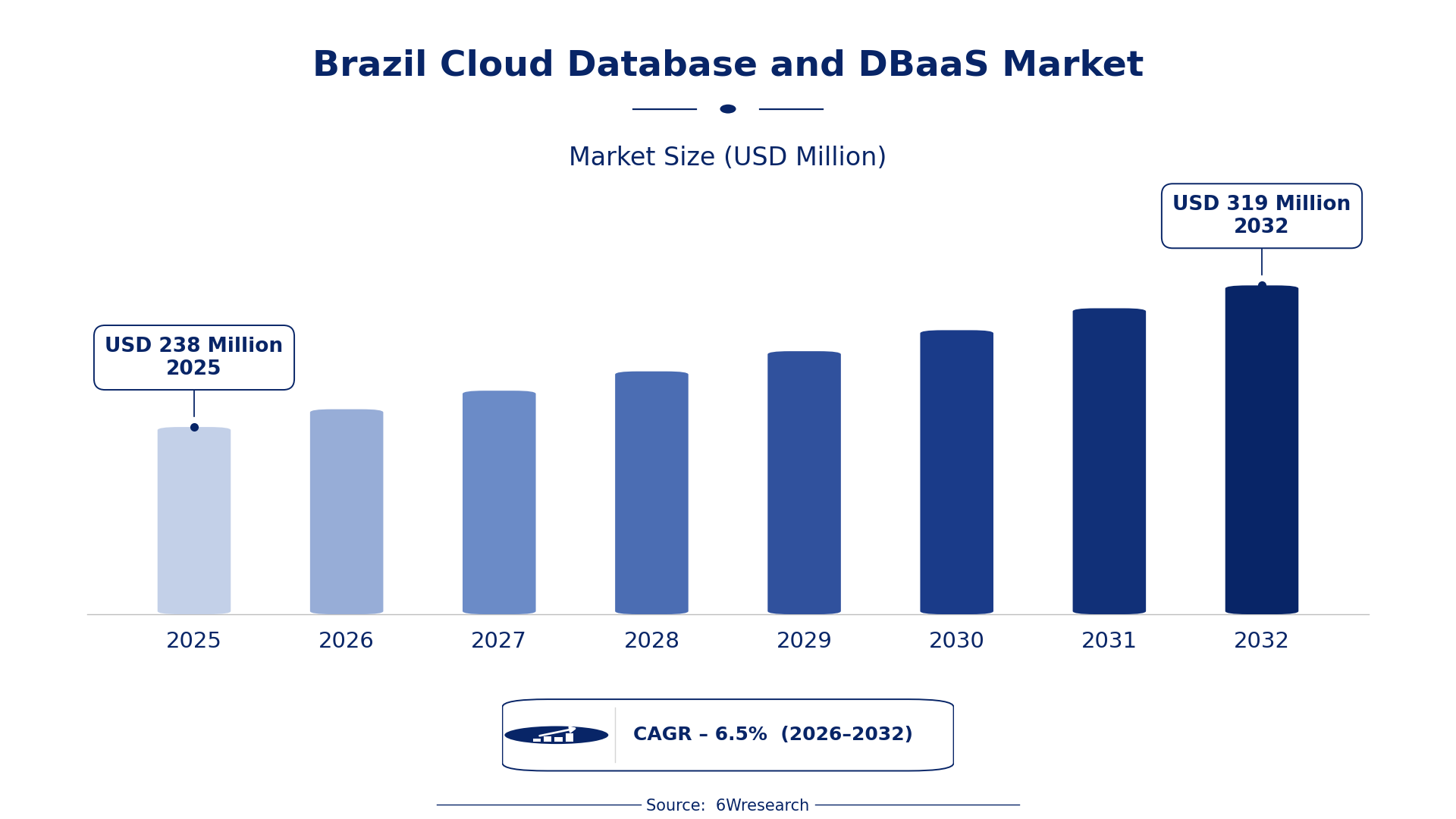
The Brazil Cloud Database and DBaaS Market was estimated at USD 238 Million in 2025 and is projected to reach USD 319 Million by 2032, growing at a CAGR of 6.5% from 2026 to 2032.
Brazil Cloud Database and DBaaS Market Synopsis
The cloud database and Database as a Service (DBaaS) market in Brazil is gaining traction as businesses pivot towards digital solutions for data management. The shift is driven by the need for scalable, efficient, and cost-effective data storage, especially in an era characterized by data explosion.
Organizations are increasingly recognizing the value of cloud databases, which eliminate the need for substantial upfront investments in hardware. As a result, there’s an upward trajectory in demand for these services, especially among medium to large enterprises keen on optimizing their operations.
Brazil Cloud Database and DBaaS Market Year-wise Growth Rate and Key Drivers
This graph illustrates the annual growth rates of the Brazil Cloud Database and DBaaS Market from 2021 to 2032, highlighting a steady upward trajectory and projected expansion over the forecast period.
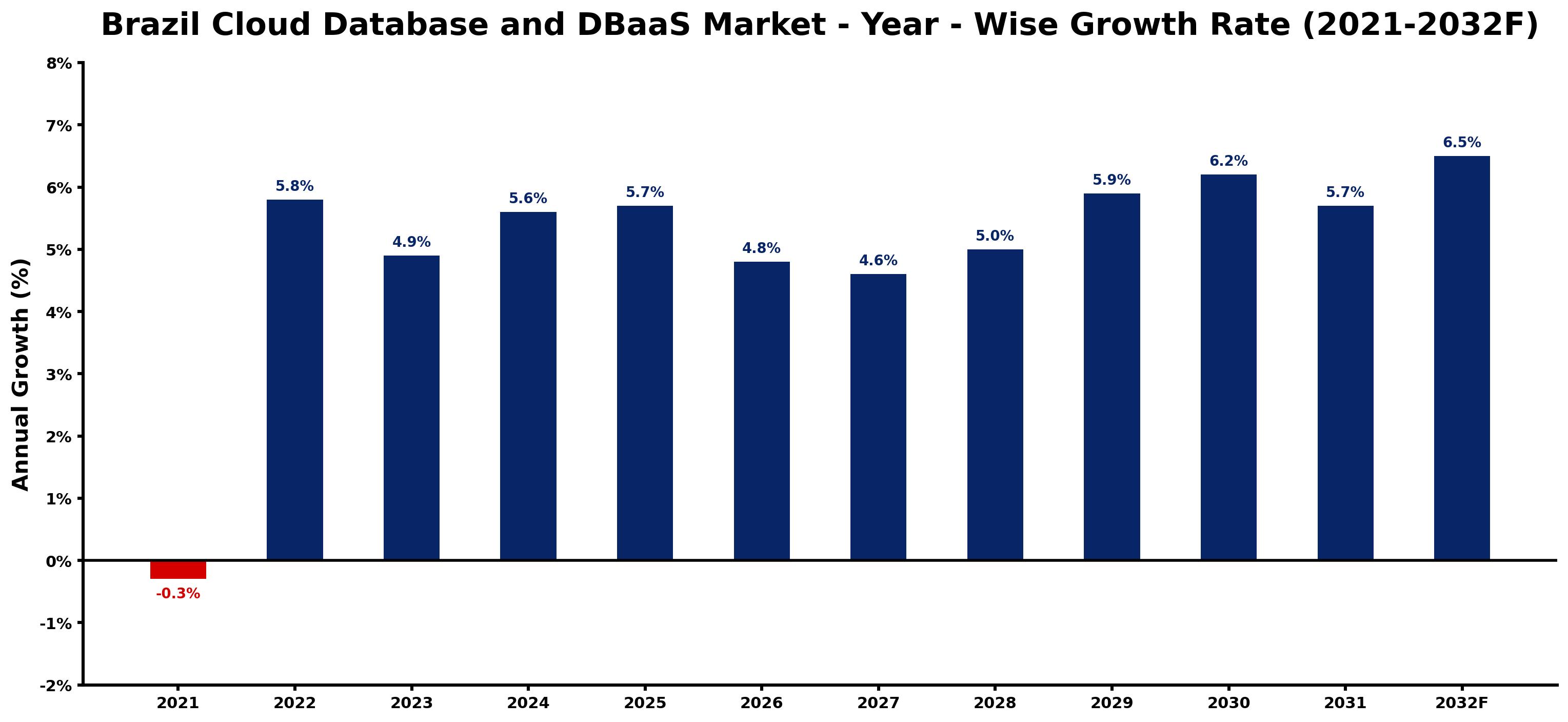
The table below presents the year‑wise growth rates along with the key drivers influencing the market
| Year | Growth Rate | Major Drivers |
| 2021 | -0.3% | High import taxes on technology infrastructure components |
| 2022 | 5.8% | Government's focus on smart city data management initiatives. |
| 2023 | 4.9% | High growth in e-commerce driving database service adoption. |
| 2024 | 5.6% | Increased investment from local fintech requiring cloud databases. |
| 2025 | 5.7% | Growth of digital entertainment content boosting database usage. |
| 2026 | 4.8% | Adoption of data analytics in agriculture enhancing DBaaS demand. |
| 2027 | 4.6% | Emergence of Brazilian SMEs leveraging cloud for scalability. |
| 2028 | 5.0% | Local regulations promoting data privacy encouraging secure cloud adoption. |
| 2029 | 5.9% | Rising penetration of IoT in urban areas needing cloud storage. |
| 2030 | 6.2% | Investment in telehealth initiatives driving database solutions demand. |
| 2031 | 5.7% | Growing app development surge among Brazilian tech companies. |
| 2032 | 6.5% | Increased cloud security compliance mandates boosting DBaaS popularity. |
Note: Market size estimations and growth projections presented in this report are based on 6Wresearch's proprietary forecasting methodology, utilizing the latest available industry data, government publications, and primary research inputs.
Brazil Cloud Database and DBaaS Market Key Takeaways
Below are some of the specific key takeaways from the market, including:
- Brazil's cloud database market is experiencing robust growth due to increased data complexity and volume.
- Data security and compliance are paramount, influencing organizations' choices in cloud service providers.
- The Brazilian government is promoting digital transformation, creating a conducive environment for cloud adoption.
- Challenges related to data residency and regulatory compliance remain significant, impacting market dynamics.
- Emerging technologies like AI and machine learning are set to further enhance cloud database capabilities.
Evaluation of Restraints in Brazil Cloud Database and DBaaS Market
The market faces critical restraints that can impede its growth trajectory. Data residency and sovereignty regulations impose strict requirements on how data is stored and accessed, creating hurdles for service providers. Organizations are often hesitant to move sensitive data to the cloud due to fears of non-compliance with local laws. Additionally, ensuring high availability and low latency continues to challenge providers, especially in a landscape where real-time data processing is becoming the norm. As businesses grow more dependent on cloud solutions, these barriers must be addressed to unlock the market's full potential.
Brazil Cloud Database and DBaaS Market Trends
A notable trend in the Brazilian cloud database market is the growing emphasis on data security. As cyber threats evolve, companies are prioritizing solutions that offer robust encryption and compliance features. This focus not only addresses security concerns but also builds trust with customers.
on top of that, the rise of hybrid cloud models is gaining momentum. Organizations seek to combine the benefits of on-premises infrastructure with the flexibility of cloud solutions, optimizing their operations. This hybrid approach allows for better control over sensitive data while still leveraging the advantages of cloud technologies.
Brazil Cloud Database and DBaaS Market Opportunities
Emerging technologies present significant opportunities within the Brazilian cloud database sector. The integration of AI and machine learning can enhance data analytics capabilities, providing businesses with deeper insights and improved decision-making. Additionally, sectors like finance and healthcare are increasingly adopting cloud solutions to streamline operations and comply with regulatory demands, creating fertile ground for growth.
As digital transformation accelerates across industries, companies that offer tailored cloud solutions will find ample opportunities to capture market share, particularly in sectors that require stringent data management practices.
Government Initiatives in the Brazil Cloud Database and DBaaS Market
Brazil's government is actively shaping the cloud database and DBaaS market through various initiatives aimed at promoting digital innovation. The push for digital transformation reflects a broader commitment to enhancing the country’s technology infrastructure and fostering a data-driven economy. Policies focusing on data privacy and localization are critical for building a secure environment for cloud adoption.
- A national digital infrastructure upgrade programme now in its rollout phase aims to enhance connectivity and support cloud adoption across various sectors.
- A regulatory framework introduced in 2025 mandating billing transparency is currently being implemented to improve consumer trust in cloud services.
- A planned public-private initiative expected to expand telecom infrastructure access by 2028 will bolster the cloud services ecosystem.
- Ongoing workshops and training programs initiated by the government are designed to equip businesses with the necessary skills for effective cloud integration.
- A recent policy shift in 2024 encourages investment in cloud technology, incentivizing companies to transition to cloud-based solutions.
Future Insights of the Brazil Cloud Database and DBaaS Market
Looking ahead to 2026-2032, the Brazil Cloud Database and DBaaS market is set for continued expansion. As more organizations shift their operations to cloud platforms, the demand for scalable and secure solutions will only increase. The interplay between regulatory frameworks and technological advancements will be crucial in shaping market dynamics.
The integration of advanced analytics and AI will enhance the functionality of cloud databases, enabling businesses to unlock new levels of efficiency. As companies increasingly recognize the strategic value of data, investments in cloud solutions will become a top priority, driving sustained growth in the sector.
Brazil Cloud Database and DBaaS Market Latest Developments
Recent activity in the Brazil Cloud Database and DBaaS market indicates a vibrant and rapidly evolving industry. In the past year, there has been a noticeable uptick in partnerships and technological advancements as providers aim to differentiate their offerings. This trend reflects the urgency for businesses to modernize their data management strategies.
- A major technology vendor announced an upgrade to its cloud database platform in early 2025, enhancing performance and security features.
- An ongoing initiative that began in mid-2025 focuses on expanding cloud service access to underserved regions, promoting digital inclusion.
- By mid-2026, a prominent cloud service provider is expected to launch a new DBaaS solution tailored for small and medium enterprises.
- A recent collaboration between local startups and established cloud providers aims to accelerate innovation in cloud technologies, currently underway since late 2024.
- A rollout planned for late 2026 will introduce new compliance tools for organizations navigating Brazil’s regulatory landscape.
Brazil Cloud Database and DBaaS Market - Key Attractiveness of the Report
- 10 Years of Market Numbers
- Historical Data Starting from 2022 to 2025
- Base Year: 2025
- Forecast Data until 2032
- Key Performance Indicators Impacting the Market
- Major Upcoming Developments and Projects
Key Highlights of the Report:
- Brazil Cloud Database and DBaaS Market Outlook
- Market Size of Brazil Cloud Database and DBaaS Market, 2025
- Forecast of Brazil Cloud Database and DBaaS Market, 2032
- Historical Data and Forecast of Brazil Cloud Database and DBaaS Revenues & Volume for the Period 2022-2032F
- Brazil Cloud Database and DBaaS Market Trend Evolution
- Brazil Cloud Database and DBaaS Market Drivers and Challenges
- Brazil Cloud Database and DBaaS Price Trends
- Brazil Cloud Database and DBaaS Porter's Five Forces
- Brazil Cloud Database and DBaaS Industry Life Cycle
- Historical Data and Forecast of Brazil Cloud Database and DBaaS Market Revenues & Volume By Database Type for the Period 2022-2032F
- Historical Data and Forecast of Brazil Cloud Database and DBaaS Market Revenues & Volume By SQL for the Period 2022-2032F
- Historical Data and Forecast of Brazil Cloud Database and DBaaS Market Revenues & Volume By NoSQL for the Period 2022-2032F
- Historical Data and Forecast of Brazil Cloud Database and DBaaS Market Revenues & Volume By Service for the Period 2022-2032F
- Historical Data and Forecast of Brazil Cloud Database and DBaaS Market Revenues & Volume By Professional Services for the Period 2022-2032F
- Historical Data and Forecast of Brazil Cloud Database and DBaaS Market Revenues & Volume By Consulting for the Period 2022-2032F
- Historical Data and Forecast of Brazil Cloud Database and DBaaS Market Revenues & Volume By Implementation for the Period 2022-2032F
- Historical Data and Forecast of Brazil Cloud Database and DBaaS Market Revenues & Volume By Support and Maintenance for the Period 2022-2032F
- Historical Data and Forecast of Brazil Cloud Database and DBaaS Market Revenues & Volume By Managed Services for the Period 2022-2032F
- Historical Data and Forecast of Brazil Cloud Database and DBaaS Market Revenues & Volume By Vertical for the Period 2022-2032F
- Historical Data and Forecast of Brazil Cloud Database and DBaaS Market Revenues & Volume By Banking, Financial Services and Insurance (BFSI) for the Period 2022-2032F
- Historical Data and Forecast of Brazil Cloud Database and DBaaS Market Revenues & Volume By Telecom and Information Technology (IT) for the Period 2022-2032F
- Historical Data and Forecast of Brazil Cloud Database and DBaaS Market Revenues & Volume By Government for the Period 2022-2032F
- Historical Data and Forecast of Brazil Cloud Database and DBaaS Market Revenues & Volume By Consumer Goods and Retail for the Period 2022-2032F
- Historical Data and Forecast of Brazil Cloud Database and DBaaS Market Revenues & Volume By Manufacturing for the Period 2022-2032F
- Historical Data and Forecast of Brazil Cloud Database and DBaaS Market Revenues & Volume By Energy and Utilities for the Period 2022-2032F
- Historical Data and Forecast of Brazil Cloud Database and DBaaS Market Revenues & Volume By Media and Entertainment for the Period 2022-2032F
- Historical Data and Forecast of Brazil Cloud Database and DBaaS Market Revenues & Volume By Healthcare and Life Sciences for the Period 2022-2032F
- Historical Data and Forecast of Brazil Cloud Database and DBaaS Market Revenues & Volume By Component for the Period 2022-2032F
- Historical Data and Forecast of Brazil Cloud Database and DBaaS Market Revenues & Volume By Solution for the Period 2022-2032F
- Historical Data and Forecast of Brazil Cloud Database and DBaaS Market Revenues & Volume By Services for the Period 2022-2032F
- Historical Data and Forecast of Brazil Cloud Database and DBaaS Market Revenues & Volume By Deployment Model for the Period 2022-2032F
- Historical Data and Forecast of Brazil Cloud Database and DBaaS Market Revenues & Volume By Public Cloud for the Period 2022-2032F
- Historical Data and Forecast of Brazil Cloud Database and DBaaS Market Revenues & Volume By Private Cloud for the Period 2022-2032F
- Historical Data and Forecast of Brazil Cloud Database and DBaaS Market Revenues & Volume By Hybrid Cloud for the Period 2022-2032F
- Historical Data and Forecast of Brazil Cloud Database and DBaaS Market Revenues & Volume By Organization Size for the Period 2022-2032F
- Historical Data and Forecast of Brazil Cloud Database and DBaaS Market Revenues & Volume By Large Enterprises for the Period 2022-2032F
- Historical Data and Forecast of Brazil Cloud Database and DBaaS Market Revenues & Volume By Small and Medium-sized Enterprises (SMEs) for the Period 2022-2032F
- Brazil Cloud Database and DBaaS Import Export Trade Statistics
- Market Opportunity Assessment By Database Type
- Market Opportunity Assessment By Service
- Market Opportunity Assessment By Vertical
- Market Opportunity Assessment By Component
- Market Opportunity Assessment By Deployment Model
- Market Opportunity Assessment By Organization Size
- Brazil Cloud Database and DBaaS Top Companies Market Share
- Brazil Cloud Database and DBaaS Competitive Benchmarking By Technical and Operational Parameters
- Brazil Cloud Database and DBaaS Company Profiles
- Brazil Cloud Database and DBaaS Key Strategic Recommendations






































