Brazil Cloud Security Market Size & Growth Rate (2026-2032)
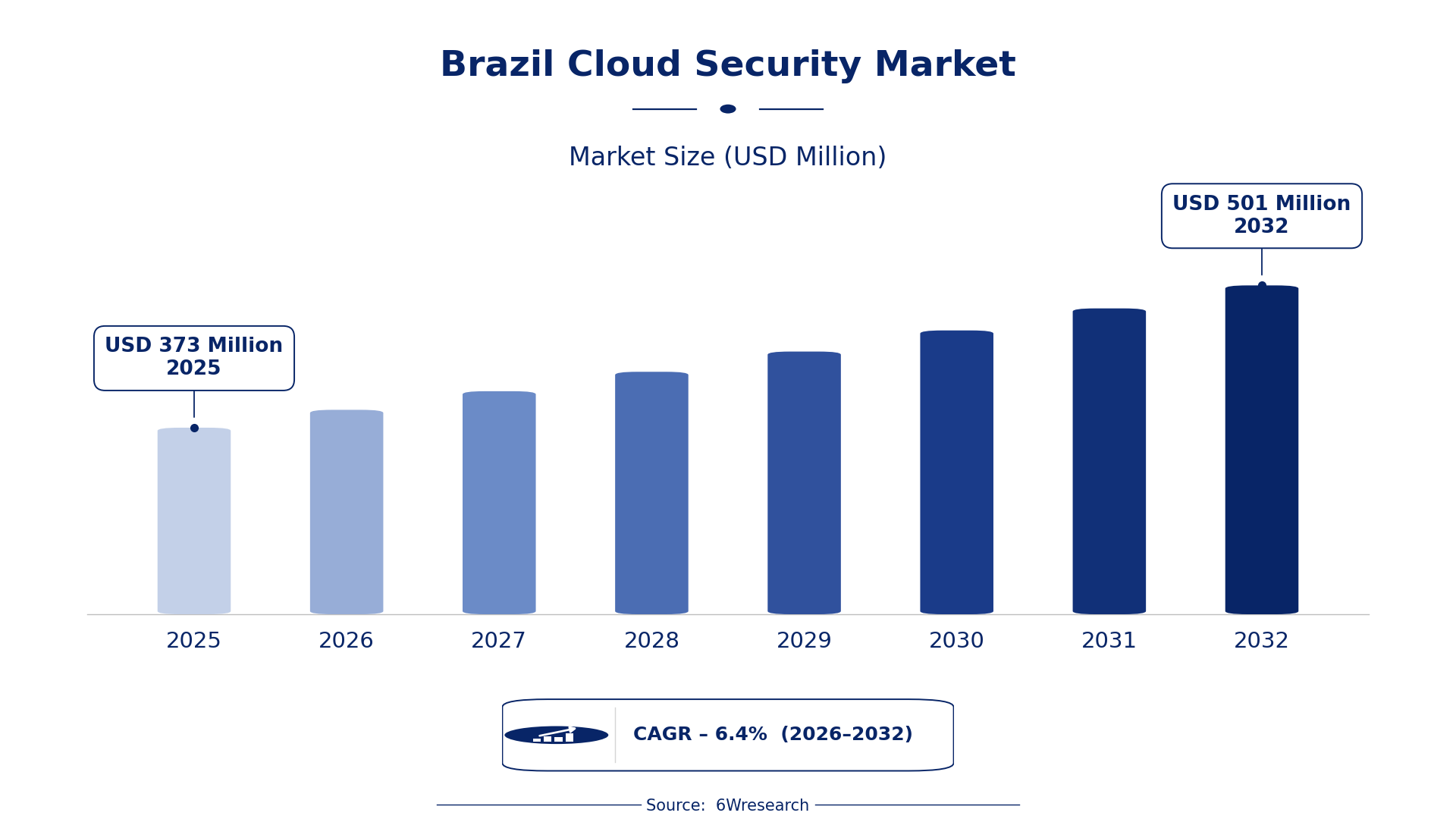
The Brazil Cloud Security Market was estimated at USD 373 Million in 2025 and is projected to reach USD 501 Million by 2032, growing at a CAGR of 6.4% from 2026 to 2032.
Brazil Cloud Security Market Synopsis
As Brazilian companies increasingly transition to cloud-based solutions, the need for specialized cloud security measures becomes urgent. The surge in digital transformation initiatives is prompting organizations to prioritize security to protect sensitive information stored in the cloud.
Regulatory compliance remains a significant concern in Brazil's cloud security market. With stringent data protection regulations emerging, businesses must align their cloud strategies to meet these compliance requirements, which in turn drives demand for advanced cloud security solutions.
Brazil Cloud Security Market Year-wise Growth Rate and Key Drivers
This graph illustrates the annual growth rates of the Brazil Cloud Security Market from 2021 to 2032, highlighting a steady upward trajectory and projected expansion over the forecast period.
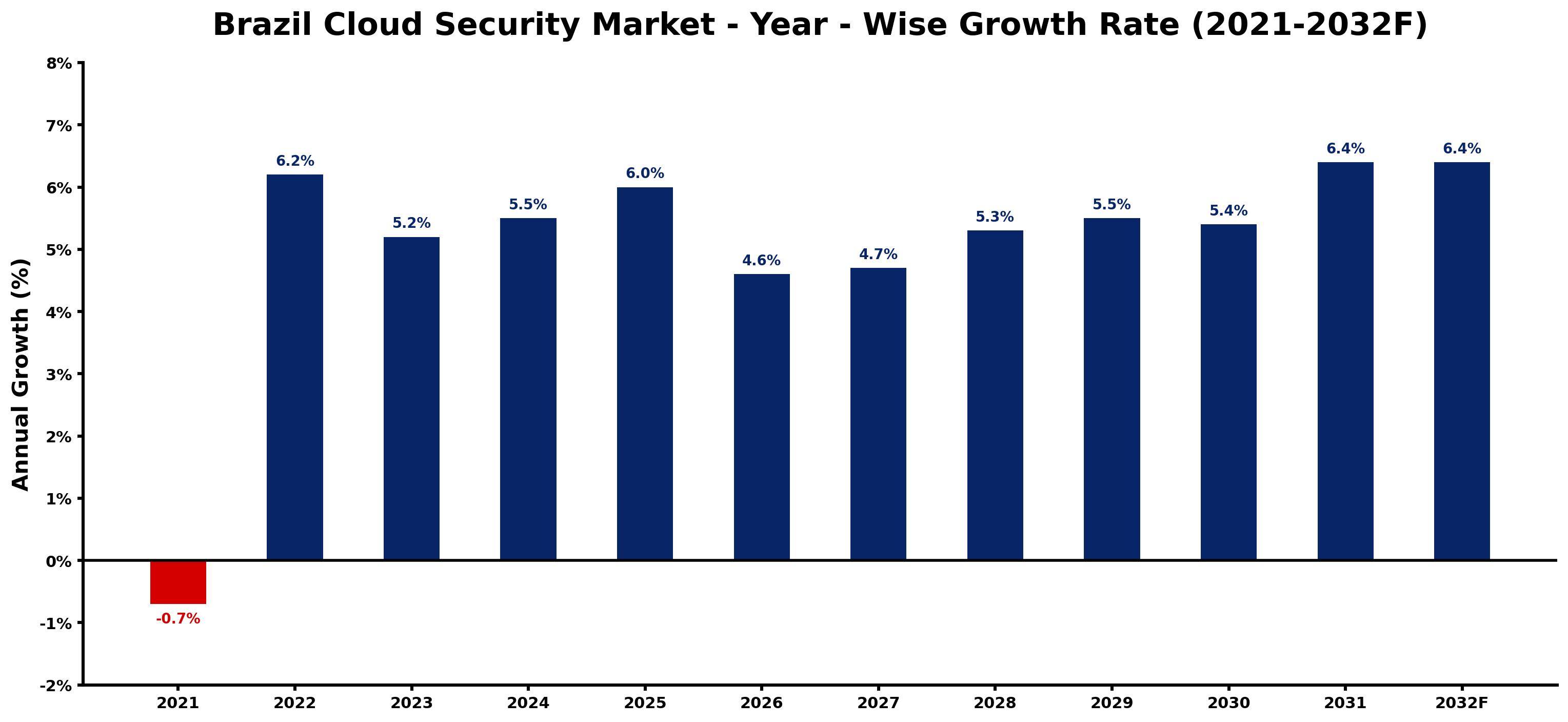
The table below presents the year‑wise growth rates along with the key drivers influencing the market
| Year | Growth Rate | Major Drivers |
| 2021 | -0.7% | COVID-19 impact on Brazilian enterprise IT budgets |
| 2022 | 6.2% | General Data Protection Law compliance boosts cloud security needs. |
| 2023 | 5.2% | Increased cyber threats prompted higher security investments. |
| 2024 | 5.5% | Government cloud initiatives drive public sector security expansion. |
| 2025 | 6.0% | Growing tech startups require enhanced cloud security solutions. |
| 2026 | 4.6% | Rise in remote work increases demand for cloud protections. |
| 2027 | 4.7% | Partnerships between firms and security vendors strengthen adoption. |
| 2028 | 5.3% | Local cybersecurity frameworks enhance market growth opportunities. |
| 2029 | 5.5% | Consumer trust in cloud platforms necessitates stronger protections. |
| 2030 | 5.4% | Increased regulatory scrutiny on data privacy fuels demand. |
| 2031 | 6.4% | Emerging fintech companies prioritize robust cloud security measures. |
| 2032 | 6.4% | Rise in sophisticated ransomware attacks accelerates cloud security. |
Note: Market size estimations and growth projections presented in this report are based on 6Wresearch's proprietary forecasting methodology, utilizing the latest available industry data, government publications, and primary research inputs.
Brazil Cloud Security Market Key Takeaways
Below are some of the specific key takeaways from the market, including:
- The market is witnessing a steady increase in demand due to the rapid adoption of cloud services.
- Regulatory pressures are leading companies to invest in robust cloud security frameworks.
- Complex cloud ecosystems pose challenges that drive the need for specialized security solutions.
- Organizations must address the shared responsibility model to effectively manage cloud security.
- Investment in education and training on cloud security best practices is essential for businesses.
Evaluation of Restraints in Brazil Cloud Security Market
Despite the growth potential, the Brazil Cloud Security market faces notable restraints. Organizations often struggle with integrating multiple cloud services, which can lead to security gaps. Additionally, maintaining compliance with evolving data protection regulations can be burdensome for businesses. The lack of skilled personnel in cloud security roles compounds these issues, as many companies find it challenging to deploy and manage effective security measures. These barriers require focused efforts to foster a knowledgeable workforce and streamline compliance processes.
Brazil Cloud Security Market Trends
Several key trends are shaping the Brazil Cloud Security market. Firstly, an increasing emphasis on automation and artificial intelligence in security measures is gaining traction, enabling organizations to enhance threat detection and response capabilities. Cloud-native security solutions are also emerging, designed specifically to address the unique challenges of cloud environments.
on top of that, organizations are exploring multi-cloud strategies, increasing the complexity of their security needs. This shift necessitates solutions that can provide a unified security posture across different cloud platforms. The growing awareness of cyber threats is pushing businesses to adopt proactive security measures, making continuous monitoring and incident response critical components of cloud security strategies.
Brazil Cloud Security Market Opportunities
The future of the Brazil Cloud Security market is ripe with opportunities. Businesses that focus on developing innovative cloud security technologies will find a receptive market as companies seek to strengthen their defenses. on top of that, partnerships between cloud service providers and cybersecurity firms can lead to the creation of comprehensive solutions tailored to specific industry needs.
Investments in education and training programs for IT professionals will also present a significant opportunity to bridge the skills gap in cloud security. As companies strive for compliance, the demand for consulting services that specialize in regulatory frameworks is expected to increase, providing avenues for growth.
Government Initiatives in the Brazil Cloud Security Market
Government policy in Brazil is increasingly focused on enhancing cloud security through robust data protection regulations and frameworks. Policymakers are prioritizing public-sector initiatives that promote secure cloud adoption across various industries. This regulatory backdrop is vital for shaping a secure environment for cloud-based operations in Brazil.
- A regulatory framework introduced in 2025 mandates enhanced data protection measures for all cloud service providers handling sensitive information.
- Ongoing initiatives include a national awareness campaign promoting best practices in cloud security, which aims to educate businesses and the public.
- Currently underway is a public-private partnership aimed at developing cloud security certification standards, which will help ensure compliance and enhance trust in cloud services.
- Future plans involve launching a national cloud infrastructure improvement project expected to begin by mid-2026, designed to enhance security capabilities across government entities.
Future Insights of the Brazil Cloud Security Market
Looking ahead to 2026-2032, the Brazil Cloud Security market is expected to experience substantial growth driven by continuous digital transformation initiatives across all sectors. As regulatory demands increase, organizations will seek more sophisticated security solutions to safeguard their cloud environments. The integration of artificial intelligence and machine learning into cloud security tools will likely become standard, providing enhanced analytics and real-time threat detection capabilities.
Brazil Cloud Security Market Latest Developments
Recent developments in the Brazil Cloud Security market reflect the increasing urgency for enhanced security measures in cloud environments. Companies are making strides in adopting innovative security technologies while focusing on compliance with evolving regulations.
- A major technology vendor launched a new cloud-native security solution in early 2025, designed to improve visibility and control for organizations managing multiple cloud platforms.
- An industry consortium was formed in Q3 2025, aimed at developing shared cybersecurity protocols to enhance resilience against cloud-based threats.
- Currently underway is a training initiative started in late 2025 to equip IT professionals with essential cloud security skills, enhancing workforce readiness.
- By early 2026, a public sector initiative is expected to introduce standardized cloud security assessments for government agencies, aiming to improve overall security posture.
Brazil Cloud Security Market - Key Attractiveness of the Report
- 10 Years of Market Numbers
- Historical Data Starting from 2022 to 2025
- Base Year: 2025
- Forecast Data until 2032
- Key Performance Indicators Impacting the Market
- Major Upcoming Developments and Projects
Key Highlights of the Report:
- Brazil Cloud Security Market Outlook
- Market Size of Brazil Cloud Security Market, 2025
- Forecast of Brazil Cloud Security Market, 2032
- Historical Data and Forecast of Brazil Cloud Security Revenues & Volume for the Period 2022-2032F
- Brazil Cloud Security Market Trend Evolution
- Brazil Cloud Security Market Drivers and Challenges
- Brazil Cloud Security Price Trends
- Brazil Cloud Security Porter's Five Forces
- Brazil Cloud Security Industry Life Cycle
- Historical Data and Forecast of Brazil Cloud Security Market Revenues & Volume By Application for the Period 2022-2032F
- Historical Data and Forecast of Brazil Cloud Security Market Revenues & Volume By Visibility for the Period 2022-2032F
- Historical Data and Forecast of Brazil Cloud Security Market Revenues & Volume By Risk Assessment for the Period 2022-2032F
- Historical Data and Forecast of Brazil Cloud Security Market Revenues & Volume By User for the Period 2022-2032F
- Historical Data and Forecast of Brazil Cloud Security Market Revenues & Volume By Data Governance for the Period 2022-2032F
- Historical Data and Forecast of Brazil Cloud Security Market Revenues & Volume By Vertical for the Period 2022-2032F
- Historical Data and Forecast of Brazil Cloud Security Market Revenues & Volume By BFSI for the Period 2022-2032F
- Historical Data and Forecast of Brazil Cloud Security Market Revenues & Volume By IT for the Period 2022-2032F
- Historical Data and Forecast of Brazil Cloud Security Market Revenues & Volume By ITeS for the Period 2022-2032F
- Historical Data and Forecast of Brazil Cloud Security Market Revenues & Volume By Retail for the Period 2022-2032F
- Historical Data and Forecast of Brazil Cloud Security Market Revenues & Volume By Organization Size for the Period 2022-2032F
- Historical Data and Forecast of Brazil Cloud Security Market Revenues & Volume By Large Enterprises for the Period 2022-2032F
- Historical Data and Forecast of Brazil Cloud Security Market Revenues & Volume By SMEs for the Period 2022-2032F
- Historical Data and Forecast of Brazil Cloud Security Market Revenues & Volume By Security Type for the Period 2022-2032F
- Historical Data and Forecast of Brazil Cloud Security Market Revenues & Volume By Perimeter Security for the Period 2022-2032F
- Historical Data and Forecast of Brazil Cloud Security Market Revenues & Volume By Network Security for the Period 2022-2032F
- Historical Data and Forecast of Brazil Cloud Security Market Revenues & Volume By Endpoint Security for the Period 2022-2032F
- Historical Data and Forecast of Brazil Cloud Security Market Revenues & Volume By Application Security for the Period 2022-2032F
- Historical Data and Forecast of Brazil Cloud Security Market Revenues & Volume By Others for the Period 2022-2032F
- Historical Data and Forecast of Brazil Cloud Security Market Revenues & Volume By Service Model for the Period 2022-2032F
- Historical Data and Forecast of Brazil Cloud Security Market Revenues & Volume By IaaS for the Period 2022-2032F
- Historical Data and Forecast of Brazil Cloud Security Market Revenues & Volume By PaaS for the Period 2022-2032F
- Historical Data and Forecast of Brazil Cloud Security Market Revenues & Volume By SaaS for the Period 2022-2032F
- Brazil Cloud Security Import Export Trade Statistics
- Market Opportunity Assessment By Application
- Market Opportunity Assessment By Vertical
- Market Opportunity Assessment By Organization Size
- Market Opportunity Assessment By Security Type
- Market Opportunity Assessment By Service Model
- Brazil Cloud Security Top Companies Market Share
- Brazil Cloud Security Competitive Benchmarking By Technical and Operational Parameters
- Brazil Cloud Security Company Profiles
- Brazil Cloud Security Key Strategic Recommendations






































