Brazil Cloud VPN Market Size & Growth Rate (2026-2032)
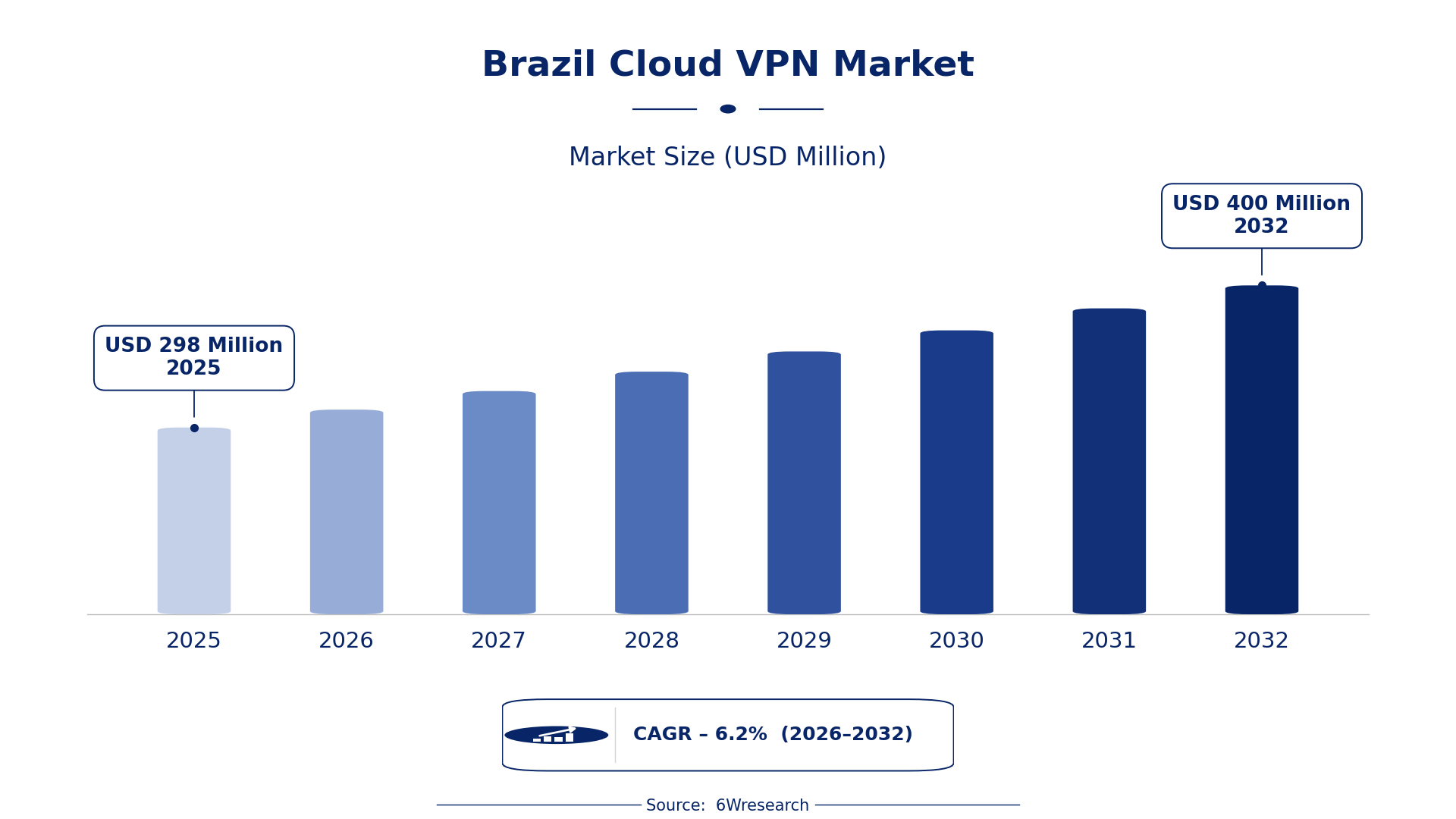
The Brazil Cloud VPN Market was estimated at USD 298 Million in 2025 and is projected to reach USD 400 Million by 2032, growing at a CAGR of 6.2% from 2026 to 2032.
Brazil Cloud VPN Market Synopsis
The demand for cloud VPN solutions in Brazil is surging as organizations look for secure ways to enable remote work and protect sensitive data. Companies are increasingly adopting cloud-based VPNs to facilitate scalable connectivity for their distributed workforce, a trend that has accelerated in the wake of the global shift to remote operations.
Despite the strong market growth, challenges persist. Issues related to data privacy, latency, and regulatory compliance create hurdles that companies must navigate. The drive towards robust cybersecurity frameworks is paramount as Brazilian businesses embrace cloud technologies.
Brazil Cloud VPN Market Year-wise Growth Rate and Key Drivers
This graph illustrates the annual growth rates of the Brazil Cloud VPN Market from 2021 to 2032, highlighting a steady upward trajectory and projected expansion over the forecast period.
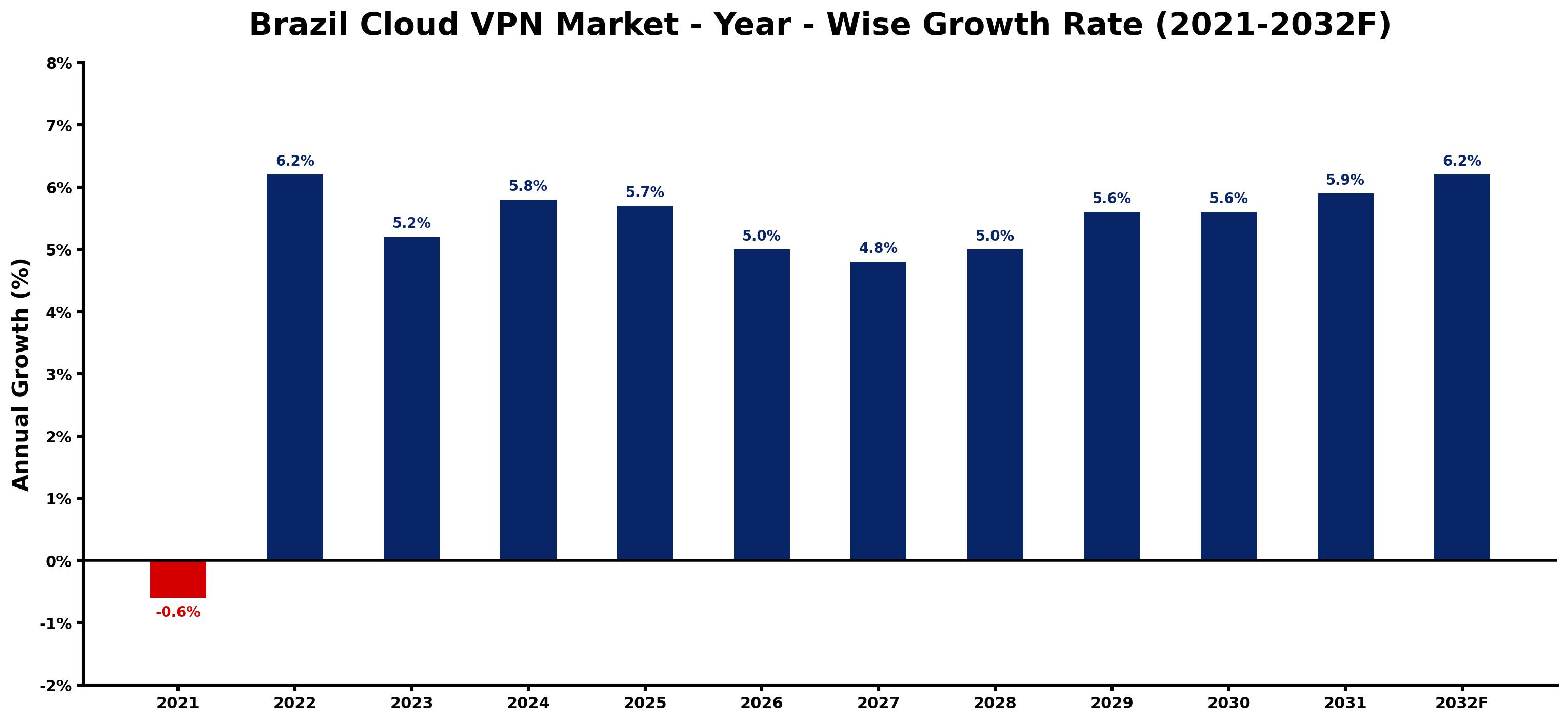
The table below presents the year‑wise growth rates along with the key drivers influencing the market
| Year | Growth Rate | Major Drivers |
| 2021 | -0.6% | ANATEL's regulations limited service provider offerings. |
| 2022 | 6.2% | Increased remote working regulations driving VPN adoption. |
| 2023 | 5.2% | Cybersecurity concerns prompting businesses to secure connections. |
| 2024 | 5.8% | Regulatory compliance mandating encrypted data transmission services. |
| 2025 | 5.7% | Growth in e-commerce requiring secure transactional environments. |
| 2026 | 5.0% | Local data privacy laws enhancing demand for VPN solutions. |
| 2027 | 4.8% | Surge in digital banking necessitating secure user access. |
| 2028 | 5.0% | Rise in telemedicine services increasing security demands. |
| 2029 | 5.6% | Increased digitalization across SMEs driving VPN implementation. |
| 2030 | 5.6% | Regulatory scrutiny on data protection boosting VPN market. |
| 2031 | 5.9% | Growing awareness of online privacy among consumers. |
| 2032 | 6.2% | Advances in cloud technology enhancing VPN service offerings. |
Note: Market size estimations and growth projections presented in this report are based on 6Wresearch's proprietary forecasting methodology, utilizing the latest available industry data, government publications, and primary research inputs.
Brazil Cloud VPN Market Key Takeaways
Below are some of the specific key takeaways from the market, including:
- Cloud VPNs are becoming essential for secure remote connectivity amid rising cybersecurity threats.
- Brazil’s regulatory environment influences the adoption and implementation of cloud VPN services.
- Businesses are increasingly seeking cost-effective, scalable solutions for their communication needs.
- Growing remote work culture is driving demand for flexible and secure cloud VPN infrastructures.
- Data privacy concerns remain a critical factor affecting market growth and innovation.
Evaluation of Restraints in Brazil Cloud VPN Market
The Brazil Cloud VPN market is grappling with several constraints that impede faster adoption. A primary concern is the issue of data privacy, especially in light of Brazil’s stringent General Data Protection Law (LGPD). Companies must ensure that their cloud VPN solutions comply with these regulations, which complicates the deployment process. Moreover, potential vulnerabilities within cloud infrastructure pose risks that can deter businesses from fully embracing these technologies. Companies need to invest in robust security measures, which may hinder some smaller players from entering the market.
Brazil Cloud VPN Market Trends
A notable trend shaping the Brazil Cloud VPN market is the growing integration of advanced encryption protocols aimed at enhancing data security. As cyber threats evolve, businesses are prioritizing security features when selecting VPN solutions. Another trend is the increasing collaboration between cloud service providers and cybersecurity firms, which seeks to address vulnerabilities and streamline secure connectivity options.
Additionally, the emphasis on hybrid work models is creating a demand for versatile cloud VPN solutions that can effectively accommodate both in-office and remote workers. These solutions are becoming more attractive due to their scalability and cost-effectiveness, making them appealing for businesses of all sizes.
Brazil Cloud VPN Market Opportunities
Significant opportunities are emerging within the Brazil Cloud VPN market, particularly for service providers who can innovate around security and compliance. Businesses are looking for tailored solutions that address their unique needs, such as advanced threat detection and response capabilities. Furthermore, as companies increasingly seek to expand their digital transformation initiatives, there is a clear opening for integrated cloud solutions that combine VPN functionality with other cloud services.
Government Initiatives in the Brazil Cloud VPN Market
Government policies are playing a crucial role in shaping the Brazil Cloud VPN market by enhancing cybersecurity measures and encouraging data protection compliance. Initiatives that support the adoption of secure cloud-based solutions are pivotal for market growth. Policymakers are focused on balancing innovation with necessary regulation to promote trust in digital infrastructure.
- A national digital infrastructure upgrade program launched in 2025 to enhance cybersecurity across public and private sectors.
- Current discussions around creating a regulatory framework for cloud services aimed at standardizing data protection measures across industries.
- Ongoing workshops organized by government bodies aimed at educating businesses on GDPR compliance and its impact on VPN usage.
- A planned initiative to create a public-private partnership expected to roll out by 2027 to enhance secure internet access nationwide.
- Recent policy amendments that facilitate easier access to cloud services for small and medium enterprises.
Future Insights of the Brazil Cloud VPN Market
Looking ahead to 2026-2032, the Brazil Cloud VPN market is likely to experience substantial growth, driven by heightened awareness of cybersecurity and the necessity for secure remote access solutions. As organizations continue to adapt to the changing work environment, the integration of advanced technologies such as AI and machine learning into VPN services will offer new avenues for innovation. The emphasis on compliance with both local and international data protection standards will remain a pivotal aspect of market dynamics.
Brazil Cloud VPN Market Latest Developments
In the past year, activity within the Brazil Cloud VPN market has intensified, marked by increased partnerships and technological advancements. Businesses are actively seeking solutions that align with regulatory standards while addressing the challenges posed by remote work.
- A leading technology vendor announced the rollout of its next-generation cloud VPN service in Q1 2025, featuring enhanced encryption protocols and user-friendly interfaces.
- An ongoing collaboration between regional operators focused on integrating cloud VPN capabilities into existing telecom infrastructure, expected to expand access by mid-2026.
- A major cloud service provider launched a new initiative in late 2025 aimed at providing tailored VPN solutions for SMEs, leveraging machine learning for advanced security features.
- Anticipation is building around a planned cybersecurity summit scheduled for early 2027, which aims to address emerging threats and showcase best practices in cloud VPN deployment.
- A recent upgrade to existing cloud VPN services was completed in late 2025, introducing enhanced compliance tools designed to simplify adherence to LGPD.
Brazil Cloud VPN Market - Key Attractiveness of the Report
- 10 Years of Market Numbers
- Historical Data Starting from 2022 to 2025
- Base Year: 2025
- Forecast Data until 2032
- Key Performance Indicators Impacting the Market
- Major Upcoming Developments and Projects
Key Highlights of the Report:
- Brazil Cloud VPN Market Outlook
- Market Size of Brazil Cloud VPN Market, 2025
- Forecast of Brazil Cloud VPN Market, 2032
- Historical Data and Forecast of Brazil Cloud VPN Revenues & Volume for the Period 2022-2032F
- Brazil Cloud VPN Market Trend Evolution
- Brazil Cloud VPN Market Drivers and Challenges
- Brazil Cloud VPN Price Trends
- Brazil Cloud VPN Porter's Five Forces
- Brazil Cloud VPN Industry Life Cycle
- Historical Data and Forecast of Brazil Cloud VPN Market Revenues & Volume By Component for the Period 2022-2032F
- Historical Data and Forecast of Brazil Cloud VPN Market Revenues & Volume By Software for the Period 2022-2032F
- Historical Data and Forecast of Brazil Cloud VPN Market Revenues & Volume By Services for the Period 2022-2032F
- Historical Data and Forecast of Brazil Cloud VPN Market Revenues & Volume By Connectivity Type for the Period 2022-2032F
- Historical Data and Forecast of Brazil Cloud VPN Market Revenues & Volume By Site-to-Site for the Period 2022-2032F
- Historical Data and Forecast of Brazil Cloud VPN Market Revenues & Volume By Remote Access for the Period 2022-2032F
- Historical Data and Forecast of Brazil Cloud VPN Market Revenues & Volume By Organization Size for the Period 2022-2032F
- Historical Data and Forecast of Brazil Cloud VPN Market Revenues & Volume By Large Enterprises for the Period 2022-2032F
- Historical Data and Forecast of Brazil Cloud VPN Market Revenues & Volume By SMEs for the Period 2022-2032F
- Historical Data and Forecast of Brazil Cloud VPN Market Revenues & Volume By End User for the Period 2022-2032F
- Historical Data and Forecast of Brazil Cloud VPN Market Revenues & Volume By Service Providers for the Period 2022-2032F
- Historical Data and Forecast of Brazil Cloud VPN Market Revenues & Volume By Verticals for the Period 2022-2032F
- Brazil Cloud VPN Import Export Trade Statistics
- Market Opportunity Assessment By Component
- Market Opportunity Assessment By Connectivity Type
- Market Opportunity Assessment By Organization Size
- Market Opportunity Assessment By End User
- Brazil Cloud VPN Top Companies Market Share
- Brazil Cloud VPN Competitive Benchmarking By Technical and Operational Parameters
- Brazil Cloud VPN Company Profiles
- Brazil Cloud VPN Key Strategic Recommendations






































