Brazil Copper Forged Market Summary
The brazil copper forged market was estimated at USD 307 Million in 2025 and is projected to reach USD 367 Million by 2032, growing at a CAGR of 3.0% from 2026 to 2032.
Brazil Copper Forged Market Year-wise Growth Rate and Key Drivers
This graph highlights how the Brazil Copper Forged Market has steadily grown over the past five years, supported by major growth factors.
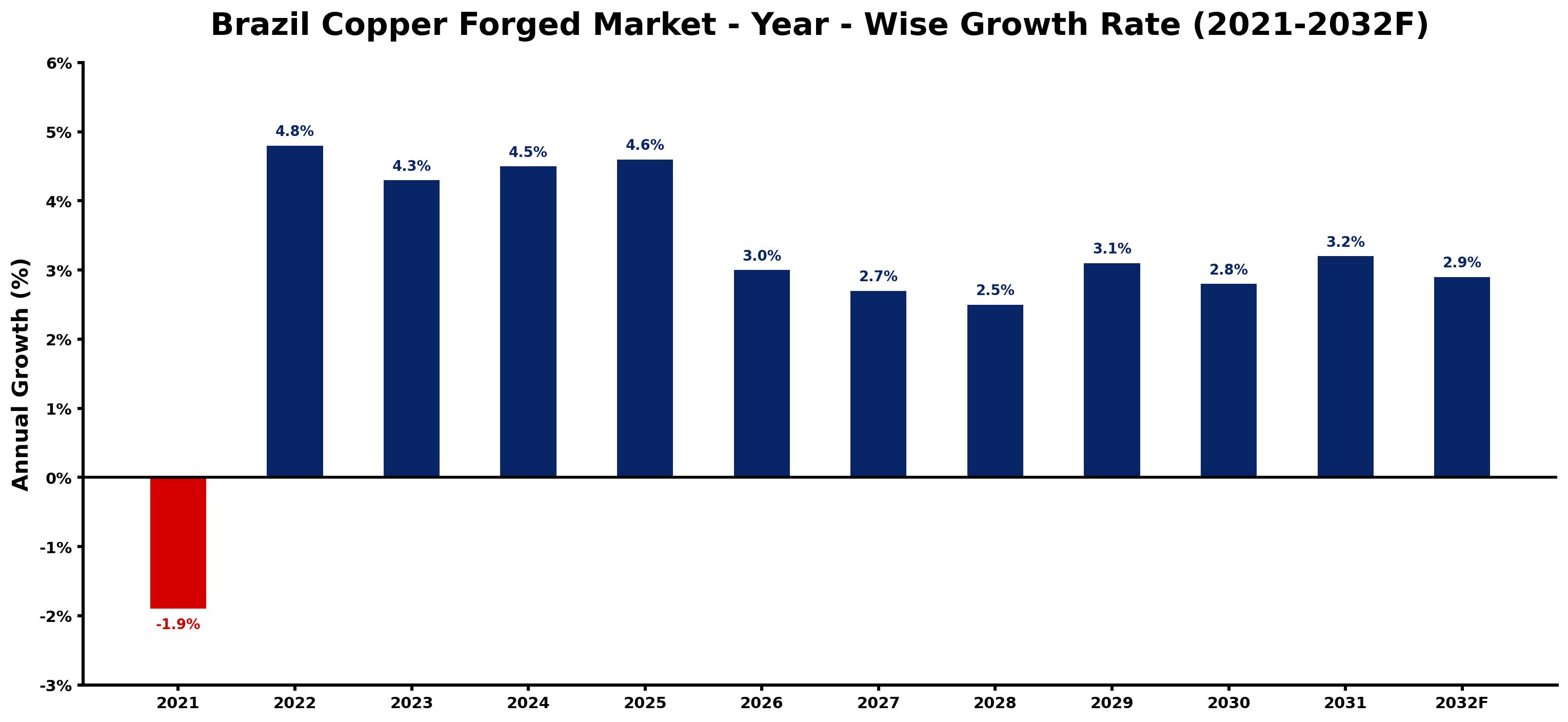
The table below presents the year wise growth rates along with the key drivers influencing the market
| Year | Growth Rate | Major Drivers |
| 2021 | -1.9% | Increased competition from alternative materials diminished demand for traditional copper forged products in various applications. |
| 2022 | 4.8% | Legacy copper grid failures prompted industries to upgrade their power distribution systems. |
| 2023 | 4.3% | Enterprise budgets prioritizing sustainable manufacturing processes increased copper forging investments. |
| 2024 | 4.5% | Emerging electric vehicle trends drove demand for high-performance copper components. |
| 2025 | 4.6% | Brazil's renewable energy plans highlighted the role of copper in energy efficiency. |
| 2026 | 3.0% | Construction sector expansions fueled by urbanization called for more forged copper products. |
| 2027 | 2.7% | Technological innovations enhanced copper forging methods, improving product quality and efficiency. |
| 2028 | 2.5% | International trade agreements opened new markets for Brazilian copper forged products. |
| 2029 | 3.1% | Rising global copper prices incentivized local industries to enhance production capacities. |
| 2030 | 2.8% | Industry collaborations focused on copper recycling solutions gained traction in manufacturing. |
| 2031 | 3.2% | Sustainable sourcing practices led to increased demand for responsibly forged copper. |
| 2032 | 2.9% | Consumer awareness about product quality shifted preferences toward expertly forged copper items. |
Note - Market size estimations and growth projections presented in this report are based on 6Wresearch's advanced forecasting approach, validated with industry datasets as of June 2026.
Brazil Copper Forged Market Synopsis
The Brazil Copper Forged Market is projected to reach 3.0% and witness significant growth during the forecast period (2026-2032). This market is pivotal within Brazil's industrial ecosystem, serving various sectors such as electronics, construction, and transportation. The interplay of these industrial applications creates considerable demand for copper forged products, positioning the market for robust expansion.
Brazil Copper Forged Market Growth Drivers
The growth of the Brazil Copper Forged Market is underpinned by several key drivers that reflect broader economic trends and technological advancements.
- The escalating demand from the electrical and electronics industry is a primary factor. Copper forgings form essential components in electrical systems, including motors and power generation equipment, driving increased production.
- A surge in the adoption of renewable energy sources, with copper playing a vital role in solar panels and wind turbines, is significantly influencing market dynamics. This trend underscores the importance of copper in sustainable energy solutions.
- The need for high-performance materials in industrial applications is further contributing to market growth. Manufacturers are increasingly turning to copper forgings for their durability and efficiency, enhancing operational reliability.
- As construction practices evolve towards sustainability, the demand for copper in construction applications is rising. This shift is linked to the growing emphasis on eco-friendly building materials and methods.
- Technological innovations in metal forging techniques are improving production efficiency, thereby reducing costs. This has positioned the copper forged market favorably within various sectors seeking competitive advantages.
Brazil Copper Forged Market Challenges and Restraints
Despite the positive growth trajectory, the Brazil Copper Forged Market faces several challenges that could impact its performance.
- Price volatility in global metal markets remains a significant concern. Fluctuating copper prices can adversely affect production costs and profit margins for businesses reliant on copper forgings.
- Environmental issues associated with copper mining and processing have brought the need for sustainable practices to the forefront. Companies are now tasked with balancing operational needs with eco-friendly technologies.
- Competition from alternative materials, such as aluminum and composites, poses a threat to the copper forged market. As industries seek cost-effective and lightweight solutions, copper must continuously demonstrate its advantages.
- Supply chain disruptions, exacerbated by geopolitical tensions and global economic fluctuations, can hinder the availability of raw materials necessary for copper forging.
- Compliance with increasingly stringent environmental regulations may require additional investments in sustainable practices, impacting overall market growth if not managed effectively.
Brazil Copper Forged Market Government Investment and Initiatives
Government policies play a crucial role in shaping the Brazil Copper Forged Market, aiming to foster economic growth while prioritizing sustainability.
- Brazilian authorities are implementing regulations promoting responsible mining practices, ensuring that environmental considerations are integrated into metal sourcing and production processes.
- Public investment in infrastructure projects, particularly those emphasizing electrical and renewable energy systems, is driving demand for copper forgings as a key material.
- Government incentives for adopting eco-friendly technologies are encouraging companies within the copper forging sector to innovate and align with global sustainability objectives.
- Collaborations between public and private sectors are being emphasized to advance research and development in copper forging techniques, enhancing competitiveness on the global stage.
- Policies aimed at improving waste management practices in the copper industry are being enforced, focusing on reducing environmental impact and promoting recycling initiatives.
Brazil Copper Forged Market Latest Developments (May 2025 - June 2026)
The period from May 2025 to June 2026 has seen notable shifts within the Brazil Copper Forged Market, reflecting ongoing adaptations to global trends and local challenges.
- Significant investments in renewable energy infrastructure have become prevalent, with a strong focus on integrating copper forgings in solar and wind energy projects across Brazil.
- Emerging technologies in metal forging that enhance production efficiency and reduce waste have gained traction, aligning with environmental goals and improving profit margins for manufacturers.
- Collaborative initiatives between the government and industry leaders have launched programs aimed at advancing sustainable mining practices, ensuring the sector's long-term viability.
- Market participants are increasingly prioritizing investments in R&D to innovate copper forging applications, expanding into new sectors such as smart technology and electric vehicles.
- Regulatory changes have prompted companies to adopt more rigorous compliance measures regarding environmental impact, influencing operational strategies and investment decisions in the market.
Brazil Copper Forged Market - Key Attractiveness of the Report
- 10 Years of Market Numbers
- Historical Data Starting from 2022 to 2025
- Base Year: 2025
- Forecast Data until 2032
- Key Performance Indicators Impacting the Market
- Major Upcoming Developments and Projects
Key Highlights of the Report:
- Brazil Copper Forged Market Outlook
- Market Size of Brazil Copper Forged Market, 2025
- Forecast of Brazil Copper Forged Market, 2032
- Historical Data and Forecast of Brazil Copper Forged Revenues & Volume for the Period 2022-2032F
- Brazil Copper Forged Market Trend Evolution
- Brazil Copper Forged Market Drivers and Challenges
- Brazil Copper Forged Price Trends
- Brazil Copper Forged Porter's Five Forces
- Brazil Copper Forged Industry Life Cycle
- Historical Data and Forecast of Brazil Copper Forged Market Revenues & Volume By Product Types for the Period 2022-2032F
- Historical Data and Forecast of Brazil Copper Forged Market Revenues & Volume By Closed Die Forging for the Period 2022-2032F
- Historical Data and Forecast of Brazil Copper Forged Market Revenues & Volume By Open Die Forging for the Period 2022-2032F
- Historical Data and Forecast of Brazil Copper Forged Market Revenues & Volume By Rolled Ring Forging for the Period 2022-2032F
- Historical Data and Forecast of Brazil Copper Forged Market Revenues & Volume By Applications for the Period 2022-2032F
- Historical Data and Forecast of Brazil Copper Forged Market Revenues & Volume By Automotive for the Period 2022-2032F
- Historical Data and Forecast of Brazil Copper Forged Market Revenues & Volume By Aerospace for the Period 2022-2032F
- Historical Data and Forecast of Brazil Copper Forged Market Revenues & Volume By Oil & Gas for the Period 2022-2032F
- Historical Data and Forecast of Brazil Copper Forged Market Revenues & Volume By Construction for the Period 2022-2032F
- Historical Data and Forecast of Brazil Copper Forged Market Revenues & Volume By Agriculture for the Period 2022-2032F
- Historical Data and Forecast of Brazil Copper Forged Market Revenues & Volume By Others for the Period 2022-2032F
- Brazil Copper Forged Import Export Trade Statistics
- Market Opportunity Assessment By Product Types
- Market Opportunity Assessment By Applications
- Brazil Copper Forged Top Companies Market Share
- Brazil Copper Forged Competitive Benchmarking By Technical and Operational Parameters
- Brazil Copper Forged Company Profiles
- Brazil Copper Forged Key Strategic Recommendations






































