Brazil Corticosteroid Market Size, Share & Growth Rate
The Brazil Corticosteroid Market was estimated at USD 271 Million in 2025 and is projected to reach USD 324 Million by 2032, growing at a CAGR of 2.6% from 2026 to 2032. This growth trajectory is underpinned by the rising prevalence of inflammatory conditions and autoimmune diseases, which necessitate effective treatment solutions. Moreover, advancements in pharmaceutical formulations and the expanding availability of corticosteroid medications in various forms are contributing to increasing consumer demand across healthcare settings.
Brazil Corticosteroid Market Year-wise Growth Rate and Key Drivers
This graph highlights how the Brazil Corticosteroid Market has steadily grown over the years, supported by major growth factors.
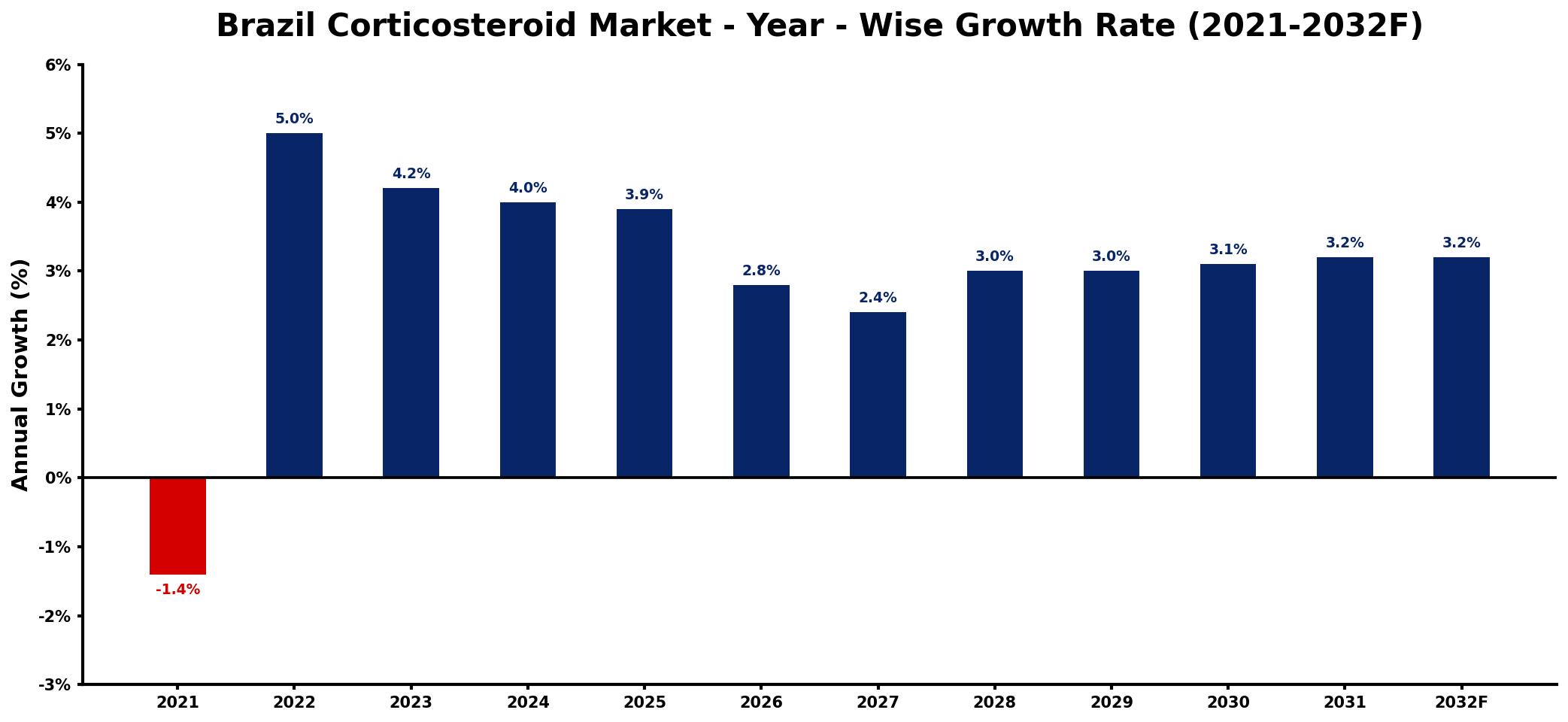
The table below presents the year‑wise growth rates along with the key drivers influencing the market
| Year | Growth Rate | Major Drivers |
| 2021 | -1.4% | decreased healthcare spending in hospitals |
| 2022 | 5.0% | rising prevalence of chronic diseases |
| 2023 | 4.2% | increased investment in healthcare infrastructure |
| 2024 | 4.0% | growing awareness of treatment options |
| 2025 | 3.9% | expansion of telehealth services availability |
| 2026 | 2.8% | improvement in patient access programs |
| 2027 | 2.4% | increased research funding for innovations |
| 2028 | 3.0% | growing demand for personalized medicine |
| 2029 | 3.0% | enhanced distribution channels efficiency |
| 2030 | 3.1% | rising number of healthcare professionals |
| 2031 | 3.2% | increased collaborations between organizations |
| 2032 | 3.2% | growing focus on preventive care |
Note: Market size estimations and growth projections presented in this report are based on 6Wresearch's proprietary forecasting methodology, utilizing the latest available industry data, government publications, and primary research inputs.
Brazil Corticosteroid Market Synopsis
The most significant force currently shaping the Brazil Corticosteroid Market is the increasing incidence of inflammatory diseases. Conditions such as asthma, allergies, and rheumatoid arthritis are pushing the demand for effective corticosteroid therapies, which offer relief through their potent anti-inflammatory and immunosuppressive properties.
Additionally, the growth of Brazil's healthcare infrastructure is fostering market development. As hospitals and clinics expand their pharmaceutical offerings, more patients gain access to corticosteroid treatments, significantly impacting patient care and quality of life.
Brazil Corticosteroid Market Key Takeaways
- The market is influenced by the rising prevalence of inflammatory and autoimmune diseases in Brazil.
- Growing advancements in pharmaceutical formulations are driving product availability and efficacy.
- Access to corticosteroids is expanding within Brazils healthcare facilities, enhancing treatment outcomes.
- Regulatory compliance remains a crucial aspect for manufacturers in navigating market challenges.
- Government policies play a pivotal role in shaping healthcare standards and patient access to corticosteroid therapies.
Evaluation of Restraints in Brazil Corticosteroid Market
Despite the positive growth trajectory, the Brazil Corticosteroid Market faces notable restraints. Regulatory hurdles pose challenges for manufacturers as they must adhere to stringent quality standards and lengthy approval processes. Additionally, the expiration of patents can lead to increased competition from generic manufacturers, potentially impacting profit margins. Safety concerns surrounding adverse effects and long-term usage of corticosteroids are also significant, as they require ongoing monitoring and research to ensure patient well-being and responsible medication use.
Brazil Corticosteroid Market Trends
Current trends within the Brazil Corticosteroid Market reflect a growing inclination toward personalized medicine, where treatment regimens are tailored to individual patient profiles for maximum efficacy. Additionally, the rise of digital health technologies is enhancing patient monitoring and medication adherence, further promoting better treatment outcomes. The integration of biologics and targeted therapies alongside traditional corticosteroids is also emerging, providing a comprehensive approach to managing inflammatory diseases.
Brazil Corticosteroid Market Opportunities
Genuine growth opportunities in the Brazil Corticosteroid Market lie within the expanding therapeutic areas that require corticosteroid interventions, such as dermatology and respiratory conditions. The potential for innovative delivery methods, such as inhalers and transdermal patches, presents additional avenues for development. Furthermore, collaborations with healthcare providers to enhance patient education on corticosteroid usage could foster greater acceptance and adherence, driving market expansion.
Government Initiatives in the Brazil Corticosteroid Market
The Brazilian government plays a crucial role in shaping the corticosteroid market through regulations and policies that ensure product safety and efficacy. Initiatives aimed at improving healthcare access, such as expanded pharmaceutical coverage in public health programs, enhance the availability of corticosteroid treatments. Additionally, ongoing investments in healthcare infrastructure indicate a commitment to improving patient outcomes across the nation.
Future Insights of the Brazil Corticosteroid Market
Looking ahead to 2026-2032, the Brazil Corticosteroid Market is poised for continued growth driven by innovation and evolving healthcare dynamics. As the population ages and the burden of chronic diseases increases, the demand for effective corticosteroid therapies will likely rise. Advances in drug formulations and delivery methods are expected to enhance patient compliance and treatment effectiveness, positioning the market for sustained progress in the coming years.
Brazil Corticosteroid Market Latest Developments (2025 - 2026)
Recent developments in the Brazil Corticosteroid Market indicate a strong push towards enhanced regulatory frameworks aimed at improving patient safety. Moreover, ongoing research and clinical trials focusing on the efficacy of new corticosteroid formulations are gaining momentum. There is also a noticeable shift towards integrating technology in treatment protocols, aiding healthcare professionals in managing patient therapies more effectively.
Brazil Corticosteroid Market - Key Attractiveness of the Report
- 10 Years of Market Numbers
- Historical Data Starting from 2022 to 2025
- Base Year: 2025
- Forecast Data until 2032
- Key Performance Indicators Impacting the Market
- Major Upcoming Developments and Projects
Key Highlights of the Report:
- Brazil Corticosteroid Market Outlook
- Market Size of Brazil Corticosteroid Market, 2025
- Forecast of Brazil Corticosteroid Market, 2032
- Historical Data and Forecast of Brazil Corticosteroid Revenues & Volume for the Period 2022-2032F
- Brazil Corticosteroid Market Trend Evolution
- Brazil Corticosteroid Market Drivers and Challenges
- Brazil Corticosteroid Price Trends
- Brazil Corticosteroid Porter's Five Forces
- Brazil Corticosteroid Industry Life Cycle
- Historical Data and Forecast of Brazil Corticosteroid Market Revenues & Volume By Product for the Period 2022-2032F
- Historical Data and Forecast of Brazil Corticosteroid Market Revenues & Volume By Glucocorticoids for the Period 2022-2032F
- Historical Data and Forecast of Brazil Corticosteroid Market Revenues & Volume By Mineralocorticoids for the Period 2022-2032F
- Historical Data and Forecast of Brazil Corticosteroid Market Revenues & Volume By Administration for the Period 2022-2032F
- Historical Data and Forecast of Brazil Corticosteroid Market Revenues & Volume By Topical Steroids for the Period 2022-2032F
- Historical Data and Forecast of Brazil Corticosteroid Market Revenues & Volume By Inhaled Steroids for the Period 2022-2032F
- Historical Data and Forecast of Brazil Corticosteroid Market Revenues & Volume By Oral Forms for the Period 2022-2032F
- Historical Data and Forecast of Brazil Corticosteroid Market Revenues & Volume By Systemic Forms for the Period 2022-2032F
- Historical Data and Forecast of Brazil Corticosteroid Market Revenues & Volume By Others for the Period 2022-2032F
- Historical Data and Forecast of Brazil Corticosteroid Market Revenues & Volume By Application for the Period 2022-2032F
- Historical Data and Forecast of Brazil Corticosteroid Market Revenues & Volume By Rheumatology Indications for the Period 2022-2032F
- Historical Data and Forecast of Brazil Corticosteroid Market Revenues & Volume By Skin Allergies for the Period 2022-2032F
- Historical Data and Forecast of Brazil Corticosteroid Market Revenues & Volume By Endocrinology for the Period 2022-2032F
- Historical Data and Forecast of Brazil Corticosteroid Market Revenues & Volume By Gastroenterology for the Period 2022-2032F
- Historical Data and Forecast of Brazil Corticosteroid Market Revenues & Volume By Acute Respiratory Diseases for the Period 2022-2032F
- Historical Data and Forecast of Brazil Corticosteroid Market Revenues & Volume By Others for the Period 2022-2032F
- Brazil Corticosteroid Import Export Trade Statistics
- Market Opportunity Assessment By Product
- Market Opportunity Assessment By Administration
- Market Opportunity Assessment By Application
- Brazil Corticosteroid Top Companies Market Share
- Brazil Corticosteroid Competitive Benchmarking By Technical and Operational Parameters
- Brazil Corticosteroid Company Profiles
- Brazil Corticosteroid Key Strategic Recommendations






































