Brazil Crystal Lighting Market Summary
The brazil crystal lighting market was estimated at USD 231 Million in 2025 and is projected to reach USD 275 Million by 2032, growing at a CAGR of 3.1% from 2026 to 2032.
Brazil Crystal Lighting Market Year-wise Growth Rate and Key Drivers
This graph highlights how the Brazil Crystal Lighting Market has steadily grown over the past five years, supported by major growth factors.
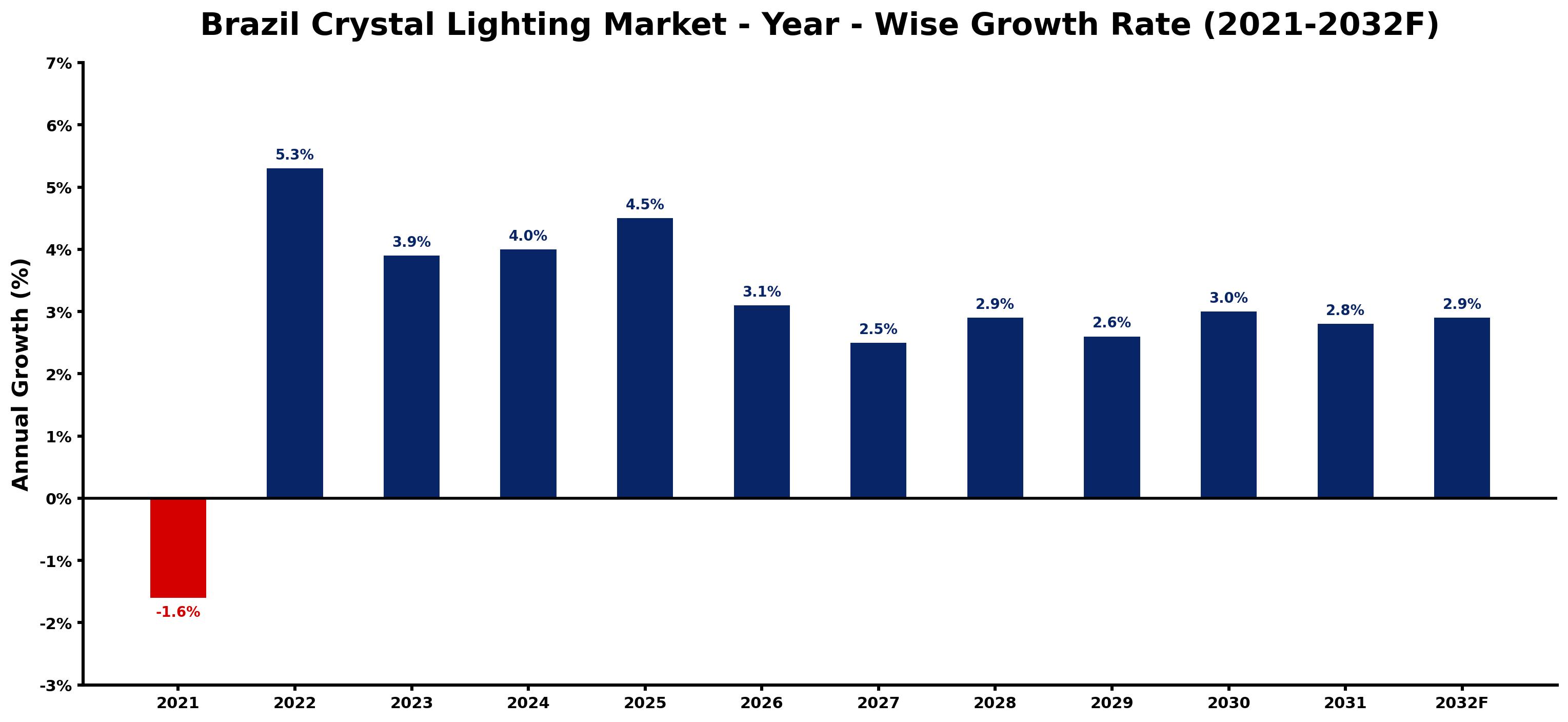
The table below presents the year wise growth rates along with the key drivers influencing the market
| Year | Growth Rate | Major Drivers |
| 2021 | -1.6% | Supply chain disruptions hampered manufacturing capabilities, leading to diminished product availability in the market. |
| 2022 | 5.3% | Sustainability trends influence consumer choices towards energy-efficient crystal lighting options. |
| 2023 | 3.9% | Emerging luxury residential developments prioritize elegant crystal fixtures for interior aesthetics. |
| 2024 | 4.0% | Technological innovations enable advanced designs, attracting decorators and architects alike. |
| 2025 | 4.5% | Increased disposable incomes lead to higher spending on premium lighting products. |
| 2026 | 3.1% | Major retailers begin to showcase crystal lighting, enhancing market visibility and appeal. |
| 2027 | 2.5% | Urbanization trends accelerate demand for modern, stylish lighting in metropolitan areas. |
| 2028 | 2.9% | Local artisans and manufacturers innovate, blending traditional techniques with contemporary designs. |
| 2029 | 2.6% | E-commerce platforms expand, making crystal lighting more accessible to broader demographics. |
| 2030 | 3.0% | Sustainability certifications become essential, shaping consumer preferences for eco-friendly products. |
| 2031 | 2.8% | Increased collaboration between luxury brands and lighting designers elevates market standards. |
| 2032 | 2.9% | Cultural events and exhibitions boost awareness of crystal lighting as a design element. |
Note - Market size estimations and growth projections presented in this report are based on 6Wresearch's advanced forecasting approach, validated with industry datasets as of June 2026.
Brazil Crystal Lighting Market Synopsis
The Brazil Crystal Lighting Market is projected to reach 3.1% and witness significant growth during the forecast period (2026-2032). This market captures the essence of luxury and sophistication, appealing primarily to high-end residential and commercial sectors. The increasing demand for exquisite and visually captivating lighting fixtures reflects Brazil's rich artistic heritage and the consumer's desire for elegance in interior design.
Brazil Crystal Lighting Market Growth Drivers
The growth of the Brazil Crystal Lighting Market can be attributed to various interlinked factors. The luxury and interior design sectors are at the forefront, propelling market demand as consumers opt for high-quality and aesthetically pleasing lighting solutions. As urbanization continues to rise, more consumers invest in home renovations and upscale interior designs.
- The demand for crystal lighting fixtures is heightened by a growing trend in luxury home decoration, where unique and artistic pieces become focal points in modern interiors.
- Commercial establishments, such as hotels and upscale restaurants, increasingly incorporate crystal lighting in their design aesthetics, enhancing customer experiences through distinguished ambiance.
- Moreover, the rise in disposable income among Brazilian consumers enables investment in premium lighting products, further driving the market.
- The fusion of traditional craftsmanship with modern design principles caters to a discerning clientele that values both heritage and contemporary style in their lighting choices.
- Lastly, evolving consumer preferences towards customized and bespoke lighting solutions are creating new avenues for growth, as designers innovate to meet these demands.
Brazil Crystal Lighting Market Challenges and Restraints
Despite its robust growth, the Brazil Crystal Lighting Market faces notable challenges. One primary concern is the need to maintain the luxury appeal of crystal lighting products while adapting to shifting consumer preferences towards minimalism and sustainable options.
- Economic fluctuations can significantly affect demand for high-end decorative lighting, posing a risk during downturns when consumers prioritize essential expenses over luxury items.
- Additionally, sustainability concerns are becoming increasingly important. Consumers are more inclined to seek environmentally friendly options, challenging companies to innovate without compromising quality.
- The delicate balance between traditional artistry and modern technological advancements in lighting manufacturing creates pressure for companies to invest in research and development.
- Supply chain disruptions, especially regarding sourcing quality crystal materials, can be detrimental to production timelines and overall market stability.
- Lastly, the competitive landscape is intensifying, requiring businesses to differentiate their offerings through unique designs and superior craftsmanship.
Brazil Crystal Lighting Market Government Investment and Initiatives
The Brazilian government plays a significant role in the crystal lighting market, implementing regulations and initiatives to ensure product quality and consumer safety. Strict standards govern the sourcing and production processes of crystal materials to uphold the high craftsmanship associated with Brazil's rich artisanal traditions.
- Government policies promote the artistic and cultural value of Brazilian crystal craftsmanship, aiming to enhance both domestic and international recognition of these high-quality products.
- Additionally, public spending initiatives focus on infrastructure and development projects that may incorporate decorative crystal lighting in commercial and public spaces, stimulating market growth.
- The government supports training programs for artisans and manufacturers, fostering skills that ensure the continuation of traditional production methods while integrating modern technologies.
- Furthermore, incentives are in place to encourage sustainability within the lighting sector, where environmentally friendly practices are increasingly rewarded through subsidies and grants.
- Finally, collaborative initiatives between the government and industry stakeholders aim to promote trade shows and exhibitions, enhancing visibility and market access for local producers.
Brazil Crystal Lighting Market Latest Developments (May 2025 - June 2026)
Between May 2025 and June 2026, the Brazil Crystal Lighting Market witnessed a series of impactful developments that reflect the evolving landscape of design and consumer behavior. Manufacturers are increasingly adopting innovative production techniques that blend artisanal craftsmanship with modern design elements, resulting in unique product offerings tailored to contemporary aesthetics.
- Sustainability initiatives gained momentum, with several manufacturers exploring eco-friendly materials and production processes to align with consumer expectations for environmentally responsible products.
- Collaborations between designers and artisans have led to limited-edition collections that emphasize exclusivity and artistic expression, attracting affluent clients seeking one-of-a-kind pieces.
- Social media and online platforms have transformed how brands engage with consumers, enabling more dynamic marketing strategies that highlight the craftsmanship and elegance of crystal lighting products.
- The rise in remote work has also influenced the market, with homeowners investing in personalized home office lighting solutions that blend functionality with aesthetics.
- Trade shows and exhibitions have become pivotal events for networking and showcasing innovations, allowing stakeholders to stay abreast of trends and consumer demands in the luxury lighting segment.
Brazil Crystal Lighting Market - Key Attractiveness of the Report
- 10 Years of Market Numbers
- Historical Data Starting from 2022 to 2025
- Base Year: 2025
- Forecast Data until 2032
- Key Performance Indicators Impacting the Market
- Major Upcoming Developments and Projects
Key Highlights of the Report:
- Brazil Crystal Lighting Market Outlook
- Market Size of Brazil Crystal Lighting Market, 2025
- Forecast of Brazil Crystal Lighting Market, 2032
- Historical Data and Forecast of Brazil Crystal Lighting Revenues & Volume for the Period 2022-2032F
- Brazil Crystal Lighting Market Trend Evolution
- Brazil Crystal Lighting Market Drivers and Challenges
- Brazil Crystal Lighting Price Trends
- Brazil Crystal Lighting Porter's Five Forces
- Brazil Crystal Lighting Industry Life Cycle
- Historical Data and Forecast of Brazil Crystal Lighting Market Revenues & Volume By Product Type for the Period 2022-2032F
- Historical Data and Forecast of Brazil Crystal Lighting Market Revenues & Volume By Ceiling Crystal Lights for the Period 2022-2032F
- Historical Data and Forecast of Brazil Crystal Lighting Market Revenues & Volume By Crystal Chandeliers for the Period 2022-2032F
- Historical Data and Forecast of Brazil Crystal Lighting Market Revenues & Volume By Others for the Period 2022-2032F
- Historical Data and Forecast of Brazil Crystal Lighting Market Revenues & Volume By Applications for the Period 2022-2032F
- Historical Data and Forecast of Brazil Crystal Lighting Market Revenues & Volume By Commercial for the Period 2022-2032F
- Historical Data and Forecast of Brazil Crystal Lighting Market Revenues & Volume By Designer for the Period 2022-2032F
- Historical Data and Forecast of Brazil Crystal Lighting Market Revenues & Volume By Superior Residential for the Period 2022-2032F
- Brazil Crystal Lighting Import Export Trade Statistics
- Market Opportunity Assessment By Product Type
- Market Opportunity Assessment By Applications
- Brazil Crystal Lighting Top Companies Market Share
- Brazil Crystal Lighting Competitive Benchmarking By Technical and Operational Parameters
- Brazil Crystal Lighting Company Profiles
- Brazil Crystal Lighting Key Strategic Recommendations






































