Brazil Data Center Logical Security Market Size & Growth Rate (2026-2032)
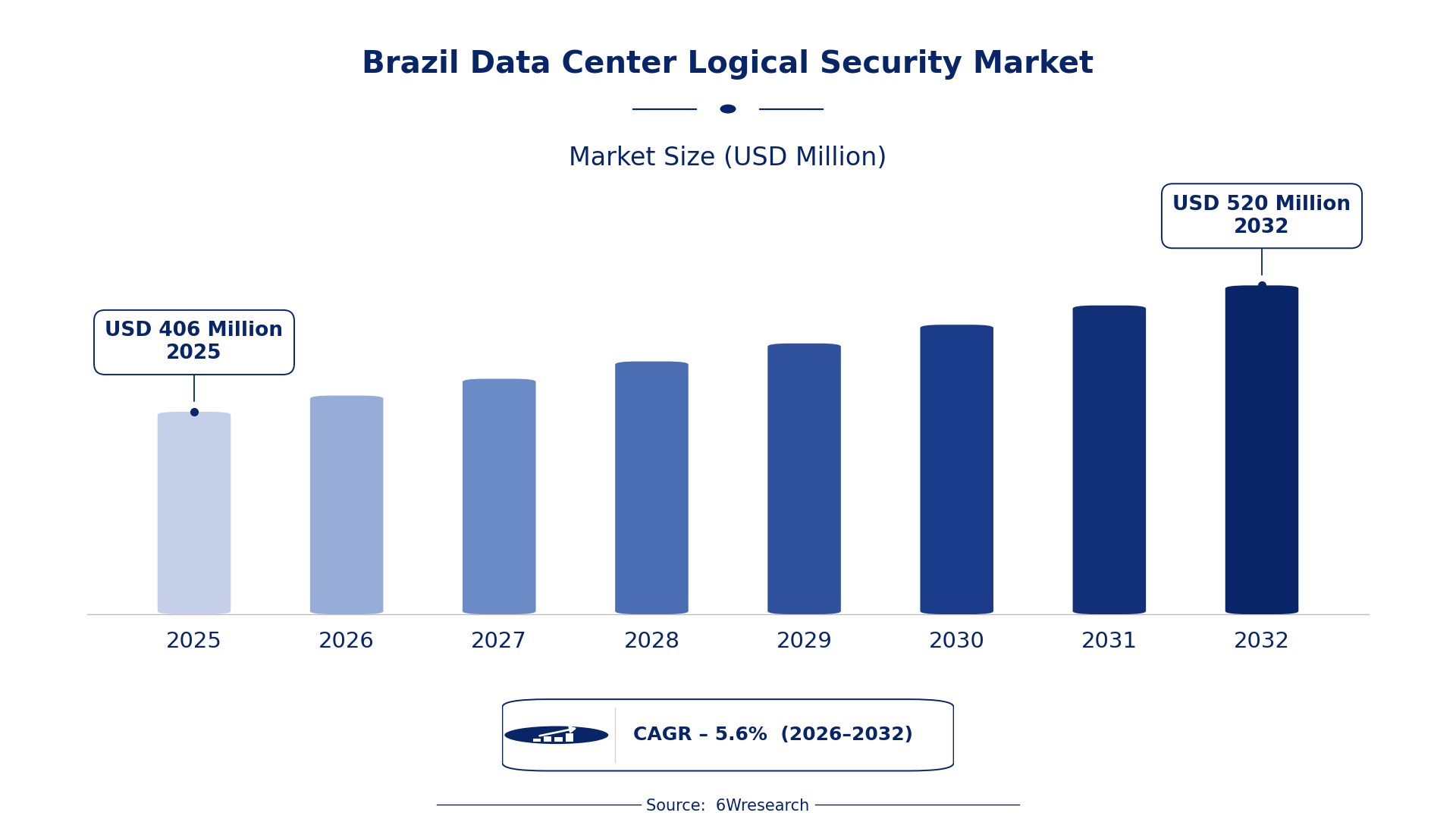
The Brazil Data Center Logical Security Market was estimated at USD 406 Million in 2025 and is projected to reach USD 520 Million by 2032, growing at a CAGR of 5.6% from 2026 to 2032.
Brazil Data Center Logical Security Market Synopsis
Logical security is increasingly critical for data centers across Brazil, especially as organizations grapple with mounting cyber threats. Companies are recognizing that robust data protection measures are no longer optional but essential for safeguarding their sensitive information and maintaining customer trust.
The demand for logical security solutions, including access controls and encryption technologies, is intensifying. As regulatory pressures heighten with laws like the LGPD, enterprises are investing heavily in advanced security frameworks to ensure compliance and protect their digital assets.
Brazil Data Center Logical Security Market Year-wise Growth Rate and Key Drivers
This graph illustrates the annual growth rates of the Brazil Data Center Logical Security Market from 2021 to 2032, highlighting a steady upward trajectory and projected expansion over the forecast period.
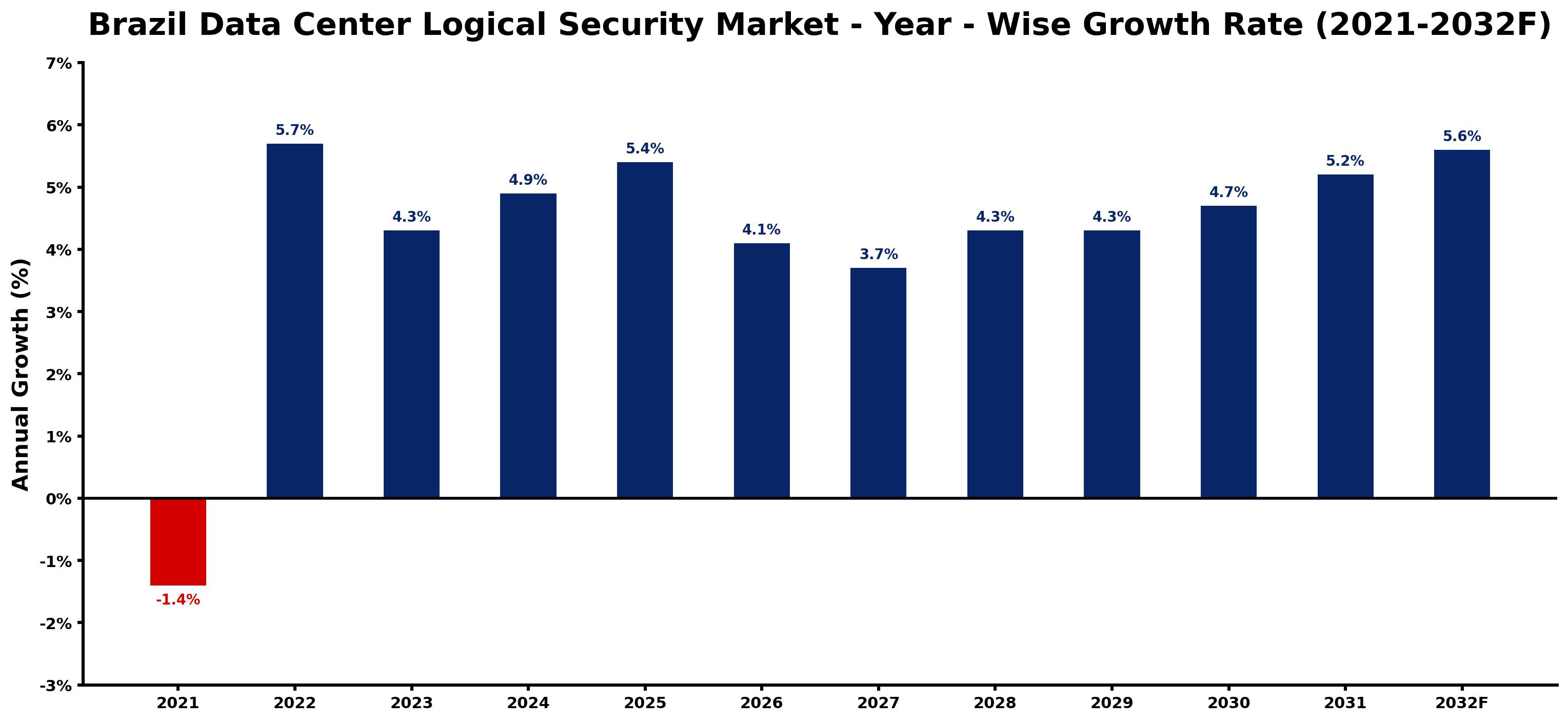
The table below presents the year‑wise growth rates along with the key drivers influencing the market
| Year | Growth Rate | Major Drivers |
| 2021 | -1.4% | Increased government regulations on data privacy laws |
| 2022 | 5.7% | Implementation of LGPD mandates for data protection compliance |
| 2023 | 4.3% | Increased cybersecurity investment by Brazilian federal government |
| 2024 | 4.9% | Growth in e-commerce driving security service demand |
| 2025 | 5.4% | Rise in data breach incidents prompting enhanced protection |
| 2026 | 4.1% | Legislative push for stronger digital privacy measures |
| 2027 | 3.7% | Surge in cloud adoption leading to security upgrades |
| 2028 | 4.3% | Increase in IoT devices necessitating advanced security solutions |
| 2029 | 4.3% | Banking sector's digital transformation requiring cybersecurity tools |
| 2030 | 4.7% | State initiatives promoting digital trust in online services |
| 2031 | 5.2% | Local demand for remote monitoring and management services |
| 2032 | 5.6% | Emergence of national cybersecurity guidelines enhancing market growth |
Note: Market size estimations and growth projections presented in this report are based on 6Wresearch's proprietary forecasting methodology, utilizing the latest available industry data, government publications, and primary research inputs.
Brazil Data Center Logical Security Market Key Takeaways
Below are some of the specific key takeaways from the market, including:
- The market is driven by an increasing volume of sensitive data requiring protection.
- Compliance with regulations like the LGPD is a significant catalyst for investment.
- Advanced threat detection and response solutions are gaining traction.
- Integration of logical security measures into existing infrastructures poses challenges.
- Growing awareness among enterprises about the importance of cybersecurity is reshaping the market.
Evaluation of Restraints in Brazil Data Center Logical Security Market
Despite its growth, the Brazil Data Center Logical Security Market faces several constraints. One of the most pressing challenges is the rapid evolution of cyber threats, which demands constant updates and adaptations in security measures. Businesses must also navigate the complexities of integrating new logical security technologies into their existing frameworks without hindering performance. This delicate balance can delay investments and implementation, ultimately limiting market growth.
Brazil Data Center Logical Security Market Trends
A few key trends are influencing the Brazil Data Center Logical Security Market. The shift towards cloud computing is prompting organizations to adopt more sophisticated security protocols to protect their data in transit. Additionally, artificial intelligence and machine learning are becoming integral components in threat detection systems, enhancing the ability to preemptively counteract attacks. on top of that, the demand for compliance-driven solutions is propelling innovation in encryption technologies.
Brazil Data Center Logical Security Market Opportunities
Opportunities abound for businesses ready to innovate in the Brazilian data center logical security sector. The increasing regulatory landscape encourages investments in compliance solutions, while the surge in remote work necessitates enhanced security measures for distributed networks. Companies that can offer integrated solutions combining physical and logical security will likely capture significant market share as organizations seek to consolidate their security efforts.
Government Initiatives in the Brazil Data Center Logical Security Market
The Brazilian government plays a crucial role in shaping the Data Center Logical Security Market through regulatory frameworks and policies. With a heightened focus on data protection, initiatives are being implemented to enforce compliance and bolster cybersecurity measures across the nation. The emphasis on public sector accountability and transparency in data handling underscores the urgency for robust logical security solutions.
- A recently completed initiative involved the rollout of the National Cybersecurity Strategy, which emphasizes the importance of securing critical digital infrastructure.
- A currently ongoing program aims to enhance public sector data protection measures, mandating compliance with the LGPD across all government agencies.
- A planned initiative expects to introduce a national cybersecurity certification framework for data centers, set to begin in early 2026.
- Upcoming legislation is anticipated to enhance penalties for data breaches, driving businesses to invest in advanced security technologies.
- A collaborative effort between private and public sectors is underway to develop a cybersecurity skills training program, designed to address workforce shortages in the field.
Future Insights of the Brazil Data Center Logical Security Market
Looking ahead to 2026-2032, the Brazil Data Center Logical Security Market is expected to continue its upward trajectory. As digital transformation accelerates, organizations will prioritize security measures that align with evolving regulatory requirements. The integration of AI-driven analytics into security protocols will enhance threat detection capabilities, while investments in employee training will ensure a more resilient cybersecurity workforce. With the landscape continually shifting, staying ahead of emerging threats will be paramount for data centers.
Brazil Data Center Logical Security Market Latest Developments
Recent activity in the Brazil Data Center Logical Security Market indicates a strong push towards adopting innovative technologies and solutions. Organizations are increasingly prioritizing data security as regulatory requirements become more stringent. This trend has catalyzed a flurry of developments aimed at enhancing logical security measures across the sector.
- A major technology vendor announced the launch of a new encryption solution designed specifically for cloud data centers, which began its rollout in early 2025.
- A regional operator is currently implementing an advanced threat detection system to strengthen its logical security framework, a project that started in mid-2025 and remains underway.
- An initiative to upgrade existing data center infrastructures with next-generation security features is expected to begin in late 2026, focusing on seamless integration.
- A partnership between local firms aims to develop a comprehensive cybersecurity training program, with workshops scheduled for Q4 2025.
- A pilot program for testing AI-driven security solutions is planned for mid-2026, aimed at assessing their effectiveness in real-world scenarios.
Brazil Data Center Logical Security Market - Key Attractiveness of the Report
- 10 Years of Market Numbers
- Historical Data Starting from 2022 to 2025
- Base Year: 2025
- Forecast Data until 2032
- Key Performance Indicators Impacting the Market
- Major Upcoming Developments and Projects
Key Highlights of the Report:
- Brazil Data Center Logical Security Market Outlook
- Market Size of Brazil Data Center Logical Security Market, 2025
- Forecast of Brazil Data Center Logical Security Market, 2032
- Historical Data and Forecast of Brazil Data Center Logical Security Revenues & Volume for the Period 2022-2032F
- Brazil Data Center Logical Security Market Trend Evolution
- Brazil Data Center Logical Security Market Drivers and Challenges
- Brazil Data Center Logical Security Price Trends
- Brazil Data Center Logical Security Porter's Five Forces
- Brazil Data Center Logical Security Industry Life Cycle
- Historical Data and Forecast of Brazil Data Center Logical Security Market Revenues & Volume By Solutions Types for the Period 2022-2032F
- Historical Data and Forecast of Brazil Data Center Logical Security Market Revenues & Volume By Threat and Application Security Solutions for the Period 2022-2032F
- Historical Data and Forecast of Brazil Data Center Logical Security Market Revenues & Volume By Access Control and Compliance for the Period 2022-2032F
- Historical Data and Forecast of Brazil Data Center Logical Security Market Revenues & Volume By Data Protection Solutions for the Period 2022-2032F
- Historical Data and Forecast of Brazil Data Center Logical Security Market Revenues & Volume By Service Types for the Period 2022-2032F
- Historical Data and Forecast of Brazil Data Center Logical Security Market Revenues & Volume By Security Consulting services for the Period 2022-2032F
- Historical Data and Forecast of Brazil Data Center Logical Security Market Revenues & Volume By Managed Security Services for the Period 2022-2032F
- Historical Data and Forecast of Brazil Data Center Logical Security Market Revenues & Volume By Data Center Types for the Period 2022-2032F
- Historical Data and Forecast of Brazil Data Center Logical Security Market Revenues & Volume By Mid-Size for the Period 2022-2032F
- Historical Data and Forecast of Brazil Data Center Logical Security Market Revenues & Volume By Enterprise for the Period 2022-2032F
- Historical Data and Forecast of Brazil Data Center Logical Security Market Revenues & Volume By Large for the Period 2022-2032F
- Historical Data and Forecast of Brazil Data Center Logical Security Market Revenues & Volume By Verticals for the Period 2022-2032F
- Historical Data and Forecast of Brazil Data Center Logical Security Market Revenues & Volume By IT and Telecom for the Period 2022-2032F
- Historical Data and Forecast of Brazil Data Center Logical Security Market Revenues & Volume By BFSI for the Period 2022-2032F
- Historical Data and Forecast of Brazil Data Center Logical Security Market Revenues & Volume By Government for the Period 2022-2032F
- Historical Data and Forecast of Brazil Data Center Logical Security Market Revenues & Volume By Healthcare for the Period 2022-2032F
- Historical Data and Forecast of Brazil Data Center Logical Security Market Revenues & Volume By Energy for the Period 2022-2032F
- Historical Data and Forecast of Brazil Data Center Logical Security Market Revenues & Volume By Others (Education and Retail) for the Period 2022-2032F
- Brazil Data Center Logical Security Import Export Trade Statistics
- Market Opportunity Assessment By Solutions Types
- Market Opportunity Assessment By Service Types
- Market Opportunity Assessment By Data Center Types
- Market Opportunity Assessment By Verticals
- Brazil Data Center Logical Security Top Companies Market Share
- Brazil Data Center Logical Security Competitive Benchmarking By Technical and Operational Parameters
- Brazil Data Center Logical Security Company Profiles
- Brazil Data Center Logical Security Key Strategic Recommendations






































