Brazil Data Migration Market Size & Growth Rate (2026-2032)
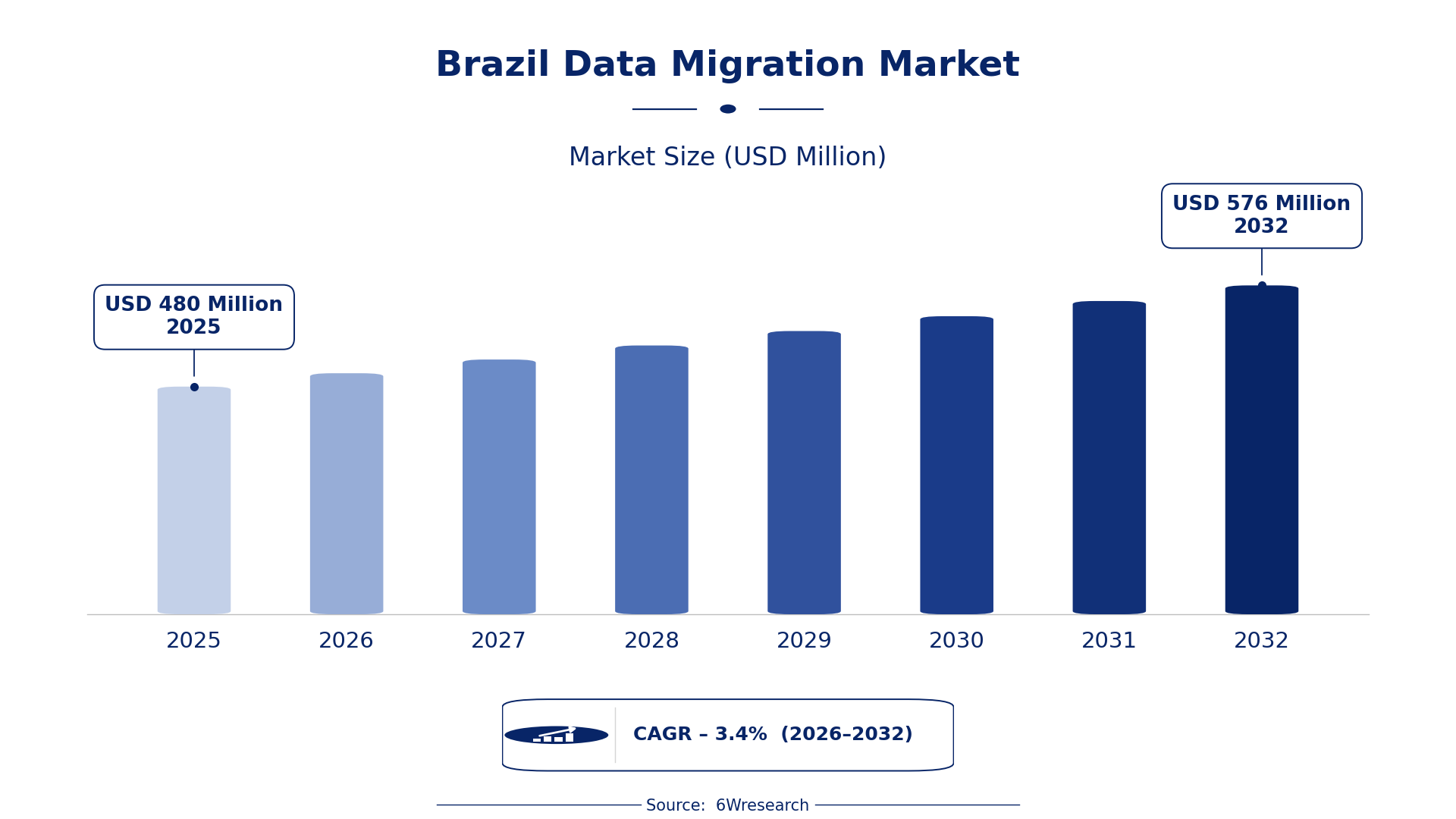
The Brazil Data Migration Market was estimated at USD 480 Million in 2025 and is projected to reach USD 576 Million by 2032, growing at a CAGR of 3.4% from 2026 to 2032.
Brazil Data Migration Market Synopsis
The Brazil Data Migration Market is experiencing robust growth, driven by the urgent need for organizations to modernize their IT infrastructure. As companies increasingly adopt cloud solutions and shift to advanced data management practices, the focus on effective data migration strategies has intensified.
Current trends indicate that businesses are prioritizing the migration of legacy systems to more agile platforms, which enhances operational efficiency. However, this transition is not without challenges, as maintaining data integrity and minimizing downtime during migration are critical for success.
Brazil Data Migration Market Year-wise Growth Rate and Key Drivers
This graph illustrates the annual growth rates of the Brazil Data Migration Market from 2021 to 2032, highlighting a steady upward trajectory and projected expansion over the forecast period.
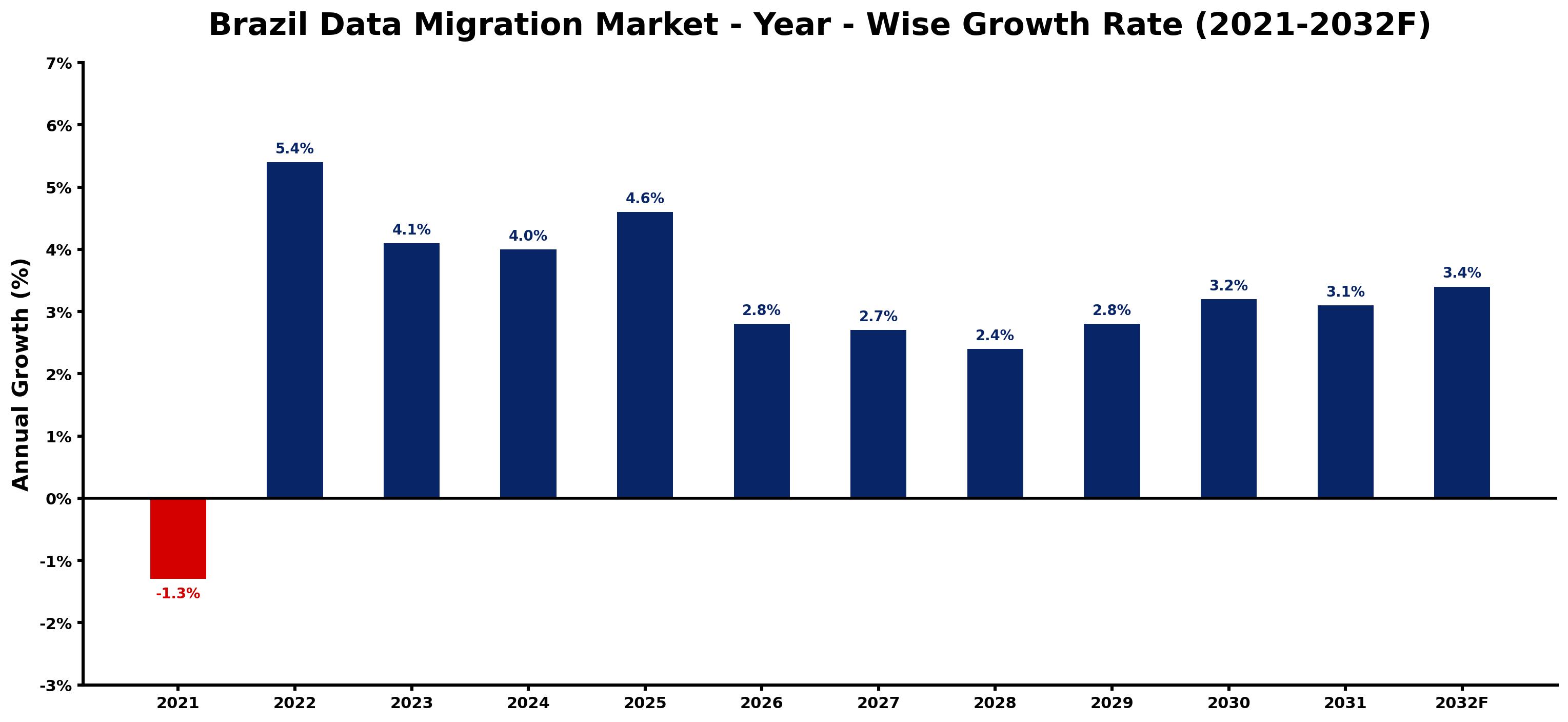
The table below presents the year‑wise growth rates along with the key drivers influencing the market
| Year | Growth Rate | Major Drivers |
| 2021 | -1.3% | Government budget cuts reduced IT infrastructure investments. |
| 2022 | 5.4% | Cloud Adoption Program by Brazil's Ministry of Economy |
| 2023 | 4.1% | Increased cybersecurity laws driving secure data migrations |
| 2024 | 4.0% | Growing e-commerce sector fueling data storage needs |
| 2025 | 4.6% | Higher investment in fintech innovations boosting data transfers |
| 2026 | 2.8% | Government incentives for businesses upgrading IT infrastructures |
| 2027 | 2.7% | Rising IoT applications necessitating efficient data handling solutions |
| 2028 | 2.4% | Local tech startups demanding advanced data management services |
| 2029 | 2.8% | Global firms expanding operations in Brazil needing data solutions |
| 2030 | 3.2% | Development of 5G networks enhancing data processing capabilities |
| 2031 | 3.1% | Emergence of AI applications increasing data migration activities |
| 2032 | 3.4% | Ongoing digital transformation initiatives among Brazilian enterprises |
Note: Market size estimations and growth projections presented in this report are based on 6Wresearch's proprietary forecasting methodology, utilizing the latest available industry data, government publications, and primary research inputs.
Brazil Data Migration Market Key Takeaways
Below are some of the specific key takeaways from the market, including:
- The market is primarily driven by technology upgrades and increasing cloud adoption.
- Ensuring data integrity and compatibility is crucial for effective migration processes.
- Government policies on data protection significantly influence migration practices.
- Businesses are investing in advanced tools to facilitate smoother data transfers.
- Ongoing digital transformation initiatives are shaping the future of the market.
Evaluation of Restraints in Brazil Data Migration Market
The main obstacles in the Brazil Data Migration Market stem from the complexities involved in transferring data across different systems. Organizations often face challenges regarding data integrity, where the risk of data loss or corruption looms large. Additionally, concerns about downtime during migration processes can deter companies from pursuing necessary upgrades. Without meticulous planning and comprehensive strategies, many organizations struggle to navigate these hurdles effectively.
Brazil Data Migration Market Trends
A notable trend in the Brazil Data Migration Market is the increasing reliance on automated migration tools, which streamline processes and reduce human error. Companies are also exploring hybrid cloud solutions, allowing for a gradual transition to cloud environments while maintaining some on-premises systems. on top of that, data security concerns are driving organizations to adopt more stringent protocols during migration, ensuring compliance with evolving regulations.
Brazil Data Migration Market Opportunities
The shift towards data-driven decision-making presents considerable opportunities for growth. Businesses that invest in modern migration solutions can harness data analytics and gain a competitive edge. Additionally, the rise of remote work has accelerated cloud adoption, creating a demand for efficient data migration services. Companies that position themselves to facilitate these transitions will find ample prospects in this evolving market.
Government Initiatives in the Brazil Data Migration Market
Government policies are playing a crucial role in shaping the Brazil Data Migration Market, focusing on data protection and compliance. Clear regulations help businesses understand their obligations regarding data migration, fostering a more secure environment. As Brazil pushes for digital transformation, public-sector initiatives are essential for creating a framework that supports businesses in their migration efforts.
- A national digital infrastructure upgrade programme recently completed aims to enhance data transfer capabilities across industries.
- Currently underway is an initiative focused on developing a regulatory framework that mandates security protocols for data migration projects.
- A planned public-private partnership expected to launch in 2026 will encourage innovation in data management practices.
- In 2025, a new compliance guideline was introduced to standardize data migration processes across various sectors.
- The government is also exploring incentives for businesses that adopt secure and efficient data migration technologies.
Future Insights of the Brazil Data Migration Market
Looking ahead to 2026-2032, the Brazil Data Migration Market is set for continued expansion. As organizations further embrace digital transformation, the demand for effective data migration strategies will increase. Companies that invest in advanced technologies and prioritize data security will thrive, while those that lag may find themselves at a disadvantage. The interplay between regulatory frameworks and technological advancements will also shape the trajectory of this market.
Brazil Data Migration Market Latest Developments
Recent activity in the Brazil Data Migration Market highlights a strong push towards modernization and efficiency. Over the past year, many organizations have ramped up their data migration efforts, reflecting a broader trend of digital transformation across sectors. The focus has been on adopting innovative solutions that enhance data security and streamline operations.
- A major technology vendor launched a new automated data migration tool in Q1 2025, aimed at reducing downtime and errors.
- An initiative that began in early 2025 and remains underway focuses on creating a centralized data management platform for government agencies.
- In mid-2025, a regional operator announced a partnership with a cloud service provider to enhance data transfer capabilities.
- Upcoming in late 2026 is a project to implement an AI-driven analytics tool that aids businesses in monitoring migration performance.
- A recent development in Q3 2025 involved a pilot programme for small and medium enterprises to access affordable data migration services.
Brazil Data Migration Market - Key Attractiveness of the Report
- 10 Years of Market Numbers
- Historical Data Starting from 2022 to 2025
- Base Year: 2025
- Forecast Data until 2032
- Key Performance Indicators Impacting the Market
- Major Upcoming Developments and Projects
Key Highlights of the Report:
- Brazil Data Migration Market Outlook
- Market Size of Brazil Data Migration Market, 2025
- Forecast of Brazil Data Migration Market, 2032
- Historical Data and Forecast of Brazil Data Migration Revenues & Volume for the Period 2022-2032F
- Brazil Data Migration Market Trend Evolution
- Brazil Data Migration Market Drivers and Challenges
- Brazil Data Migration Price Trends
- Brazil Data Migration Porter's Five Forces
- Brazil Data Migration Industry Life Cycle
- Historical Data and Forecast of Brazil Data Migration Market Revenues & Volume By Data Type for the Period 2022-2032F
- Historical Data and Forecast of Brazil Data Migration Market Revenues & Volume By Customer data for the Period 2022-2032F
- Historical Data and Forecast of Brazil Data Migration Market Revenues & Volume By Product data for the Period 2022-2032F
- Historical Data and Forecast of Brazil Data Migration Market Revenues & Volume By Financial data for the Period 2022-2032F
- Historical Data and Forecast of Brazil Data Migration Market Revenues & Volume By Compliance data for the Period 2022-2032F
- Historical Data and Forecast of Brazil Data Migration Market Revenues & Volume By Supplier data for the Period 2022-2032F
- Historical Data and Forecast of Brazil Data Migration Market Revenues & Volume By Business Function for the Period 2022-2032F
- Historical Data and Forecast of Brazil Data Migration Market Revenues & Volume By Marketing for the Period 2022-2032F
- Historical Data and Forecast of Brazil Data Migration Market Revenues & Volume By Sales for the Period 2022-2032F
- Historical Data and Forecast of Brazil Data Migration Market Revenues & Volume By Finance for the Period 2022-2032F
- Historical Data and Forecast of Brazil Data Migration Market Revenues & Volume By Legal for the Period 2022-2032F
- Historical Data and Forecast of Brazil Data Migration Market Revenues & Volume By Operations for the Period 2022-2032F
- Historical Data and Forecast of Brazil Data Migration Market Revenues & Volume By Human Resources (HR) for the Period 2022-2032F
- Historical Data and Forecast of Brazil Data Migration Market Revenues & Volume By Component for the Period 2022-2032F
- Historical Data and Forecast of Brazil Data Migration Market Revenues & Volume By Software for the Period 2022-2032F
- Historical Data and Forecast of Brazil Data Migration Market Revenues & Volume By Services for the Period 2022-2032F
- Historical Data and Forecast of Brazil Data Migration Market Revenues & Volume By Deployment Model for the Period 2022-2032F
- Historical Data and Forecast of Brazil Data Migration Market Revenues & Volume By On-premises for the Period 2022-2032F
- Historical Data and Forecast of Brazil Data Migration Market Revenues & Volume By Cloud for the Period 2022-2032F
- Historical Data and Forecast of Brazil Data Migration Market Revenues & Volume By Organization Size for the Period 2022-2032F
- Historical Data and Forecast of Brazil Data Migration Market Revenues & Volume By Small and Medium-sized Enterprises (SMEs) for the Period 2022-2032F
- Historical Data and Forecast of Brazil Data Migration Market Revenues & Volume By Large enterprises for the Period 2022-2032F
- Historical Data and Forecast of Brazil Data Migration Market Revenues & Volume By Industry Vertical for the Period 2022-2032F
- Historical Data and Forecast of Brazil Data Migration Market Revenues & Volume By Banking, Financial Services, and Insurance (BFSI) for the Period 2022-2032F
- Historical Data and Forecast of Brazil Data Migration Market Revenues & Volume By Retail and consumer goods for the Period 2022-2032F
- Historical Data and Forecast of Brazil Data Migration Market Revenues & Volume By Government and defense for the Period 2022-2032F
- Historical Data and Forecast of Brazil Data Migration Market Revenues & Volume By Healthcare and life sciences for the Period 2022-2032F
- Historical Data and Forecast of Brazil Data Migration Market Revenues & Volume By Manufacturing for the Period 2022-2032F
- Historical Data and Forecast of Brazil Data Migration Market Revenues & Volume By Telecommunications and IT for the Period 2022-2032F
- Historical Data and Forecast of Brazil Data Migration Market Revenues & Volume By Energy and utilities for the Period 2022-2032F
- Historical Data and Forecast of Brazil Data Migration Market Revenues & Volume By Media and entertainment for the Period 2022-2032F
- Brazil Data Migration Import Export Trade Statistics
- Market Opportunity Assessment By Data Type
- Market Opportunity Assessment By Business Function
- Market Opportunity Assessment By Component
- Market Opportunity Assessment By Deployment Model
- Market Opportunity Assessment By Organization Size
- Market Opportunity Assessment By Industry Vertical
- Brazil Data Migration Top Companies Market Share
- Brazil Data Migration Competitive Benchmarking By Technical and Operational Parameters
- Brazil Data Migration Company Profiles
- Brazil Data Migration Key Strategic Recommendations






































