Brazil Doughnuts Market Top 5 Importing Countries and Market Competition (HHI) Analysis
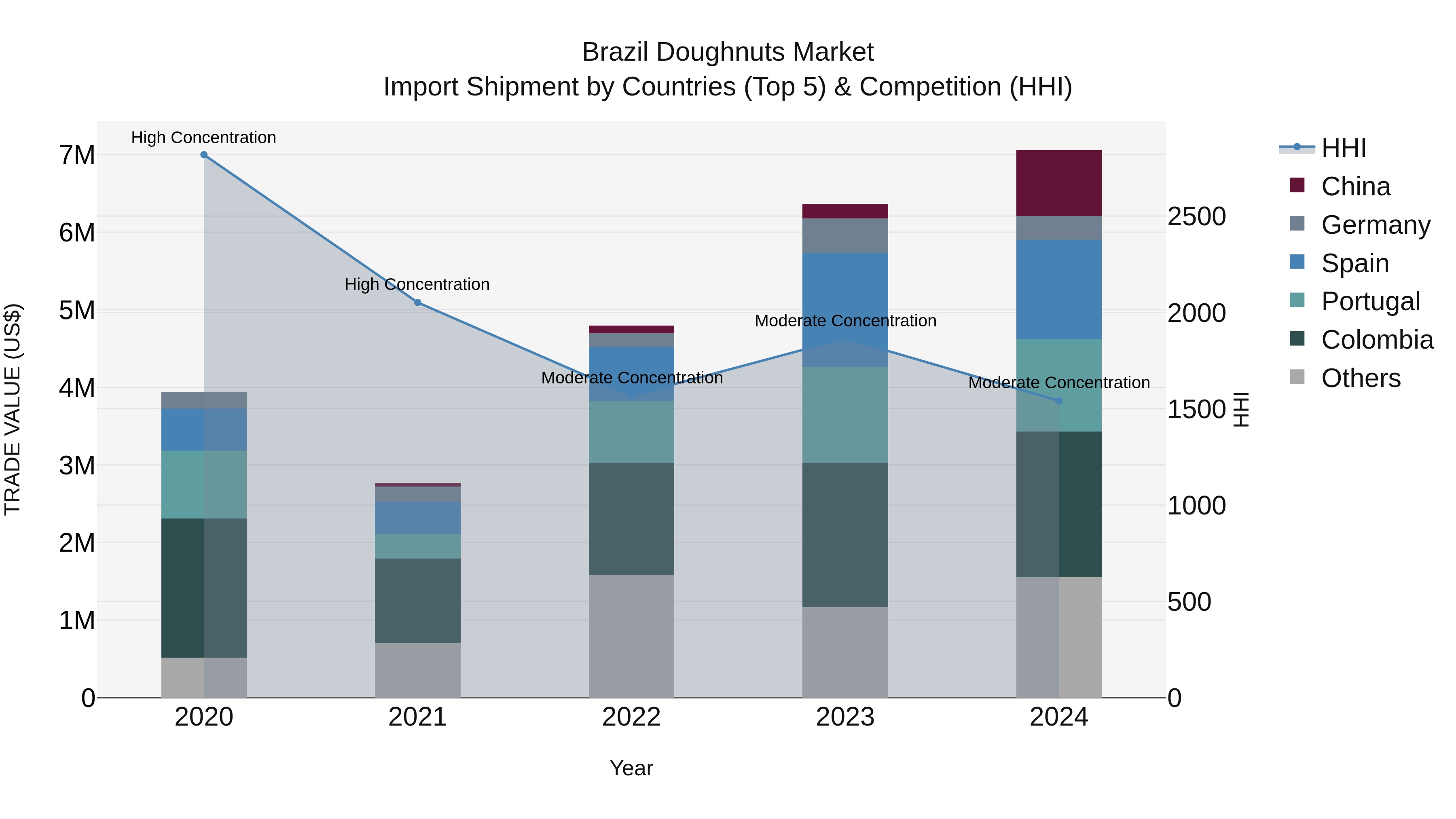
Brazil`s doughnut import market saw significant growth with a CAGR of 15.7% from 2020 to 2024, driven by imports from top countries such as Colombia, Spain, Portugal, China, and Italy. Despite the increasing competition, the market maintained a moderate concentration level in 2024. The growth rate in 2024 stood at a promising 10.9%, indicating a thriving market for doughnut imports in Brazil. As consumer demand for diverse and international flavors continues to rise, the outlook for doughnut imports remains positive in the coming years.
Brazil Doughnuts Market Overview
The Brazil doughnuts market is a growing sector within the country`s bakery industry, driven by evolving consumer preferences and an increasing demand for convenience foods. Traditional Brazilian doughnuts, known as "sonhos" or "bolinhos de chuva," continue to be popular choices, while international chains like Dunkin` Donuts and Krispy Kreme have also established a presence in the market. Local bakeries and cafes are innovating with unique flavors and toppings to cater to a diverse customer base. The rise of online food delivery services has further boosted sales, offering consumers easy access to a variety of doughnut options. With a young and dynamic population that appreciates indulgent treats, the Brazil doughnuts market is poised for continued growth and expansion in the coming years.
Brazil Doughnuts Market Trends
The Brazil doughnuts market is experiencing a surge in demand for gourmet and artisanal doughnuts, with consumers seeking unique flavors and high-quality ingredients. Traditional flavors like brigadeiro and coconut remain popular, but there is a growing trend towards innovative and exotic flavor combinations such as passion fruit, guava, and açaÃ. Health-conscious consumers are also influencing the market, leading to a rise in demand for gluten-free and vegan options. The market is becoming increasingly competitive with the entry of international brands and the expansion of local doughnut shops. Additionally, online ordering and delivery services are gaining prominence, providing convenience to consumers looking to satisfy their doughnut cravings without leaving their homes. Overall, the Brazil doughnuts market is evolving to cater to diverse consumer preferences and lifestyle choices.
Brazil Doughnuts Market Challenges
In the Brazil doughnuts market, some key challenges include intense competition from both local and international chains, fluctuating ingredient costs, and evolving consumer preferences towards healthier options. Local bakeries and cafes often struggle to differentiate themselves in a saturated market, leading to pricing pressures and the need for innovative marketing strategies to stand out. Additionally, economic factors and currency fluctuations can impact ingredient costs, affecting profit margins for doughnut businesses. With a growing focus on health and wellness, there is also a shift in consumer demand towards lighter, less sugary alternatives, prompting doughnut sellers to adapt their product offerings to cater to changing tastes while maintaining the traditional appeal of these indulgent treats.
Brazil Doughnuts Market Investment Opportunities
The Brazilian doughnuts market presents various investment opportunities for both domestic and international investors. With the rising disposable income and changing consumer preferences in Brazil, there is a growing demand for innovative and high-quality doughnut products. Investors can consider entering the market by establishing or partnering with existing doughnut chains to capitalize on the increasing popularity of indulgent snacks and desserts. Additionally, there is potential for introducing unique flavors, healthier alternatives, and convenient delivery options to cater to the diverse consumer base in Brazil. Investing in marketing strategies to promote brand awareness and product differentiation can also help companies establish a strong presence in the competitive doughnut market in Brazil. Overall, the market offers prospects for growth and profitability for investors looking to tap into the country`s evolving food and beverage industry.
Brazil Doughnuts Market Government Policy
Government policies related to the Brazil doughnuts market primarily focus on food safety regulations, labor laws, and taxation. The Brazilian government has stringent regulations in place to ensure that all food products, including doughnuts, meet health and safety standards. This includes requirements for proper labeling, storage, and handling of ingredients to maintain quality and prevent contamination. Additionally, labor laws dictate working conditions for employees in doughnut shops, such as minimum wage and maximum working hours. Taxation policies also impact the doughnut market, with value-added tax (VAT) and other levies affecting production costs and consumer prices. Overall, these government policies play a crucial role in shaping the operating environment for businesses in the Brazil doughnuts market.
Brazil Doughnuts Market Future Outlook
The future outlook for the Brazil doughnuts market appears promising, with continued growth expected in the coming years. Factors such as changing consumer preferences towards indulgent and convenient snack options, the increasing presence of international doughnut chains in the country, and the rising popularity of coffee shops and bakeries offering a variety of doughnut flavors are driving the market expansion. Additionally, the growing trend of customization and innovation in doughnut offerings, along with the influence of social media in promoting food trends, are likely to further fuel market growth. With a young and urban population that enjoys exploring new food experiences, the Brazil doughnuts market is poised for sustained growth, presenting opportunities for both domestic and international doughnut brands to thrive in the market.
Key Highlights of the Report:
- Brazil Doughnuts Market Outlook
- Market Size of Brazil Doughnuts Market,2024
- Forecast of Brazil Doughnuts Market, 2031
- Historical Data and Forecast of Brazil Doughnuts Revenues & Volume for the Period 2021-2031
- Brazil Doughnuts Market Trend Evolution
- Brazil Doughnuts Market Drivers and Challenges
- Brazil Doughnuts Price Trends
- Brazil Doughnuts Porter's Five Forces
- Brazil Doughnuts Industry Life Cycle
- Historical Data and Forecast of Brazil Doughnuts Market Revenues & Volume By Type for the Period 2021-2031
- Historical Data and Forecast of Brazil Doughnuts Market Revenues & Volume By Yeast Doughnuts for the Period 2021-2031
- Historical Data and Forecast of Brazil Doughnuts Market Revenues & Volume By Cake Doughnuts for the Period 2021-2031
- Historical Data and Forecast of Brazil Doughnuts Market Revenues & Volume By Filled Doughnuts for the Period 2021-2031
- Historical Data and Forecast of Brazil Doughnuts Market Revenues & Volume By Flavor for the Period 2021-2031
- Historical Data and Forecast of Brazil Doughnuts Market Revenues & Volume By Glazed for the Period 2021-2031
- Historical Data and Forecast of Brazil Doughnuts Market Revenues & Volume By Chocolate for the Period 2021-2031
- Historical Data and Forecast of Brazil Doughnuts Market Revenues & Volume By Fruit-Flavored for the Period 2021-2031
- Historical Data and Forecast of Brazil Doughnuts Market Revenues & Volume By Others for the Period 2021-2031
- Historical Data and Forecast of Brazil Doughnuts Market Revenues & Volume By Distribution Channel for the Period 2021-2031
- Historical Data and Forecast of Brazil Doughnuts Market Revenues & Volume By Supermarkets & Hypermarkets for the Period 2021-2031
- Historical Data and Forecast of Brazil Doughnuts Market Revenues & Volume By Bakery Shops for the Period 2021-2031
- Historical Data and Forecast of Brazil Doughnuts Market Revenues & Volume By Online Retail for the Period 2021-2031
- Brazil Doughnuts Import Export Trade Statistics
- Market Opportunity Assessment By Type
- Market Opportunity Assessment By Flavor
- Market Opportunity Assessment By Distribution Channel
- Brazil Doughnuts Top Companies Market Share
- Brazil Doughnuts Competitive Benchmarking By Technical and Operational Parameters
- Brazil Doughnuts Company Profiles
- Brazil Doughnuts Key Strategic Recommendations






































