Brazil Electric and Acoustic Guitar Strings Market Size, Share & Growth Rate
The Brazil Electric and Acoustic Guitar Strings Market was estimated at USD 133 Million in 2025 and is projected to reach USD 158 Million by 2032, growing at a CAGR of 2.5% from 2026 to 2032. This growth is primarily fueled by Brazil's rich musical heritage, which has created a strong demand for high-quality, durable strings. As more musicians and enthusiasts seek to perfect their sound, the market is benefiting from an increase in both production quality and consumer awareness regarding the importance of string selection.
Brazil Electric and Acoustic Guitar Strings Market Year-wise Growth Rate and Key Drivers
This graph highlights how the Brazil Electric and Acoustic Guitar Strings Market has steadily grown over the years, supported by major growth factors.
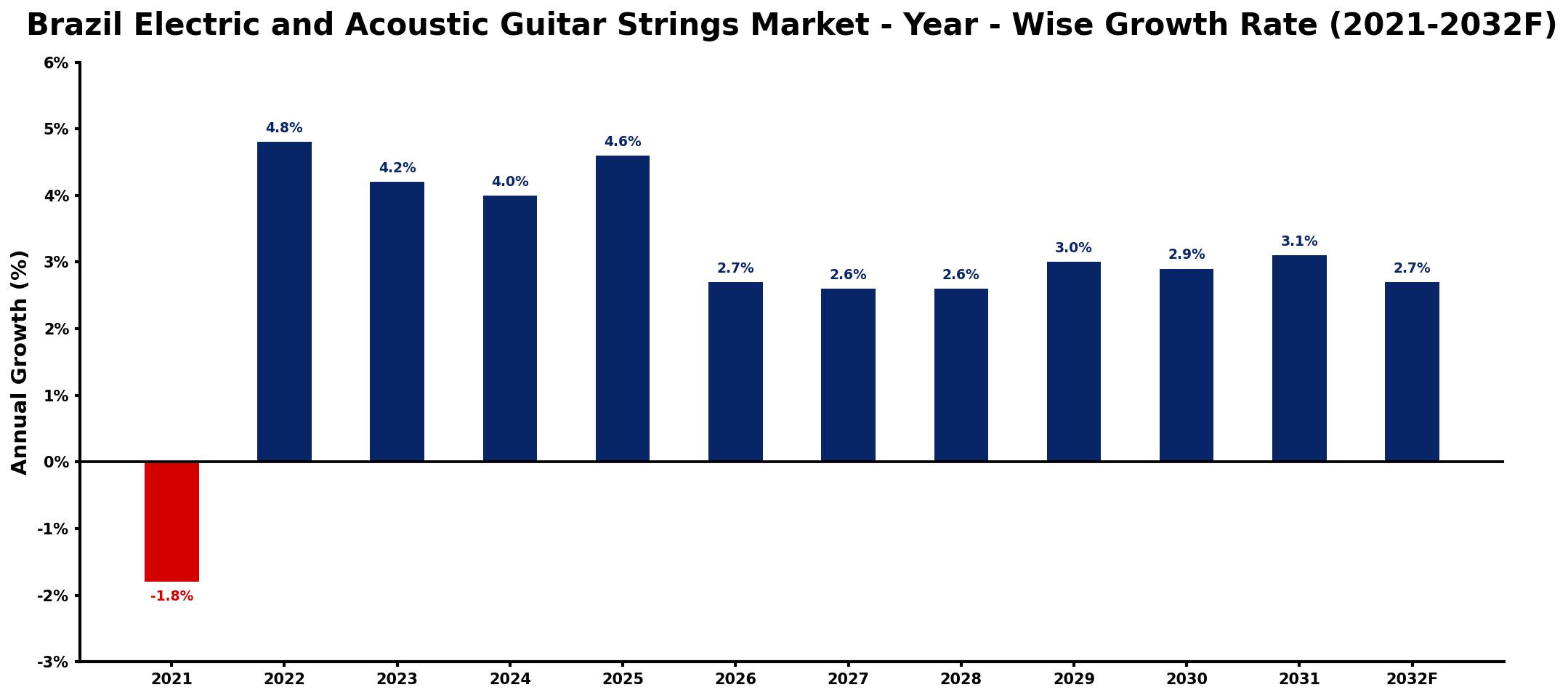
The table below presents the year‑wise growth rates along with the key drivers influencing the market
| Year | Growth Rate | Major Drivers |
| 2021 | -1.8% | Consumer spending on musical instruments |
| 2022 | 4.8% | Rise in live music events |
| 2023 | 4.2% | Growth of online music courses |
| 2024 | 4.0% | Increase in home music studios |
| 2025 | 4.6% | Expansion of music retail outlets |
| 2026 | 2.7% | Surge in music festivals attendance |
| 2027 | 2.6% | improved processing technologies adoption |
| 2028 | 2.6% | expanding healthcare application demand |
| 2029 | 3.0% | growing automotive sector requirements |
| 2030 | 2.9% | improved raw material availability |
| 2031 | 3.1% | Increased investment in music technology |
| 2032 | 2.7% | Growth in music collaboration platforms |
Note: Market size estimations and growth projections presented in this report are based on 6Wresearch's proprietary forecasting methodology, utilizing the latest available industry data, government publications, and primary research inputs.
Brazil Electric and Acoustic Guitar Strings Market Synopsis
The surge in guitar enthusiasts throughout Brazil has transformed the market into a dynamic space for innovation and variety. The diversity of music genres prevalent in Brazil, from Samba to Bossa Nova, drives the demand for different string types that cater to varied tones and styles.
Additionally, the influx of international music influences has encouraged local manufacturers to enhance the quality and durability of their products. This scenario is further complemented by local events and festivals that showcase the significance of guitar music in Brazilian culture.
Brazil Electric and Acoustic Guitar Strings Market Key Takeaways
- The market is driven by an increasing number of guitar players and a thriving music culture.
- High-quality materials are becoming essential for meeting the diverse preferences of musicians.
- Market players face challenges from competition and fluctuating raw material prices.
- Regulatory standards ensure consumer protection and product safety in string manufacturing.
- Innovation in product offerings is vital for market differentiation and growth.
Evaluation of Restraints in Brazil Electric and Acoustic Guitar Strings Market
Despite the growth potential, the Brazil Electric and Acoustic Guitar Strings Market is restrained by saturation and intense competition among numerous suppliers. As the market fills with diverse offerings, differentiating products while maintaining high-quality standards becomes increasingly challenging. Moreover, the volatility in the prices of raw materials, such as steel and nylon, exacerbates production costs and complicates pricing strategies for market players.
Brazil Electric and Acoustic Guitar Strings Market Trends
The rising trend of customization in guitar strings is becoming increasingly prominent, as musicians seek unique sound profiles that resonate with their personal style. Additionally, eco-friendly materials are gaining traction, with manufacturers exploring sustainable alternatives to traditional string materials. Social media platforms also play a crucial role in influencing purchasing decisions, as musicians showcase their gear and sound preferences online, prompting a shift in consumer behavior.
Brazil Electric and Acoustic Guitar Strings Market Opportunities
Opportunities for growth lie in enhancing product offerings that cater to specific genres and skill levels. Collaborations with local musicians and sponsorship of events could facilitate brand visibility and acceptance. Furthermore, the development of e-commerce platforms tailored for musicians presents a vital channel for reaching broader customer bases, particularly younger demographics who are driving a significant portion of the market growth.
Government Initiatives in the Brazil Electric and Acoustic Guitar Strings Market
Brazilian government initiatives focus on upholding quality standards within the electric and acoustic guitar strings market. Policies emphasize consumer protection and ensure that materials used in strings are safe and reliable. Additionally, public investment in the arts, including music education and cultural events, supports the growth of the music industry, indirectly benefiting the guitar strings market.
Future Insights of the Brazil Electric and Acoustic Guitar Strings Market
Looking ahead to 2026-2032, the Brazil Electric and Acoustic Guitar Strings Market is set to evolve further, driven by the ongoing rise of digital platforms for music promotion and education. The increasing interest in online learning resources for guitar players is anticipated to boost string sales, as new musicians equip themselves with quality instruments and accessories. Additionally, sustainable practices in manufacturing are likely to gain traction, offering a competitive edge to companies adopting green policies.
Brazil Electric and Acoustic Guitar Strings Market Latest Developments (2025 - 2026)
In recent months, the market has witnessed a notable shift towards sustainable production practices, with several manufacturers exploring innovative materials. Additionally, consumer engagement through social media campaigns has increased, further driving brand loyalty and awareness. Collaborations with local music festivals have also expanded market reach, connecting brands directly with a passionate audience of guitar enthusiasts.
Brazil Electric and Acoustic Guitar Strings Market - Key Attractiveness of the Report
- 10 Years of Market Numbers
- Historical Data Starting from 2022 to 2025
- Base Year: 2025
- Forecast Data until 2032
- Key Performance Indicators Impacting the Market
- Major Upcoming Developments and Projects
Key Highlights of the Report:
- Brazil Electric and Acoustic Guitar Strings Market Outlook
- Market Size of Brazil Electric and Acoustic Guitar Strings Market, 2025
- Forecast of Brazil Electric and Acoustic Guitar Strings Market, 2032
- Historical Data and Forecast of Brazil Electric and Acoustic Guitar Strings Revenues & Volume for the Period 2022-2032F
- Brazil Electric and Acoustic Guitar Strings Market Trend Evolution
- Brazil Electric and Acoustic Guitar Strings Market Drivers and Challenges
- Brazil Electric and Acoustic Guitar Strings Price Trends
- Brazil Electric and Acoustic Guitar Strings Porter's Five Forces
- Brazil Electric and Acoustic Guitar Strings Industry Life Cycle
- Historical Data and Forecast of Brazil Electric and Acoustic Guitar Strings Market Revenues & Volume By Product Type for the Period 2022-2032F
- Historical Data and Forecast of Brazil Electric and Acoustic Guitar Strings Market Revenues & Volume By Light, Custom Light for the Period 2022-2032F
- Historical Data and Forecast of Brazil Electric and Acoustic Guitar Strings Market Revenues & Volume By Extra Light for the Period 2022-2032F
- Historical Data and Forecast of Brazil Electric and Acoustic Guitar Strings Market Revenues & Volume By Application for the Period 2022-2032F
- Historical Data and Forecast of Brazil Electric and Acoustic Guitar Strings Market Revenues & Volume By Acoustic Guitar for the Period 2022-2032F
- Historical Data and Forecast of Brazil Electric and Acoustic Guitar Strings Market Revenues & Volume By Electric Guitar for the Period 2022-2032F
- Brazil Electric and Acoustic Guitar Strings Import Export Trade Statistics
- Market Opportunity Assessment By Product Type
- Market Opportunity Assessment By Application
- Brazil Electric and Acoustic Guitar Strings Top Companies Market Share
- Brazil Electric and Acoustic Guitar Strings Competitive Benchmarking By Technical and Operational Parameters
- Brazil Electric and Acoustic Guitar Strings Company Profiles
- Brazil Electric and Acoustic Guitar Strings Key Strategic Recommendations






































