Brazil Gift Retailing Market Summary
The brazil gift retailing market was estimated at USD 361 Million in 2025 and is projected to reach USD 500 Million by 2032, growing at a CAGR of 5.0% from 2026 to 2032.
Brazil Gift Retailing Market Year-wise Growth Rate and Key Drivers
This graph highlights how the Brazil Gift Retailing Market has steadily grown over the past five years, supported by major growth factors.
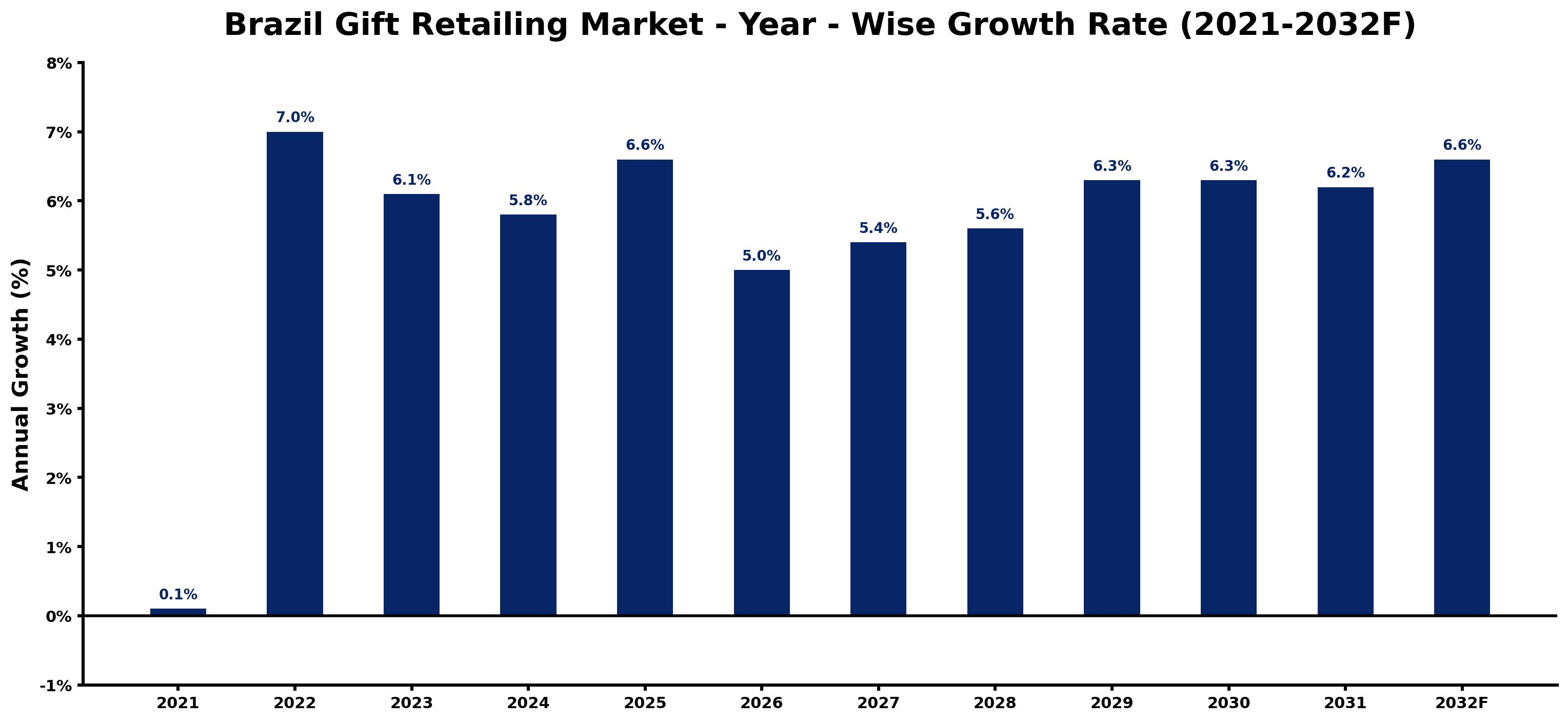
The table below presents the year wise growth rates along with the key drivers influencing the market
| Year | Growth Rate | Major Drivers |
| 2021 | 0.1% | Post-lockdown retail projects spark interest in personalized gifting experiences across Brazil. |
| 2022 | 7.0% | Digital marketing campaigns effectively target younger consumers seeking unique gifts online. |
| 2023 | 6.1% | Social media influences consumer preferences, driving demand for creative gift solutions. |
| 2024 | 5.8% | Local artisans gain traction due to platforms promoting handmade Brazilian products extensively. |
| 2025 | 6.6% | Retailers embrace sustainability, offering eco-friendly gifts that attract environmentally conscious shoppers. |
| 2026 | 5.0% | Seasonal events create opportunities for themed gift collections, boosting sales during holidays. |
| 2027 | 5.4% | Consumer habits shift towards experiential gifts as preferences for events and activities rise. |
| 2028 | 5.6% | Corporate gifting expands as businesses recognize employee appreciation's impact on productivity. |
| 2029 | 6.3% | Emerging technologies enhance customer engagement through virtual reality gift showcases and experiences. |
| 2030 | 6.3% | Urbanization trends increase urban consumers' willingness to explore diverse gifting options. |
| 2031 | 6.2% | Collaborations between brands and influencers spark interest in exclusive, limited-edition gift items. |
| 2032 | 6.6% | Increased disposable income among millennials and gen Z drives luxury gift market growth. |
Note - Market size estimations and growth projections presented in this report are based on 6Wresearch's advanced forecasting approach, validated with industry datasets as of June 2026.
Brazil Gift Retailing Market Synopsis
The Brazil Gift Retailing Market is projected to reach 5.0% and witness significant growth during the forecast period (2026-2032). This dynamic market is shaped by a rich cultural landscape and various gifting traditions, which influence consumer behavior. In Brazil, the act of giving gifts is not merely transactional; it is intertwined with social interactions and cultural festivities that occur throughout the year, thereby creating multiple opportunities for retail growth.
Brazil Gift Retailing Market Growth Drivers
The vibrant Brazil Gift Retailing Market is propelled by several key drivers:
- Cultural Celebrations: Brazil's multitude of festivals and celebrations provides a continuous impetus for gift-giving, with occasions such as Christmas, birthdays, and Valentine's Day being particularly significant.
- Personalized Gifting Trend: There is an increasing preference among consumers for unique, customized gifts, which helps retailers to differentiate their offerings and enhance consumer loyalty.
- E-commerce Expansion: The rise of online shopping platforms has made gift-giving more accessible, allowing consumers to purchase a diverse range of products from the comfort of their homes.
- Social Media Influence: The pervasive nature of social media has also contributed to the growth of the gift retail market, as consumers are often inspired to buy gifts based on trends and recommendations they see online.
- Retail Adaptability: Retailers' ability to quickly adapt to changing consumer preferences and offer appealing product varieties plays a crucial role in market dynamics.
Brazil Gift Retailing Market Challenges and Restraints
While the Brazil Gift Retailing Market presents numerous opportunities, it is not without its challenges:
- Economic Sensitivity: Fluctuations in consumer spending, particularly during economic downturns, can adversely affect gift-buying behavior.
- Seasonal Dependency: The market is highly sensitive to seasonal trends, necessitating retailers to maintain a diverse range of attractive products throughout the year.
- E-commerce Competition: The surge in e-commerce has intensified competition for traditional brick-and-mortar retailers, pressuring them to develop a strong online presence.
- Logistical Challenges: Supply chain disruptions can hinder inventory management, impacting product availability and ultimately affecting sales.
- Regulatory Compliance: Adhering to government policies related to consumer rights and fair trade practices can be complex and burdensome for retailers.
Brazil Gift Retailing Market Government Investment and Initiatives
The Brazilian government plays a significant role in shaping the Gift Retailing Market through various policies and initiatives. These include:
- Consumer Protection Laws: The government enforces regulations to safeguard consumer rights, ensuring transparency in pricing and product quality.
- Support for Local Artisans: Initiatives aimed at promoting local craftsmanship not only bolster the economy but also enhance cultural heritage, encouraging the purchase of locally-made gift items.
- Trade Regulations: Regulations governing fair trade practices help maintain a competitive environment in the gift retail sector, benefiting both consumers and retailers.
- Quality Control Measures: Implementing stringent quality standards ensures the safety and reliability of products offered in the market, thereby increasing consumer confidence.
- Infrastructure Development: Investments in logistics and infrastructure improvements facilitate better distribution and availability of gift products across the country.
Brazil Gift Retailing Market Latest Developments (May 2025 - June 2026)
In recent months, the Brazil Gift Retailing Market has undergone several noteworthy developments:
- Market Adaptation: Retailers have increasingly implemented innovative strategies to improve customer shopping experiences, particularly through enhanced online platforms and customer engagement initiatives.
- Sustainability Trends: There has been a rising focus on eco-friendly gifting options as consumers become more conscious of their purchasing decisions, prompting retailers to explore sustainable practices in product sourcing.
- Collaborative Initiatives: Partnerships between local artisans and retailers have gained traction, creating unique offerings that celebrate cultural heritage while meeting modern consumer demands.
- Technological Innovations: Retailers are increasingly adopting technology, such as augmented reality and AI, to enhance product visualization and customer experience in both physical and online stores.
- Shifts in Consumer Preferences: The ongoing evolution of consumer preferences has necessitated a focusing on diverse product ranges, including artisanal and experiential gifts, aligning with lifestyle trends.
Brazil Gift Retailing Market - Key Attractiveness of the Report
- 10 Years of Market Numbers
- Historical Data Starting from 2022 to 2025
- Base Year: 2025
- Forecast Data until 2032
- Key Performance Indicators Impacting the Market
- Major Upcoming Developments and Projects
Key Highlights of the Report:
- Brazil Gift Retailing Market Outlook
- Market Size of Brazil Gift Retailing Market, 2025
- Forecast of Brazil Gift Retailing Market, 2032
- Historical Data and Forecast of Brazil Gift Retailing Revenues & Volume for the Period 2022-2032F
- Brazil Gift Retailing Market Trend Evolution
- Brazil Gift Retailing Market Drivers and Challenges
- Brazil Gift Retailing Price Trends
- Brazil Gift Retailing Porter's Five Forces
- Brazil Gift Retailing Industry Life Cycle
- Historical Data and Forecast of Brazil Gift Retailing Market Revenues & Volume By Product Type for the Period 2022-2032F
- Historical Data and Forecast of Brazil Gift Retailing Market Revenues & Volume By Souvenirs and Novelty Items for the Period 2022-2032F
- Historical Data and Forecast of Brazil Gift Retailing Market Revenues & Volume By Seasonal Decorations for the Period 2022-2032F
- Historical Data and Forecast of Brazil Gift Retailing Market Revenues & Volume By Greeting Cards for the Period 2022-2032F
- Historical Data and Forecast of Brazil Gift Retailing Market Revenues & Volume By Giftware? for the Period 2022-2032F
- Historical Data and Forecast of Brazil Gift Retailing Market Revenues & Volume By Other? for the Period 2022-2032F
- Historical Data and Forecast of Brazil Gift Retailing Market Revenues & Volume By Distribution Channel for the Period 2022-2032F
- Historical Data and Forecast of Brazil Gift Retailing Market Revenues & Volume By Online for the Period 2022-2032F
- Historical Data and Forecast of Brazil Gift Retailing Market Revenues & Volume By Offline for the Period 2022-2032F
- Brazil Gift Retailing Import Export Trade Statistics
- Market Opportunity Assessment By Product Type
- Market Opportunity Assessment By Distribution Channel
- Brazil Gift Retailing Top Companies Market Share
- Brazil Gift Retailing Competitive Benchmarking By Technical and Operational Parameters
- Brazil Gift Retailing Company Profiles
- Brazil Gift Retailing Key Strategic Recommendations






































