Brazil Gluten Free Pasta Market Size Growth Rate
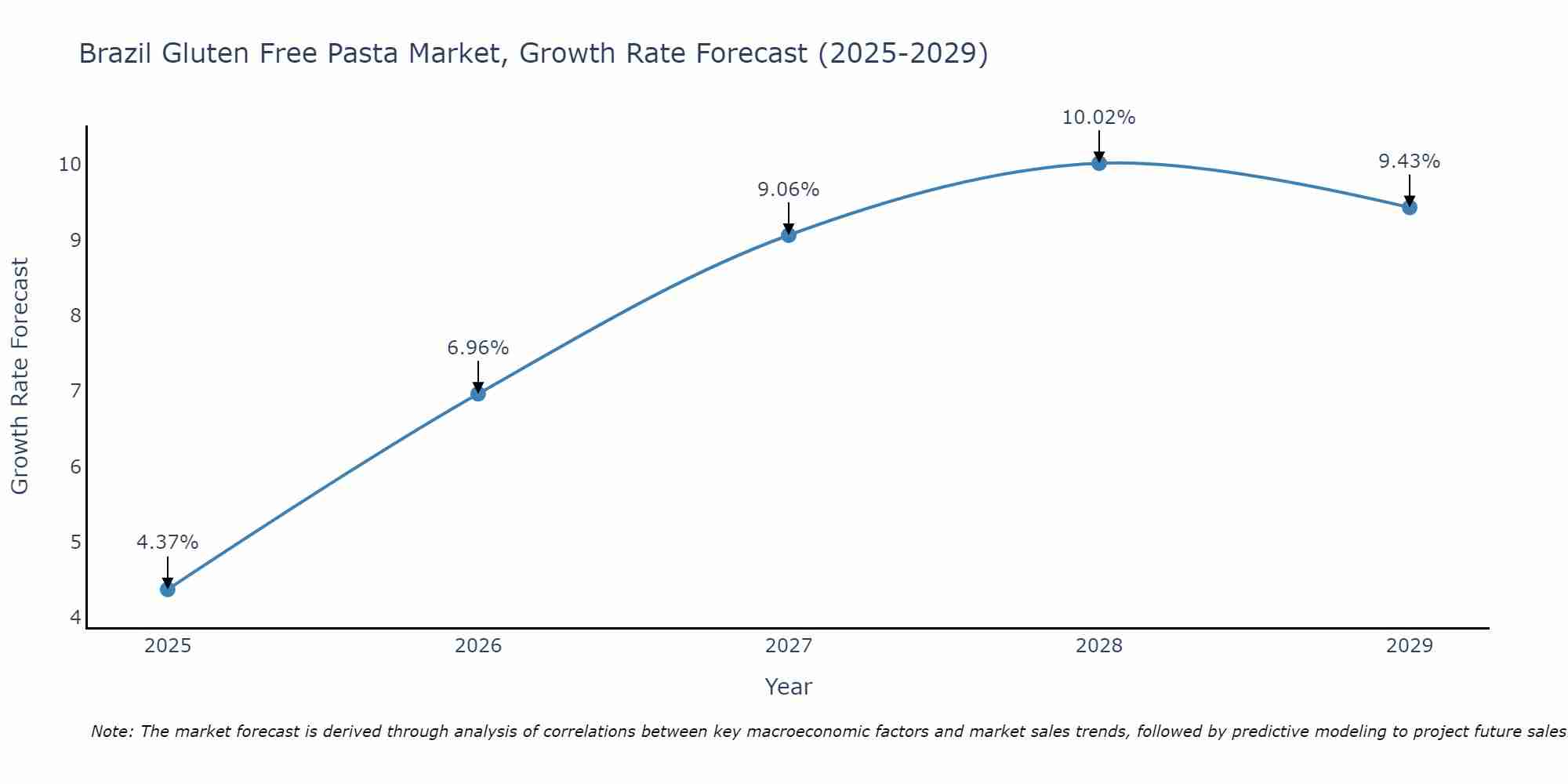
The Brazil Gluten Free Pasta Market is projected to witness mixed growth rate patterns during 2025 to 2029. Growth accelerates to 10.02% in 2028, following an initial rate of 4.37%, before easing to 9.43% at the end of the period.
Brazil Gluten Free Pasta Market Overview
The Gluten-Free Pasta market in Brazil reflects the growing awareness of gluten intolerance and the adoption of gluten-free diets. This market has witnessed a surge in demand as consumers seek alternatives that cater to dietary restrictions without compromising on taste and texture. The market is influenced by health-conscious consumers, gluten-sensitive individuals, and the broader trend of embracing alternative food choices.
Drivers of the market
The Brazil Gluten-Free Pasta Market is driven by the increasing prevalence of gluten sensitivity and the growing demand for healthier food alternatives. Gluten-free pasta caters to consumers with dietary restrictions, and its popularity extends beyond individuals with gluten intolerance, encompassing health-conscious consumers seeking alternative pasta options.
Challenges of the market
The Gluten-Free Pasta Market in Brazil faces challenges related to the perception of gluten-free products as niche or expensive. Overcoming stereotypes and emphasizing the quality and taste of gluten-free pasta compared to traditional counterparts is crucial. Additionally, ensuring a diverse range of gluten-free options to cater to different dietary needs poses a challenge.
Government Policy of the market
Government policies in the gluten-free pasta market center around ensuring the safety and quality of gluten-free products. Regulatory measures address issues such as cross-contamination, ingredient labeling, and gluten-free certification standards. The Brazil government actively supports awareness campaigns to educate consumers about gluten-free options, contributing to the growth and acceptance of gluten-free pasta in the market.
Key Highlights of the Report:
- Brazil Gluten Free Pasta Market Outlook
- Market Size of Brazil Gluten Free Pasta Market, 2024
- Forecast of Brazil Gluten Free Pasta Market, 2031
- Historical Data and Forecast of Brazil Gluten Free Pasta Revenues & Volume for the Period 2018 - 2031
- Brazil Gluten Free Pasta Market Trend Evolution
- Brazil Gluten Free Pasta Market Drivers and Challenges
- Brazil Gluten Free Pasta Price Trends
- Brazil Gluten Free Pasta Porter's Five Forces
- Brazil Gluten Free Pasta Industry Life Cycle
- Historical Data and Forecast of Brazil Gluten Free Pasta Market Revenues & Volume By Product Type for the Period 2018 - 2031
- Historical Data and Forecast of Brazil Gluten Free Pasta Market Revenues & Volume By Brown Rice Pasta for the Period 2018 - 2031
- Historical Data and Forecast of Brazil Gluten Free Pasta Market Revenues & Volume By Quinoa Pasta for the Period 2018 - 2031
- Historical Data and Forecast of Brazil Gluten Free Pasta Market Revenues & Volume By Chickpea Pasta for the Period 2018 - 2031
- Historical Data and Forecast of Brazil Gluten Free Pasta Market Revenues & Volume By Multigrain Pasta for the Period 2018 - 2031
- Historical Data and Forecast of Brazil Gluten Free Pasta Market Revenues & Volume By Distribution Channel for the Period 2018 - 2031
- Historical Data and Forecast of Brazil Gluten Free Pasta Market Revenues & Volume By Retail Shops for the Period 2018 - 2031
- Historical Data and Forecast of Brazil Gluten Free Pasta Market Revenues & Volume By Supermarket/hypermarket for the Period 2018 - 2031
- Historical Data and Forecast of Brazil Gluten Free Pasta Market Revenues & Volume By E-Commerce for the Period 2018 - 2031
- Brazil Gluten Free Pasta Import Export Trade Statistics
- Market Opportunity Assessment By Product Type
- Market Opportunity Assessment By Distribution Channel
- Brazil Gluten Free Pasta Top Companies Market Share
- Brazil Gluten Free Pasta Competitive Benchmarking By Technical and Operational Parameters
- Brazil Gluten Free Pasta Company Profiles
- Brazil Gluten Free Pasta Key Strategic Recommendations






































