Brazil Golf Clubs Market Size, Share & Growth Rate
The Brazil Golf Clubs Market was estimated at USD 451 Million in 2025 and is projected to reach USD 538 Million by 2032, growing at a CAGR of 2.6% from 2026 to 2032. This upward trajectory is largely fueled by the increasing popularity of golf as a leisure activity, reflecting a cultural shift towards recreational sports. Furthermore, improved infrastructure and rising disposable incomes are propelling demand for golf clubs, reinforcing the sport's presence across different demographics.
Brazil Golf Clubs Market Year-wise Growth Rate and Key Drivers
This graph highlights how the Brazil Golf Clubs Market has steadily grown over the years, supported by major growth factors.
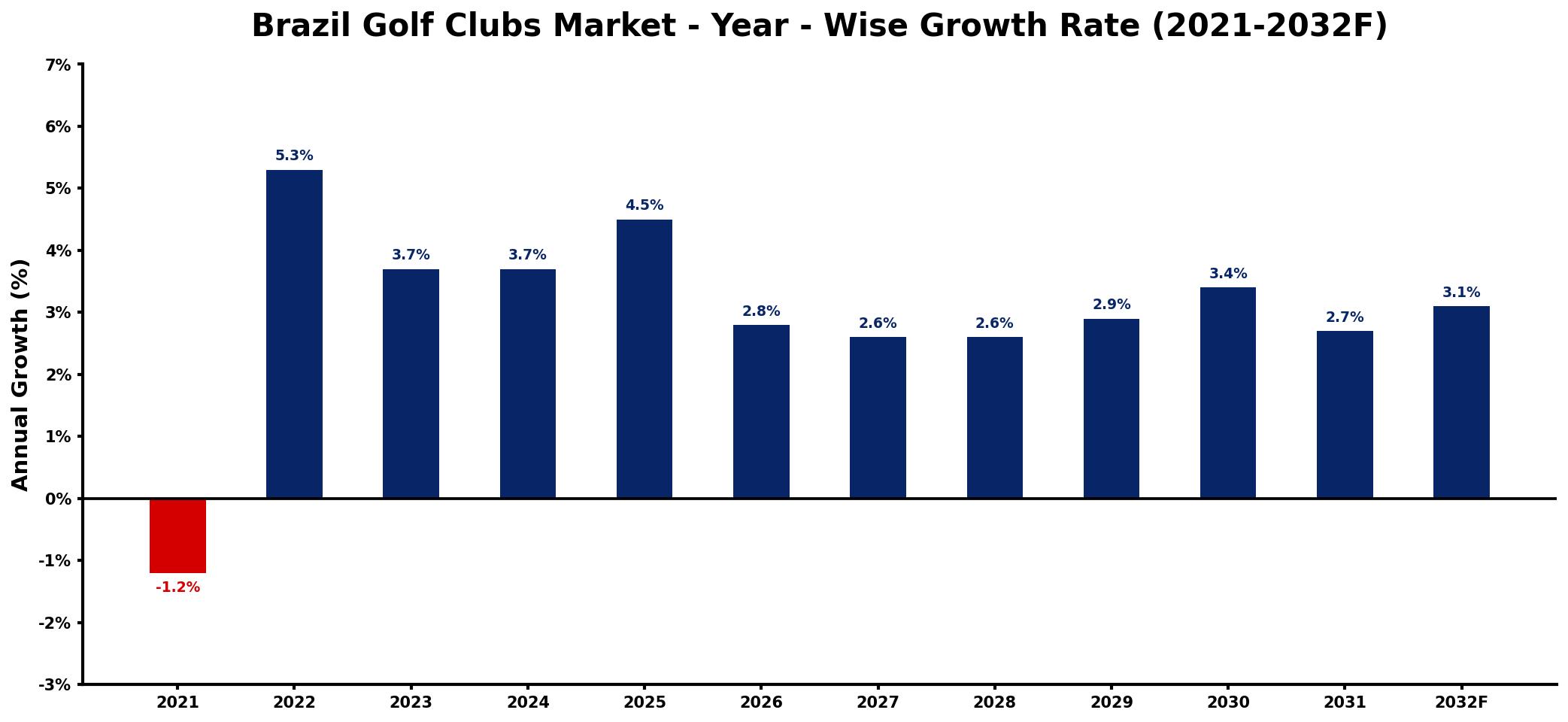
The table below presents the year‑wise growth rates along with the key drivers influencing the market
| Year | Growth Rate | Major Drivers |
| 2021 | -1.2% | decreased consumer discretionary spending |
| 2022 | 5.3% | growing interest in outdoor activities |
| 2023 | 3.7% | increased investment in recreational facilities |
| 2024 | 3.7% | expansion of tourism infrastructure |
| 2025 | 4.5% | rising popularity of fitness trends |
| 2026 | 2.8% | enhanced marketing strategies employed |
| 2027 | 2.6% | growth in middle class demographics |
| 2028 | 2.6% | improvement in disposable income levels |
| 2029 | 2.9% | increased participation in leisure sports |
| 2030 | 3.4% | development of new entertainment venues |
| 2031 | 2.7% | strengthened community engagement initiatives |
| 2032 | 3.1% | growing influence of social media |
Note: Market size estimations and growth projections presented in this report are based on 6Wresearch's proprietary forecasting methodology, utilizing the latest available industry data, government publications, and primary research inputs.
Brazil Golf Clubs Market Synopsis
Recent momentum in the Brazil Golf Clubs market indicates a vibrant and growing interest in golf as a recreational pursuit. However, as the sport gains traction, it faces challenges in terms of accessibility and the necessity for infrastructure development. Looking ahead, strategic initiatives and targeted marketing will be essential for sustaining growth and reaching broader audiences.
The evolving landscape of the Brazil Golf Clubs market presents a mix of opportunities and challenges. As more individuals engage with golf, there is an increasing demand for not just clubs but also comprehensive facilities and community engagement. Addressing environmental concerns associated with course maintenance remains crucial in shaping a sustainable future for the market.
Brazil Golf Clubs Market Key Takeaways
- Growing recreational interest in golf is driving increased demand for golf clubs.
- Improved infrastructure and rising disposable incomes are key growth enablers.
- Accessibility and affordability issues need to be addressed for wider participation.
- Environmental sustainability is becoming integral to the development of golf courses.
- Strategic partnerships and marketing initiatives are vital for market expansion.
Evaluation of Restraints in Brazil Golf Clubs Market
Despite its growth potential, the Brazil Golf Clubs market is hindered by several significant restraints. High equipment costs limit accessibility for many aspiring golfers, which can deter participation. Moreover, the need for substantial infrastructure development poses logistical challenges. Addressing these issues requires a concerted effort from stakeholders to create more inclusive and cost-effective pathways into the sport, ensuring golf's expansion reaches a diverse audience.
Brazil Golf Clubs Market Trends
Current trends in the Brazil Golf Clubs market highlight a shift towards environmentally friendly practices, reflecting a growing awareness of sustainability. Golf clubs are increasingly adopting eco-friendly maintenance techniques and materials to address environmental concerns. Additionally, the rise of digital engagement through online bookings and virtual coaching is reshaping how golfers interact with the sport, providing new avenues for market growth.
Brazil Golf Clubs Market Opportunities
The Brazil Golf Clubs market holds genuine growth and investment opportunities, particularly in developing junior programs and community-focused initiatives. By fostering a new generation of golfers, stakeholders can tap into a sustained interest in the sport. Furthermore, enhancing the accessibility of golf through affordable equipment and more inclusive facilities will likely contribute to market expansion.
Government Initiatives in the Brazil Golf Clubs Market
Government policies significantly influence the Brazil Golf Clubs market, particularly regarding land use and environmental conservation. Regulations aimed at sustainable development are increasingly shaping how golf courses are established and maintained. Moreover, public spending initiatives that promote sports and leisure can catalyze growth within the golf sector by incentivizing infrastructure improvements and accessibility initiatives.
Future Insights of the Brazil Golf Clubs Market
Looking ahead to 2026-2032, the Brazil Golf Clubs market is poised for a period of steady growth driven by an expanding player base and ongoing improvements in infrastructure. The potential for increased collaboration between private entities and governmental bodies could further enhance the sports profile, particularly if environmental and accessibility issues are effectively addressed. This focused approach will likely establish golf as a more integral part of Brazils recreational landscape.
Brazil Golf Clubs Market Latest Developments (2025 - 2026)
Recent industry direction shows a heightened emphasis on community engagement and outreach programs aimed at promoting golf among underrepresented demographics. Simultaneously, there are ongoing discussions around government incentives for sustainable golf course development that align with Brazil's environmental goals. These initiatives reflect a concerted effort to position golf as a sport that is both accessible and environmentally responsible.
Brazil Golf Clubs Market - Key Attractiveness of the Report
- 10 Years of Market Numbers
- Historical Data Starting from 2022 to 2025
- Base Year: 2025
- Forecast Data until 2032
- Key Performance Indicators Impacting the Market
- Major Upcoming Developments and Projects
Key Highlights of the Report:
- Brazil Golf Clubs Market Outlook
- Market Size of Brazil Golf Clubs Market, 2025
- Forecast of Brazil Golf Clubs Market, 2032
- Historical Data and Forecast of Brazil Golf Clubs Revenues & Volume for the Period 2022-2032F
- Brazil Golf Clubs Market Trend Evolution
- Brazil Golf Clubs Market Drivers and Challenges
- Brazil Golf Clubs Price Trends
- Brazil Golf Clubs Porter's Five Forces
- Brazil Golf Clubs Industry Life Cycle
- Historical Data and Forecast of Brazil Golf Clubs Market Revenues & Volume By Product Type for the Period 2022-2032F
- Historical Data and Forecast of Brazil Golf Clubs Market Revenues & Volume By Woods for the Period 2022-2032F
- Historical Data and Forecast of Brazil Golf Clubs Market Revenues & Volume By Iron for the Period 2022-2032F
- Historical Data and Forecast of Brazil Golf Clubs Market Revenues & Volume By Wedges for the Period 2022-2032F
- Historical Data and Forecast of Brazil Golf Clubs Market Revenues & Volume By Putters for the Period 2022-2032F
- Brazil Golf Clubs Import Export Trade Statistics
- Market Opportunity Assessment By Product Type
- Brazil Golf Clubs Top Companies Market Share
- Brazil Golf Clubs Competitive Benchmarking By Technical and Operational Parameters
- Brazil Golf Clubs Company Profiles
- Brazil Golf Clubs Key Strategic Recommendations






































