Brazil Hair Care Market Growth Rate
According to 6Wresearch internal database and industry insights, the Brazil Hair Care Market is projected to grow at a compound annual growth rate (CAGR) of 7.3% during the forecast period (2026–2032).
Brazil Hair Care Market Year-wise Growth Rate and Key Drivers
This graph highlights how the Brazil Hair Care Market has steadily grown over the past five years, supported by major growth factors.
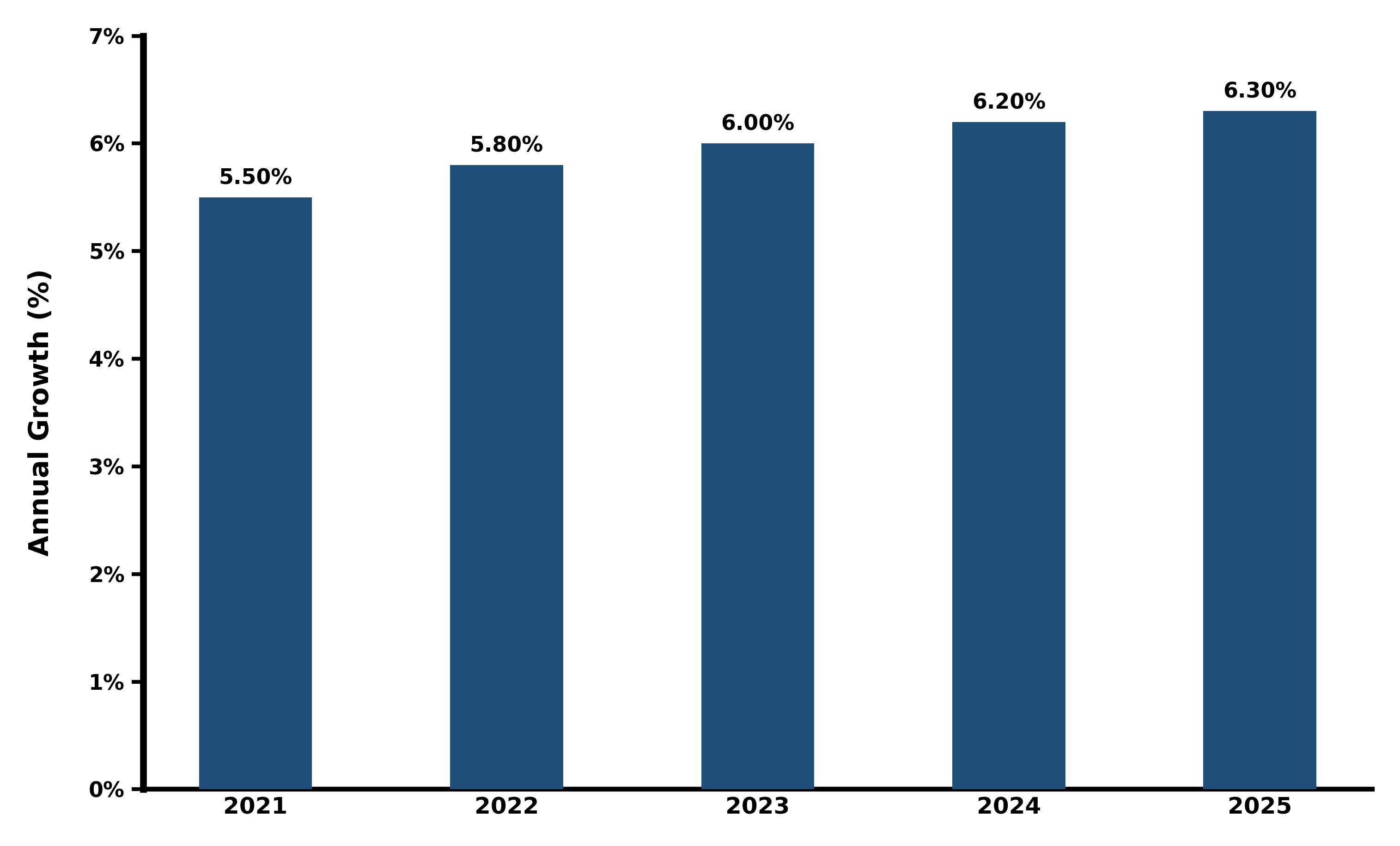 The table below presents the year‑wise growth rates along with the key drivers influencing the market
| Years | Estimated Annual Growth (%) | Growth Drivers |
| 2021 | 5.5% | Increased consumer awareness regarding personal grooming and hair health. |
| 2022 | 5.8% | A surge in demand for natural and organic hair care products. |
| 2023 | 6% | An increase in disposable incomes and preference for premium hair care brands. |
| 2024 | 6.2% | A rise in the expansion of e-commerce platforms and online retailing for hair care products. |
| 2025 | 6.3% | Increase in demand for hair styling products driven by trends in fashion and beauty. |
Topics Covered in the Brazil Hair Care Market Report
The Brazil Hair Care Market report thoroughly covers the market by Type, Product Type, and Distribution Channel. The report provides a detailed analysis of ongoing market trends, opportunities, high-growth areas, and market drivers that will help stakeholders devise and align strategies according to current and future market dynamics.
Brazil Hair Care Market Highlights
| Report Name | Brazil Hair Care Market |
| Forecast period | 2026–2032 |
| CAGR | 7.3% |
| Growing Sector | Hair Care Products |
Brazil Hair Care Market Synopsis
The Brazil Hair Care Market growth is estimated to increase in the coming years as it is influenced by an increase in the demand for hair care products, especially natural and organic products and increasing income levels of middle class population. The accessibility of various hair care solutions is improved, with the growing influence of e-commerce platforms. Along with these, there is a growing trend of hair styling and personal grooming, especially among younger populations, which is increasing the demand for hair styling products such as gels, sprays, and oils.
Evaluation of Growth Drivers in the Brazil Hair Care Market
Below are some prominent drivers and their influence on the market dynamics:
| Drivers | Primary Segments Affected | Why it Matters |
| Growing Disposable Income | By Type (Product, Services) | Increased disposable income allows consumers to spend on premium hair care products and services. |
| Health and Wellness Trends | By Product Type (Shampoo, Conditioner, Hair Oil) | Rising health consciousness among consumers has led to greater demand for chemical-free hair products. |
| E-commerce Growth | By Distribution Channel (Online Stores, Hypermarkets) | Increased online shopping options for hair care products have expanded market reach. |
| Rising Beauty Consciousness | By Product Type (Hair Styling Products, Hair Color) | There is a growing interest in beauty and personal grooming, which has contributed to the demand for hair care services. |
| Product Innovation | By Product Type (Shampoo, Hair Gel, Hair Oil) | Continuous innovation in hair care products, such as new formulations and scents, is attracting more consumers. |
The Brazil Hair Care Market is projected to grow at a CAGR of 7.3% during the forecast period (2026–2032). This growth is driven by increasing consumer interest in personal grooming, an increase in the demand for organic products, and the rise in e-commerce platforms that enhance product availability. Rising beauty consciousness among the population, as well as a rise in the demand for organic and sulfate-free hair care solutions, is another major growth boosting factor of the market, especially among health-conscious consumers. There is a rising expansion of e-commerce platforms and online retail, which has further fueled Brazil Hair Care Market growth, which make a wide range of products more accessible to urban and rural consumers.
Evaluation of Restraints in the Brazil Hair Care Market
Below are some prominent restraints and their impact on the market dynamics:
| Challenges | Primary Segments Affected | Why it Matters |
| Intense Competition | By Product Type (Shampoos, Conditioners, Hair Styling Products) | High competition from local and international brands makes it difficult for new players to establish themselves. |
| High Import Costs | By Product Type (Shampoos, Hair Colorants, Styling Gels) | High import tariffs increase product prices, which limit affordability for many consumers. |
| Price Sensitivity | By Distribution Channel (Hypermarket/Supermarkets, Online Retail Stores) | Many consumers are highly price-sensitive in the country, particularly for mass-market hair care products. |
| Limited Awareness in Rural Areas | By Distribution Channel (Hypermarket/Supermarkets, Specialty Stores) | Lack of awareness about the benefits of premium hair care products in rural areas. |
| Regulatory Compliance Costs | By Product Type (Shampoos, Hair Oils, Hair Colorants) | International regulations for product safety and quality increases manufacturing costs. |
Brazil Hair Care Market Challenges
Despite the Brazil Hair Care Market's growth potential, it has various challenges, such as high competition from local brands, the high cost of premium products, and international regulations for product safety and quality increases manufacturing costs. Other major challenges are limited awareness in rural areas and the rising availability of counterfeit products, which threaten the market's integrity. Overcoming these challenges will require brand differentiation, targeted marketing campaigns, and increased distribution in rural areas.
Brazil Hair Care Market Trends
Below mentioned are some major trends that are influencing the Brazil Hair Care Market growth:
- Rise of Organic and Chemical-Free Products: Consumers are spending on those products that are natural and organic, as they are more conscious about the ingredients in their beauty products.
- Growth in E-commerce Retailing: Online retail platforms are rapidly growing, which provides consumers an easy access to a wide range of hair care products from various brands.
- Hair Care as a Service: The growing demand for personalised hair care services is driving salon visits and the availability of customised hair care solutions.
Investment Opportunities in the Brazil Hair Care Market
Below mentioned are some key investment opportunities:
- Product Innovation: There is significant potential for introducing innovative hair care products, including organic options and unique formulations.
- Retail and Distribution Network Expansion: Investing in improving distribution networks, especially through e-commerce platforms and local retail stores, will increase product availability.
- Men's Hair Care Products: With the growing demand for male grooming products, there is an opportunity to introduce new products targeting male consumers.
Top 5 Leading Players in the Brazil Hair Care Market
Below is the list of prominent companies leading the Brazil Hair Care Market:
1. Natura &Co
| Company Name | Natura &Co |
| Established Year | 1969 |
| Headquarters | São Paulo, Brazil |
| Official Website | - |
Natura &Co is a leading player in the Brazilian beauty industry, offering a wide range of organic and natural hair care products that cater to various consumer needs.
2. Unilever Brasil
| Company Name | Unilever Brasil |
| Established Year | 1929 |
| Headquarters | São Paulo, Brazil |
| Official Website | Click Here |
Unilever Brasil is a key player in the hair care market, with a portfolio of well-known hair care brands such as Dove, TRESemmé, and Seda.
3. L'Oréal Brasil
| Company Name | L'Oréal Brasil |
| Established Year | 1959 |
| Headquarters | São Paulo, Brazil |
| Official Website | Click Here |
L'Oréal Brasil offers a range of professional and mass-market hair care products, including those under brands like L'Oréal Paris, Garnier, and Kérastase.
4. Procter & Gamble (P&G) Brasil
| Company Name | Procter & Gamble (P&G) Brasil |
| Established Year | 1930 |
| Headquarters | São Paulo, Brazil |
| Official Website | - |
Procter & Gamble Brasil is a significant player in the Brazilian market, offering products under renowned brands like Pantene, Head & Shoulders, and Herbal Essences.
5. Avon Brasil
| Company Name | Avon Brasil |
| Established Year | 1958 |
| Headquarters | São Paulo, Brazil |
| Official Website | - |
Avon Brasil is a major player in the direct-selling hair care market, offering a wide range of products, from shampoos to conditioners, focusing on accessibility and affordability.
Government Regulations Introduced in the Brazil Hair Care Market
According to Brazilian government data, some regulations have been introduced that make sure the safety, quality, and transparency of hair care products in the market. One of the prominent regulatory bodies is ANVISA (National Health Surveillance Agency), which oversee the approval and certification of cosmetics and personal care products. Aside from that, the government pushes eco-friendly and sustainable practices in product manufacturing process, contributing to consumer trust and market stability.
Future Insights of the Brazil Hair Care Market
The Brazil Hair Care Market share is estimated to increase in the coming years, which is supported by some significant reasons. These reasons are rising consumer interest in personal grooming and growing preference for natural and organic products. innovations in hair care solutions are being made to cater the growing needs of customers, as well as expansion of e-commerce platforms that will improve accessibility, particularly in remote areas, driving overall market growth. The increasing acceptance of premium and men's hair care products presents further growth opportunities.
Market Segmentation Analysis – Brazil Hair Care Market
The report offers a comprehensive study of the following market segments and their leading categories:
By Product Type – Shampoos to Lead the Market
According to Harshita, Senior Research Analyst, 6Wresearch, Shampoos are the leading categories in the market, as it is driven by the universal use of shampoos across all demographics and the growing demand for specialized formulations catering to various hair types, such as organic, sulfate-free, and anti-dandruff shampoos.
By Distribution Channel – Hypermarket/Supermarkets to Lead the Market
Hypermarket/Supermarkets are likely to hold the largest market share. This is due to their widespread presence across urban Brazil and the broad assortment of hair care products available in these stores.
By Product Category – Hair Colorants to Lead the Market
The Hair Colorants segment is likely to lead the market; this is due to the increasing interest in personal grooming, with consumers focusing more on hair coloring products for aesthetic and cosmetic reasons. Hair colorants are in demand not only among women but also among men, contributing to the overall market growth.
Key Attractiveness of the Report
- 10 Years of Market Numbers
- Historical Data Starting from 2022 to 2025
- Base Year: 2025
- Forecast Data until 2032
- Key Performance Indicators Impacting the Market
- Major Upcoming Developments and Projects
Key Highlights of the Report:
- Brazil Hair Care Market Overview
- Brazil Hair Care Market Outlook
- Market Size of Brazil Hair Care Market
- Forecast of Brazil Hair Care Market, 2032
- Historical Data and Forecast of Brazil Hair Care Revenues & Volume for the Period 2022-2032
- Brazil Hair Care Market Trend Evolution
- Brazil Hair Care Market Drivers and Challenges
- Brazil Hair Care Price Trends
- Brazil Hair Care Porter's Five Forces
- Brazil Hair Care Industry Life Cycle
- Historical Data and Forecast of Brazil Hair Care Market Revenues & Volume By Type for the Period 2022-2032
- Historical Data and Forecast of Brazil Hair Care Market Revenues & Volume By Product for the Period 2022-2032
- Historical Data and Forecast of Brazil Hair Care Market Revenues & Volume By Services for the Period 2022-2032
- Historical Data and Forecast of Brazil Hair Care Market Revenues & Volume By Product Type for the Period 2022-2032
- Historical Data and Forecast of Brazil Hair Care Market Revenues & Volume By Shampoo for the Period 2022-2032
- Historical Data and Forecast of Brazil Hair Care Market Revenues & Volume By Hair Colour for the Period 2022-2032
- Historical Data and Forecast of Brazil Hair Care Market Revenues & Volume By Conditioner for the Period 2022-2032
- Historical Data and Forecast of Brazil Hair Care Market Revenues & Volume By Hair Styling Product for the Period 2022-2032
- Historical Data and Forecast of Brazil Hair Care Market Revenues & Volume By Hair Oil for the Period 2022-2032
- Historical Data and Forecast of Brazil Hair Care Market Revenues & Volume By Hair Spray for the Period 2022-2032
- Historical Data and Forecast of Brazil Hair Care Market Revenues & Volume By Hair Gel for the Period 2022-2032
- Historical Data and Forecast of Brazil Hair Care Market Revenues & Volume By Others for the Period 2022-2032
- Historical Data and Forecast of Brazil Hair Care Market Revenues & Volume By Distribution Channel for the Period 2022-2032
- Historical Data and Forecast of Brazil Hair Care Market Revenues & Volume By Online Stores for the Period 2022-2032
- Historical Data and Forecast of Brazil Hair Care Market Revenues & Volume By Hypermarkets for the Period 2022-2032
- Historical Data and Forecast of Brazil Hair Care Market Revenues & Volume By Direct Selling for the Period 2022-2032
- Brazil Hair Care Import Export Trade Statistics
- Market Opportunity Assessment By Type
- Market Opportunity Assessment By Product Type
- Market Opportunity Assessment By Distribution Channel
- Brazil Hair Care Top Companies Market Share
- Brazil Hair Care Competitive Benchmarking By Technical and Operational Parameters
- Brazil Hair Care Company Profiles
- Brazil Hair Care Key Strategic Recommendations
Market Segmentation
By Type
- Product
- Services
By Product Type
- Shampoo
- Hair Colour
- Conditioner
- Hair Styling Product
- Hair Oil
- Hair Spray
- Hair Gel
- Others
By Distribution Channel
- Online Stores
- Hypermarkets
- Direct Selling






































