Brazil Internet Protocol Television (IPTV) CDN Market Size & Growth Rate (2026-2032)
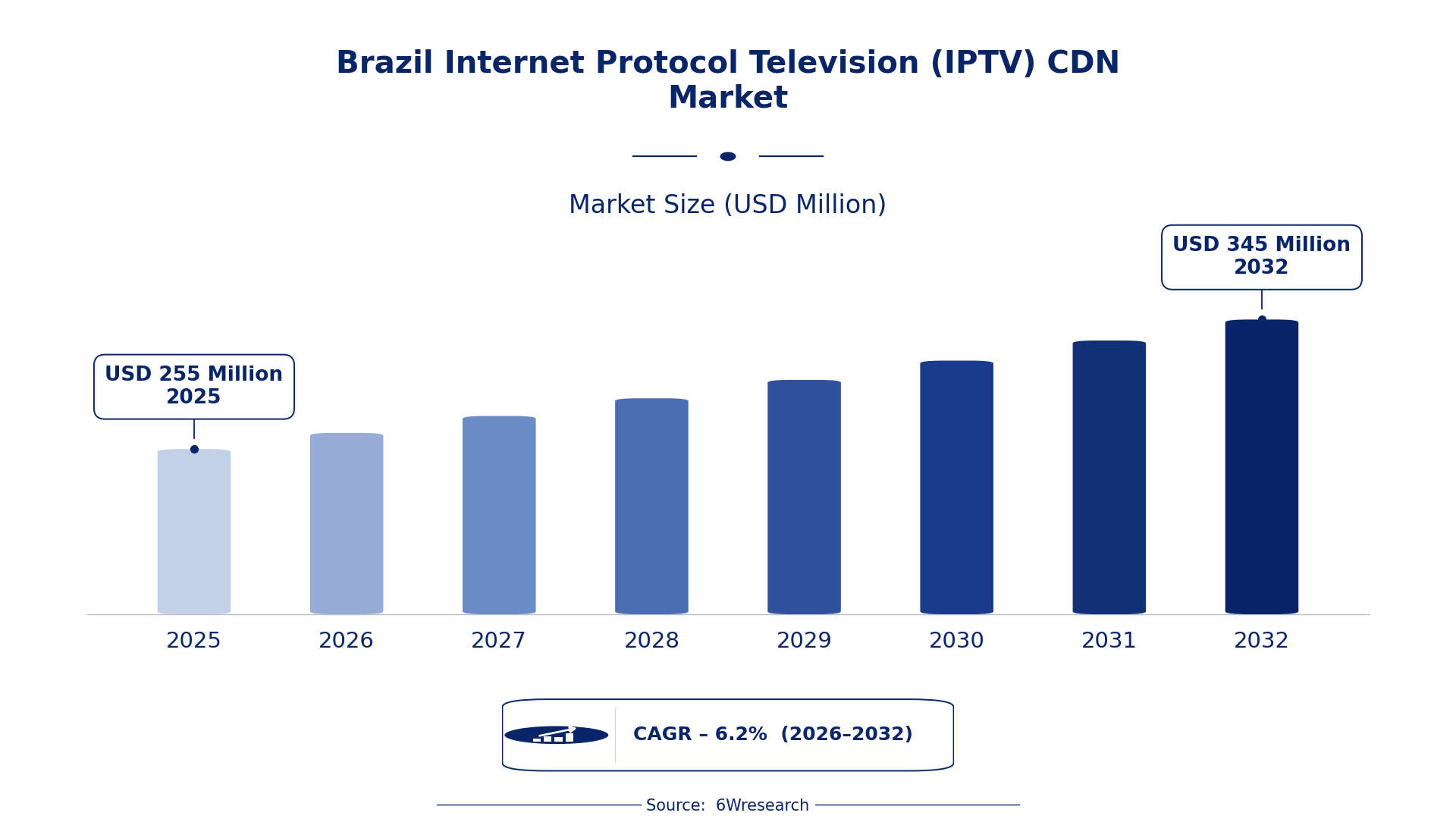
The Brazil Internet Protocol Television (IPTV) CDN Market was estimated at USD 255 Million in 2025 and is projected to reach USD 345 Million by 2032, growing at a CAGR of 6.2% from 2026 to 2032.
Brazil Internet Protocol Television (IPTV) CDN Market Synopsis
At the forefront of the Brazil Internet Protocol Television (IPTV) CDN market is the growing demand for high-quality video content. As consumers increasingly favor on-demand streaming services, the necessity for an advanced content delivery network (CDN) becomes more pressing. This trend is shaping the trajectory of investments and innovations in the sector.
Furthermore, the ability to minimize latency and buffering has become a top priority. As user expectations rise, service providers are compelled to invest in superior CDN infrastructures to enhance viewing experiences. This push is further compounded by the need to ensure secure content delivery, responding to piracy and security challenges.
Brazil Internet Protocol Television (IPTV) CDN Market Year-wise Growth Rate and Key Drivers
This graph illustrates the annual growth rates of the Brazil Internet Protocol Television (IPTV) CDN Market from 2021 to 2032, highlighting a steady upward trajectory and projected expansion over the forecast period.
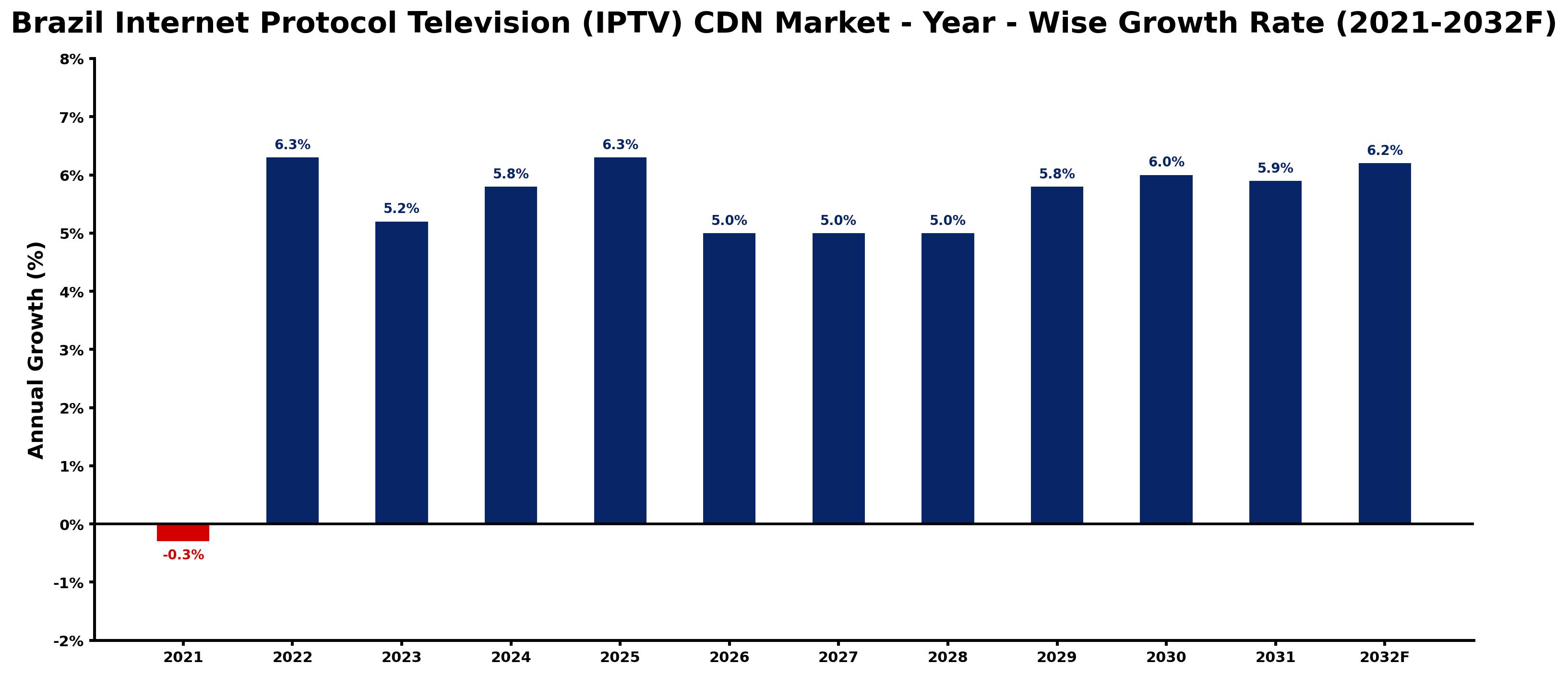
The table below presents the year‑wise growth rates along with the key drivers influencing the market
| Year | Growth Rate | Major Drivers |
| 2021 | -0.3% | Local tax increases on streaming services reduced subscriptions. |
| 2022 | 6.3% | Implementation of Anatel’s broadband expansion policies |
| 2023 | 5.2% | Increased smartphone penetration fueling IPTV access |
| 2024 | 5.8% | Boost from local content production incentives |
| 2025 | 6.3% | Rise in binge-watching habits boosting subscriber numbers |
| 2026 | 5.0% | Improvements in local CDN infrastructure reliability |
| 2027 | 5.0% | Popularity of interactive viewing features attracting users |
| 2028 | 5.0% | Adoption of hybrid streaming models by providers |
| 2029 | 5.8% | Strong regional demand for niche streaming channels |
| 2030 | 6.0% | Local partnerships enhancing content delivery efficiency |
| 2031 | 5.9% | Increased regional investment in audiovisual technology |
| 2032 | 6.2% | Growth in advertising revenue for local content creators |
Note: Market size estimations and growth projections presented in this report are based on 6Wresearch's proprietary forecasting methodology, utilizing the latest available industry data, government publications, and primary research inputs.
Brazil Internet Protocol Television (IPTV) CDN Market Key Takeaways
Below are some of the specific key takeaways from the market, including:
- The market is witnessing robust growth driven by escalating demand for streaming services.
- Investments in CDN infrastructure are essential to improve video quality and reduce latency.
- Consumer preferences are evolving toward personalized viewing experiences and on-demand content.
- Security concerns regarding content distribution necessitate the implementation of advanced security measures.
- Partnerships between CDN providers and content creators are becoming increasingly common.
Evaluation of Restraints in Brazil Internet Protocol Television (IPTV) CDN Market
The Brazil Internet Protocol Television (IPTV) CDN market faces several significant restraints. High network congestion remains a persistent challenge, often hindering the delivery of high-quality content. Service providers struggle to optimize their CDN infrastructures while managing bandwidth constraints, leading to potential delivery delays. Furthermore, ensuring robust security measures against piracy is a constant endeavor that demands additional resources. These issues necessitate comprehensive strategies to enhance the user experience and overcome technical limitations.
Brazil Internet Protocol Television (IPTV) CDN Market Trends
Current trends indicate a shift towards integrating artificial intelligence (AI) within CDN frameworks. AI capabilities are being harnessed to optimize streaming quality and personalize content recommendations. Alongside this, the increasing prevalence of 5G technology stands to significantly impact content delivery efficiency, minimizing latency, and enhancing user engagement.
Moreover, consumer demand for bundled services, where IPTV is combined with internet and telephony, is on the rise. This trend compels providers to rethink their service offerings and enhance their CDN capabilities to deliver value-driven packages.
Brazil Internet Protocol Television (IPTV) CDN Market Opportunities
Growth opportunities within the Brazil Internet Protocol Television (IPTV) CDN market are substantial. The rise of regional content production offers a unique chance for localized services to flourish, addressing niche markets that seek culturally relevant programming. Furthermore, increasing internet penetration, especially in rural areas, presents a lucrative opportunity for service providers aiming to expand their subscriber base.
The ongoing transition to cloud-based CDN solutions enables greater scalability and flexibility, facilitating smoother operations. As competition intensifies, companies that strategically invest in these advanced technologies will likely gain a competitive edge.
Government Initiatives in the Brazil Internet Protocol Television (IPTV) CDN Market
Government policies are playing a significant role in shaping the Brazil Internet Protocol Television (IPTV) CDN market. Regulations focusing on content distribution and consumer protection are essential to maintain fair competition and stimulate market growth. By ensuring compliance with intellectual property rights, the government fosters an environment that encourages innovation within the sector.
- A regulatory framework introduced in 2025 mandates transparency in content delivery pricing.
- Ongoing initiatives aim to bolster national digital infrastructure, enhancing internet access nationwide.
- A recently completed program has established guidelines for securing digital content against piracy.
- Upcoming plans include a public-private partnership aimed at expanding broadband access in underserved areas by 2027.
- The government is currently evaluating policies that promote quality standards for IPTV services.
Future Insights of the Brazil Internet Protocol Television (IPTV) CDN Market
Looking ahead to 2026-2032, the Brazil Internet Protocol Television (IPTV) CDN market is set for steady expansion. The increasing integration of advanced technologies such as AI and machine learning will enhance content delivery systems. As consumer preferences lean toward interactive and personalized content, service providers will need to adapt quickly to meet these demands.
Moreover, the collaborative efforts between content creators and CDN providers will likely intensify, fostering a dynamic ecosystem for innovation. The transition to 5G will further revolutionize how content is accessed and streamed, setting the stage for a more engaging viewing experience.
Brazil Internet Protocol Television (IPTV) CDN Market Latest Developments
Recent activity in the Brazil Internet Protocol Television (IPTV) CDN market reflects a strategic push toward enhancing service quality and expanding reach. Companies are focusing on upgrading infrastructure to accommodate a growing subscriber base while ensuring high-quality content delivery.
- A major technology vendor launched a new CDN platform designed specifically for optimizing video streaming, with beta testing commencing in early 2025.
- An initiative aimed at enhancing CDN security protocols was initiated in Q4 2025, focusing on protecting user data and content integrity.
- Current collaborations between regional ISPs and content providers are underway to improve streaming quality for rural communities.
- Plans are in motion for a nationwide marketing campaign to raise awareness of new IPTV packages expected to launch in early 2026.
- A leading regional operator is developing a cloud-based CDN solution that is projected to roll out in the second half of 2026.
Brazil Internet Protocol Television (IPTV) CDN Market - Key Attractiveness of the Report
- 10 Years of Market Numbers
- Historical Data Starting from 2022 to 2025
- Base Year: 2025
- Forecast Data until 2032
- Key Performance Indicators Impacting the Market
- Major Upcoming Developments and Projects
Key Highlights of the Report:
- Brazil Internet Protocol Television (IPTV) CDN Market Outlook
- Market Size of Brazil Internet Protocol Television (IPTV) CDN Market, 2025
- Forecast of Brazil Internet Protocol Television (IPTV) CDN Market, 2032
- Historical Data and Forecast of Brazil Internet Protocol Television (IPTV) CDN Revenues & Volume for the Period 2022-2032F
- Brazil Internet Protocol Television (IPTV) CDN Market Trend Evolution
- Brazil Internet Protocol Television (IPTV) CDN Market Drivers and Challenges
- Brazil Internet Protocol Television (IPTV) CDN Price Trends
- Brazil Internet Protocol Television (IPTV) CDN Porter's Five Forces
- Brazil Internet Protocol Television (IPTV) CDN Industry Life Cycle
- Historical Data and Forecast of Brazil Internet Protocol Television (IPTV) CDN Market Revenues & Volume By Type for the Period 2022-2032F
- Historical Data and Forecast of Brazil Internet Protocol Television (IPTV) CDN Market Revenues & Volume By Video for the Period 2022-2032F
- Historical Data and Forecast of Brazil Internet Protocol Television (IPTV) CDN Market Revenues & Volume By Non-Video Content for the Period 2022-2032F
- Historical Data and Forecast of Brazil Internet Protocol Television (IPTV) CDN Market Revenues & Volume By Service for the Period 2022-2032F
- Historical Data and Forecast of Brazil Internet Protocol Television (IPTV) CDN Market Revenues & Volume By In-House for the Period 2022-2032F
- Historical Data and Forecast of Brazil Internet Protocol Television (IPTV) CDN Market Revenues & Volume By Manage Service for the Period 2022-2032F
- Historical Data and Forecast of Brazil Internet Protocol Television (IPTV) CDN Market Revenues & Volume By End-User for the Period 2022-2032F
- Historical Data and Forecast of Brazil Internet Protocol Television (IPTV) CDN Market Revenues & Volume By SME for the Period 2022-2032F
- Historical Data and Forecast of Brazil Internet Protocol Television (IPTV) CDN Market Revenues & Volume By Large Enterprise for the Period 2022-2032F
- Historical Data and Forecast of Brazil Internet Protocol Television (IPTV) CDN Market Revenues & Volume By Residential Customers for the Period 2022-2032F
- Brazil Internet Protocol Television (IPTV) CDN Import Export Trade Statistics
- Market Opportunity Assessment By Type
- Market Opportunity Assessment By Service
- Market Opportunity Assessment By End-User
- Brazil Internet Protocol Television (IPTV) CDN Top Companies Market Share
- Brazil Internet Protocol Television (IPTV) CDN Competitive Benchmarking By Technical and Operational Parameters
- Brazil Internet Protocol Television (IPTV) CDN Company Profiles
- Brazil Internet Protocol Television (IPTV) CDN Key Strategic Recommendations






































