Brazil Mineral Oil Market Growth Rate Analysis (2021-2031)
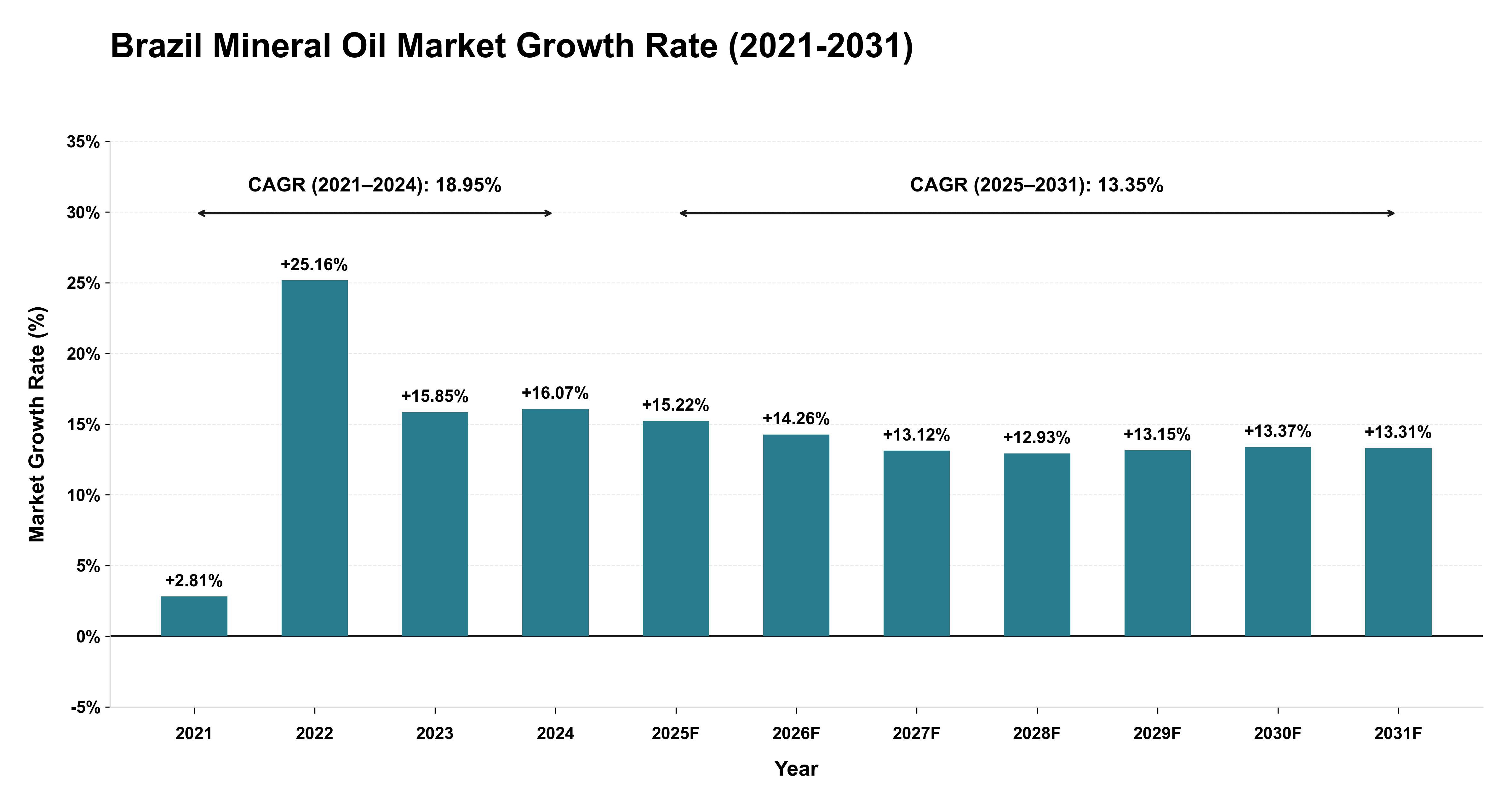
The Brazil Mineral Oil Market demonstrated robust growth from 2021 to 2024, with a notable CAGR of 18.95%, propelled by increased industrial activities, infrastructure projects, and capital investments. Looking ahead to 2025-2031, a slightly slower growth pace is anticipated, with a CAGR of 13.35%. The year-on-year growth rates are showing a trend of stabilization post the initial surge, gradually moderating while remaining positive. The consistent double-digit growth forecasted for 2025-2031 indicates a healthy and stable market environment for Brazil's mineral oil sector, suggesting a phase of market normalization and sustainable expansion in the upcoming years.
Brazil Mineral Oil Market Overview
The Brazil Mineral Oil market is expected to witness growth between 2024 and 2030, driven by its diverse applications in the cosmetics, pharmaceutical, and industrial sectors. However, challenges may include the shift towards sustainable and bio-based alternatives, regulatory changes impacting the petroleum industry, and geopolitical factors affecting the oil market. Companies need to anticipate these challenges, invest in sustainable practices, and explore emerging opportunities in the evolving energy landscape to secure a stable position in the mineral oil market in Brazil.
Drivers of the market
The Brazil Mineral Oil market is expected to grow during the forecast period, driven by the expanding industrial and automotive sectors. Mineral oil is a crucial component in various industries, including lubricants, pharmaceuticals, and cosmetics. The increasing demand for lubricants in the automotive and manufacturing sectors, coupled with the rising population and industrialization, is expected to fuel the growth of the mineral oil market in Brazil between 2024 and 2030.
Challenges of the market
The Brazil Mineral Oil market is poised for growth, but challenges lie ahead. Regulatory shifts towards renewable energy sources, increasing focus on sustainable alternatives, and the volatility of crude oil prices may impact the market. Adapting to these changes, exploring renewable options, and establishing resilient supply chains are essential for navigating the evolving landscape of the mineral oil industry in the coming years.
Government Policy of the market
Over the forecast period (2024 - 2030), the Brazil Mineral Oil market will be influenced by energy and environmental policies. Government initiatives promoting renewable energy sources and addressing climate change impact the mineral oil industry. Market players need to align their strategies with evolving energy policies, explore alternative sources, and invest in sustainable practices to navigate challenges related to market shifts and environmental concerns.
Key Highlights of the Report:
- Brazil Mineral Oil Market Outlook
- Market Size of Brazil Mineral Oil Market, 2024
- Forecast of Brazil Mineral Oil Market, 2031
- Historical Data and Forecast of Brazil Mineral Oil Revenues & Volume for the Period 2021-2031
- Brazil Mineral Oil Market Trend Evolution
- Brazil Mineral Oil Market Drivers and Challenges
- Brazil Mineral Oil Price Trends
- Brazil Mineral Oil Porter's Five Forces
- Brazil Mineral Oil Industry Life Cycle
- Historical Data and Forecast of Brazil Mineral Oil Market Revenues & Volume By Grade for the Period 2021-2031
- Historical Data and Forecast of Brazil Mineral Oil Market Revenues & Volume By Technical Oil for the Period 2021-2031
- Historical Data and Forecast of Brazil Mineral Oil Market Revenues & Volume By White Oil for the Period 2021-2031
- Historical Data and Forecast of Brazil Mineral Oil Market Revenues & Volume By Application for the Period 2021-2031
- Historical Data and Forecast of Brazil Mineral Oil Market Revenues & Volume By Baby Oil for the Period 2021-2031
- Historical Data and Forecast of Brazil Mineral Oil Market Revenues & Volume By Cosmetics for the Period 2021-2031
- Historical Data and Forecast of Brazil Mineral Oil Market Revenues & Volume By Skin Care Products for the Period 2021-2031
- Historical Data and Forecast of Brazil Mineral Oil Market Revenues & Volume By Hair Care Products for the Period 2021-2031
- Historical Data and Forecast of Brazil Mineral Oil Market Revenues & Volume By Consumer Goods for the Period 2021-2031
- Historical Data and Forecast of Brazil Mineral Oil Market Revenues & Volume By Others for the Period 2021-2031
- Brazil Mineral Oil Import Export Trade Statistics
- Market Opportunity Assessment By Grade
- Market Opportunity Assessment By Application
- Brazil Mineral Oil Top Companies Market Share
- Brazil Mineral Oil Competitive Benchmarking By Technical and Operational Parameters
- Brazil Mineral Oil Company Profiles
- Brazil Mineral Oil Key Strategic Recommendations






































