Brazil Naphthalene Market Top 5 Importing Countries and Market Competition (HHI) Analysis
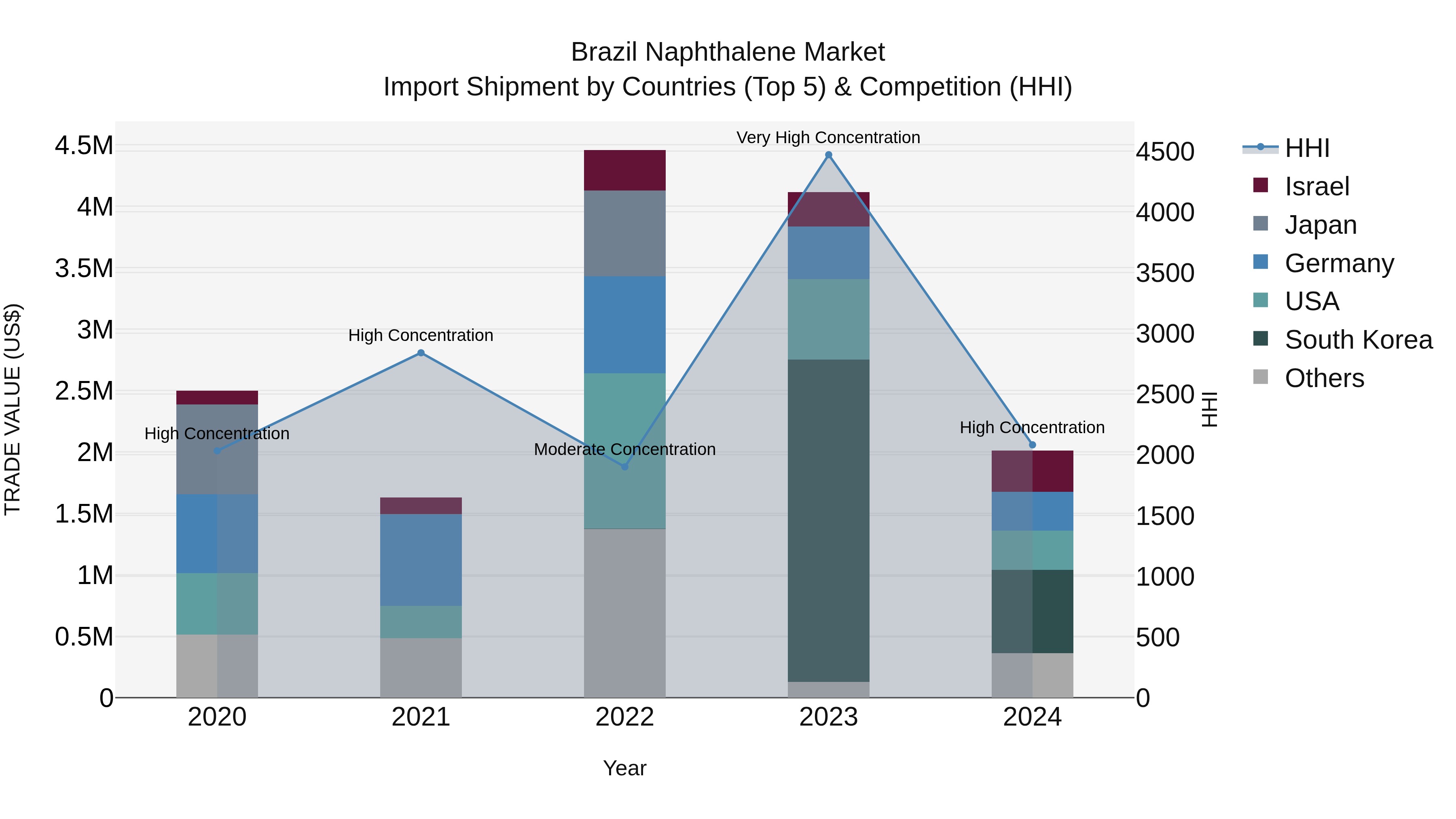
Brazil`s naphthalene import market saw a shift in concentration levels in 2024, with a high Herfindahl-Hirschman Index (HHI) indicating increased concentration among top exporting countries. South Korea, Israel, USA, Germany, and China emerged as key players in supplying naphthalene to Brazil. Despite a negative Compound Annual Growth Rate (CAGR) of -5.27% from 2020 to 2024, the drastic decline in growth rate by -51.14% from 2023 to 2024 suggests a challenging market environment. Monitoring market dynamics and exploring diversification strategies may be crucial for stakeholders in the naphthalene import sector.
Brazil Naphthalene Market Synopsis
The Brazil Naphthalene market is experiencing steady growth due to increasing demand from industries such as construction, agriculture, and chemicals. Naphthalene, a crystalline hydrocarbon obtained from coal tar, is primarily used in the production of phthalic anhydride, which is a key ingredient in the manufacturing of plastics, dyes, and resins. The market is driven by the expanding construction sector, where naphthalene is utilized in the production of concrete admixtures for improving the strength and durability of structures. Additionally, the growing agricultural sector is boosting the demand for naphthalene-based pesticides and insecticides. Key players in the Brazil naphthalene market include Koppers Inc., RÃTGERS Group, and Goyal Group, among others, who are focusing on product innovation and strategic partnerships to maintain a competitive edge in the market.
Brazil Naphthalene Market Trends
The Brazil naphthalene market is experiencing steady growth driven by increasing demand from industries such as construction, agriculture, and chemicals. A key trend in the market is the rising adoption of naphthalene as a raw material in the production of dyes, resins, and pesticides due to its versatile properties. Additionally, the growing focus on sustainable practices is creating opportunities for the development of bio-based naphthalene products, catering to the environmentally conscious consumer base. With the government`s initiatives to boost infrastructure development and industrial growth, the Brazil naphthalene market is expected to witness further expansion in the coming years, presenting lucrative opportunities for market players to innovate and diversify their product offerings to meet the evolving market demands.
Brazil Naphthalene Market Challenges
In the Brazil naphthalene market, some key challenges include fluctuations in raw material prices, environmental concerns related to naphthalene`s toxicity, and increasing competition from alternative chemicals. The volatility in raw material prices, such as crude oil, directly impacts the production cost of naphthalene, affecting profit margins for manufacturers. Environmental regulations aimed at reducing naphthalene emissions and its classification as a possible carcinogen have led to stricter controls on its usage, potentially limiting market growth. Additionally, the emergence of alternative chemicals for similar applications, such as phthalic anhydride and maleic anhydride, poses a competitive threat to the naphthalene market in Brazil. Overcoming these challenges will require companies to innovate, diversify their product offerings, and adapt to evolving regulatory requirements and market dynamics.
Brazil Naphthalene Market Investment Opportunities
The Brazil Naphthalene Market is primarily driven by the increasing demand for naphthalene in the production of phthalic anhydride, which is widely used in the production of plasticizers and dyes. The growth of the construction and automotive industries in Brazil is also fueling the demand for naphthalene as it is used in the manufacturing of concrete admixtures and asphalt additives. Furthermore, the expanding textile industry in the country is driving the consumption of naphthalene in the production of dyes and pigments. Additionally, the rising awareness about the benefits of naphthalene as a moth repellent and insecticide is further contributing to the market growth. With increasing industrial activities and infrastructure development in Brazil, the demand for naphthalene is expected to continue growing in the foreseeable future.
Brazil Naphthalene Market Government Polices
Brazil`s government policies related to the naphthalene market primarily focus on environmental protection and regulation. The country has implemented strict guidelines and regulations to control the usage and disposal of naphthalene, a chemical commonly used in mothballs and insecticides. The government aims to reduce environmental pollution and health hazards associated with naphthalene exposure by enforcing restrictions on its production, import, and use. Additionally, Brazil has set emission standards for industries producing or using naphthalene to ensure compliance with environmental regulations. The government encourages the adoption of sustainable practices and alternative chemicals to minimize the impact of naphthalene on the environment and public health.
Brazil Naphthalene Market Future Outlook
The future outlook for the Brazil Naphthalene Market appears promising, driven by factors such as the increasing demand for naphthalene as a key ingredient in the production of various chemicals, especially in the construction and textile industries. The market is expected to witness steady growth due to the rising use of naphthalene in the manufacturing of pesticides, surfactants, and other industrial applications. Additionally, the ongoing research and development activities focused on enhancing the properties and applications of naphthalene are likely to further fuel market expansion in Brazil. With a growing emphasis on sustainable practices and environmental regulations, the market may also experience a shift towards bio-based naphthalene products, presenting new opportunities for industry players to innovate and cater to evolving consumer preferences.
Key Highlights of the Report:
- Brazil Naphthalene Market Outlook
- Market Size of Brazil Naphthalene Market, 2024
- Forecast of Brazil Naphthalene Market, 2031
- Historical Data and Forecast of Brazil Naphthalene Revenues & Volume for the Period 2021- 2031
- Brazil Naphthalene Market Trend Evolution
- Brazil Naphthalene Market Drivers and Challenges
- Brazil Naphthalene Price Trends
- Brazil Naphthalene Porter's Five Forces
- Brazil Naphthalene Industry Life Cycle
- Historical Data and Forecast of Brazil Naphthalene Market Revenues & Volume By Application for the Period 2021- 2031
- Historical Data and Forecast of Brazil Naphthalene Market Revenues & Volume By Phthalic Anhydride for the Period 2021- 2031
- Historical Data and Forecast of Brazil Naphthalene Market Revenues & Volume By Naphthalene Sulfonates for the Period 2021- 2031
- Historical Data and Forecast of Brazil Naphthalene Market Revenues & Volume By Low-Volatility Solvents for the Period 2021- 2031
- Historical Data and Forecast of Brazil Naphthalene Market Revenues & Volume By Moth Repellent for the Period 2021- 2031
- Historical Data and Forecast of Brazil Naphthalene Market Revenues & Volume By Pesticides for the Period 2021- 2031
- Historical Data and Forecast of Brazil Naphthalene Market Revenues & Volume By Other for the Period 2021- 2031
- Brazil Naphthalene Import Export Trade Statistics
- Market Opportunity Assessment By Application
- Brazil Naphthalene Top Companies Market Share
- Brazil Naphthalene Competitive Benchmarking By Technical and Operational Parameters
- Brazil Naphthalene Company Profiles
- Brazil Naphthalene Key Strategic Recommendations






































