Brazil Nylon Market Top 5 Importing Countries and Market Competition (HHI) Analysis
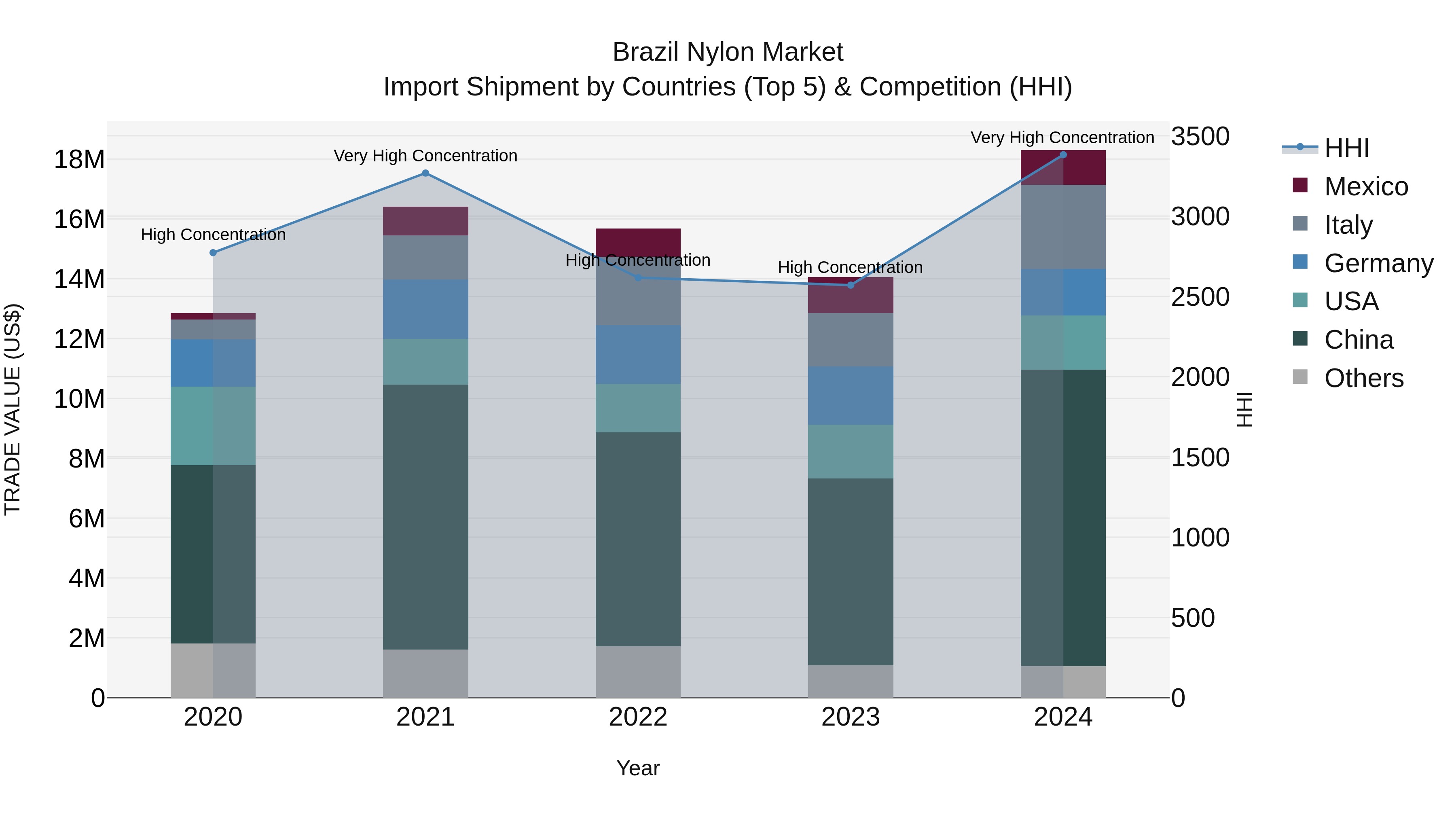
Brazil`s nylon import market experienced significant growth in 2024, with a CAGR of 9.22% from 2020 to 2024. The top countries exporting to Brazil were China, Italy, USA, Germany, and Mexico. The market concentration, as measured by the HHI, increased from high in 2023 to very high in 2024. This shift indicates a more concentrated market landscape. Furthermore, the impressive growth rate of 30.16% from 2023 to 2024 suggests a strong demand for nylon imports in Brazil, highlighting potential opportunities for market players in the industry.
Brazil Nylon Market Overview
The overall nylon market in Brazil encompasses a wide range of products, including fibers, resins, and engineering plastics. Nylon`s versatility and durability make it a popular choice in various industries, such as automotive, electronics, and consumer goods. The market`s growth is closely tied to industrial and economic developments in Brazil. As the country continues to diversify its manufacturing base, the demand for nylon is expected to remain strong, influencing the market`s trajectory.
Drivers of the market
The Brazil Nylon market is experiencing growth, with a focus on the versatility and adaptability of nylon across different sectors. Nylon`s properties, such as strength, flexibility, and resistance to abrasion, make it a preferred material in the production of various goods, including packaging materials, automotive components, and consumer products. The market is responding to advancements in nylon technology, exploring new applications and manufacturing processes that enhance the material`s overall performance.
Challenges of the market
The Brazil Nylon Market encounters challenges related to the global supply chain, with nylon being a key component in various industries. Market players need to navigate the impacts of geopolitical events, trade policies, and transportation disruptions that can affect the availability and pricing of nylon products.
Government Policy of the market
The Brazil Nylon Market is governed by policies that regulate the production, trade, and quality standards of nylon products. Government regulations may cover aspects such as product specifications, safety standards, and environmental considerations. Additionally, the government may introduce measures to foster innovation, research, and development within the nylon industry, ensuring its competitiveness in the global market.
Key Highlights of the Report:
- Brazil Nylon Market Outlook
- Market Size of Brazil Nylon Market, 2024
- Forecast of Brazil Nylon Market, 2031
- Historical Data and Forecast of Brazil Nylon Revenues & Volume for the Period 2018 - 2031
- Brazil Nylon Market Trend Evolution
- Brazil Nylon Market Drivers and Challenges
- Brazil Nylon Price Trends
- Brazil Nylon Porter's Five Forces
- Brazil Nylon Industry Life Cycle
- Historical Data and Forecast of Brazil Nylon Market Revenues & Volume By Product for the Period 2018 - 2031
- Historical Data and Forecast of Brazil Nylon Market Revenues & Volume By Nylon 6 for the Period 2018 - 2031
- Historical Data and Forecast of Brazil Nylon Market Revenues & Volume By Nylon 66 for the Period 2018 - 2031
- Historical Data and Forecast of Brazil Nylon Market Revenues & Volume By Application for the Period 2018 - 2031
- Historical Data and Forecast of Brazil Nylon Market Revenues & Volume By Automobile for the Period 2018 - 2031
- Historical Data and Forecast of Brazil Nylon Market Revenues & Volume By Electrical & Electronics for the Period 2018 - 2031
- Historical Data and Forecast of Brazil Nylon Market Revenues & Volume By Engineering Plastics for the Period 2018 - 2031
- Historical Data and Forecast of Brazil Nylon Market Revenues & Volume By Textiles for the Period 2018 - 2031
- Historical Data and Forecast of Brazil Nylon Market Revenues & Volume By Others for the Period 2018 - 2031
- Brazil Nylon Import Export Trade Statistics
- Market Opportunity Assessment By Product
- Market Opportunity Assessment By Application
- Brazil Nylon Top Companies Market Share
- Brazil Nylon Competitive Benchmarking By Technical and Operational Parameters
- Brazil Nylon Company Profiles
- Brazil Nylon Key Strategic Recommendations






































