Brazil Physiotherapy Equipment Market Summary
The brazil physiotherapy equipment market was estimated at USD 471 Million in 2025 and is projected to reach USD 564 Million by 2032, growing at a CAGR of 3.2% from 2026 to 2032.
Brazil Physiotherapy Equipment Market Year-wise Growth Rate and Key Drivers
This graph highlights how the Brazil Physiotherapy Equipment Market has steadily grown over the past five years, supported by major growth factors.
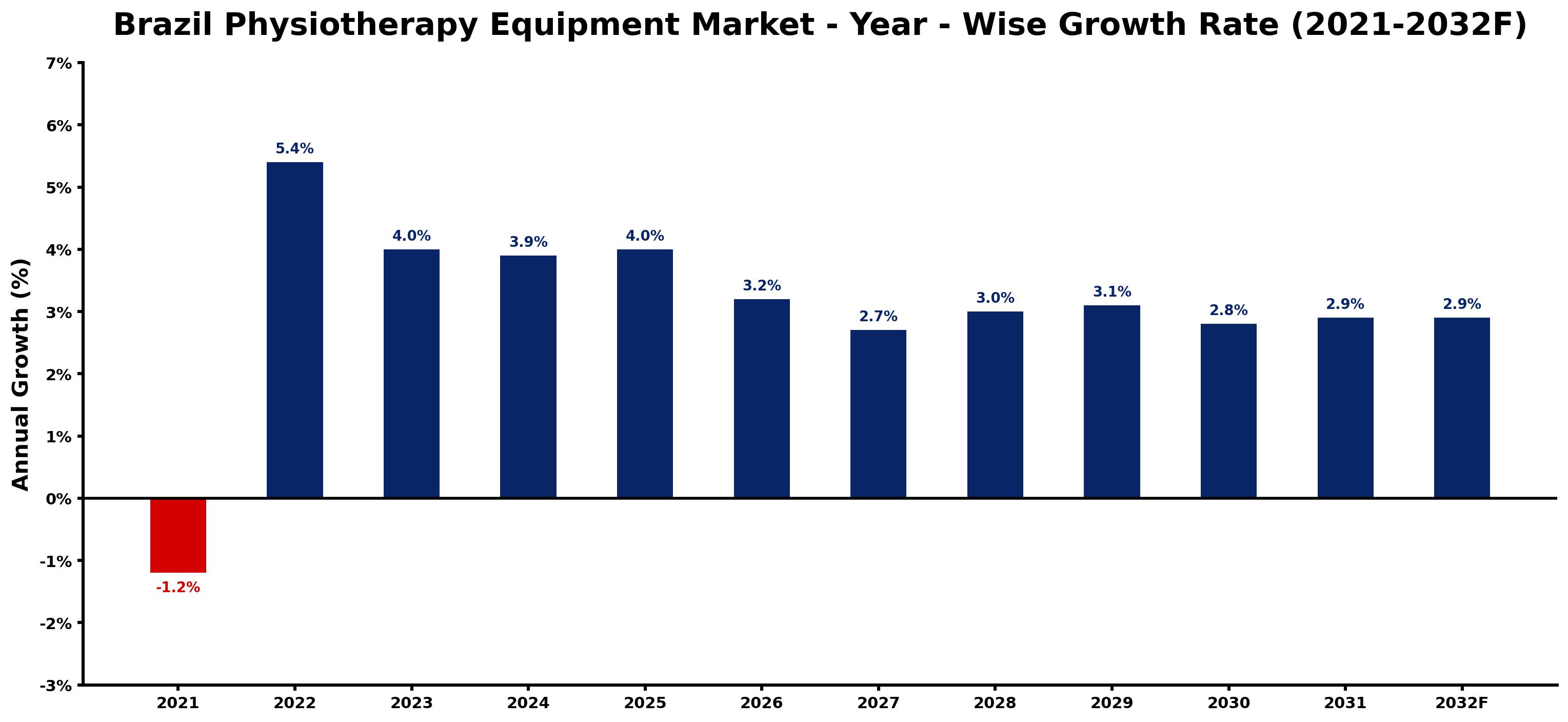
The table below presents the year wise growth rates along with the key drivers influencing the market
| Year | Growth Rate | Major Drivers |
| 2021 | -1.2% | Increased competition from lowcost international suppliers undercut local pricing, impacting sales across the physiotherapy sector. |
| 2022 | 5.4% | Increased awareness of physical health fostered investment in rehabilitation equipment segments. |
| 2023 | 4.0% | A growing elderly population intensified the need for specialized physiotherapy services nationwide. |
| 2024 | 3.9% | Technological innovations introduced new equipment enhancing treatment efficiency and patient outcomes. |
| 2025 | 4.0% | Local manufacturers began producing high-quality, cost-effective physiotherapy devices for domestic use. |
| 2026 | 3.2% | Health insurance reforms expanded coverage for physiotherapy, driving equipment purchases by clinics. |
| 2027 | 2.7% | Rising incidences of sports injuries among youth prompted demand for rehabilitation equipment. |
| 2028 | 3.0% | Climate-related health challenges increased the focus on physiotherapy for respiratory issues. |
| 2029 | 3.1% | Corporate wellness programs integrating physiotherapy services gained traction among large employers. |
| 2030 | 2.8% | Digital health trends promoted tele-rehabilitation, influencing demand for remote physiotherapy tools. |
| 2031 | 2.9% | Public-private partnerships enhanced infrastructure, boosting accessibility to physiotherapy facilities nationwide. |
| 2032 | 2.9% | Continuous professional development for physiotherapists emphasized the importance of advanced equipment training. |
Note - Market size estimations and growth projections presented in this report are based on 6Wresearch's advanced forecasting approach, validated with industry datasets as of June 2026.
Brazil Physiotherapy Equipment Market Synopsis
The Brazil Physiotherapy Equipment Market is projected to reach 3.2% and witness significant growth during the forecast period (2026-2032). The market is characterized by a robust compound annual growth rate (CAGR) of 8.7%, driven by several pivotal factors including the rising geriatric population, an increase in chronic disease prevalence, and the growing adoption of advanced technologies and services within healthcare settings. Furthermore, favorable government initiatives aimed at promoting health and wellness are contributing positively to the market landscape. The introduction of technologically advanced physiotherapy equipment is also a significant contributor to the market's growth trajectory, indicating a vibrant and evolving sector.
Brazil Physiotherapy Equipment Market Growth Drivers
The growth of the Brazil physiotherapy equipment market is underpinned by a confluence of drivers. Firstly, the rapidly aging population is resulting in a higher demand for physiotherapy services, as older adults are more prone to musculoskeletal issues and chronic conditions that necessitate physiotherapeutic interventions. Secondly, the rising prevalence of chronic diseases, including diabetes and cardiovascular conditions, is fueling the need for rehabilitative services and equipment. This demand is further augmented by the increasing number of healthcare facilities that are integrating advanced physiotherapy technologies and services into their offerings for enhanced patient care.
- The transformative impact of technology on physiotherapy practices is notable, with devices like tele-rehabilitation tools and digital physiotherapy platforms gaining traction, enhancing accessibility and efficiency.
- Government support in the form of health promotion initiatives is stimulating awareness and encouraging individuals to seek physiotherapy for preventive care and rehabilitation.
- Increased healthcare expenditure and investment in health infrastructure are facilitating the procurement of state-of-the-art physiotherapy equipment, thus improving treatment options available to practitioners and patients alike.
- A growing emphasis on personalized medicine is driving the development of customized physiotherapy solutions that cater to individual patient needs, further amplifying market demand.
- The expansion of insurance coverage for physiotherapy services in Brazil is making these treatments more accessible to the population, thereby increasing patient engagement and treatment uptake.
Brazil Physiotherapy Equipment Market Trends and Opportunities
In the Brazil physiotherapy equipment market, several trends and opportunities are emerging that present avenues for growth. One notable trend is the shift towards home-based physiotherapy solutions, propelled by patient preference for convenience and remote monitoring capabilities. Additionally, the increasing integration of artificial intelligence (AI) and machine learning in physiotherapy applications is revolutionizing treatment approaches, enabling more effective patient monitoring and engagement.
- The rise of telehealth services is facilitating access to physiotherapy for patients in remote areas, expanding the market's reach and improving health outcomes.
- Wearable technologies are gaining popularity among physiotherapy patients, offering real-time data that allows for more tailored therapeutic interventions.
- There is a growing inclination towards eco-friendly and sustainable equipment, as healthcare providers are increasingly prioritizing environmental sustainability in their purchasing decisions.
- Innovations in robotic-assisted therapy equipment are enhancing rehabilitation processes, leading to improved patient recovery times and outcomes.
- Strategic partnerships between technology firms and healthcare providers are likely to foster the development of cutting-edge physiotherapy solutions, driving further market expansion.
Brazil Physiotherapy Equipment Market Challenges and Restraints
Despite the positive outlook for the Brazil physiotherapy equipment market, several challenges and restraints persist. A major concern is the high initial cost associated with advanced physiotherapy equipment, which can be a barrier for smaller healthcare facilities and practitioners. Furthermore, the lack of trained personnel proficient in utilizing new technologies can limit the effective implementation of advanced physiotherapy equipment.
- Regulatory hurdles regarding the approval and use of new physiotherapy devices can slow down market entry for innovative products.
- Variability in healthcare infrastructure across regions poses challenges in achieving uniform access to physiotherapy services and equipment.
- Competition from alternative therapeutic modalities, such as chiropractic and alternative medicine, can impact the physiotherapy market's growth potential.
- Economic fluctuations and public health crises may result in reduced healthcare budgets, affecting investments in physiotherapy equipment.
- Patient reluctance towards adopting new technologies for fear of in-person therapy being more effective can hinder market penetration of innovative solutions.
Brazil Physiotherapy Equipment Market Government Investment and Initiatives
Government investment and initiatives play a crucial role in shaping the Brazil physiotherapy equipment market. The Brazilian government has been proactive in facilitating health initiatives that focus on the accessibility and quality of physiotherapy services across the nation. This includes funding for public health campaigns aimed at educating the population about the benefits of physiotherapy and rehabilitation.
- The establishment of public-private partnerships is enhancing the development and distribution of physiotherapy equipment, ensuring that advanced technologies are accessible to a wider population.
- Investment in health infrastructure is focused on expanding healthcare facilities, particularly in underserved regions, to improve access to physiotherapy services.
- Government incentives for training and certification programs in physiotherapy are producing a skilled workforce that can effectively utilize advanced equipment, enhancing service delivery.
- Legislative measures to enhance insurance coverage for physiotherapy treatments are expected to boost market demand by making services more affordable for patients.
- Initiatives aimed at promoting preventative healthcare measures are encouraging individuals to integrate physiotherapy into their wellness regimes, further stimulating market growth.
Brazil Physiotherapy Equipment Market Latest Developments (May 2025 - June 2026)
In the latest developments impacting the Brazil physiotherapy equipment market between May 2025 and June 2026, several key industry directions are emerging. There is a noticeable uptick in research and development activities among companies striving to innovate and introduce new products that leverage the latest technological advancements. The focus on digital health solutions is gaining momentum, with an array of digital platforms and tele-rehabilitation services being brought to market.
- Collaborations between technology firms and healthcare providers are increasingly fostering the development of integrated physiotherapy solutions, enhancing patient care.
- Regulatory bodies are working towards streamlining approval processes for new physiotherapy equipment, facilitating quicker market entry for innovative solutions.
- Industry players are focusing on sustainability, with many companies pivoting towards eco-friendly manufacturing practices for physiotherapy equipment.
- Emerging trends include the incorporation of virtual reality (VR) in rehabilitation programs, offering immersive experiences to patients and improving engagement.
- Investment in training programs for healthcare professionals is being prioritized to ensure effective use of advanced physiotherapy technologies, improving outcomes.
Brazil Physiotherapy Equipment Market - Key Attractiveness of the Report
- 10 Years of Market Numbers
- Historical Data Starting from 2022 to 2025
- Base Year: 2025
- Forecast Data until 2032
- Key Performance Indicators Impacting the Market
- Major Upcoming Developments and Projects
Key Highlights of the Report:
- Brazil Physiotherapy Equipment Market Outlook
- Market Size of Brazil Physiotherapy Equipment Market, 2025
- Forecast of Brazil Physiotherapy Equipment Market, 2032F
- Historical Data and Forecast of Brazil Physiotherapy Equipment Revenues & Volume for the Period 2022-2032F
- Brazil Physiotherapy Equipment Market Trend Evolution
- Brazil Physiotherapy Equipment Market Drivers and Challenges
- Brazil Physiotherapy Equipment Price Trends
- Brazil Physiotherapy Equipment Porter's Five Forces
- Brazil Physiotherapy Equipment Industry Life Cycle
- Historical Data and Forecast of Brazil Physiotherapy Equipment Market Revenues & Volume By Product Types for the Period 2022-2032F
- Historical Data and Forecast of Brazil Physiotherapy Equipment Market Revenues & Volume By Equipment for the Period 2022-2032F
- Historical Data and Forecast of Brazil Physiotherapy Equipment Market Revenues & Volume By Accessories for the Period 2022-2032F
- Historical Data and Forecast of Brazil Physiotherapy Equipment Market Revenues & Volume By Application? for the Period 2022-2032F
- Historical Data and Forecast of Brazil Physiotherapy Equipment Market Revenues & Volume By Musculoskeletal Applications for the Period 2022-2032F
- Historical Data and Forecast of Brazil Physiotherapy Equipment Market Revenues & Volume By Neurological Applications for the Period 2022-2032F
- Historical Data and Forecast of Brazil Physiotherapy Equipment Market Revenues & Volume By Cardiovascular & Pulmonary Applications for the Period 2022-2032F
- Historical Data and Forecast of Brazil Physiotherapy Equipment Market Revenues & Volume By Pediatric Applications for the Period 2022-2032F
- Historical Data and Forecast of Brazil Physiotherapy Equipment Market Revenues & Volume By Gynecological Applications for the Period 2022-2032F
- Historical Data and Forecast of Brazil Physiotherapy Equipment Market Revenues & Volume By Other? for the Period 2022-2032F
- Historical Data and Forecast of Brazil Physiotherapy Equipment Market Revenues & Volume By End-user for the Period 2022-2032F
- Historical Data and Forecast of Brazil Physiotherapy Equipment Market Revenues & Volume By Physiotherapy & Rehabilitation Centers for the Period 2022-2032F
- Historical Data and Forecast of Brazil Physiotherapy Equipment Market Revenues & Volume By Hospitals for the Period 2022-2032F
- Historical Data and Forecast of Brazil Physiotherapy Equipment Market Revenues & Volume By Home Care Settings for the Period 2022-2032F
- Historical Data and Forecast of Brazil Physiotherapy Equipment Market Revenues & Volume By Physician Offices for the Period 2022-2032F
- Historical Data and Forecast of Brazil Physiotherapy Equipment Market Revenues & Volume By Others for the Period 2022-2032F
- Brazil Physiotherapy Equipment Import Export Trade Statistics
- Market Opportunity Assessment By Product Types
- Market Opportunity Assessment By Application?
- Market Opportunity Assessment By End-user
- Brazil Physiotherapy Equipment Top Companies Market Share
- Brazil Physiotherapy Equipment Competitive Benchmarking By Technical and Operational Parameters
- Brazil Physiotherapy Equipment Company Profiles
- Brazil Physiotherapy Equipment Key Strategic Recommendations






































