Brazil Plant-based Meat Market Size, Share & Growth Rate
The Brazil Plant-based Meat Market was estimated at USD 218 Million in 2025 and is projected to reach USD 260 Million by 2032, growing at a CAGR of 2.5% from 2026 to 2032. This growth is predominantly driven by a significant shift in consumer preferences towards healthier food options and an increasing awareness of sustainability issues. As the Brazilian population becomes more health-conscious and concerned about the environmental impacts of traditional meat production, the demand for plant-based alternatives continues to gain momentum.
Brazil Plant-based Meat Market Year-wise Growth Rate and Key Drivers
This graph highlights how the Brazil Plant-based Meat Market has steadily grown over the years, supported by major growth factors.
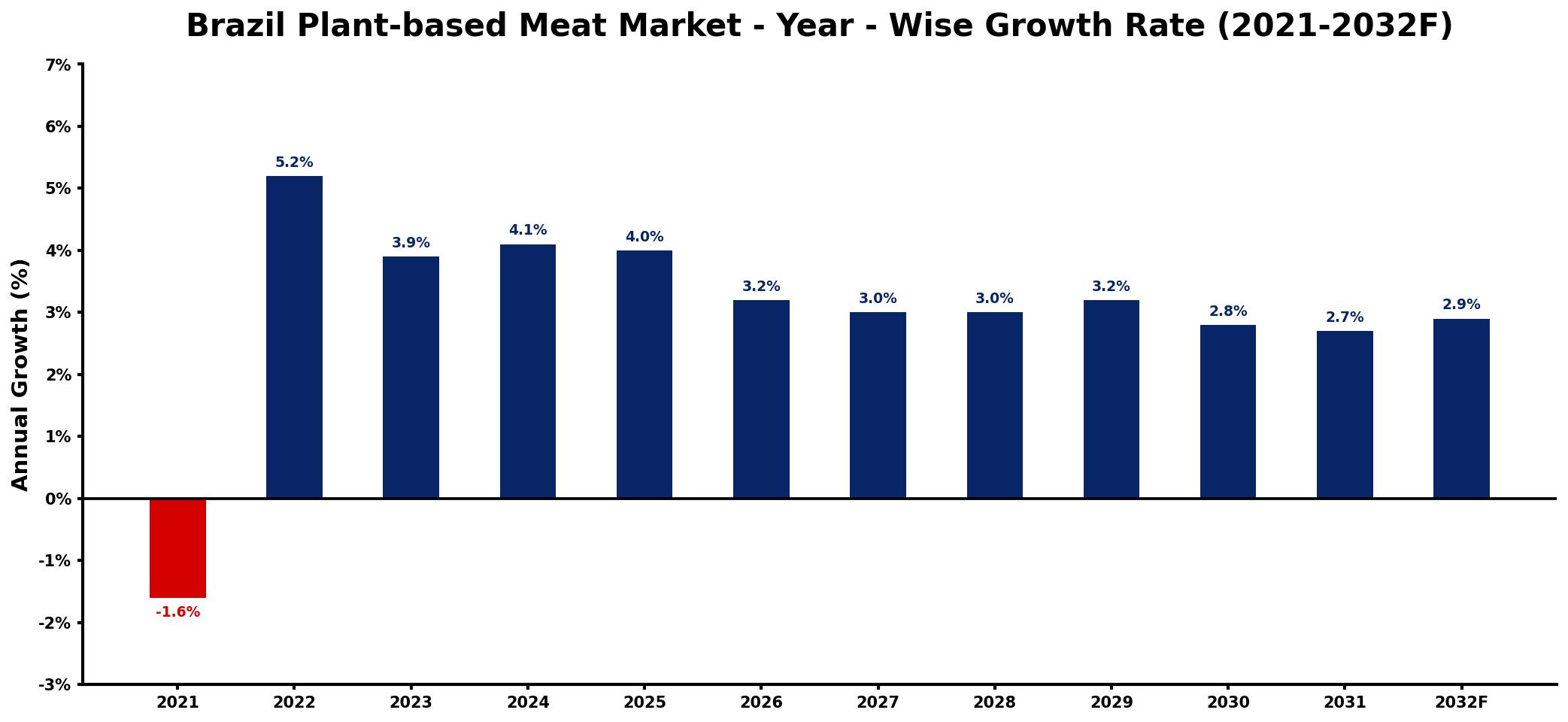
The table below presents the year‑wise growth rates along with the key drivers influencing the market
| Year | Growth Rate | Major Drivers |
| 2021 | -1.6% | Consumer interest in alternatives declines |
| 2022 | 5.2% | Health awareness drives consumption growth |
| 2023 | 3.9% | Sustainability trends boost market demand |
| 2024 | 4.1% | Innovative products attract new customers |
| 2025 | 4.0% | Retail partnerships expand distribution channels |
| 2026 | 3.2% | Increased investments in production facilities |
| 2027 | 3.0% | E-commerce platforms enhance accessibility |
| 2028 | 3.0% | Culinary trends influence consumer preferences |
| 2029 | 3.2% | Regulatory support promotes industry expansion |
| 2030 | 2.8% | Public awareness campaigns increase visibility |
| 2031 | 2.7% | New flavors attract diverse consumers |
| 2032 | 2.9% | Technological advancements improve production efficiency |
Note: Market size estimations and growth projections presented in this report are based on 6Wresearch's proprietary forecasting methodology, utilizing the latest available industry data, government publications, and primary research inputs.
Brazil Plant-based Meat Market Synopsis
In Brazil, the rise in health consciousness is directly influencing consumer choices, with many opting for meat alternatives that promise both nutrition and sustainability. The market is increasingly characterized by the introduction of innovative products that cater to local tastes, making plant-based diets more appealing to the average Brazilian consumer.
Moreover, there is a notable push from younger demographics who are keen on exploring plant-based diets, driven by social media and lifestyle influences. This trend is reinforced by public awareness campaigns promoting the benefits of plant-based eating, further stimulating interest in meat substitutes.
Brazil Plant-based Meat Market Key Takeaways
- The market is witnessing robust growth fueled by rising health and environmental concerns.
- Innovative product offerings are being tailored to local Brazilian tastes and culinary preferences.
- Government support through incentives is fostering a conducive environment for market expansion.
- Younger consumers are leading the charge in adopting plant-based diets, impacting overall demand.
- Effective marketing strategies are essential to overcoming cultural preferences for traditional meat.
Evaluation of Restraints in Brazil Plant-based Meat Market
Despite its rapid growth, the Brazil Plant-based Meat Market faces challenges, notably rooted in entrenched cultural preferences. Traditional meat is a significant part of Brazilian cuisine, making it difficult for plant-based alternatives to gain acceptance. Overcoming these barriers requires not only innovation in product development but also robust marketing initiatives that effectively communicate the benefits of plant-based options. Consumer education about the nutritional and environmental advantages of these alternatives is crucial to dispelling myths and fostering acceptance.
Brazil Plant-based Meat Market Trends
Several key trends are shaping the Brazil Plant-based Meat Market. Firstly, there's a surge in demand for locally-sourced and manufactured products, as consumers increasingly prefer alternatives that resonate with their cultural culinary practices. Additionally, advancements in food technology are leading to improved taste and texture of plant-based products, making them more appealing to mainstream consumers. Social media and influencer-driven marketing campaigns are also playing a significant role in driving visibility and interest in plant-based offerings.
Brazil Plant-based Meat Market Opportunities
Investment opportunities abound in the Brazil Plant-based Meat Market. Companies can capitalize on the growing interest in plant-based diets by expanding product lines to include locally relevant flavors and ingredients. There is also room for developing educational platforms that inform consumers about the benefits of plant-based eating, further driving demand. Collaborations with retailers to enhance visibility and accessibility of plant-based products in supermarkets and restaurants present another promising avenue for growth.
Government Initiatives in the Brazil Plant-based Meat Market
The Brazilian government is playing a vital role in fostering growth in the plant-based meat sector through supportive policies and initiatives. Financial incentives, research grants, and tax breaks are being offered to companies that invest in plant-based protein production. Additionally, public awareness campaigns aimed at promoting the nutritional benefits and sustainability of plant-based diets are crucial in shaping consumer perceptions and encouraging the acceptance of these alternatives.
Future Insights of the Brazil Plant-based Meat Market
Looking ahead to 2026-2032, the Brazil Plant-based Meat Market is poised for continued growth as consumer attitudes evolve. As plant-based diets gain traction, supported by a robust infrastructure for production and distribution, the market will likely witness an increase in both product offerings and variety. The integration of new technologies in food production will enhance product quality and consumer experience, helping to solidify plant-based options as mainstream choices in Brazilian cuisine.
Brazil Plant-based Meat Market Latest Developments (2025 - 2026)
Recent developments in the Brazil Plant-based Meat Market reflect the growing momentum behind plant-based eating. Companies are launching new products that cater to health-conscious consumers, with an emphasis on natural ingredients and authentic flavors. Market players are also exploring innovative distribution channels to reach a broader audience, particularly through e-commerce platforms. Additionally, collaborations between industry players and agricultural sectors are becoming common as they seek to enhance the supply chain for plant-based ingredients.
Brazil Plant-based Meat Market - Key Attractiveness of the Report
- 10 Years of Market Numbers
- Historical Data Starting from 2022 to 2025
- Base Year: 2025
- Forecast Data until 2032
- Key Performance Indicators Impacting the Market
- Major Upcoming Developments and Projects
Key Highlights of the Report:
- Brazil Plant-based Meat Market Outlook
- Market Size of Brazil Plant-based Meat Market, 2025
- Forecast of Brazil Plant-based Meat Market, 2032
- Historical Data and Forecast of Brazil Plant-based Meat Revenues & Volume for the Period 2022-2032F
- Brazil Plant-based Meat Market Trend Evolution
- Brazil Plant-based Meat Market Drivers and Challenges
- Brazil Plant-based Meat Price Trends
- Brazil Plant-based Meat Porter's Five Forces
- Brazil Plant-based Meat Industry Life Cycle
- Historical Data and Forecast of Brazil Plant-based Meat Market Revenues & Volume By Source for the Period 2022-2032F
- Historical Data and Forecast of Brazil Plant-based Meat Market Revenues & Volume By Soy for the Period 2022-2032F
- Historical Data and Forecast of Brazil Plant-based Meat Market Revenues & Volume By Pea for the Period 2022-2032F
- Historical Data and Forecast of Brazil Plant-based Meat Market Revenues & Volume By Wheat for the Period 2022-2032F
- Historical Data and Forecast of Brazil Plant-based Meat Market Revenues & Volume By Others for the Period 2022-2032F
- Historical Data and Forecast of Brazil Plant-based Meat Market Revenues & Volume By Product for the Period 2022-2032F
- Historical Data and Forecast of Brazil Plant-based Meat Market Revenues & Volume By Burgers for the Period 2022-2032F
- Historical Data and Forecast of Brazil Plant-based Meat Market Revenues & Volume By Sausages for the Period 2022-2032F
- Historical Data and Forecast of Brazil Plant-based Meat Market Revenues & Volume By Patties for the Period 2022-2032F
- Historical Data and Forecast of Brazil Plant-based Meat Market Revenues & Volume By Nuggets, for the Period 2022-2032F
- Historical Data and Forecast of Brazil Plant-based Meat Market Revenues & Volume By Tenders & Cutlets for the Period 2022-2032F
- Historical Data and Forecast of Brazil Plant-based Meat Market Revenues & Volume By Grounds for the Period 2022-2032F
- Historical Data and Forecast of Brazil Plant-based Meat Market Revenues & Volume By Others for the Period 2022-2032F
- Historical Data and Forecast of Brazil Plant-based Meat Market Revenues & Volume By Type for the Period 2022-2032F
- Historical Data and Forecast of Brazil Plant-based Meat Market Revenues & Volume By Chicken for the Period 2022-2032F
- Historical Data and Forecast of Brazil Plant-based Meat Market Revenues & Volume By Pork for the Period 2022-2032F
- Historical Data and Forecast of Brazil Plant-based Meat Market Revenues & Volume By Beef for the Period 2022-2032F
- Historical Data and Forecast of Brazil Plant-based Meat Market Revenues & Volume By Fish for the Period 2022-2032F
- Historical Data and Forecast of Brazil Plant-based Meat Market Revenues & Volume By Others for the Period 2022-2032F
- Historical Data and Forecast of Brazil Plant-based Meat Market Revenues & Volume By End-user for the Period 2022-2032F
- Historical Data and Forecast of Brazil Plant-based Meat Market Revenues & Volume By Retail for the Period 2022-2032F
- Historical Data and Forecast of Brazil Plant-based Meat Market Revenues & Volume By HORECA (Hotel/Restaurant/Caf) for the Period 2022-2032F
- Historical Data and Forecast of Brazil Plant-based Meat Market Revenues & Volume By Storage for the Period 2022-2032F
- Historical Data and Forecast of Brazil Plant-based Meat Market Revenues & Volume By Refrigerated Plant-based Meat for the Period 2022-2032F
- Historical Data and Forecast of Brazil Plant-based Meat Market Revenues & Volume By Frozen Plant-based Meat for the Period 2022-2032F
- Historical Data and Forecast of Brazil Plant-based Meat Market Revenues & Volume By Shelf-stable Plant-based Meat for the Period 2022-2032F
- Brazil Plant-based Meat Import Export Trade Statistics
- Market Opportunity Assessment By Source
- Market Opportunity Assessment By Product
- Market Opportunity Assessment By Type
- Market Opportunity Assessment By End-user
- Market Opportunity Assessment By Storage
- Brazil Plant-based Meat Top Companies Market Share
- Brazil Plant-based Meat Competitive Benchmarking By Technical and Operational Parameters
- Brazil Plant-based Meat Company Profiles
- Brazil Plant-based Meat Key Strategic Recommendations






































