Brazil Protein Market Growth Rate Analysis (2025 - 2031)
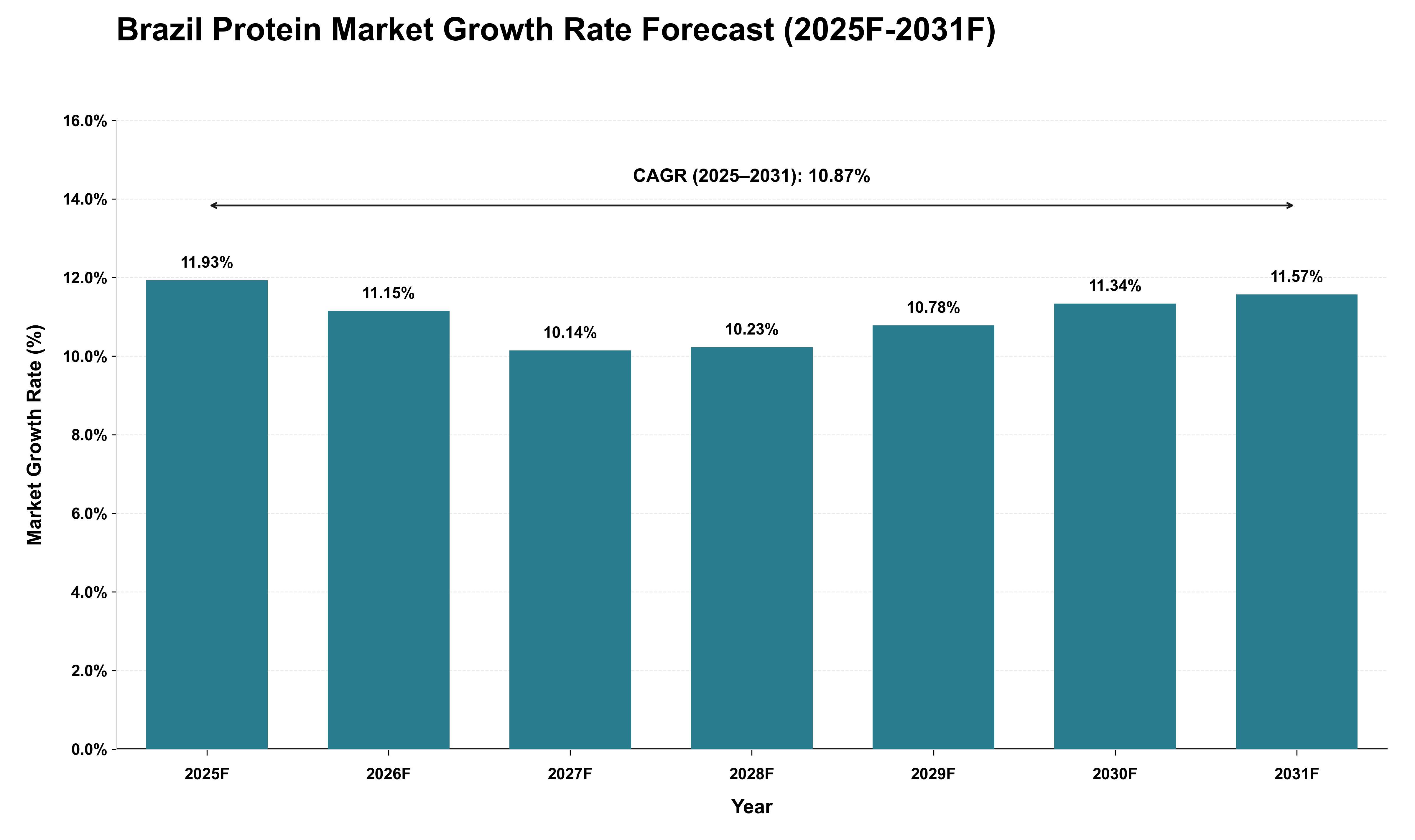
The Brazil protein market is poised for robust growth driven by evolving regulatory frameworks and trade policies that will enhance export capabilities and domestic consumption. As global demand for protein sources escalates, Brazil's strategic positioning as a leading exporter will be bolstered by anticipated trade agreements that facilitate access to key international markets. The projected CAGR of 10.87% reflects not only the increasing health consciousness among consumers but also the expected rise in livestock production efficiency due to technological advancements and supportive government initiatives. Import dependencies may shift as local production scales up, reducing reliance on foreign protein sources while ensuring compliance with stricter food safety regulations. Consequently, annual growth rates will likely fluctuate between 10.14% and 11.93%, indicating a dynamic response to both domestic policy changes and global market conditions throughout this period.
Key Highlights of the Report:
- Brazil Protein Market Outlook
- Market Size of Brazil Protein Market, 2024
- Forecast of Brazil Protein Market, 2031
- Historical Data and Forecast of Brazil Protein Revenues & Volume for the Period 2021- 2031
- Brazil Protein Market Trend Evolution
- Brazil Protein Market Drivers and Challenges
- Brazil Protein Price Trends
- Brazil Protein Porter's Five Forces
- Brazil Protein Industry Life Cycle
- Historical Data and Forecast of Brazil Protein Market Revenues & Volume By Source for the Period 2021- 2031
- Historical Data and Forecast of Brazil Protein Market Revenues & Volume By Animal for the Period 2021- 2031
- Historical Data and Forecast of Brazil Protein Market Revenues & Volume By Microbial for the Period 2021- 2031
- Historical Data and Forecast of Brazil Protein Market Revenues & Volume By End User for the Period 2021- 2031
- Historical Data and Forecast of Brazil Protein Market Revenues & Volume By Animal Feed for the Period 2021- 2031
- Historical Data and Forecast of Brazil Protein Market Revenues & Volume By Food and Beverages for the Period 2021- 2031
- Historical Data and Forecast of Brazil Protein Market Revenues & Volume By Personal Care and Cosmetics for the Period 2021- 2031
- Historical Data and Forecast of Brazil Protein Market Revenues & Volume By Supplements for the Period 2021- 2031
- Brazil Protein Import Export Trade Statistics
- Market Opportunity Assessment By Source
- Market Opportunity Assessment By End User
- Brazil Protein Top Companies Market Share
- Brazil Protein Competitive Benchmarking By Technical and Operational Parameters
- Brazil Protein Company Profiles
- Brazil Protein Key Strategic Recommendations






































