Brazil Rattan Furniture Market Top 5 Importing Countries and Market Competition (HHI) Analysis
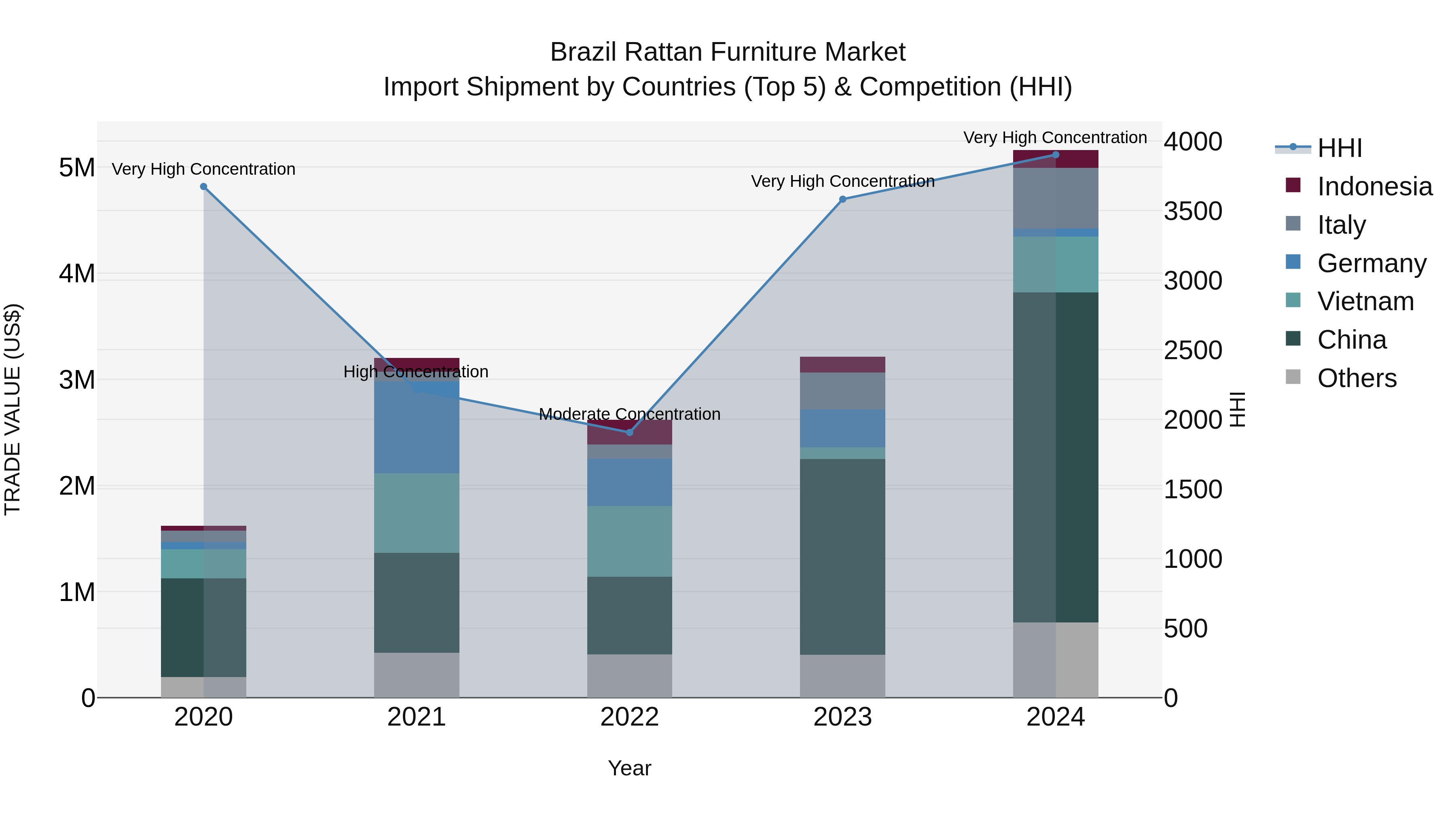
Brazil`s rattan furniture import market continues to thrive in 2024, with top exporting countries including China, Italy, Vietnam, USA, and Indonesia. The high Herfindahl-Hirschman Index (HHI) indicates a concentrated market, while the impressive compound annual growth rate (CAGR) of 33.59% from 2020 to 2024 demonstrates sustained expansion. Notably, the growth rate spiked to 60.54% from 2023 to 2024, reflecting a surge in demand for rattan furniture in Brazil. This data underscores the strong presence of international suppliers in meeting Brazil`s growing appetite for rattan furniture imports.
Brazil Rattan Furniture Market Overview
The rattan furniture market in Brazil is experiencing growth driven by factors such as the popularity of natural and sustainable materials in home decor and furniture design. Rattan furniture is prized for its durability, natural aesthetics, and eco-friendly properties, making it a preferred choice among environmentally conscious consumers. Manufacturers are offering a wide range of rattan furniture products, including chairs, sofas, tables, and accessories, catering to diverse consumer preferences for stylish and sustainable home furnishings.
Drivers of the market
The rattan furniture market in Brazil is driven by factors such as consumer preferences for natural and eco-friendly materials, design trends, and lifestyle choices. Additionally, factors like availability of raw materials, craftsmanship, and trade policies influence the production and consumption of rattan furniture in Brazil.
Challenges of the market
The Brazil rattan furniture market faces the challenge of adapting to changing design trends and consumer preferences. While rattan furniture is prized for its natural aesthetic and durability, manufacturers must innovate to offer contemporary designs that appeal to modern consumers. Moreover, with growing competition from alternative materials such as synthetic rattan and wicker, traditional rattan furniture makers must differentiate their products based on craftsmanship, quality, and sustainability. Keeping abreast of design trends and consumer preferences is essential for remaining competitive in this niche market.
Government Policy of the market
In an effort to promote sustainable and eco-friendly furniture options, the Brazil government has implemented policies addressing the rattan furniture market. These policies aim to support the sustainable harvesting and processing of rattan materials, ensuring responsible practices that preserve natural resources and biodiversity. Additionally, incentives are provided to companies that prioritize the use of rattan in furniture production and adopt sustainable manufacturing processes, fostering innovation and economic development in the rattan furniture industry.
Key Highlights of the Report:
- Brazil Rattan Furniture Market Outlook
- Market Size of Brazil Rattan Furniture Market, 2021
- Forecast of Brazil Rattan Furniture Market, 2028
- Historical Data and Forecast of Brazil Rattan Furniture Revenues & Volume for the Period 2018 - 2028
- Brazil Rattan Furniture Market Trend Evolution
- Brazil Rattan Furniture Market Drivers and Challenges
- Brazil Rattan Furniture Price Trends
- Brazil Rattan Furniture Porter's Five Forces
- Brazil Rattan Furniture Industry Life Cycle
- Historical Data and Forecast of Brazil Rattan Furniture Market Revenues & Volume By Type for the Period 2018 - 2028
- Historical Data and Forecast of Brazil Rattan Furniture Market Revenues & Volume By Table for the Period 2018 - 2028
- Historical Data and Forecast of Brazil Rattan Furniture Market Revenues & Volume By Chairs for the Period 2018 - 2028
- Historical Data and Forecast of Brazil Rattan Furniture Market Revenues & Volume By Storage for the Period 2018 - 2028
- Historical Data and Forecast of Brazil Rattan Furniture Market Revenues & Volume By Beds for the Period 2018 - 2028
- Historical Data and Forecast of Brazil Rattan Furniture Market Revenues & Volume By Others for the Period 2018 - 2028
- Historical Data and Forecast of Brazil Rattan Furniture Market Revenues & Volume By Application for the Period 2018 - 2028
- Historical Data and Forecast of Brazil Rattan Furniture Market Revenues & Volume By Residential for the Period 2018 - 2028
- Historical Data and Forecast of Brazil Rattan Furniture Market Revenues & Volume By Commercial for the Period 2018 - 2028
- Historical Data and Forecast of Brazil Rattan Furniture Market Revenues & Volume By Distribution Channel for the Period 2018 - 2028
- Historical Data and Forecast of Brazil Rattan Furniture Market Revenues & Volume By Multi-brand Stores for the Period 2018 - 2028
- Historical Data and Forecast of Brazil Rattan Furniture Market Revenues & Volume By Exclusive Stores for the Period 2018 - 2028
- Historical Data and Forecast of Brazil Rattan Furniture Market Revenues & Volume By Online for the Period 2018 - 2028
- Historical Data and Forecast of Brazil Rattan Furniture Market Revenues & Volume By Other Distribution Channel for the Period 2018 - 2028
- Brazil Rattan Furniture Import Export Trade Statistics
- Market Opportunity Assessment By Type
- Market Opportunity Assessment By Application
- Market Opportunity Assessment By Distribution Channel
- Brazil Rattan Furniture Top Companies Market Share
- Brazil Rattan Furniture Competitive Benchmarking By Technical and Operational Parameters
- Brazil Rattan Furniture Company Profiles
- Brazil Rattan Furniture Key Strategic Recommendations






































