Brazil Retinol Market Growth Rate Analysis (2021-2031)
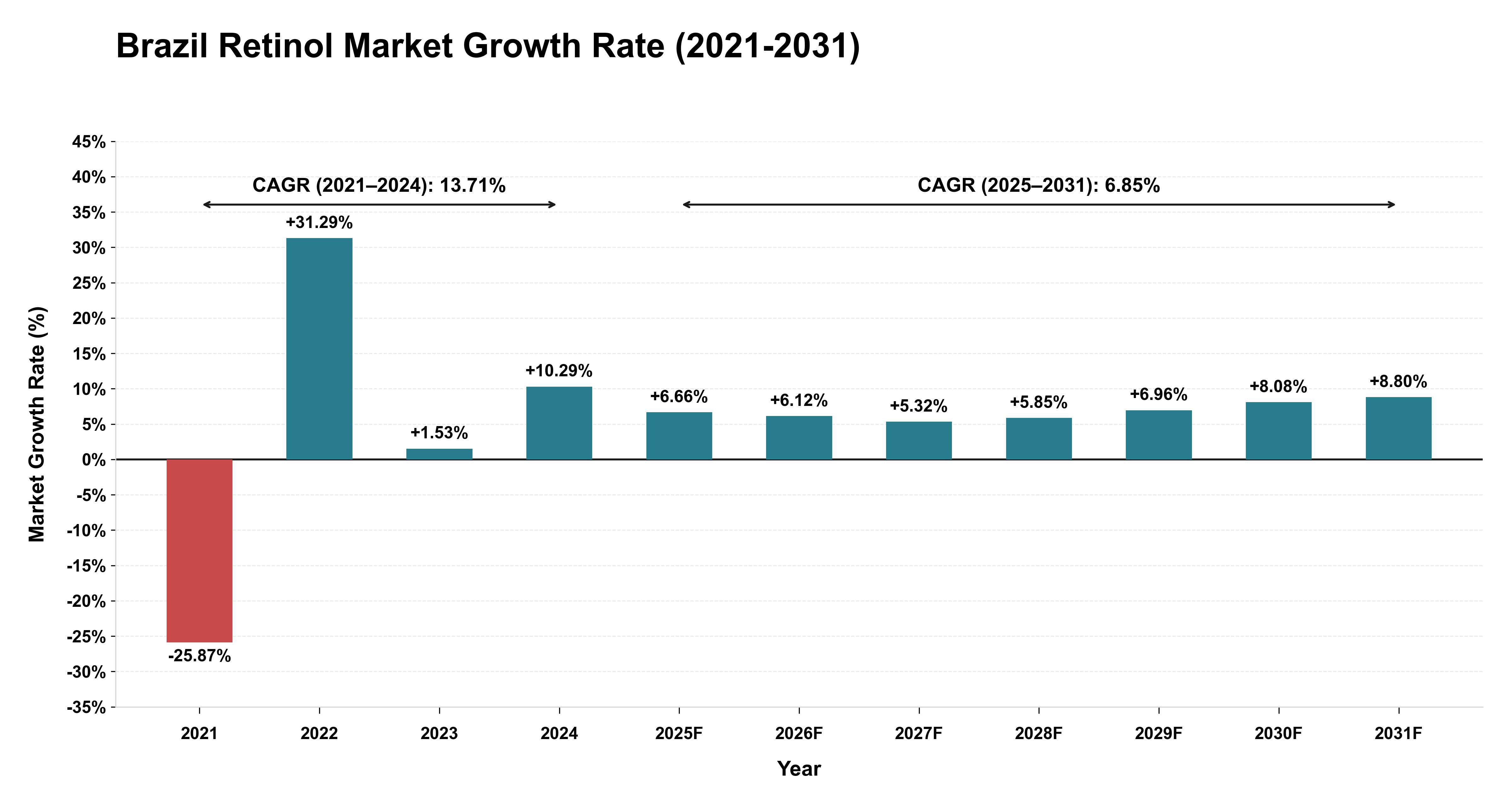
The Brazil Retinol market underwent a volatile period from 2021 to 2024, characterized by a significant decline in 2021, a sharp recovery in 2022, and moderate growth in the following years, resulting in a positive trajectory with a CAGR of 13.71%. This fluctuating trend mirrors market adjustments post-pandemic disruptions and evolving consumer preferences. Looking forward to 2031, the market is projected to stabilize, with growth rates gradually moderating to an anticipated CAGR of 6.85%. This slowdown indicates a maturing market landscape, where the initial surge post-recovery transitions into more sustainable expansion levels. Factors like changing regulatory landscapes, heightened competition, and evolving consumer demographics will influence the industry's growth trajectory towards a more stable and predictable path over the forecast period.
Brazil Retinol Market Synopsis
The Brazil Retinol market is witnessing steady growth driven by the increasing consumer focus on skincare and anti-aging products. Retinol, a derivative of vitamin A, is widely known for its benefits in reducing wrinkles, improving skin texture, and promoting collagen production. The market is primarily fueled by the rising awareness of skincare among consumers, especially in urban areas. Key players in the Brazil Retinol market are focusing on product innovations, such as incorporating retinol in various formulations like serums, creams, and oils to cater to diverse consumer needs. Additionally, the market is also witnessing a surge in demand for natural and organic retinol products, reflecting the growing trend towards clean beauty and sustainable skincare solutions among Brazilian consumers.
Brazil Retinol Market Trends
The Brazil Retinol market is experiencing significant growth due to the increasing demand for skincare products with anti-aging and anti-acne properties. Consumers are becoming more aware of the benefits of retinol in improving skin texture, reducing wrinkles, and combating acne. There is a growing trend towards natural and organic skincare products, leading to the development of retinol-based formulations with clean and sustainable ingredients. Manufacturers are also focusing on product innovation by incorporating advanced delivery systems to enhance the efficacy and stability of retinol in skincare products. With the rising disposable income and changing consumer preferences towards premium skincare products, there are ample opportunities for market players to expand their product offerings and capture a larger market share in the Brazil Retinol market.
Brazil Retinol Market Challenges
In the Brazil Retinol Market, challenges often revolve around regulatory issues, such as strict requirements for product registration and certification. Additionally, there can be challenges related to the education and awareness of consumers regarding the benefits of retinol products, as well as concerns about potential side effects or misinformation. Competition from other skincare ingredients and products also presents a challenge, as companies need to differentiate their offerings and effectively market the benefits of retinol. Supply chain issues and fluctuations in raw material prices can impact the cost and availability of retinol products in the market. Overall, navigating these challenges requires companies to stay informed about regulatory changes, invest in consumer education, and innovate to stand out in a competitive market landscape.
Brazil Retinol Market Investment Opportunities
The Brazil Retinol Market is primarily driven by the increasing demand for effective skincare products among the country`s population. With a growing awareness of skincare benefits and the desire for youthful and healthy-looking skin, consumers are increasingly turning to retinol-based products known for their anti-aging and skin-rejuvenating properties. Additionally, the rising disposable income levels in Brazil are enabling consumers to invest in higher-end skincare products, further boosting the demand for retinol-based formulations. The presence of key market players introducing innovative products and formulations in the market is also fueling market growth. Furthermore, the influence of social media and beauty influencers promoting the benefits of retinol in skincare routines is driving consumer interest and adoption of retinol products in Brazil.
Brazil Retinol Market Government Policie
In Brazil, the Retinol market is governed by regulations set forth by the Agência Nacional de Vigilância Sanitária (ANVISA), the country`s health surveillance agency. ANVISA strictly regulates the use of Retinol in cosmetic products, setting maximum concentration levels and ensuring product safety for consumers. Additionally, the Brazilian government has implemented import tariffs and restrictions on the importation of Retinol products to protect local manufacturers and promote domestic production. Companies operating in the Brazil Retinol market must comply with ANVISA regulations and adhere to import guidelines to ensure market access and consumer safety.
Brazil Retinol Market Future Outlook
The Brazil Retinol Market is poised for growth in the coming years due to increasing consumer awareness of the benefits of retinol in skincare products. Factors such as a growing middle-class population, rising disposable income, and a focus on personal grooming are driving the demand for skincare products containing retinol. Additionally, the trend towards natural and organic skincare products is expected to further boost the market for retinol in Brazil. Key players in the market are likely to capitalize on these trends by introducing innovative products and expanding their distribution networks. Overall, the Brazil Retinol Market is projected to experience steady growth in the forecast period as consumers continue to prioritize skincare and anti-aging solutions.
Key Highlights of the Report:
- Brazil Retinol Market Outlook
- Market Size of Brazil Retinol Market, 2024
- Forecast of Brazil Retinol Market, 2031
- Historical Data and Forecast of Brazil Retinol Revenues & Volume for the Period 2021- 2031
- Brazil Retinol Market Trend Evolution
- Brazil Retinol Market Drivers and Challenges
- Brazil Retinol Price Trends
- Brazil Retinol Porter's Five Forces
- Brazil Retinol Industry Life Cycle
- Historical Data and Forecast of Brazil Retinol Market Revenues & Volume By Type for the Period 2021- 2031
- Historical Data and Forecast of Brazil Retinol Market Revenues & Volume By Natural for the Period 2021- 2031
- Historical Data and Forecast of Brazil Retinol Market Revenues & Volume By Synthetic for the Period 2021- 2031
- Historical Data and Forecast of Brazil Retinol Market Revenues & Volume By Application for the Period 2021- 2031
- Historical Data and Forecast of Brazil Retinol Market Revenues & Volume By Personal Care & Cosmetics for the Period 2021- 2031
- Historical Data and Forecast of Brazil Retinol Market Revenues & Volume By Dietary Supplements for the Period 2021- 2031
- Historical Data and Forecast of Brazil Retinol Market Revenues & Volume By Food & Beverage for the Period 2021- 2031
- Historical Data and Forecast of Brazil Retinol Market Revenues & Volume By Animal Feed for the Period 2021- 2031
- Historical Data and Forecast of Brazil Retinol Market Revenues & Volume By Others for the Period 2021- 2031
- Brazil Retinol Import Export Trade Statistics
- Market Opportunity Assessment By Type
- Market Opportunity Assessment By Application
- Brazil Retinol Top Companies Market Share
- Brazil Retinol Competitive Benchmarking By Technical and Operational Parameters
- Brazil Retinol Company Profiles
- Brazil Retinol Key Strategic Recommendations






































