Brazil Salicylic Acid Market Growth Rate Analysis (2021-2031)
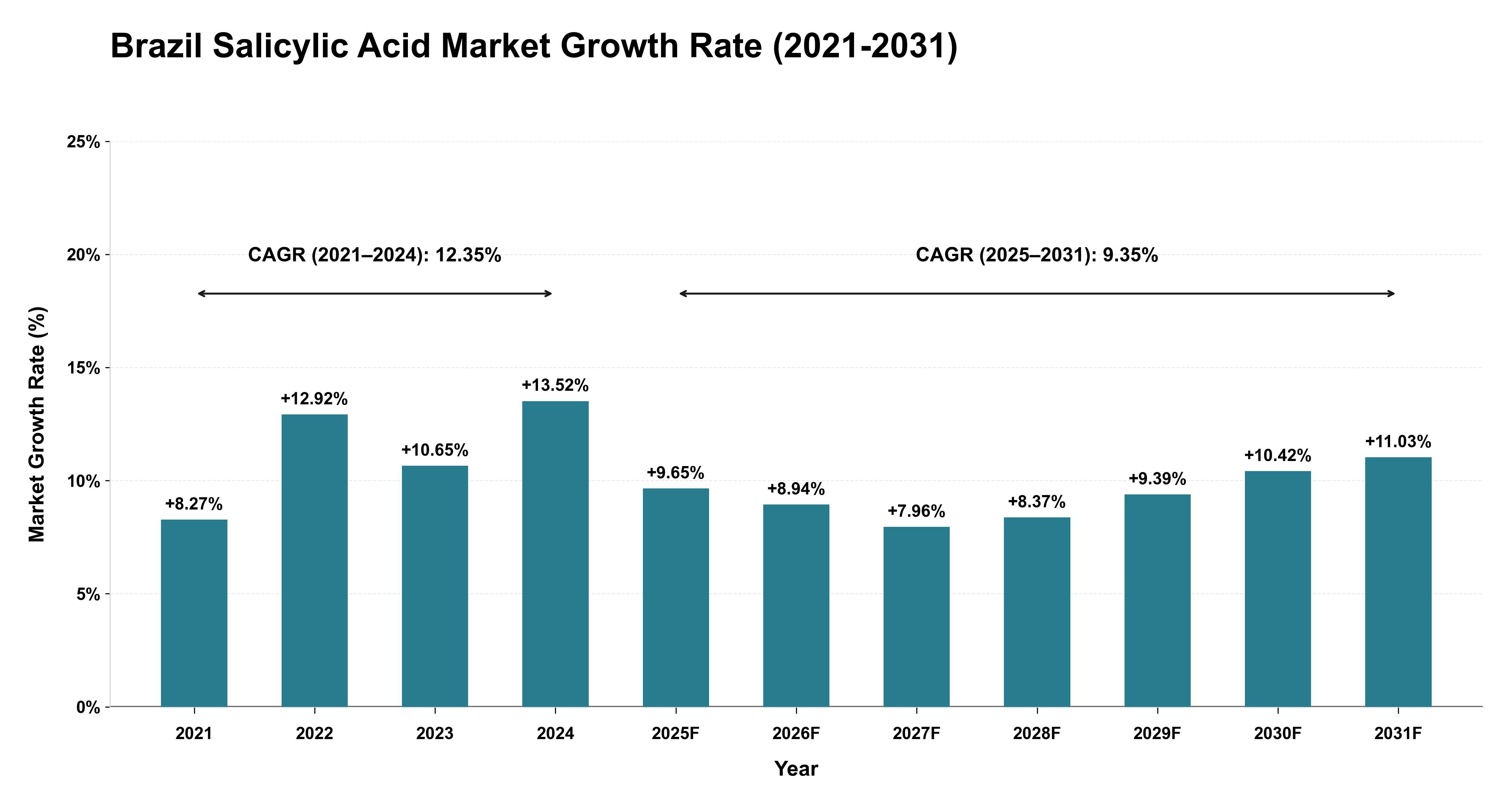
The Brazil Salicylic Acid market demonstrated robust growth from 2021 to 2024, with a CAGR of 12.35%, driven by increased demand in the cosmetics and pharmaceutical sectors due to rising disposable incomes and a focus on personal care products. Looking ahead, the market is projected to sustain a positive growth trajectory, albeit at a slightly slower pace, with a forecasted CAGR of 9.35% from 2025 to 2031. The gradual decline in growth rates post-2024 reflects market stabilization after the initial surge, influenced by evolving consumer preferences and regulatory dynamics. Despite the moderated growth rates, the Brazil Salicylic Acid market remains appealing for investors due to its steady expansion and the solid foundation established in previous years.
Brazil Salicylic Acid Market Overview
The Brazil Salicylic Acid market, widely used in pharmaceuticals and cosmetics, faces challenges such as increasing competition, raw material price fluctuations, and regulatory scrutiny. Market participants need to focus on product innovation, quality assurance, and compliance with regulatory standards to stay competitive and meet the evolving demands of the salicylic acid market.
Drivers of the market
The Brazil Salicylic Acid market has seen growth owing to its applications in pharmaceuticals, cosmetics, and the food industry. Salicylic acid is widely used for its anti-inflammatory and antimicrobial properties. Factors such as the increasing prevalence of skincare and healthcare concerns, growth in the cosmetic industry, and the pharmaceutical sector`s demand for salicylic acid contribute to the market`s positive outlook.
Challenges of the market
The Brazil Salicylic Acid market, with applications in pharmaceuticals and cosmetics, faces challenges such as evolving regulations, competition from natural alternatives, and supply chain disruptions. Adapting to these challenges, along with focusing on sustainable sourcing and production practices, is imperative for stakeholders in the salicylic acid market.
Government Policy of the market
Government policies in Brazil, particularly those related to the pharmaceutical and cosmetic industries, influence the Salicylic Acid market. Policies regulating the production, import, and use of pharmaceutical ingredients impact market trends. Challenges include compliance with quality standards, adherence to pharmaceutical regulations, and addressing safety concerns. Adapting to evolving government policies and maintaining high production standards are essential for success in the salicylic acid market.
Key Highlights of the Report:
- Brazil Salicylic Acid Market Outlook
- Market Size of Brazil Salicylic Acid Market, 2020
- Forecast of Brazil Salicylic Acid Market, 2027
- Historical Data and Forecast of Brazil Salicylic Acid Revenues & Volume for the Period 2018 - 2027
- Brazil Salicylic Acid Market Trend Evolution
- Brazil Salicylic Acid Market Drivers and Challenges
- Brazil Salicylic Acid Price Trends
- Brazil Salicylic Acid Porter's Five Forces
- Brazil Salicylic Acid Industry Life Cycle
- Historical Data and Forecast of Brazil Salicylic Acid Market Revenues & Volume By Application for the Period 2018 - 2027
- Historical Data and Forecast of Brazil Salicylic Acid Market Revenues & Volume By Pharmaceutical for the Period 2018 - 2027
- Historical Data and Forecast of Brazil Salicylic Acid Market Revenues & Volume By Food & Preservatives for the Period 2018 - 2027
- Historical Data and Forecast of Brazil Salicylic Acid Market Revenues & Volume By Cosmetics for the Period 2018 - 2027
- Historical Data and Forecast of Brazil Salicylic Acid Market Revenues & Volume By Others for the Period 2018 - 2027
- Brazil Salicylic Acid Import Export Trade Statistics
- Market Opportunity Assessment By Application
- Brazil Salicylic Acid Top Companies Market Share
- Brazil Salicylic Acid Competitive Benchmarking By Technical and Operational Parameters
- Brazil Salicylic Acid Company Profiles
- Brazil Salicylic Acid Key Strategic Recommendations






































