Brazil SIP Trunking Services Market Size & Growth Rate (2026-2032)
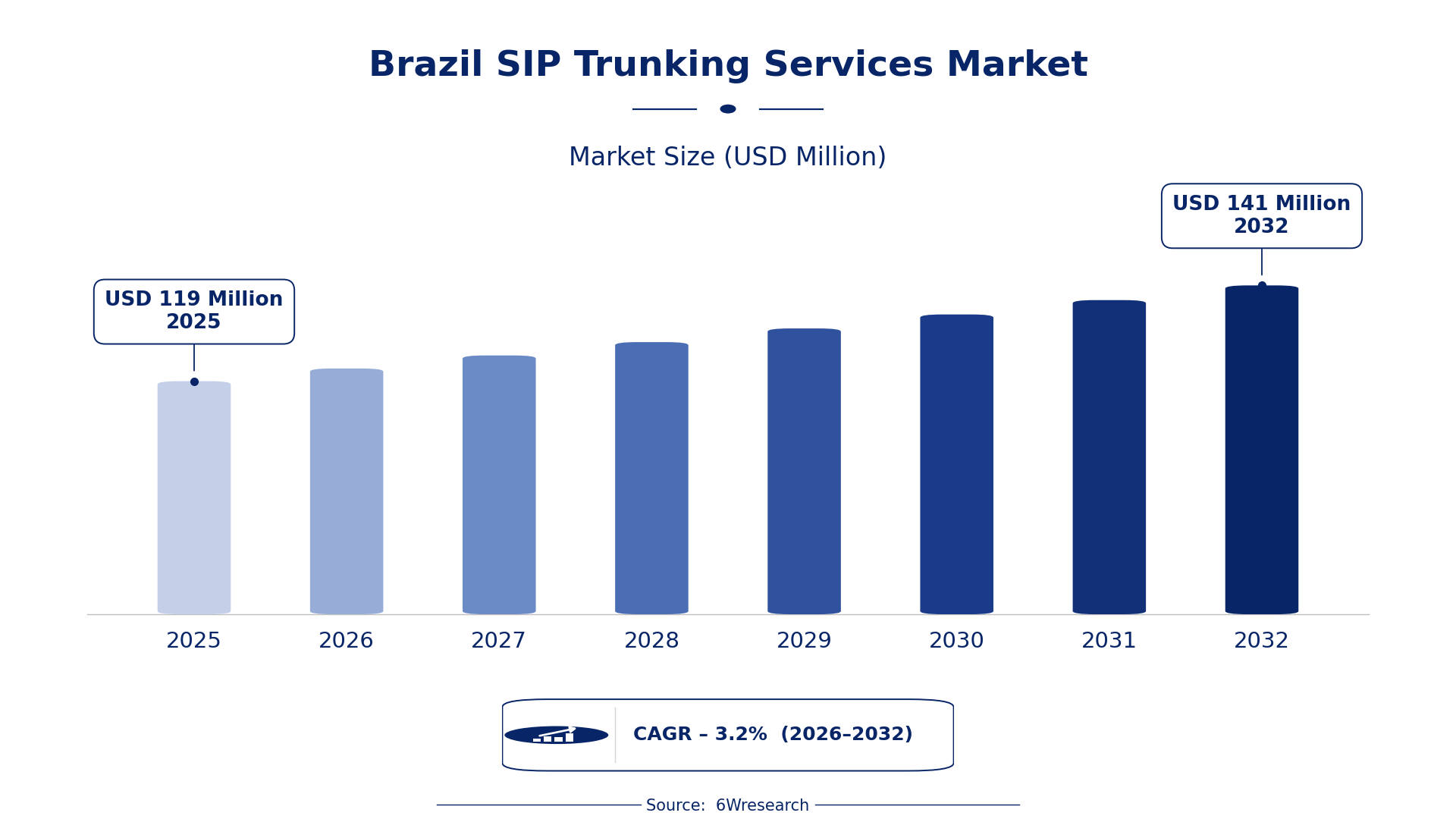
The Brazil SIP Trunking Services Market was estimated at USD 119 Million in 2025 and is projected to reach USD 141 Million by 2032, growing at a CAGR of 3.2% from 2026 to 2032.
Brazil SIP Trunking Services Market Synopsis
The most influential force currently shaping the Brazil SIP Trunking Services market is the broad shift from traditional telephony systems to IP-based solutions. As businesses increasingly seek flexibility and cost savings, the demand for SIP trunking services is surging, reflecting a significant transformation in communication strategies across industries.
However, the market isn't without its obstacles. Regulatory compliance and the need for a dependable network infrastructure remain critical challenges. Navigating these complexities will be essential for companies aiming to maximize the potential benefits of SIP trunking within Brazil’s competitive telecom environment.
Brazil SIP Trunking Services Market Year-wise Growth Rate and Key Drivers
This graph illustrates the annual growth rates of the Brazil SIP Trunking Services Market from 2021 to 2032, highlighting a steady upward trajectory and projected expansion over the forecast period.
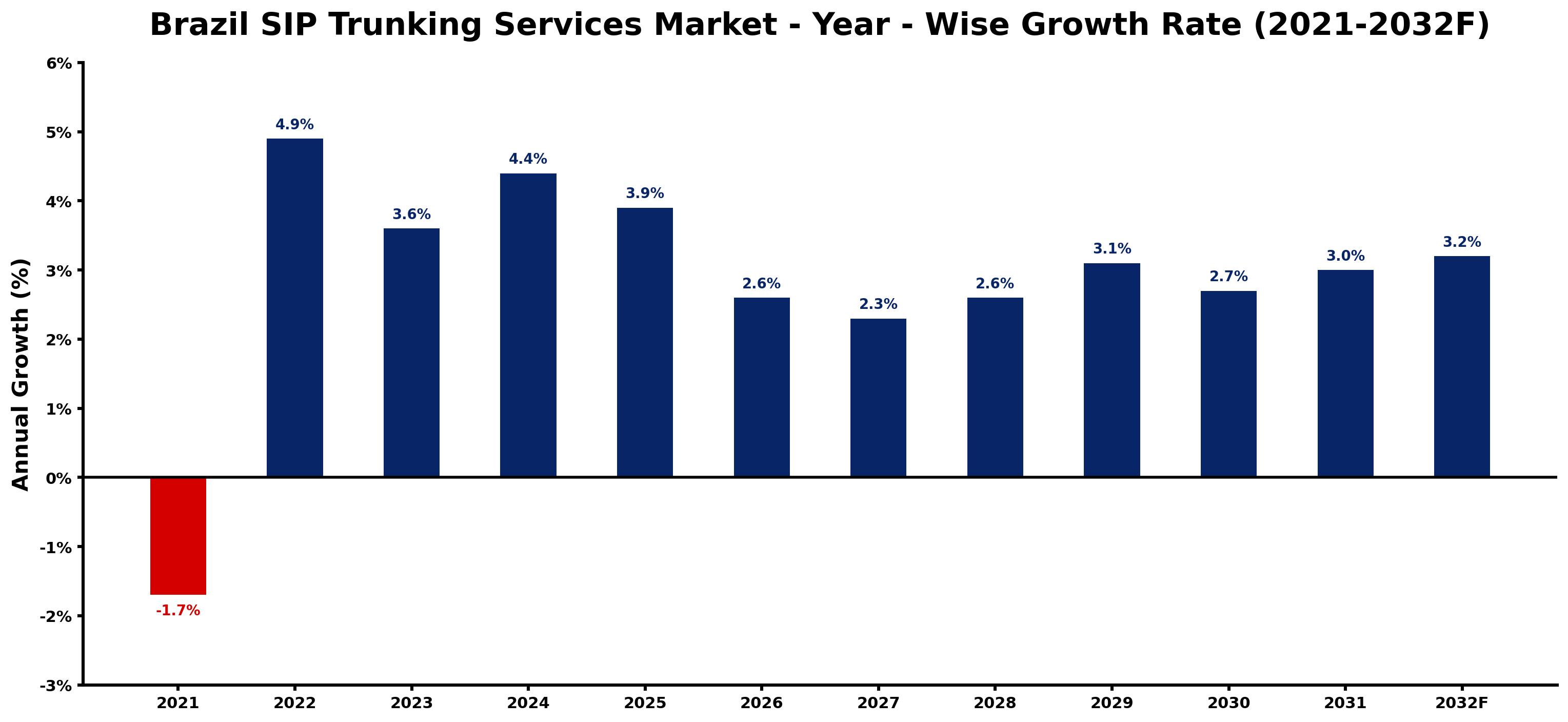
The table below presents the year‑wise growth rates along with the key drivers influencing the market
| Year | Growth Rate | Major Drivers |
| 2021 | -1.7% | ANATEL updated regulations limiting VoIP service providers. |
| 2022 | 4.9% | Regulatory push for VoIP adoption by Anatel agency. |
| 2023 | 3.6% | Growth in smartphone penetration driving cloud-based communications. |
| 2024 | 4.4% | Increased enterprise interest in cost-effective communication solutions. |
| 2025 | 3.9% | Small business digital transformation initiatives boosting SIP usage. |
| 2026 | 2.6% | Telecom companies promoting innovative bundled services for efficiency. |
| 2027 | 2.3% | Events and conferences demonstrating SIP flexibility to businesses. |
| 2028 | 2.6% | Rise in e-commerce demanding robust customer communication tools. |
| 2029 | 3.1% | Government initiatives supporting digital infrastructure for connectivity. |
| 2030 | 2.7% | Corporate cybersecurity mandates enhance SIP trunking adoption. |
| 2031 | 3.0% | Emerging startups needing scalable communication services surge. |
| 2032 | 3.2% | Increased internet capacity supporting enhanced VoIP solutions. |
Note: Market size estimations and growth projections presented in this report are based on 6Wresearch's proprietary forecasting methodology, utilizing the latest available industry data, government publications, and primary research inputs.
Brazil SIP Trunking Services Market Key Takeaways
Below are some of the specific key takeaways from the market, including:
- The migration to IP-based communication is accelerating among Brazilian businesses, driving demand for SIP trunking services.
- Cost efficiency and scalability are primary factors that enhance the appeal of SIP trunking solutions in the market.
- Regulatory compliance challenges continue to influence the speed of SIP trunking adoption in Brazil.
- The emergence of unified communication solutions presents a significant growth opportunity for SIP trunking service providers.
- Improved network infrastructure is critical for ensuring reliable service delivery in the SIP trunking segment.
Evaluation of Restraints in Brazil SIP Trunking Services Market
A variety of restraints continue to hinder the expansion of the Brazil SIP Trunking Services market. Network reliability remains a pressing concern, as many businesses still depend on legacy systems that lack compatibility with modern SIP technologies. Additionally, regulatory compliance is a complex landscape, often evolving without warning, making it difficult for providers to ensure they meet all requirements. These factors not only slow down the adoption of SIP trunking services but can also deter investment from potential new entrants into the market.
Brazil SIP Trunking Services Market Trends
Several trends are currently shaping the Brazil SIP Trunking Services market. Notably, businesses are increasingly recognizing the need for unified communications platforms that integrate various modes of communication. The rise of remote work has further propelled this demand, necessitating reliable, flexible solutions that can accommodate changing workforce needs. Additionally, advancements in network technology are enabling service providers to offer enhanced SIP trunking features, such as improved call quality and lower latency.
Brazil SIP Trunking Services Market Opportunities
The market presents ample opportunities for growth and investment, particularly for companies focused on integrating advanced technologies with SIP trunking services. The demand for hybrid communication systems, which combine both on-premises and cloud-based solutions, is increasing. Furthermore, enterprises seeking to optimize costs are likely to invest in SIP trunking as a means to streamline operations. Collaborations between telecom service providers and tech companies could lead to innovative offerings that capture market share in the coming years.
Government Initiatives in the Brazil SIP Trunking Services Market
Government policy significantly influences the Brazil SIP Trunking Services market, particularly through telecommunications regulations aimed at fostering a competitive environment. Efforts to modernize telecommunications infrastructure, combined with regulations promoting data privacy and service quality, create a framework that impacts how SIP trunking services are adopted and utilized across the country.
- A recently completed regulatory framework focused on enhancing VoIP service standards was introduced to improve service delivery and consumer trust.
- Ongoing initiatives from the telecommunications regulatory authority aim to streamline the licensing process for SIP trunking providers, facilitating market entry.
- Planned infrastructure upgrades to national broadband networks are expected to enhance connectivity and drive SIP trunking adoption by 2028.
- Current discussions among policymakers about enhancing data privacy regulations may impact service providers and their operational protocols in 2026.
Future Insights of the Brazil SIP Trunking Services Market
From 2026 to 2032, the Brazil SIP Trunking Services market is expected to experience gradual yet steady growth. As businesses continue to recognize the efficiency gains associated with IP-based communication, investment in SIP trunking solutions is anticipated to rise. Regulatory clarity will also play a vital role; as the government further defines its policies, the risk perception around adoption will decrease. Ultimately, those companies that embrace the evolving regulatory environment and invest in technology will thrive in this dynamic market.
Brazil SIP Trunking Services Market Latest Developments
In the past year, activity in the Brazil SIP Trunking Services market has been robust, marked by several developments geared toward enhancing service delivery and expanding market access. As businesses adapt to changing communication needs, service providers are focusing on innovation to stay competitive.
- A major regional operator successfully completed a rollout of enhanced SIP trunking solutions in early 2025, significantly improving call quality for clients.
- An ongoing initiative by a prominent technology vendor aims to integrate artificial intelligence into SIP trunking services, currently in its testing phase and expected to launch by mid-2026.
- In early 2025, a collaborative project was initiated to upgrade telecommunications infrastructure in underserved areas, targeting improved access to SIP trunking services.
- Upcoming plans from a leading service provider include the launch of a comprehensive training program for businesses focusing on effective SIP trunking implementation, set for late 2026.
Brazil SIP Trunking Services Market - Key Attractiveness of the Report
- 10 Years of Market Numbers
- Historical Data Starting from 2022 to 2025
- Base Year: 2025
- Forecast Data until 2032
- Key Performance Indicators Impacting the Market
- Major Upcoming Developments and Projects
Key Highlights of the Report:
- Brazil SIP Trunking Services Market Outlook
- Market Size of Brazil SIP Trunking Services Market, 2025
- Forecast of Brazil SIP Trunking Services Market, 2032
- Historical Data and Forecast of Brazil SIP Trunking Services Revenues & Volume for the Period 2022-2032F
- Brazil SIP Trunking Services Market Trend Evolution
- Brazil SIP Trunking Services Market Drivers and Challenges
- Brazil SIP Trunking Services Price Trends
- Brazil SIP Trunking Services Porter's Five Forces
- Brazil SIP Trunking Services Industry Life Cycle
- Historical Data and Forecast of Brazil SIP Trunking Services Market Revenues & Volume By Organization Size for the Period 2022-2032F
- Historical Data and Forecast of Brazil SIP Trunking Services Market Revenues & Volume By Small Businesses for the Period 2022-2032F
- Historical Data and Forecast of Brazil SIP Trunking Services Market Revenues & Volume By Mid-sized Businesses for the Period 2022-2032F
- Historical Data and Forecast of Brazil SIP Trunking Services Market Revenues & Volume By Enterprises for the Period 2022-2032F
- Historical Data and Forecast of Brazil SIP Trunking Services Market Revenues & Volume By End-user for the Period 2022-2032F
- Historical Data and Forecast of Brazil SIP Trunking Services Market Revenues & Volume By Verticals (BFSI, High-Tech, Government, Healthcare, Education, Retail, Transportation and Logistics, Manufacturing, Travel and Hospitality) for the Period 2022-2032F
- Historical Data and Forecast of Brazil SIP Trunking Services Market Revenues & Volume By Wholesale for the Period 2022-2032F
- Brazil SIP Trunking Services Import Export Trade Statistics
- Market Opportunity Assessment By Organization Size
- Market Opportunity Assessment By End-user
- Brazil SIP Trunking Services Top Companies Market Share
- Brazil SIP Trunking Services Competitive Benchmarking By Technical and Operational Parameters
- Brazil SIP Trunking Services Company Profiles
- Brazil SIP Trunking Services Key Strategic Recommendations































