Brazil Smoked Eel Market Size, Share & Growth Rate
The Brazil Smoked Eel Market was estimated at USD 467 Million in 2025 and is projected to reach USD 559 Million by 2032, growing at a CAGR of 2.6% from 2026 to 2032. This growth trajectory is spurred by increasing consumer interest in gourmet seafood and the rising popularity of traditional culinary practices that highlight smoked eel. Additionally, the integration of eel into diverse culinary applications and dining experiences in high-end restaurants further fuels demand.
Brazil Smoked Eel Market Year-wise Growth Rate and Key Drivers
This graph highlights how the Brazil Smoked Eel Market has steadily grown over the years, supported by major growth factors.
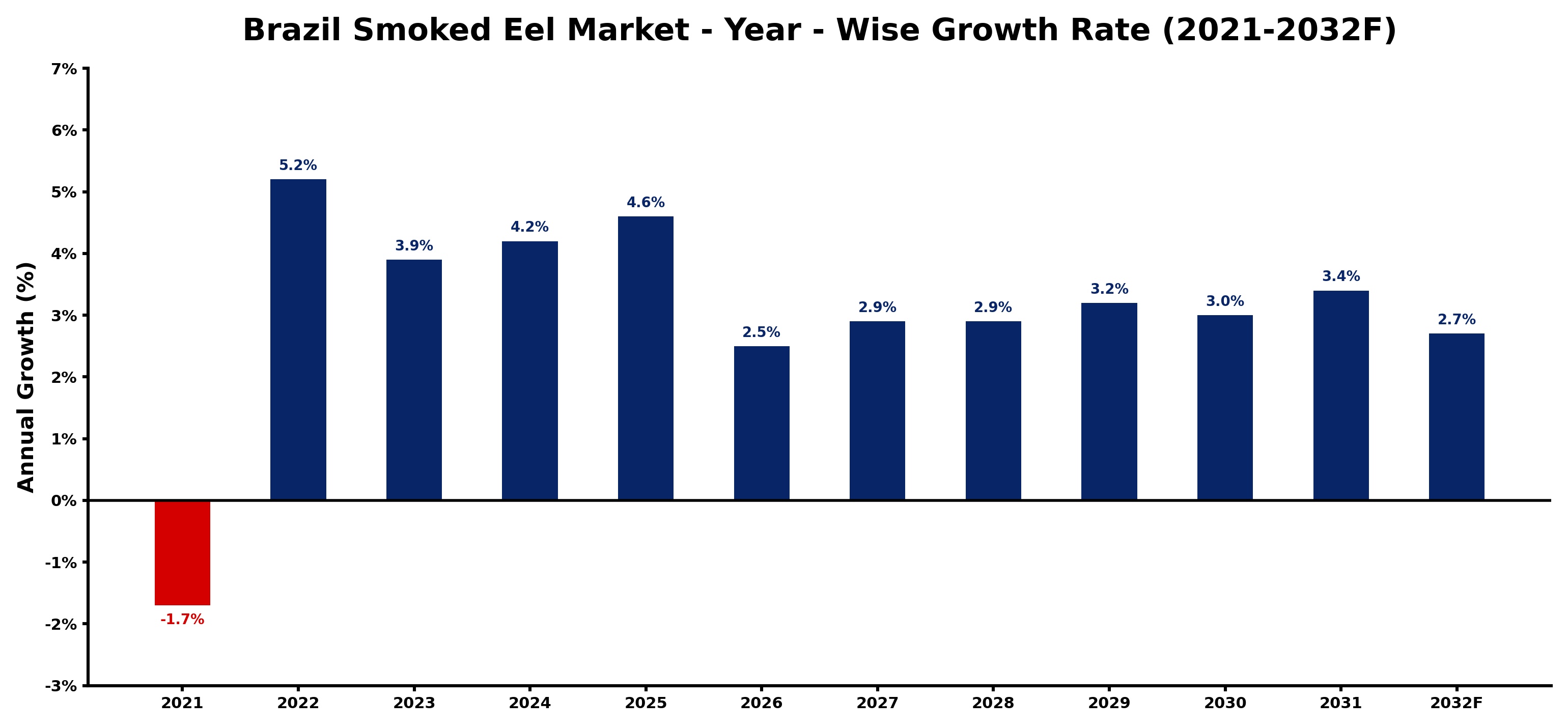
The table below presents the year‑wise growth rates along with the key drivers influencing the market
| Year | Growth Rate | Major Drivers |
| 2021 | -1.7% | Increasing industrial automation investments |
| 2022 | 5.2% | Expansion of manufacturing activities |
| 2023 | 3.9% | Rising electricity demand across industries |
| 2024 | 4.2% | Rapid growth in telecom and data center sectors |
| 2025 | 4.6% | Increasing adoption of advanced technologies |
| 2026 | 2.5% | Growing urbanization and commercial development |
| 2027 | 2.9% | Expansion of commercial construction activities |
| 2028 | 2.9% | Growing renewable energy integration projects |
| 2029 | 3.2% | Rising electricity demand across industries |
| 2030 | 3.0% | Expansion of transportation and logistics networks |
| 2031 | 3.4% | Growing renewable energy integration projects |
| 2032 | 2.7% | Expansion of commercial construction activities |
Note - Market size estimations and growth projections presented in this report are based on 6Wresearch's advanced forecasting approach, validated with industry datasets as of June 2026.
Brazil Smoked Eel Market Synopsis
Recent momentum in the Brazil Smoked Eel Market reveals a significant uptick in consumer preference for gourmet seafood, with smoked eel emerging as a sought-after delicacy. As culinary tourism expands and the gourmet food segment continues to flourish, the market is well-poised for sustained growth in the coming years. However, challenges related to consumer awareness and sourcing of high-quality eels could temper growth.
As chefs and home cooks increasingly experiment with diverse cuisines, the appeal of smoked eel is gaining traction, both as a standalone dish and as an ingredient in innovative recipes. Yet, the market's trajectory may face hurdles stemming from import regulations and a competitive landscape featuring alternative seafood products. Awareness initiatives aimed at educating consumers on the culinary versatility of smoked eel could play a crucial role in overcoming these obstacles.
Brazil Smoked Eel Market Key Takeaways
- The market is driven by trends in gourmet cuisine and increased seafood consumption.
- Smoked eel is celebrated for its unique flavor and adaptability in culinary applications.
- Regulatory policies support sustainable aquaculture and responsible fishing practices.
- Consumer awareness and educational efforts are vital for market growth and acceptance.
- The market presents notable investment opportunities, particularly in culinary tourism and gourmet offerings.
Evaluation of Restraints in Brazil Smoked Eel Market
Several factors are limiting the full potential of the Brazil Smoked Eel Market. Import regulations can pose significant challenges for sourcing high-quality eels, which are essential for maintaining flavor consistency in smoked products. Additionally, the competition from alternative seafood items may dilute consumer interest, especially in an environment where health-conscious dining choices are becoming prevalent. Limited distribution networks and a general lack of awareness regarding the benefits and culinary uses of smoked eel further complicate the landscape, necessitating robust educational initiatives to elevate consumer demand.
Brazil Smoked Eel Market Trends
Emerging trends in the Brazil Smoked Eel Market point towards a rise in artisanal production techniques, with consumers increasingly favoring products that are both sustainably sourced and handcrafted. Moreover, the intersection of health trends with gourmet offerings is propelling the smoked eel's popularity as a nutritious seafood option. Additionally, the social media influence on food trends is creating new pathways for consumer engagement, as visual platforms showcase innovative recipes featuring smoked eel, appealing to younger demographics.
Brazil Smoked Eel Market Opportunities
There is a substantial opportunity for growth within niche markets, particularly in urban centers where culinary exploration is highly valued. Investment in marketing campaigns that emphasize the unique flavors and culinary versatility of smoked eel could also drive demand. Furthermore, partnerships with high-end restaurants and gourmet food retailers may open new channels for distribution, creating a stronger presence within the premium seafood market segment.
Government Initiatives in the Brazil Smoked Eel Market
Government policies in Brazil play a critical role in shaping the smoked eel market by establishing regulations aimed at ensuring food safety and promoting sustainable practices within aquaculture. Initiatives focused on responsible fishing and farming methods are increasingly prioritized, supporting the long-term viability of eel populations. Furthermore, regulatory frameworks governing trade encourage compliance with international standards, thereby facilitating the import and export processes for smoked eel products.
Future Insights of the Brazil Smoked Eel Market
Looking ahead to 2026-2032, the Brazil Smoked Eel Market is expected to undergo dynamic changes driven by evolving consumer preferences and continued culinary innovation. As the appreciation for gourmet seafood specialties expands, smoked eel is likely to solidify its place as a premium offering in both local and international markets. The integration of sustainable practices and effective marketing strategies will be crucial in capturing the interest of diverse consumer segments and ensuring steady growth.
Brazil Smoked Eel Market Latest Developments (May 2025 - June 2026)
Recent developments in the Brazil Smoked Eel Market indicate an increased focus on quality assurance and traceability of eel products. Industry stakeholders are embracing partnerships that promote sustainable sourcing practices while enhancing consumer trust. Additionally, there is a growing inclination towards promoting smoked eel in culinary exhibitions and food festivals, aimed at broadening its appeal and integrating it into mainstream gastronomy.
Brazil Smoked Eel Market - Key Attractiveness of the Report
- 10 Years of Market Numbers
- Historical Data Starting from 2022 to 2025
- Base Year: 2025
- Forecast Data until 2032
- Key Performance Indicators Impacting the Market
- Major Upcoming Developments and Projects
Key Highlights of the Report:
- Brazil Smoked Eel Market Outlook
- Market Size of Brazil Smoked Eel Market, 2025
- Forecast of Brazil Smoked Eel Market, 2032
- Historical Data and Forecast of Brazil Smoked Eel Revenues & Volume for the Period 2022-2032F
- Brazil Smoked Eel Market Trend Evolution
- Brazil Smoked Eel Market Drivers and Challenges
- Brazil Smoked Eel Price Trends
- Brazil Smoked Eel Porter's Five Forces
- Brazil Smoked Eel Industry Life Cycle
- Historical Data and Forecast of Brazil Smoked Eel Market Revenues & Volume By Type for the Period 2022-2032F
- Historical Data and Forecast of Brazil Smoked Eel Market Revenues & Volume By Hot-smoke for the Period 2022-2032F
- Historical Data and Forecast of Brazil Smoked Eel Market Revenues & Volume By Cold-smoke for the Period 2022-2032F
- Historical Data and Forecast of Brazil Smoked Eel Market Revenues & Volume By Application for the Period 2022-2032F
- Historical Data and Forecast of Brazil Smoked Eel Market Revenues & Volume By Catering industry for the Period 2022-2032F
- Historical Data and Forecast of Brazil Smoked Eel Market Revenues & Volume By Retail for the Period 2022-2032F
- Historical Data and Forecast of Brazil Smoked Eel Market Revenues & Volume By Sales Channel for the Period 2022-2032F
- Historical Data and Forecast of Brazil Smoked Eel Market Revenues & Volume By Online Sales Channel for the Period 2022-2032F
- Historical Data and Forecast of Brazil Smoked Eel Market Revenues & Volume By Offline Sales Channel for the Period 2022-2032F
- Brazil Smoked Eel Import Export Trade Statistics
- Market Opportunity Assessment By Type
- Market Opportunity Assessment By Application
- Market Opportunity Assessment By Sales Channel
- Brazil Smoked Eel Top Companies Market Share
- Brazil Smoked Eel Competitive Benchmarking By Technical and Operational Parameters
- Brazil Smoked Eel Company Profiles
- Brazil Smoked Eel Key Strategic Recommendations






































