Brazil Tannin Market Growth Rate Analysis (2021-2031)
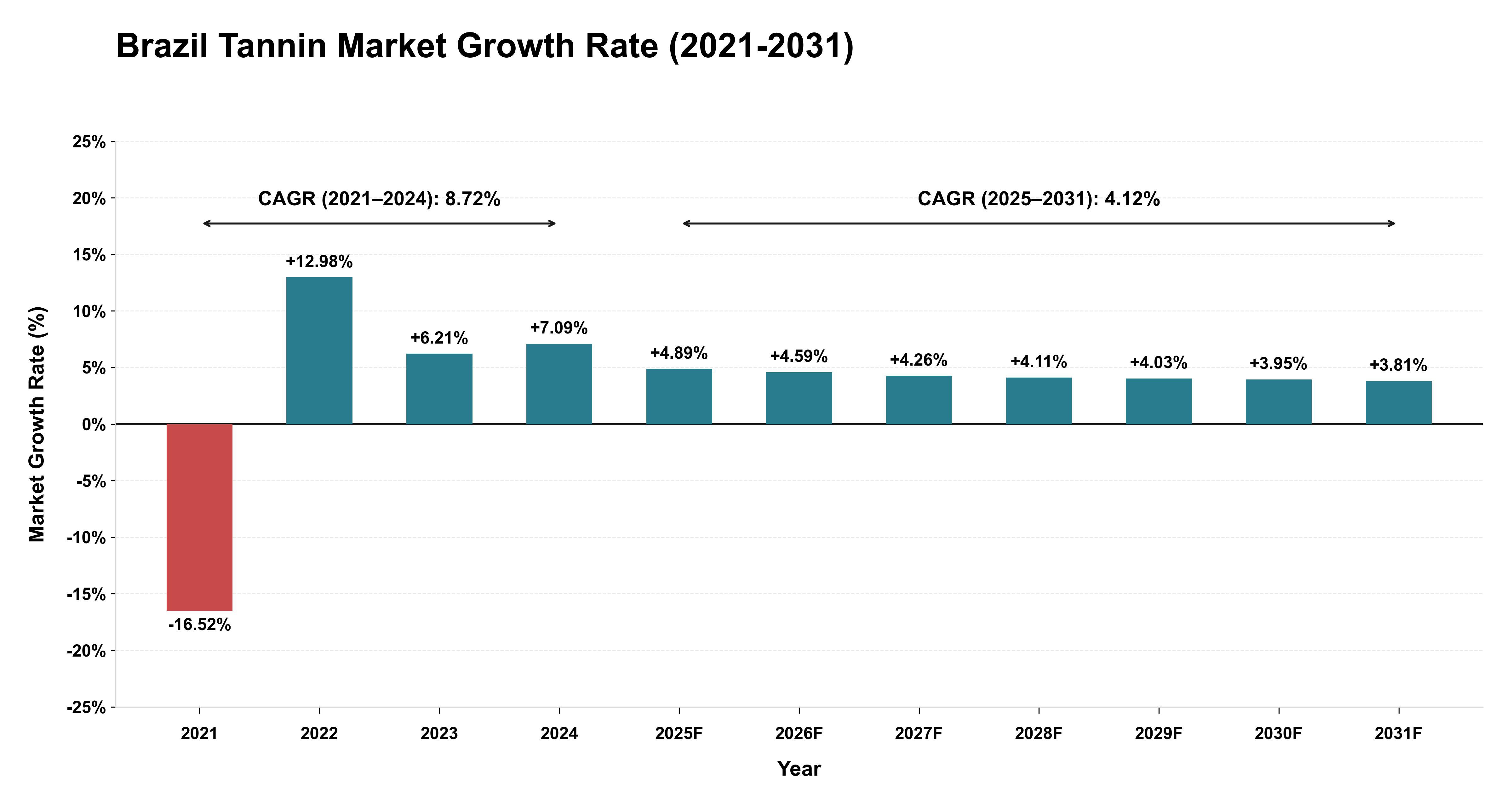
The Brazil Tannin Market underwent a tumultuous period from 2021 to 2024, starting with a sharp decline of -16.52% in 2021, followed by a notable recovery to 12.98% growth in 2022, indicating market instability and the potential for structural adjustments. Subsequent years showed more modest growth rates of 6.21% in 2023 and 7.09% in 2024, signaling a phase of stabilization post-correction. Looking ahead to the forecast period from 2025 to 2031, the market is projected to demonstrate a slower but consistent growth trajectory with a CAGR of 4.12%, reflecting a phase of normalization after the earlier erratic fluctuations. This pattern suggests a maturing market with more balanced expansion rates, likely influenced by changing consumer preferences, technological advancements, and regulatory factors within Brazil's tannin industry.
Brazil Tannin Market Overview
Tannin, extracted from various plant sources, finds applications in industries such as leather tanning, wood adhesives, and pharmaceuticals. Brazil rich biodiversity contributes to the availability of diverse tannin sources, driving innovation and sustainability in production methods.
Drivers of the market
The tannin market in Brazil is influenced by the leather, wine, and wood industries. Trends in luxury goods consumption, eco-friendly products, and innovations in tannin extraction methods shape market dynamics. Export-import regulations and competition from synthetic tannins also impact the market.
Challenges of the market
Challenges in Brazil tannin market include sourcing sustainable raw materials, meeting quality standards, and addressing environmental concerns related to tannin extraction processes, which require innovative solutions and investments in sustainable practices.
Government Policy of the market
Government policies in Brazil regarding the tannin market prioritize sustainable sourcing practices, environmental conservation, and product quality standards. Regulatory measures include guidelines for tannin extraction, processing, and trade to promote responsible production methods, protect natural resources, and ensure compliance with international standards for tannin products.
Key Highlights of the Report:
- Brazil Tannin Market Outlook
- Market Size of Brazil Tannin Market, 2021
- Forecast of Brazil Tannin Market, 2028
- Historical Data and Forecast of Brazil Tannin Revenues & Volume for the Period 2018 - 2028
- Brazil Tannin Market Trend Evolution
- Brazil Tannin Market Drivers and Challenges
- Brazil Tannin Price Trends
- Brazil Tannin Porter's Five Forces
- Brazil Tannin Industry Life Cycle
- Historical Data and Forecast of Brazil Tannin Market Revenues & Volume By Source for the Period 2018 - 2028
- Historical Data and Forecast of Brazil Tannin Market Revenues & Volume By Plants for the Period 2018 - 2028
- Historical Data and Forecast of Brazil Tannin Market Revenues & Volume By Brown Algae for the Period 2018 - 2028
- Historical Data and Forecast of Brazil Tannin Market Revenues & Volume By Product for the Period 2018 - 2028
- Historical Data and Forecast of Brazil Tannin Market Revenues & Volume By Hydrolysable for the Period 2018 - 2028
- Historical Data and Forecast of Brazil Tannin Market Revenues & Volume By Non-hydrolysable for the Period 2018 - 2028
- Historical Data and Forecast of Brazil Tannin Market Revenues & Volume By Phlorotannins for the Period 2018 - 2028
- Brazil Tannin Import Export Trade Statistics
- Market Opportunity Assessment By Source
- Market Opportunity Assessment By Product
- Brazil Tannin Top Companies Market Share
- Brazil Tannin Competitive Benchmarking By Technical and Operational Parameters
- Brazil Tannin Company Profiles
- Brazil Tannin Key Strategic Recommendations






































