Brazil Typesetting Software Market Size, Share & Growth Rate
The Brazil Typesetting Software Market was estimated at USD 199 Million in 2025 and is projected to reach USD 238 Million by 2032, growing at a CAGR of 2.6% from 2026 to 2032. This upward trajectory can be attributed to the rapid digitization sweeping across the publishing sector, where efficiency and adaptability are paramount. As e-publishing rises and multilingual demands surge, companies are increasingly seeking innovative typesetting solutions that enhance workflow while accommodating diverse content formats.
Brazil Typesetting Software Market Year-wise Growth Rate and Key Drivers
This graph highlights how the Brazil Typesetting Software Market has steadily grown over the years, supported by major growth factors.
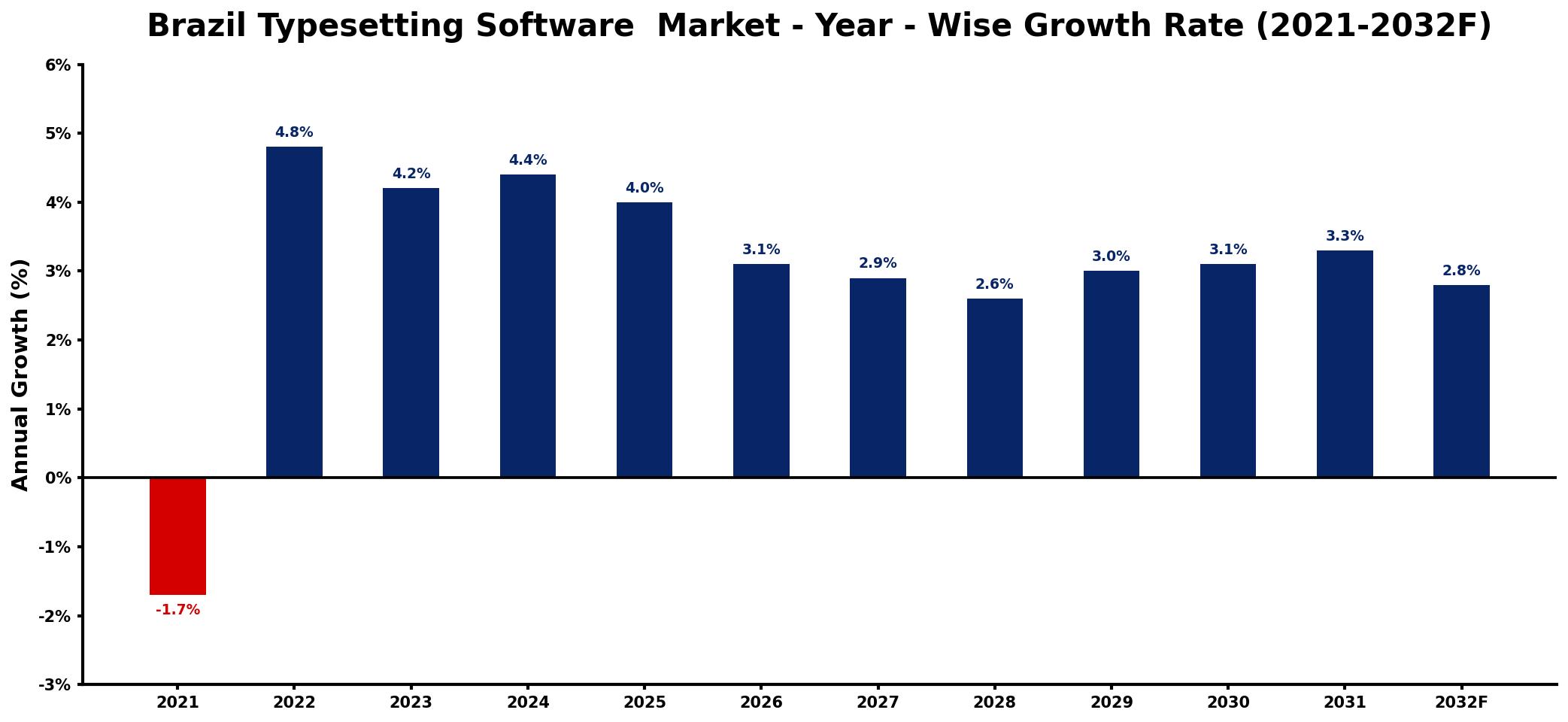
The table below presents the year‑wise growth rates along with the key drivers influencing the market
| Year | Growth Rate | Major Drivers |
| 2021 | -1.7% | decrease in digital publishing demand |
| 2022 | 4.8% | rise in e-commerce content creation |
| 2023 | 4.2% | growth in online education materials |
| 2024 | 4.4% | expansion of marketing collateral needs |
| 2025 | 4.0% | increased demand for multimedia projects |
| 2026 | 3.1% | surge in remote working resources |
| 2027 | 2.9% | expanding healthcare application demand |
| 2028 | 2.6% | growing emerging market penetration |
| 2029 | 3.0% | increase in interactive media usage |
| 2030 | 3.1% | increased capital investment inflows |
| 2031 | 3.3% | rising demand from electronics |
| 2032 | 2.8% | improved processing technologies adoption |
Note: Market size estimations and growth projections presented in this report are based on 6Wresearch's proprietary forecasting methodology, utilizing the latest available industry data, government publications, and primary research inputs.
Brazil Typesetting Software Market Synopsis
In Brazil, the demand for typesetting software has been driven by the growing need for streamlined publishing processes. The integration of advanced features such as automated layout design and real-time collaboration tools is reshaping how publishers operate. This shift is indicative of a broader trend towards digital transformation within the industry.
Furthermore, the increasing prevalence of mobile and web publishing is necessitating typesetting solutions that are not only robust but also versatile. The desire for software that accommodates various publishing platforms and formats is a critical factor fueling market growth, as companies strive to maintain competitiveness in an ever-evolving landscape.
Brazil Typesetting Software Market Key Takeaways
- The market is witnessing consistent growth, fueled by advancements in digital publishing technologies.
- Multilingual typesetting capabilities are becoming essential due to Brazil's diverse linguistic landscape.
- Efficiency-enhancing software features are increasingly sought after by publishers striving to optimize their workflow.
- Collaboration with industry stakeholders is vital for the continued evolution of typesetting software solutions.
- Effective cybersecurity measures are necessary to combat software piracy, a significant challenge within the market.
Evaluation of Restraints in Brazil Typesetting Software Market
Despite the optimistic growth outlook, the Brazil Typesetting Software Market faces notable restraints that could limit its potential. One of the most pressing issues is software piracy, which undermines revenue and stifles innovation. The rapid evolution of technological standards also presents a hurdle; companies must continuously innovate to keep pace with changing user expectations and industry demands. Additionally, navigating the complex landscape of intellectual property laws and software licensing in Brazil adds another layer of challenge for market players, necessitating strategic partnerships and robust compliance mechanisms.
Brazil Typesetting Software Market Trends
A pivotal trend shaping the Brazil Typesetting Software Market is the increasing integration of artificial intelligence and machine learning into software solutions. These technologies are enhancing automation, allowing for smarter layout designs and predictive text functionalities that significantly reduce production time. Moreover, the shift toward subscription-based models is making typesetting software more accessible to a broader range of publishers, facilitating entry for startups and smaller firms into the market.
Brazil Typesetting Software Market Opportunities
The current landscape presents several lucrative opportunities for growth within the Brazil Typesetting Software Market. Emerging startups focused on niche publishing needs are ripe for collaboration with established software developers. Additionally, as Brazilian publishers increasingly expand into international markets, there is an escalating need for software that supports multilingual typesetting, creating openings for providers specializing in this area. Furthermore, investment in cybersecurity measures will enhance consumer trust and safeguard intellectual property, paving the way for more robust market growth.
Government Initiatives in the Brazil Typesetting Software Market
Government policies in Brazil are increasingly focusing on bolstering the local technology sector, which includes typesetting software development. Initiatives aimed at supporting intellectual property rights and providing incentives for tech innovation are essential for fostering a secure and sustainable market environment. Furthermore, ongoing discussions surrounding digital rights and software licensing regulations are likely to shape the operational landscape for companies in this sector, underscoring the importance of compliance and adaptability.
Future Insights of the Brazil Typesetting Software Market
Looking ahead to 2026-2032, the Brazil Typesetting Software Market is poised for transformation. The integration of emerging technologies and the push toward more flexible publishing solutions will dictate market dynamics. As digital content consumption continues to grow, publishers will prioritize tools that enhance user engagement and improve operational efficiency. Consequently, companies that remain attuned to these trends and invest in innovative features are likely to gain a competitive edge.
Brazil Typesetting Software Market Latest Developments (2025 - 2026)
In recent months, there has been a noticeable shift toward incorporating collaborative features in typesetting software, allowing multiple users to work simultaneously on projects. Industry events have showcased advancements in AI-driven tools that streamline the editing and typesetting process. Additionally, significant efforts have been made to address software piracy, with some developers launching campaigns to educate users about the importance of legitimate software use. Overall, the focus remains on enhancing user experience and fostering innovation through technological integration.
Brazil Typesetting Software Market - Key Attractiveness of the Report
- 10 Years of Market Numbers
- Historical Data Starting from 2022 to 2025
- Base Year: 2025
- Forecast Data until 2032
- Key Performance Indicators Impacting the Market
- Major Upcoming Developments and Projects
Key Highlights of the Report:
- Brazil Typesetting Software Market Outlook
- Market Size of Brazil Typesetting Software Market, 2025
- Forecast of Brazil Typesetting Software Market, 2032
- Historical Data and Forecast of Brazil Typesetting Software Revenues & Volume for the Period 2022-2032F
- Brazil Typesetting Software Market Trend Evolution
- Brazil Typesetting Software Market Drivers and Challenges
- Brazil Typesetting Software Price Trends
- Brazil Typesetting Software Porter's Five Forces
- Brazil Typesetting Software Industry Life Cycle
- Historical Data and Forecast of Brazil Typesetting Software Market Revenues & Volume By Type for the Period 2022-2032F
- Historical Data and Forecast of Brazil Typesetting Software Market Revenues & Volume By Mobile for the Period 2022-2032F
- Historical Data and Forecast of Brazil Typesetting Software Market Revenues & Volume By PC for the Period 2022-2032F
- Historical Data and Forecast of Brazil Typesetting Software Market Revenues & Volume By Other for the Period 2022-2032F
- Historical Data and Forecast of Brazil Typesetting Software Market Revenues & Volume By Application for the Period 2022-2032F
- Historical Data and Forecast of Brazil Typesetting Software Market Revenues & Volume By Publication for the Period 2022-2032F
- Historical Data and Forecast of Brazil Typesetting Software Market Revenues & Volume By Media Design for the Period 2022-2032F
- Historical Data and Forecast of Brazil Typesetting Software Market Revenues & Volume By Other for the Period 2022-2032F
- Brazil Typesetting Software Import Export Trade Statistics
- Market Opportunity Assessment By Type
- Market Opportunity Assessment By Application
- Brazil Typesetting Software Top Companies Market Share
- Brazil Typesetting Software Competitive Benchmarking By Technical and Operational Parameters
- Brazil Typesetting Software Company Profiles
- Brazil Typesetting Software Key Strategic Recommendations






































