Brazil Veterinary Drugs Market Growth Rate Analysis (2025 - 2031)
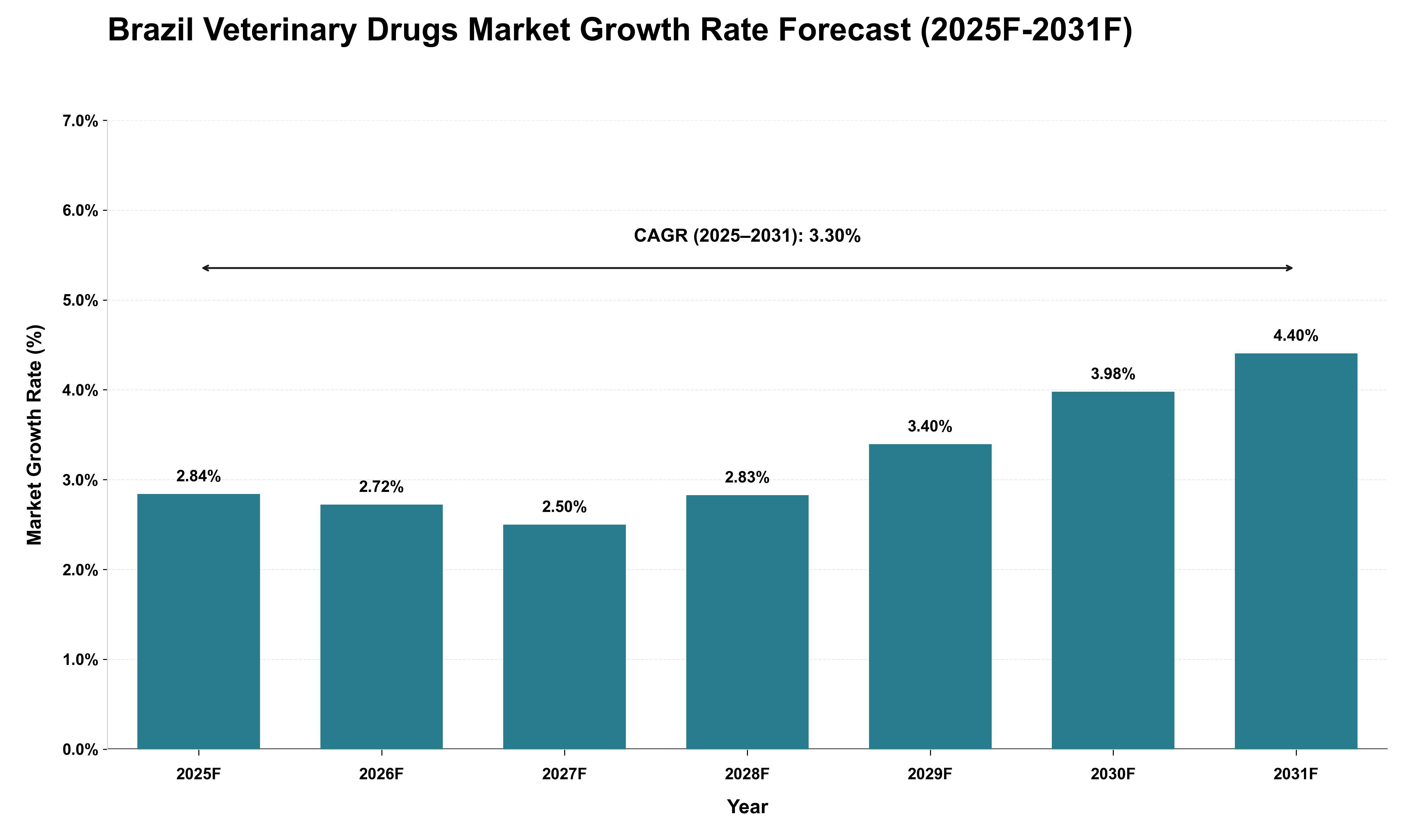
The Brazil veterinary drugs market is projected to experience a compound annual growth rate (CAGR) of 3.30% from 2025 to 2031, reflecting a nuanced response to macroeconomic cycles and evolving consumer demands. The initial years, with growth rates of 2.84% in 2025 and declining to 2.50% in 2027, suggest a period of adjustment as the market navigates potential economic headwinds, including inflationary pressures and fluctuating import dependencies for raw materials. However, as the economy stabilizes and consumer spending on pet care increases, growth is expected to accelerate significantly, peaking at 4.40% in 2031. This upward trajectory will likely be driven by advancements in veterinary medicine and an increasing focus on animal health, which will enhance demand for innovative drug solutions amidst a backdrop of cyclical recovery in the broader economy.
Key Highlights of the Report:
- Brazil Veterinary Drugs Market Outlook
- Market Size of Brazil Veterinary Drugs Market, 2024
- Forecast of Brazil Veterinary Drugs Market, 2031
- Historical Data and Forecast of Brazil Veterinary Drugs Revenues & Volume for the Period 2021- 2031
- Brazil Veterinary Drugs Market Trend Evolution
- Brazil Veterinary Drugs Market Drivers and Challenges
- Brazil Veterinary Drugs Price Trends
- Brazil Veterinary Drugs Porter's Five Forces
- Brazil Veterinary Drugs Industry Life Cycle
- Historical Data and Forecast of Brazil Veterinary Drugs Market Revenues & Volume By Type for the Period 2021- 2031
- Historical Data and Forecast of Brazil Veterinary Drugs Market Revenues & Volume By Anti-Infective for the Period 2021- 2031
- Historical Data and Forecast of Brazil Veterinary Drugs Market Revenues & Volume By Anti-Inflammatory for the Period 2021- 2031
- Historical Data and Forecast of Brazil Veterinary Drugs Market Revenues & Volume By Parasiticides for the Period 2021- 2031
- Historical Data and Forecast of Brazil Veterinary Drugs Market Revenues & Volume By Others for the Period 2021- 2031
- Historical Data and Forecast of Brazil Veterinary Drugs Market Revenues & Volume By Application for the Period 2021- 2031
- Historical Data and Forecast of Brazil Veterinary Drugs Market Revenues & Volume By Companion Animal for the Period 2021- 2031
- Historical Data and Forecast of Brazil Veterinary Drugs Market Revenues & Volume By Livestock Animal for the Period 2021- 2031
- Brazil Veterinary Drugs Import Export Trade Statistics
- Market Opportunity Assessment By Type
- Market Opportunity Assessment By Application
- Brazil Veterinary Drugs Top Companies Market Share
- Brazil Veterinary Drugs Competitive Benchmarking By Technical and Operational Parameters
- Brazil Veterinary Drugs Company Profiles
- Brazil Veterinary Drugs Key Strategic Recommendations






































