Brazil Wash Basins Market Size, Share & Growth Rate
The Brazil Wash Basins Market was estimated at USD 442 Million in 2025 and is projected to reach USD 528 Million by 2032, growing at a CAGR of 2.6% from 2026 to 2032. This growth trajectory is largely propelled by the burgeoning construction and real estate sectors, which continue to expand in response to urbanization and rising consumer demand for modern amenities. The shift towards aesthetically pleasing and functional bathroom fixtures further fuels this upward trend, as both homeowners and commercial developers seek to enhance their spaces.
Brazil Wash Basins Market Year-wise Growth Rate and Key Drivers
This graph highlights how the Brazil Wash Basins Market has steadily grown over the years, supported by major growth factors.
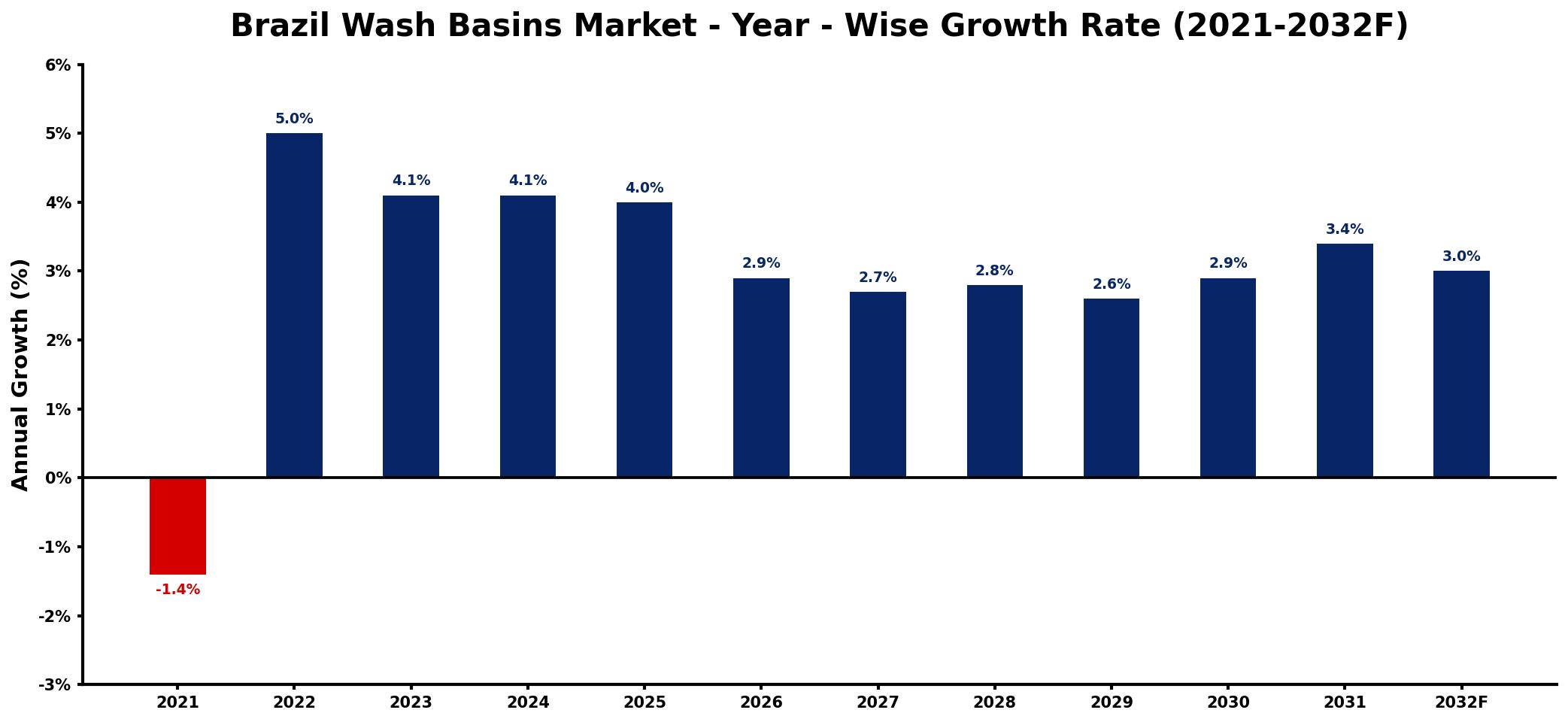
The table below presents the year‑wise growth rates along with the key drivers influencing the market
| Year | Growth Rate | Major Drivers |
| 2021 | -1.4% | decrease in construction activities |
| 2022 | 5.0% | growing urbanization and infrastructure |
| 2023 | 4.1% | increased consumer spending trends |
| 2024 | 4.1% | rise in home renovation projects |
| 2025 | 4.0% | expansion of real estate developments |
| 2026 | 2.9% | surge in eco-friendly designs |
| 2027 | 2.7% | technological advancements in manufacturing |
| 2028 | 2.8% | increased focus on sustainability |
| 2029 | 2.6% | growth in hospitality sector investments |
| 2030 | 2.9% | rising disposable income levels |
| 2031 | 3.4% | enhanced governmental housing initiatives |
| 2032 | 3.0% | evolving consumer lifestyle preferences |
Note: Market size estimations and growth projections presented in this report are based on 6Wresearch's proprietary forecasting methodology, utilizing the latest available industry data, government publications, and primary research inputs.
Brazil Wash Basins Market Synopsis
In Brazil, there is a notable trend towards integrating wash basins with innovative designs that prioritize both style and functionality. As the construction sector grows, there is an increasing emphasis on incorporating contemporary bathroom fixtures that cater to diverse consumer tastes.
Moreover, the influx of sustainable materials into the wash basin market is gaining traction among environmentally conscious consumers. This demand is further supported by regulatory measures promoting water conservation and efficient sanitary solutions in residential and commercial properties.
Brazil Wash Basins Market Key Takeaways
- Strong correlation between the real estate sector's growth and demand for wash basins.
- Emerging consumer preference for stylish, sustainable designs in bathroom fixtures.
- Government initiatives focusing on water conservation influencing market standards.
- Competition from imports challenging local manufacturers to innovate.
- Technological advancements paving the way for more durable and efficient products.
Evaluation of Restraints in Brazil Wash Basins Market
Despite its growth, the Brazil Wash Basins Market faces notable challenges that may impede its expansion. Shifting consumer preferences towards sustainable design options impose additional pressures on manufacturers to adapt and innovate. Competition from imported products, often perceived as superior or more cost-effective, presents another hurdle, as does the volatility of raw material prices that can disrupt production costs. Furthermore, ensuring compliance with stringent regulatory standards while maintaining product durability remains a critical concern for many players in the market.
Brazil Wash Basins Market Trends
A significant trend in the Brazil Wash Basins Market is the increasing focus on water efficiency, driven by governmental policies and consumer awareness regarding environmental impacts. Additionally, the rise of smart bathroom technology is leading to the development of wash basins that incorporate features such as touchless faucets and integrated sensors for improved hygiene.
Moreover, aesthetic preferences are evolving, with consumers gravitating towards custom designs that complement their personal style. This trend fosters a competitive landscape where manufacturers must continually innovate to offer unique solutions that satisfy a diverse clientele.
Brazil Wash Basins Market Opportunities
The Brazil Wash Basins Market presents several lucrative opportunities for investment and growth. With ongoing urban development projects, there is a consistent demand for bathroom fixtures in new residential and commercial buildings. Additionally, the push towards sustainability provides opportunities for brands that focus on eco-friendly materials and designs. Innovations in smart technology also open avenues for differentiation, enabling companies to capture the interest of tech-savvy consumers looking to enhance their bathrooms with cutting-edge features.
Government Initiatives in the Brazil Wash Basins Market
Government initiatives in Brazil are increasingly geared toward promoting water conservation and enhancing sanitation standards. Policies aimed at improving water efficiency standards for wash basin fixtures are being implemented, ensuring that manufacturers adhere to guidelines that prioritize sustainability. Furthermore, public awareness campaigns are encouraging consumers to opt for environmentally friendly options, thereby fostering a market environment that values both performance and ecological responsibility.
Future Insights of the Brazil Wash Basins Market
Looking ahead to the period between 2026 and 2032, the Brazil Wash Basins Market is expected to continue on its growth path, buoyed by a combination of urban expansion and evolving consumer preferences. As the construction industry flourishes, there will be increased demand for innovative bathroom solutions that offer both style and functionality. The integration of advanced technologies and sustainable practices is likely to play a pivotal role in shaping the market, ensuring that products not only meet regulatory standards but also resonate with the environmentally conscious consumer.
Brazil Wash Basins Market Latest Developments (2025 - 2026)
Recent developments within the Brazil Wash Basins Market indicate a shift towards greater customization and personalized design offerings. Manufacturers are responding to consumer demands for unique products that align with specific aesthetic preferences. Additionally, there has been a noticeable increase in collaborations aimed at integrating smart technology into wash basin designs, enhancing user experience and functionality. These trends reflect a broader evolution in the market as it adapts to changing consumer demands and competitive pressures.
Brazil Wash Basins Market - Key Attractiveness of the Report
- 10 Years of Market Numbers
- Historical Data Starting from 2022 to 2025
- Base Year: 2025
- Forecast Data until 2032
- Key Performance Indicators Impacting the Market
- Major Upcoming Developments and Projects
Key Highlights of the Report:
- Brazil Wash Basins Market Outlook
- Market Size of Brazil Wash Basins Market, 2025
- Forecast of Brazil Wash Basins Market, 2032
- Historical Data and Forecast of Brazil Wash Basins Revenues & Volume for the Period 2022-2032F
- Brazil Wash Basins Market Trend Evolution
- Brazil Wash Basins Market Drivers and Challenges
- Brazil Wash Basins Price Trends
- Brazil Wash Basins Porter's Five Forces
- Brazil Wash Basins Industry Life Cycle
- Historical Data and Forecast of Brazil Wash Basins Market Revenues & Volume By Product for the Period 2022-2032F
- Historical Data and Forecast of Brazil Wash Basins Market Revenues & Volume By Wash Basins with Integrated Half Pedestal for the Period 2022-2032F
- Historical Data and Forecast of Brazil Wash Basins Market Revenues & Volume By Counter Wash Basins With/ With Out Utility Counter for the Period 2022-2032F
- Historical Data and Forecast of Brazil Wash Basins Market Revenues & Volume By Tabletop Wash Basins for the Period 2022-2032F
- Historical Data and Forecast of Brazil Wash Basins Market Revenues & Volume By Tabletop Wall Hung Wash Basins for the Period 2022-2032F
- Historical Data and Forecast of Brazil Wash Basins Market Revenues & Volume By Wall Hung Wash Basins for the Period 2022-2032F
- Historical Data and Forecast of Brazil Wash Basins Market Revenues & Volume By Application for the Period 2022-2032F
- Historical Data and Forecast of Brazil Wash Basins Market Revenues & Volume By Domestic for the Period 2022-2032F
- Historical Data and Forecast of Brazil Wash Basins Market Revenues & Volume By Commercial for the Period 2022-2032F
- Brazil Wash Basins Import Export Trade Statistics
- Market Opportunity Assessment By Product
- Market Opportunity Assessment By Application
- Brazil Wash Basins Top Companies Market Share
- Brazil Wash Basins Competitive Benchmarking By Technical and Operational Parameters
- Brazil Wash Basins Company Profiles
- Brazil Wash Basins Key Strategic Recommendations






































