Brazil Waterproof Clothing Market Summary
The brazil waterproof clothing market was estimated at USD 134 Million in 2025 and is projected to reach USD 159 Million by 2032, growing at a CAGR of 3.2% from 2026 to 2032.
Brazil Waterproof Clothing Market Year-wise Growth Rate and Key Drivers
This graph highlights how the Brazil Waterproof Clothing Market has steadily grown over the past five years, supported by major growth factors.
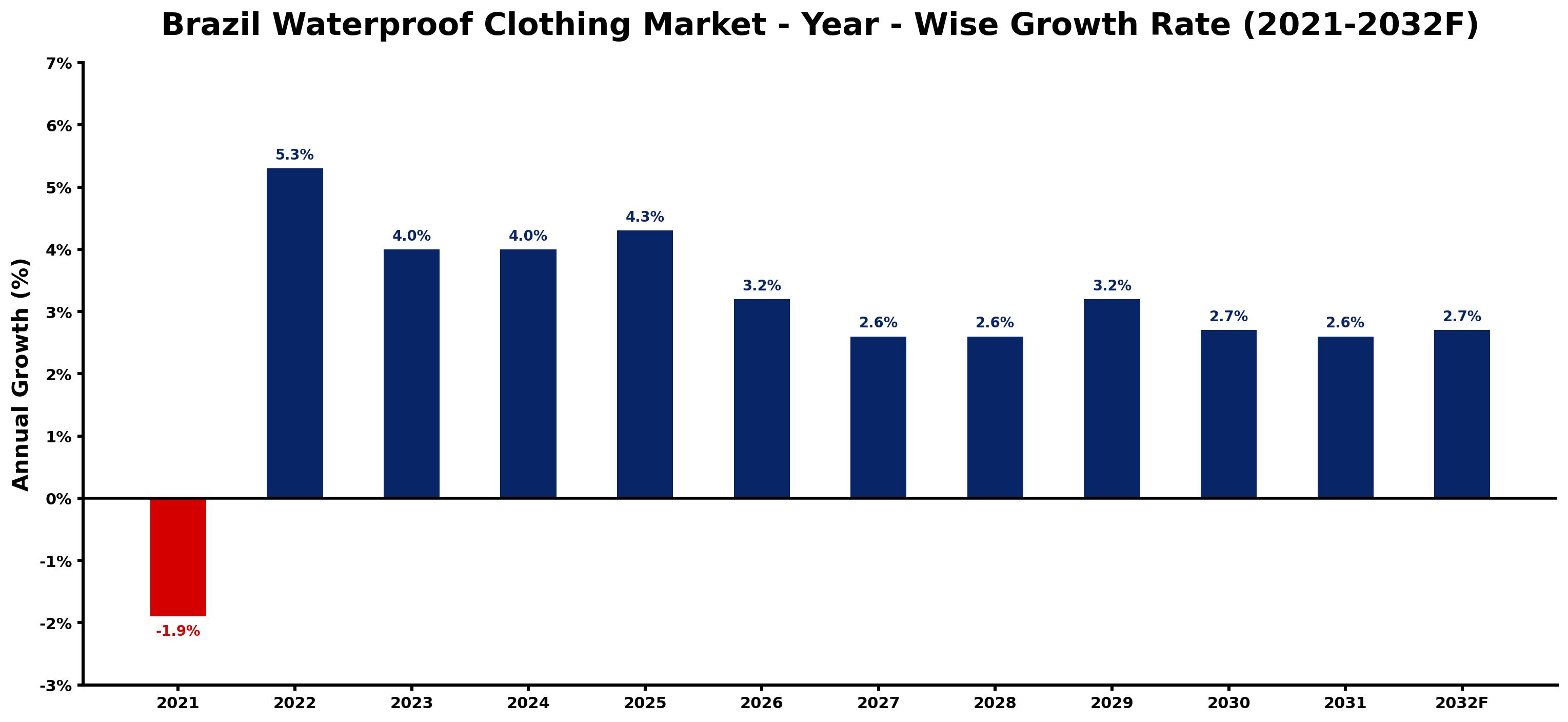
The table below presents the year wise growth rates along with the key drivers influencing the market
| Year | Growth Rate | Major Drivers |
| 2021 | -1.9% | Unfavorable weather patterns diminished outdoor activities, leading to decreased demand for waterproof clothing. |
| 2022 | 5.3% | Environmental awareness among consumers bolstered preferences for sustainable waterproof clothing. |
| 2023 | 4.0% | Technological innovations enhanced the functional performance of waterproof materials significantly. |
| 2024 | 4.0% | Retailers expanded online platforms, boosting accessibility for waterproof clothing purchases. |
| 2025 | 4.3% | Urbanization trends led to heightened demand for versatile outdoor apparel among city dwellers. |
| 2026 | 3.2% | Rising disposable incomes encouraged consumers to invest in premium waterproof brands. |
| 2027 | 2.6% | Climate change impacts fostered a greater necessity for durable waterproof gear in outdoor adventures. |
| 2028 | 2.6% | Collaborations between fashion brands and outdoor gear manufacturers created appealing product lines. |
| 2029 | 3.2% | Expansion of adventure tourism increased the need for reliable waterproof clothing options. |
| 2030 | 2.7% | Customization trends pushed brands to offer tailored solutions for diverse consumer needs. |
| 2031 | 2.6% | Increased participation in outdoor sports contributed to a steady growth in market demand. |
| 2032 | 2.7% | Innovation in sustainable production methods attracted environmentally conscious consumers actively. |
Note - Market size estimations and growth projections presented in this report are based on 6Wresearch's advanced forecasting approach, validated with industry datasets as of June 2026.
Brazil Waterproof Clothing Market Synopsis
The Brazil Waterproof Clothing Market is projected to reach 3.2% and witness significant growth during the forecast period (2026-2032). As outdoor activities gain popularity among consumers, the demand for durable and weather-resistant apparel continues to rise. This trend is further propelled by increased participation in recreational activities and a heightened awareness of climate-related challenges, spurring interest in protective clothing that can withstand the elements.
Brazil Waterproof Clothing Market Growth Drivers
Several factors are driving the growth of the Brazil Waterproof Clothing Market. Firstly, the surge in outdoor recreational activities, such as hiking, camping, and watersports, has intensified the need for specialized apparel that offers protection against rain and moisture. Secondly, consumer awareness regarding the advantages of waterproof clothing has increased, leading to a preference for products that enhance comfort and safety.
- There is a noticeable trend towards an active lifestyle among Brazilians, prompting brands to develop innovative waterproof solutions tailored to various climates.
- Advancements in fabric technology have revolutionized the market, allowing for lightweight, breathable, and highly durable materials that appeal to consumers.
- The integration of fashionable designs into waterproof clothing is resonating with style-conscious buyers, making these products more attractive in the mainstream apparel market.
- As businesses across sectors, including construction and tourism, recognize the necessity for protective wear, the demand for high-quality waterproof clothing is expected to rise significantly.
- Additionally, eco-friendly manufacturing practices are becoming increasingly important, influencing consumer choices and expanding the market for sustainable waterproof options.
Brazil Waterproof Clothing Market Challenges and Restraints
Despite its growth, the Brazil Waterproof Clothing Market faces several challenges. One of the primary obstacles is the need for continuous innovation to keep pace with consumer expectations. Many consumers may not be fully aware of the latest waterproof technologies, which presents a barrier to broader adoption.
- The lack of consumer knowledge regarding the proper maintenance of waterproof clothing can lead to dissatisfaction and underutilization of products.
- Manufacturers must also navigate the complexities of sourcing sustainable materials that meet both performance and environmental standards, placing additional pressure on production costs.
- Market players face fierce competition, which necessitates strategic investment in research and development to differentiate their offerings.
- The fluctuating costs of raw materials can affect pricing strategies, impacting overall market dynamics.
- Lastly, issues related to counterfeit products may undermine consumer trust in the market, prompting the need for effective regulations and consumer education initiatives.
Brazil Waterproof Clothing Market Government Investment and Initiatives
Government policies in Brazil play a crucial role in shaping the waterproof clothing sector. Regulatory frameworks aim to enhance consumer protection and establish stringent quality standards for manufactured clothing. These regulations encompass product testing, labeling requirements, and import controls to ensure safety and performance compliance.
- The Brazilian government has initiated programs aimed at promoting domestic production, which may encourage local manufacturers to innovate and improve product quality.
- Public spending on outdoor infrastructure and recreational spaces is expected to boost demand for waterproof apparel among users engaged in outdoor activities.
- Furthermore, government campaigns promoting sustainable practices align with increasing consumer expectations for eco-conscious products in the clothing sector.
- Scholarships and grants for research in textile technology are also likely to stimulate advancements in waterproof clothing, supporting manufacturers in their drive for innovation.
- Overall, governmental support in these areas is pivotal for the industry's growth, aligning with global sustainability goals and consumer demands.
Brazil Waterproof Clothing Market Latest Developments (May 2025 - June 2026)
The Brazil Waterproof Clothing Market has witnessed notable developments between May 2025 and June 2026. Industry stakeholders have focused on integrating more sustainable materials into the production process, reflecting the growing consumer demand for environmentally friendly apparel. Innovations in fabric technology during this period have led to the introduction of new, lightweight materials that enhance water resistance while maintaining breathability.
- Brands have increasingly adopted digital marketing strategies to educate consumers about the benefits of modern waterproof clothing, fostering greater product understanding.
- Collaborations between manufacturers and outdoor activity organizations have been formed to promote the utility and performance of waterproof apparel in real-world conditions.
- Several local trade shows and exhibitions have highlighted advancements in the waterproof clothing segment, providing a platform for knowledge sharing among industry players.
- The government has announced incentive programs to support companies investing in sustainable practices, further driving innovation in the waterproof clothing sector.
- Market trends indicate a rising interest in multi-functional waterproof clothing that blends outdoor utility with urban fashion, catering to a broader audience.
Brazil Waterproof Clothing Market - Key Attractiveness of the Report
- 10 Years of Market Numbers
- Historical Data Starting from 2022 to 2025
- Base Year: 2025
- Forecast Data until 2032
- Key Performance Indicators Impacting the Market
- Major Upcoming Developments and Projects
Key Highlights of the Report:
- Brazil Waterproof Clothing Market Outlook
- Market Size of Brazil Waterproof Clothing Market, 2025
- Forecast of Brazil Waterproof Clothing Market, 2032
- Historical Data and Forecast of Brazil Waterproof Clothing Revenues & Volume for the Period 2022-2032F
- Brazil Waterproof Clothing Market Trend Evolution
- Brazil Waterproof Clothing Market Drivers and Challenges
- Brazil Waterproof Clothing Price Trends
- Brazil Waterproof Clothing Porter's Five Forces
- Brazil Waterproof Clothing Industry Life Cycle
- Historical Data and Forecast of Brazil Waterproof Clothing Market Revenues & Volume By Raw Material for the Period 2022-2032F
- Historical Data and Forecast of Brazil Waterproof Clothing Market Revenues & Volume By ePTFE for the Period 2022-2032F
- Historical Data and Forecast of Brazil Waterproof Clothing Market Revenues & Volume By Polyurethane for the Period 2022-2032F
- Historical Data and Forecast of Brazil Waterproof Clothing Market Revenues & Volume By Polyester for the Period 2022-2032F
- Historical Data and Forecast of Brazil Waterproof Clothing Market Revenues & Volume By Others for the Period 2022-2032F
- Historical Data and Forecast of Brazil Waterproof Clothing Market Revenues & Volume By Fabric for the Period 2022-2032F
- Historical Data and Forecast of Brazil Waterproof Clothing Market Revenues & Volume By Densely Woven for the Period 2022-2032F
- Historical Data and Forecast of Brazil Waterproof Clothing Market Revenues & Volume By Membrane for the Period 2022-2032F
- Historical Data and Forecast of Brazil Waterproof Clothing Market Revenues & Volume By Coated for the Period 2022-2032F
- Historical Data and Forecast of Brazil Waterproof Clothing Market Revenues & Volume By Application for the Period 2022-2032F
- Historical Data and Forecast of Brazil Waterproof Clothing Market Revenues & Volume By General Clothing & Accessories for the Period 2022-2032F
- Historical Data and Forecast of Brazil Waterproof Clothing Market Revenues & Volume By Sports Goods for the Period 2022-2032F
- Historical Data and Forecast of Brazil Waterproof Clothing Market Revenues & Volume By Protective Clothing for the Period 2022-2032F
- Historical Data and Forecast of Brazil Waterproof Clothing Market Revenues & Volume By Others for the Period 2022-2032F
- Brazil Waterproof Clothing Import Export Trade Statistics
- Market Opportunity Assessment By Raw Material
- Market Opportunity Assessment By Fabric
- Market Opportunity Assessment By Application
- Brazil Waterproof Clothing Top Companies Market Share
- Brazil Waterproof Clothing Competitive Benchmarking By Technical and Operational Parameters
- Brazil Waterproof Clothing Company Profiles
- Brazil Waterproof Clothing Key Strategic Recommendations






































