Brazil Wireless Network Security Market Size & Growth Rate (2026-2032)
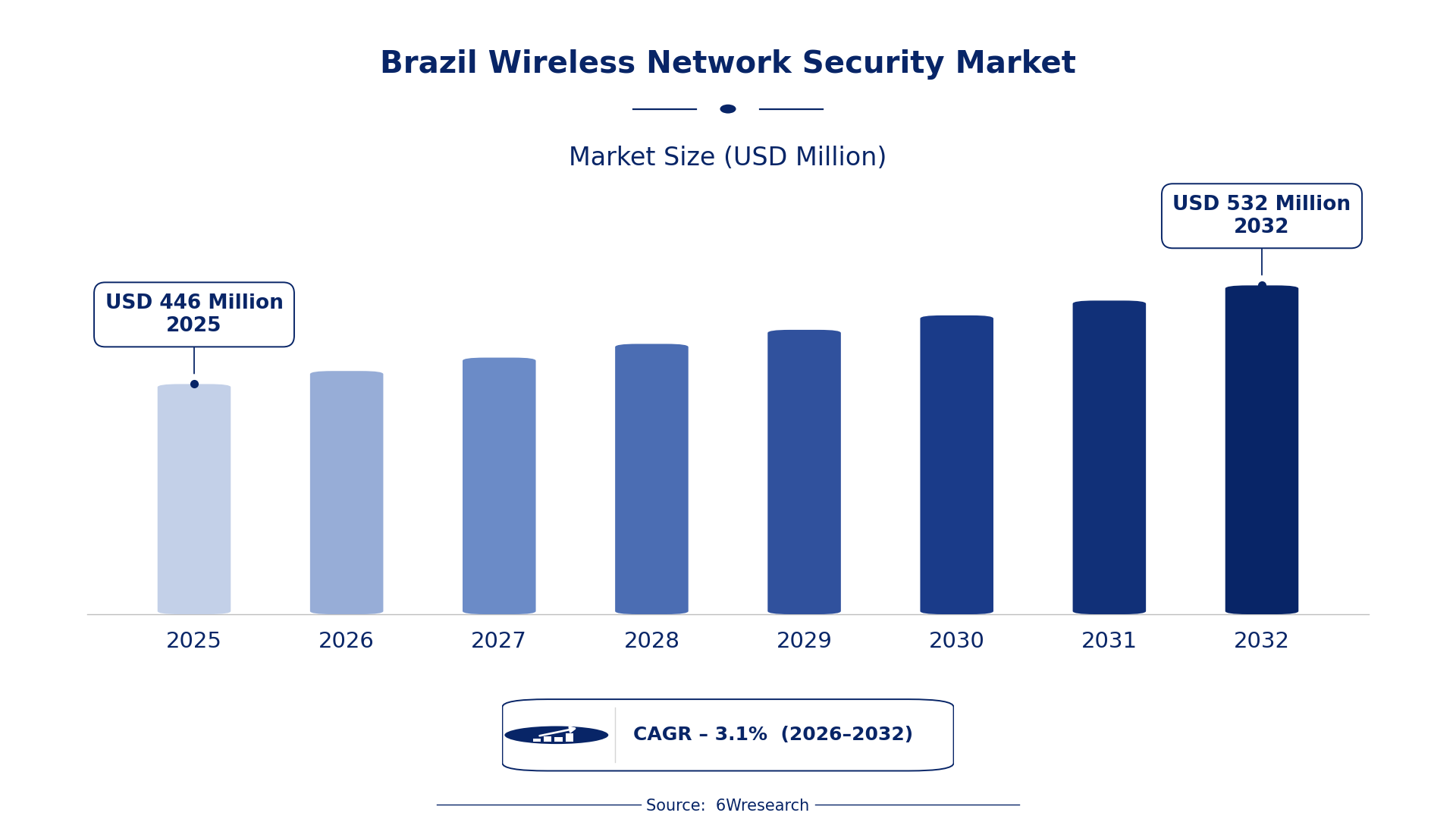
The Brazil Wireless Network Security Market was estimated at USD 446 Million in 2025 and is projected to reach USD 532 Million by 2032, growing at a CAGR of 3.1% from 2026 to 2032.
Brazil Wireless Network Security Market Synopsis
The most pressing force in the Brazil Wireless Network Security market is the proliferation of wireless devices across various sectors. This surge creates a pressing need for organizations to implement comprehensive security measures to safeguard sensitive data and ensure connectivity without breaches.
As Brazil's wireless infrastructure matures, the urgency to address vulnerabilities in wireless protocols escalates. Both public and private sectors are under pressure to adopt advanced encryption and robust access controls to mitigate the risk of unauthorized access and cyber threats.
Brazil Wireless Network Security Market Year-wise Growth Rate and Key Drivers
This graph illustrates the annual growth rates of the Brazil Wireless Network Security Market from 2021 to 2032, highlighting a steady upward trajectory and projected expansion over the forecast period.
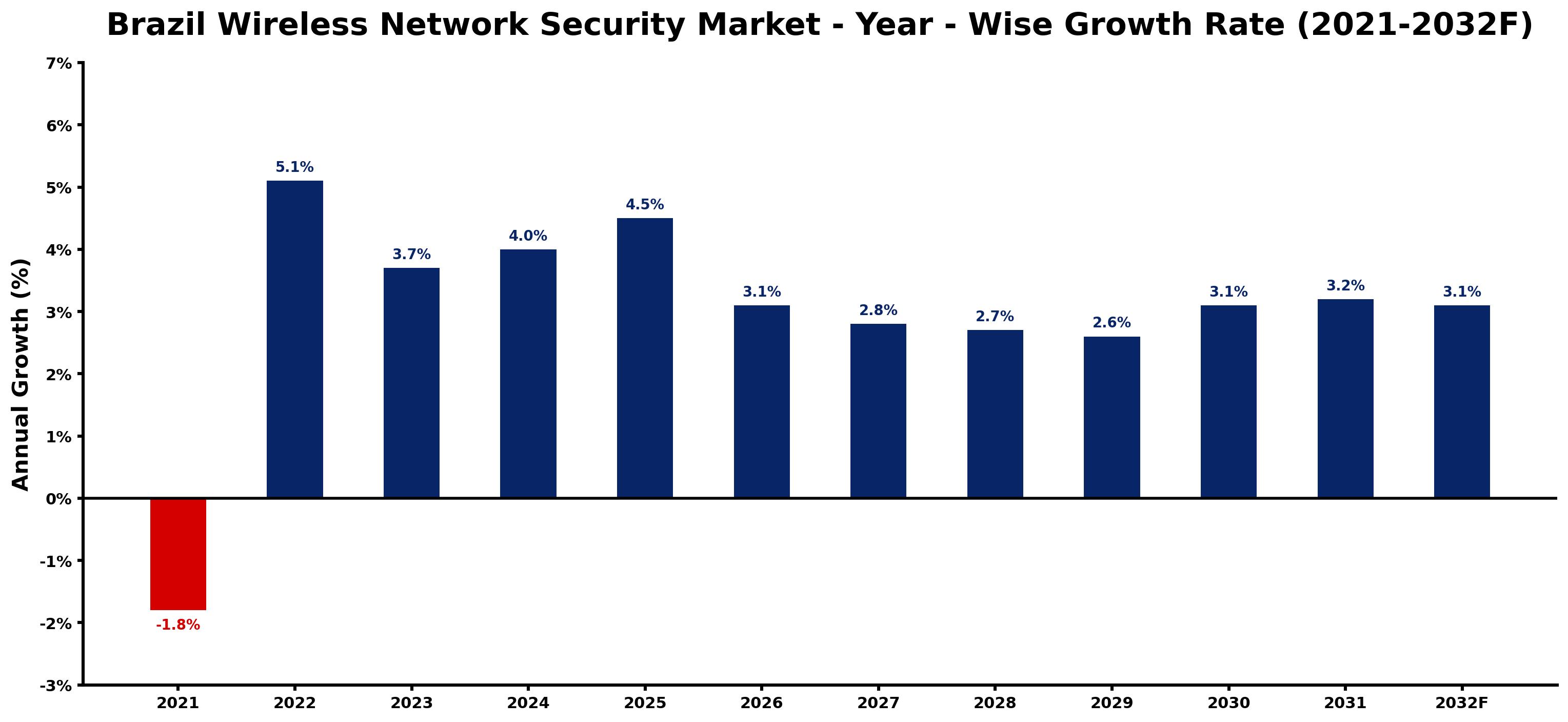
The table below presents the year‑wise growth rates along with the key drivers influencing the market
| Year | Growth Rate | Major Drivers |
| 2021 | -1.8% | ANATEL's stricter regulations limited new wireless security entrants. |
| 2022 | 5.1% | Strengthened cybersecurity regulations by Brazil's Central Bank |
| 2023 | 3.7% | Increased mobile device usage among Brazilian consumers |
| 2024 | 4.0% | Demand for secure remote working solutions post-pandemic |
| 2025 | 4.5% | Government initiatives boosting digital security investments |
| 2026 | 3.1% | Rising awareness of data protection regulations in Brazil |
| 2027 | 2.8% | Growing incidence of cyberattacks on Brazilian enterprises |
| 2028 | 2.7% | Adoption of 5G technology enhancing security solutions demand |
| 2029 | 2.6% | Local tech startups focusing on wireless security innovation |
| 2030 | 3.1% | Increased collaboration between government and cybersecurity firms |
| 2031 | 3.2% | Investments in security frameworks for IoT devices growing |
| 2032 | 3.1% | Rising public sector digital transformation initiatives |
Note: Market size estimations and growth projections presented in this report are based on 6Wresearch's proprietary forecasting methodology, utilizing the latest available industry data, government publications, and primary research inputs.
Brazil Wireless Network Security Market Key Takeaways
Below are some of the specific key takeaways from the market, including:
- Increased investments in wireless security solutions are essential for protecting sensitive organizational data.
- The rise in mobile device usage is directly correlated with growing concerns over network vulnerabilities.
- Government policies significantly influence the direction and funding for security initiatives across sectors.
- The complexity of wireless networks necessitates ongoing monitoring and management to address emerging threats.
Evaluation of Restraints in Brazil Wireless Network Security Market
Despite the growth potential, several factors restrain the Brazil Wireless Network Security market. Budget constraints remain a key issue, especially among smaller organizations that struggle to allocate funds for advanced security solutions. on top of that, the lack of skilled personnel to implement and manage security protocols poses a significant challenge. Without adequate training and resources, many businesses find it difficult to keep pace with the evolving threat landscape.
Brazil Wireless Network Security Market Trends
Several trends are influencing the Brazil Wireless Network Security market. A major trend is the increasing integration of artificial intelligence in security solutions, enabling real-time threat detection and response. The expansion of IoT devices also prompts the need for tailored security measures, as these devices introduce unique vulnerabilities. Additionally, organizations are leaning towards cloud-based security solutions for their flexibility and scalability, allowing for more effective management of their wireless networks.
Brazil Wireless Network Security Market Opportunities
The future presents numerous opportunities in the Brazil Wireless Network Security market. The impending 5G rollout is likely to spur demand for enhanced security solutions, as the faster and more connected networks will require stringent security protocols. Organizations focusing on digital transformation also stand to benefit by investing in wireless network security, as it supports broader digital initiatives while enhancing customer trust. Lastly, partnerships between tech firms and government agencies can lead to innovative security frameworks tailored to Brazil's specific needs.
Government Initiatives in the Brazil Wireless Network Security Market
Government policy has a profound impact on the Brazil Wireless Network Security market, influencing security standards and encouraging businesses to adopt necessary measures. Regulatory frameworks and initiatives are shaping a more secure wireless environment, underscoring the importance of compliance for organizations aiming to protect their operations from cyber threats.
- A recent initiative focused on enhancing national wireless communication standards was launched in early 2025, mandating compliance for all corporate networks.
- Current programs are underway to provide funding for cybersecurity training aimed at small and medium enterprises, helping them bolster their defenses.
- A planned public-private partnership expected to promote infrastructure upgrades by 2028 will enhance the overall security posture of wireless networks across the country.
- The government has also proposed a new cybersecurity framework set for 2026, aiming to address emerging threats in the IoT space.
Future Insights of the Brazil Wireless Network Security Market
Looking ahead to 2026-2032, the Brazil Wireless Network Security market is anticipated to grow steadily. The accelerating adoption of wireless technologies across sectors will drive the demand for advanced security solutions. As cyber threats become more sophisticated, organizations will need to prioritize investments in security measures that align with emerging technologies. The interplay of governmental policies and market dynamics will further shape the trajectory of this market, fostering an environment that necessitates innovation in security protocols.
Brazil Wireless Network Security Market Latest Developments
In the last 12-14 months, the Brazil Wireless Network Security market has seen significant developments reflecting heightened awareness and action against cyber threats. Organizations are not only reacting to existing vulnerabilities but are proactively seeking to fortify their defenses through new initiatives and partnerships.
- A major technology vendor launched a new suite of wireless security solutions in early 2025, designed specifically to combat the rise of IoT vulnerabilities.
- An ongoing initiative by a regional operator aims to upgrade existing Wi-Fi infrastructure, improving security features to safeguard user data through 2025.
- A forthcoming public awareness campaign set to kick off in late 2026 will focus on educating businesses about wireless security risks and best practices.
- A collaboration between academia and industry was announced in mid-2025 to develop innovative security technologies for the wireless sector.
Brazil Wireless Network Security Market - Key Attractiveness of the Report
- 10 Years of Market Numbers
- Historical Data Starting from 2022 to 2025
- Base Year: 2025
- Forecast Data until 2032
- Key Performance Indicators Impacting the Market
- Major Upcoming Developments and Projects
Key Highlights of the Report:
- Brazil Wireless Network Security Market Outlook
- Market Size of Brazil Wireless Network Security Market, 2025
- Forecast of Brazil Wireless Network Security Market, 2032
- Historical Data and Forecast of Brazil Wireless Network Security Revenues & Volume for the Period 2022-2032F
- Brazil Wireless Network Security Market Trend Evolution
- Brazil Wireless Network Security Market Drivers and Challenges
- Brazil Wireless Network Security Price Trends
- Brazil Wireless Network Security Porter's Five Forces
- Brazil Wireless Network Security Industry Life Cycle
- Historical Data and Forecast of Brazil Wireless Network Security Market Revenues & Volume By Solutions for the Period 2022-2032F
- Historical Data and Forecast of Brazil Wireless Network Security Market Revenues & Volume By Firewall for the Period 2022-2032F
- Historical Data and Forecast of Brazil Wireless Network Security Market Revenues & Volume By IPS/IDS for the Period 2022-2032F
- Historical Data and Forecast of Brazil Wireless Network Security Market Revenues & Volume By Encryption for the Period 2022-2032F
- Historical Data and Forecast of Brazil Wireless Network Security Market Revenues & Volume By I&AM for the Period 2022-2032F
- Historical Data and Forecast of Brazil Wireless Network Security Market Revenues & Volume By UTM for the Period 2022-2032F
- Historical Data and Forecast of Brazil Wireless Network Security Market Revenues & Volume By Services for the Period 2022-2032F
- Historical Data and Forecast of Brazil Wireless Network Security Market Revenues & Volume By Security Operations for the Period 2022-2032F
- Historical Data and Forecast of Brazil Wireless Network Security Market Revenues & Volume By Consulting for the Period 2022-2032F
- Historical Data and Forecast of Brazil Wireless Network Security Market Revenues & Volume By Managed Security Services for the Period 2022-2032F
- Brazil Wireless Network Security Import Export Trade Statistics
- Market Opportunity Assessment By Solutions
- Market Opportunity Assessment By Services
- Brazil Wireless Network Security Top Companies Market Share
- Brazil Wireless Network Security Competitive Benchmarking By Technical and Operational Parameters
- Brazil Wireless Network Security Company Profiles
- Brazil Wireless Network Security Key Strategic Recommendations






































