Brazil Wood Market Growth Rate Analysis (2025 - 2031)
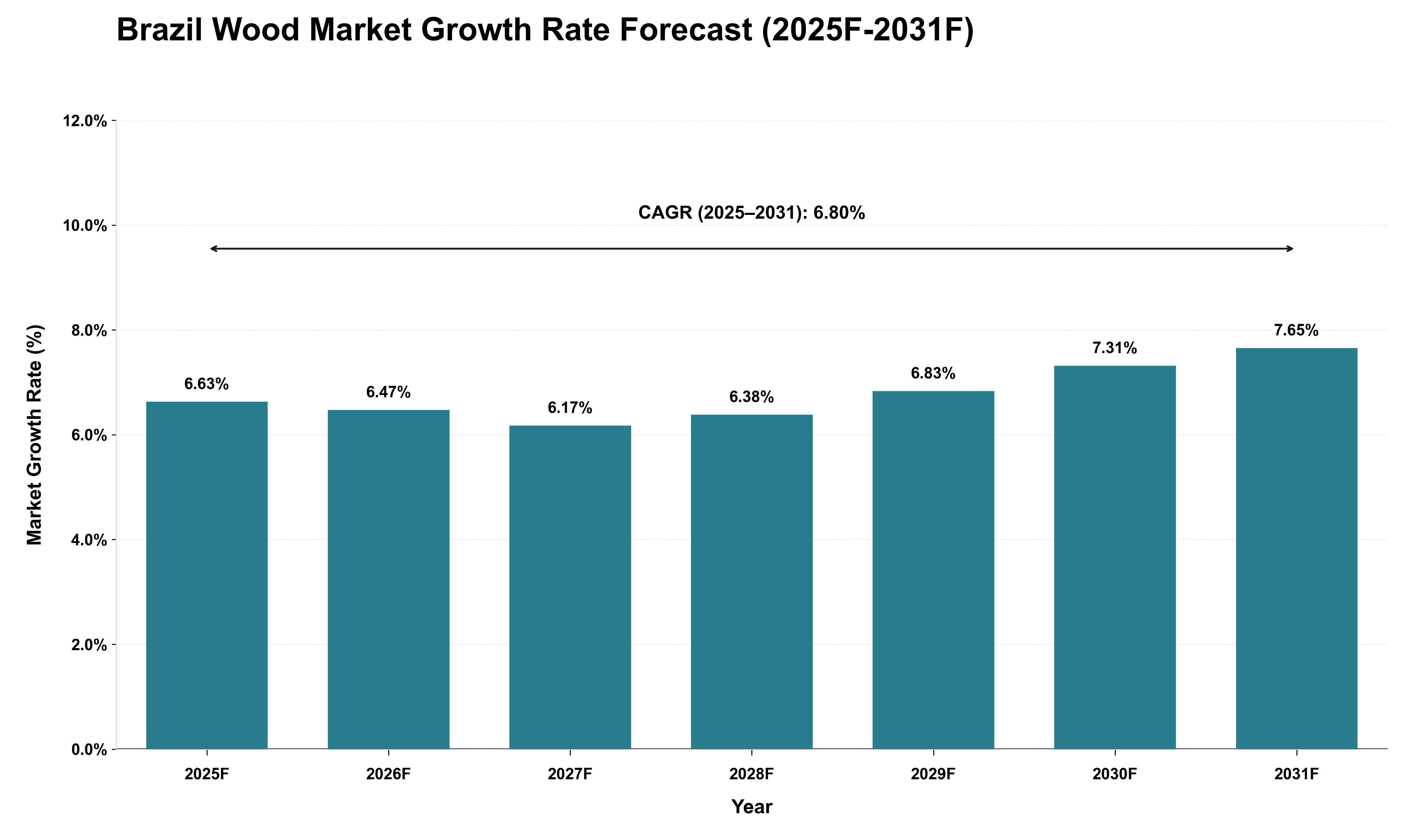
The Brazil wood market is projected to experience a compound annual growth rate of 6.80% from 2025 to 2031, reflecting a robust trajectory influenced by regulatory and trade policy dynamics. As global demand for sustainable materials intensifies, Brazil's wood exports will likely benefit from favorable trade agreements and environmental regulations that promote responsible sourcing. The anticipated fluctuations in annual growth rates, peaking at 7.65% in 2031, suggest an increasing reliance on Brazilian timber as international markets seek alternatives to less sustainable options. Additionally, the cyclical nature of construction and furniture industries will drive demand, particularly as emerging economies expand their infrastructure projects. Import dependencies in key markets may further enhance Brazil's competitive position, provided that domestic policies support sustainable forestry practices and mitigate illegal logging activities. Overall, these factors will create a conducive environment for sustained growth in the Brazilian wood sector throughout the forecast period.
Key Highlights of the Report:
- Brazil Wood Market Outlook
- Market Size of Brazil Wood Market, 2024
- Forecast of Brazil Wood Market, 2031
- Historical Data and Forecast of Brazil Wood Revenues & Volume for the Period 2021- 2031
- Brazil Wood Market Trend Evolution
- Brazil Wood Market Drivers and Challenges
- Brazil Wood Price Trends
- Brazil Wood Porter's Five Forces
- Brazil Wood Industry Life Cycle
- Historical Data and Forecast of Brazil Wood Market Revenues & Volume By Timber Type for the Period 2021- 2031
- Historical Data and Forecast of Brazil Wood Market Revenues & Volume By Ash for the Period 2021- 2031
- Historical Data and Forecast of Brazil Wood Market Revenues & Volume By Beech for the Period 2021- 2031
- Historical Data and Forecast of Brazil Wood Market Revenues & Volume By Birch for the Period 2021- 2031
- Historical Data and Forecast of Brazil Wood Market Revenues & Volume By Cedar for the Period 2021- 2031
- Historical Data and Forecast of Brazil Wood Market Revenues & Volume By Fir for the Period 2021- 2031
- Historical Data and Forecast of Brazil Wood Market Revenues & Volume By Mahogany for the Period 2021- 2031
- Historical Data and Forecast of Brazil Wood Market Revenues & Volume By Maple for the Period 2021- 2031
- Historical Data and Forecast of Brazil Ash Wood Market Revenues & Volume By Oak for the Period 2021- 2031
- Historical Data and Forecast of Brazil Wood Market Revenues & Volume By Application for the Period 2021- 2031
- Historical Data and Forecast of Brazil Wood Market Revenues & Volume By Fuel Wood for the Period 2021- 2031
- Historical Data and Forecast of Brazil Wood Market Revenues & Volume By Industrial Round Wood for the Period 2021- 2031
- Historical Data and Forecast of Brazil Wood Market Revenues & Volume By Engineered Woods for the Period 2021- 2031
- Historical Data and Forecast of Brazil Wood Market Revenues & Volume By Use for the Period 2021- 2031
- Historical Data and Forecast of Brazil Wood Market Revenues & Volume By Construction for the Period 2021- 2031
- Historical Data and Forecast of Brazil Wood Market Revenues & Volume By Flooring for the Period 2021- 2031
- Historical Data and Forecast of Brazil Wood Market Revenues & Volume By Packaging for the Period 2021- 2031
- Historical Data and Forecast of Brazil Wood Market Revenues & Volume By Transport for the Period 2021- 2031
- Historical Data and Forecast of Brazil Wood Market Revenues & Volume By Others for the Period 2021- 2031
- Historical Data and Forecast of Brazil Wood Market Revenues & Volume By End Use for the Period 2021- 2031
- Historical Data and Forecast of Brazil Wood Market Revenues & Volume By Residential and commercial for the Period 2021- 2031
- Historical Data and Forecast of Brazil Wood Market Revenues & Volume By Industrial for the Period 2021- 2031
- Brazil Wood Import Export Trade Statistics
- Market Opportunity Assessment By Timber Type
- Market Opportunity Assessment By Application
- Market Opportunity Assessment By Use
- Market Opportunity Assessment By End Use
- Brazil Wood Top Companies Market Share
- Brazil Wood Competitive Benchmarking By Technical and Operational Parameters
- Brazil Wood Company Profiles
- Brazil Wood Key Strategic Recommendations






































