Brunei Darussalam Aluminum Market Growth Rate Analysis (2025 - 2031)
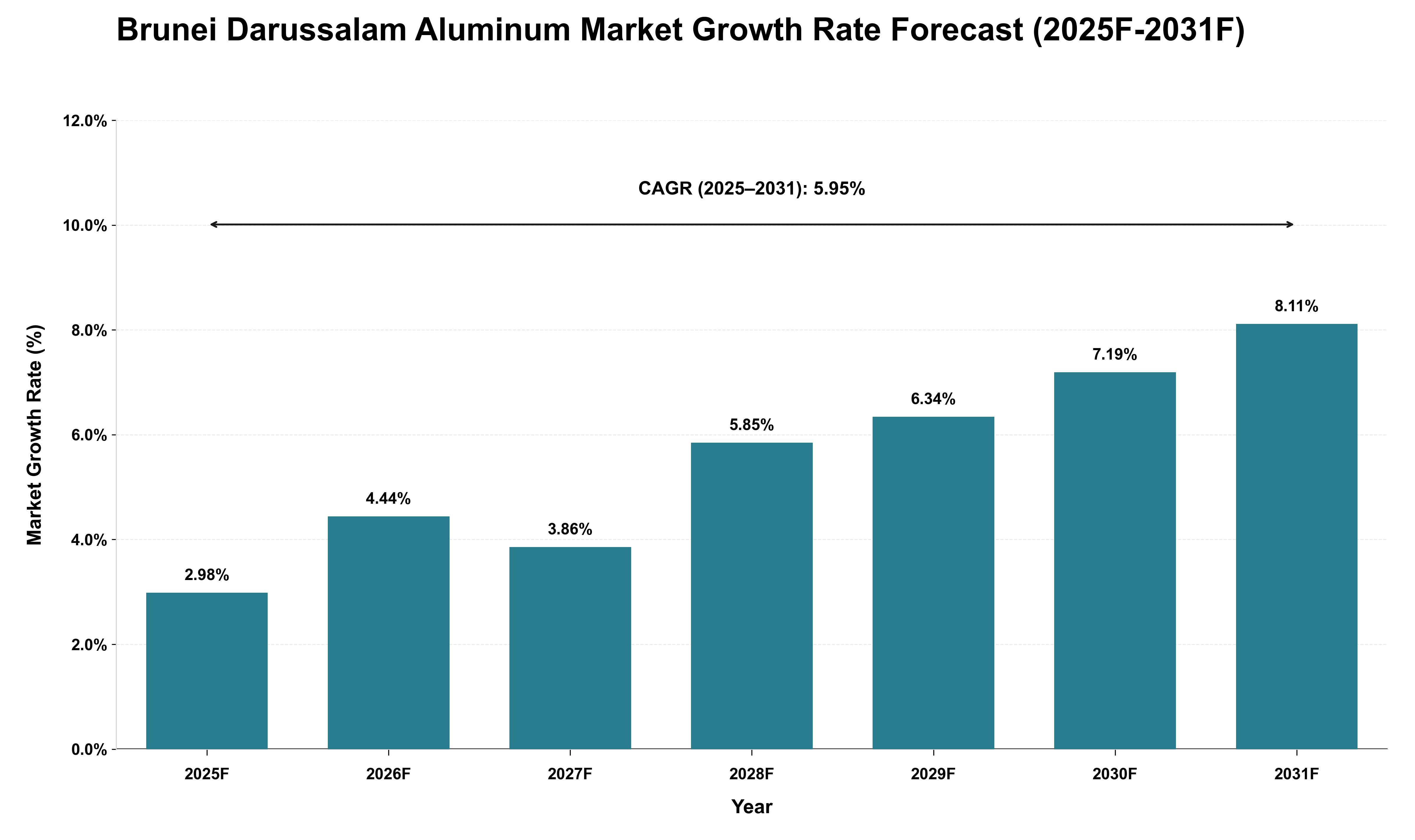
The Brunei Darussalam aluminum market is projected to experience a compound annual growth rate of 5.95% from 2025 to 2031, driven primarily by shifts in end-use demand across various sectors. The anticipated growth trajectory indicates an initial increase of 2.98% in 2025, followed by a steady acceleration peaking at 8.11% in 2031. This trend reflects the increasing reliance on aluminum for construction and automotive applications, as infrastructure development and vehicle manufacturing are expected to expand significantly during this period. Additionally, Brunei's import dependencies will likely influence market dynamics, as global supply chain fluctuations could impact pricing and availability. The cyclical nature of aluminum demand, particularly in response to economic recovery phases post-pandemic, will further contribute to the upward momentum observed in the forecasted growth rates, suggesting robust opportunities for stakeholders within this sector.
Key Highlights of the Report:
- Brunei Aluminum Market Outlook
- Market Size of Brunei Aluminum Market, 2025
- Forecast of Brunei Aluminum Market, 2032
- Historical Data and Forecast of Brunei Aluminum Revenues & Volume for the Period 2022 - 2032F
- Brunei Aluminum Market Trend Evolution
- Brunei Aluminum Market Drivers and Challenges
- Brunei Aluminum Price Trends
- Brunei Aluminum Porter`s Five Forces
- Brunei Aluminum Industry Life Cycle
- Historical Data and Forecast of Brunei Aluminum Market Revenues & Volume By Type for the Period 2022 - 2032F
- Historical Data and Forecast of Brunei Aluminum Market Revenues & Volume By Primary for the Period 2022 - 2032F
- Historical Data and Forecast of Brunei Aluminum Market Revenues & Volume By Secondary for the Period 2022 - 2032F
- Historical Data and Forecast of Brunei Aluminum Market Revenues & Volume By Product Type for the Period 2022 - 2032F
- Historical Data and Forecast of Brunei Aluminum Market Revenues & Volume By Flat Rolled for the Period 2022 - 2032F
- Historical Data and Forecast of Brunei Aluminum Market Revenues & Volume By Castings for the Period 2022 - 2032F
- Historical Data and Forecast of Brunei Aluminum Market Revenues & Volume By Extrusions for the Period 2022 - 2032F
- Historical Data and Forecast of Brunei Aluminum Market Revenues & Volume By Forgings for the Period 2022 - 2032F
- Historical Data and Forecast of Brunei Aluminum Market Revenues & Volume By Pigments & Powder for the Period 2022 - 2032F
- Historical Data and Forecast of Brunei Aluminum Market Revenues & Volume By Rod & Bar for the Period 2022 - 2032F
- Historical Data and Forecast of Brunei Aluminum Market Revenues & Volume By End-users for the Period 2022 - 2032F
- Historical Data and Forecast of Brunei Aluminum Market Revenues & Volume By Transport for the Period 2022 - 2032F
- Historical Data and Forecast of Brunei Aluminum Market Revenues & Volume By Building & Construction for the Period 2022 - 2032F
- Historical Data and Forecast of Brunei Aluminum Market Revenues & Volume By Electrical Engineering for the Period 2022 - 2032F
- Historical Data and Forecast of Brunei Aluminum Market Revenues & Volume By Consumer Goods for the Period 2022 - 2032F
- Historical Data and Forecast of Brunei Aluminum Market Revenues & Volume By Foil & Packaging for the Period 2022 - 2032F
- Historical Data and Forecast of Brunei Aluminum Market Revenues & Volume By Machinery & Equipment for the Period 2022 - 2032F
- Historical Data and Forecast of Brunei Aluminum Market Revenues & Volume By Others for the Period 2022 - 2032F
- Brunei Aluminum Import Export Trade Statistics
- Market Opportunity Assessment By Type
- Market Opportunity Assessment By Product Type
- Market Opportunity Assessment By End-users
- Brunei Aluminum Top Companies Market Share
- Brunei Aluminum Competitive Benchmarking By Technical and Operational Parameters
- Brunei Aluminum Company Profiles
- Brunei Aluminum Key Strategic Recommendations






































