Brunei Canned Tuna Market: Top 5 Importing Countries and Market Competition (HHI) Analysis
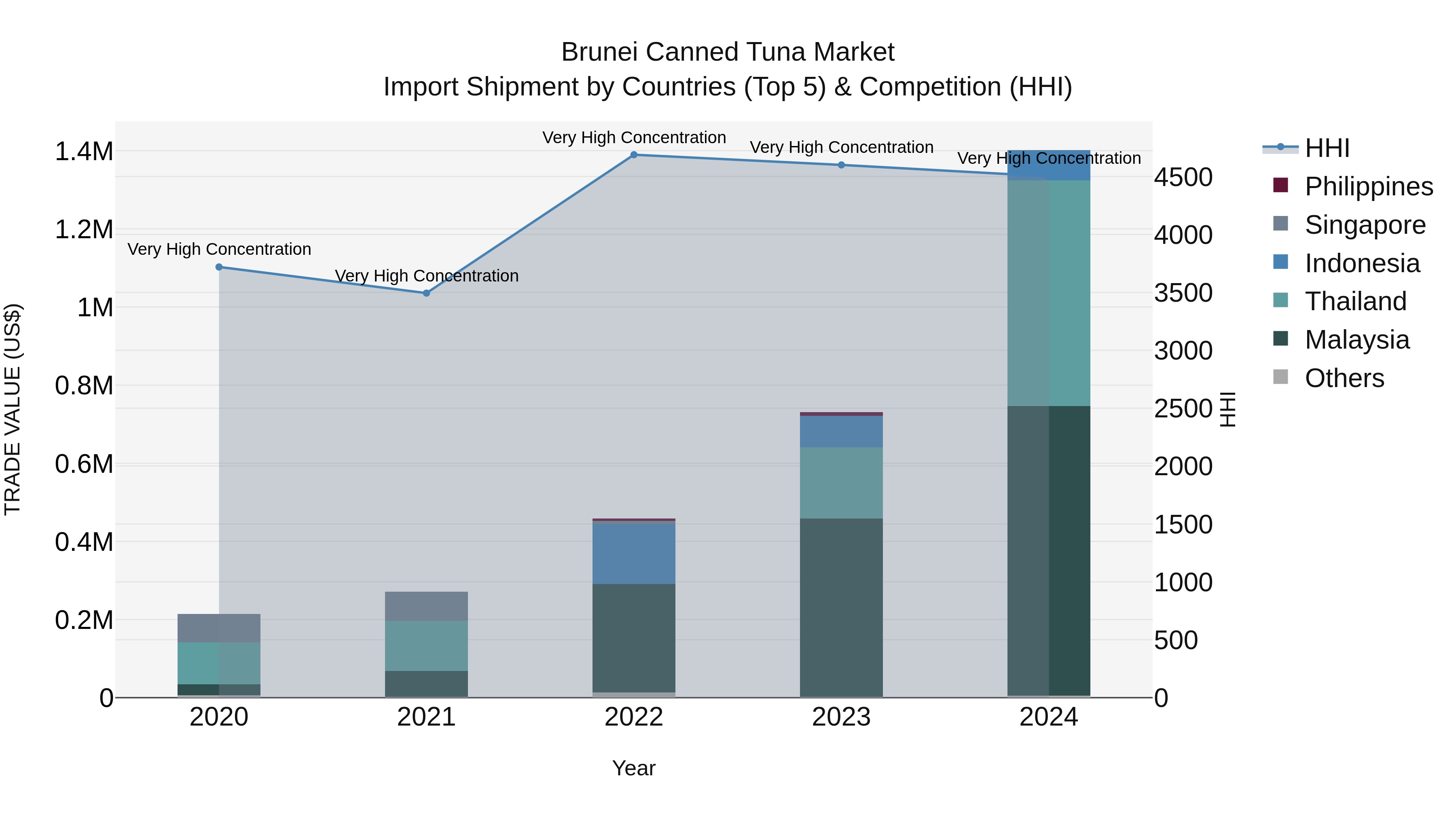
Brunei canned tuna import market saw significant growth in 2024, with Malaysia, Thailand, Indonesia, China, and Singapore emerging as the top exporting countries. The high Herfindahl-Hirschman Index (HHI) indicates a concentrated market landscape. The impressive compound annual growth rate (CAGR) of 60.0% from 2020 to 2024 highlights the increasing demand for canned tuna in Brunei. Moreover, the remarkable growth rate of 91.83% from 2023 to 2024 suggests a rapid expansion of the market, showcasing lucrative opportunities for both domestic and international suppliers.
Canned Tuna Market: Brunei Darussalam vs Top 5 Major Economies in 2027 (Asia)
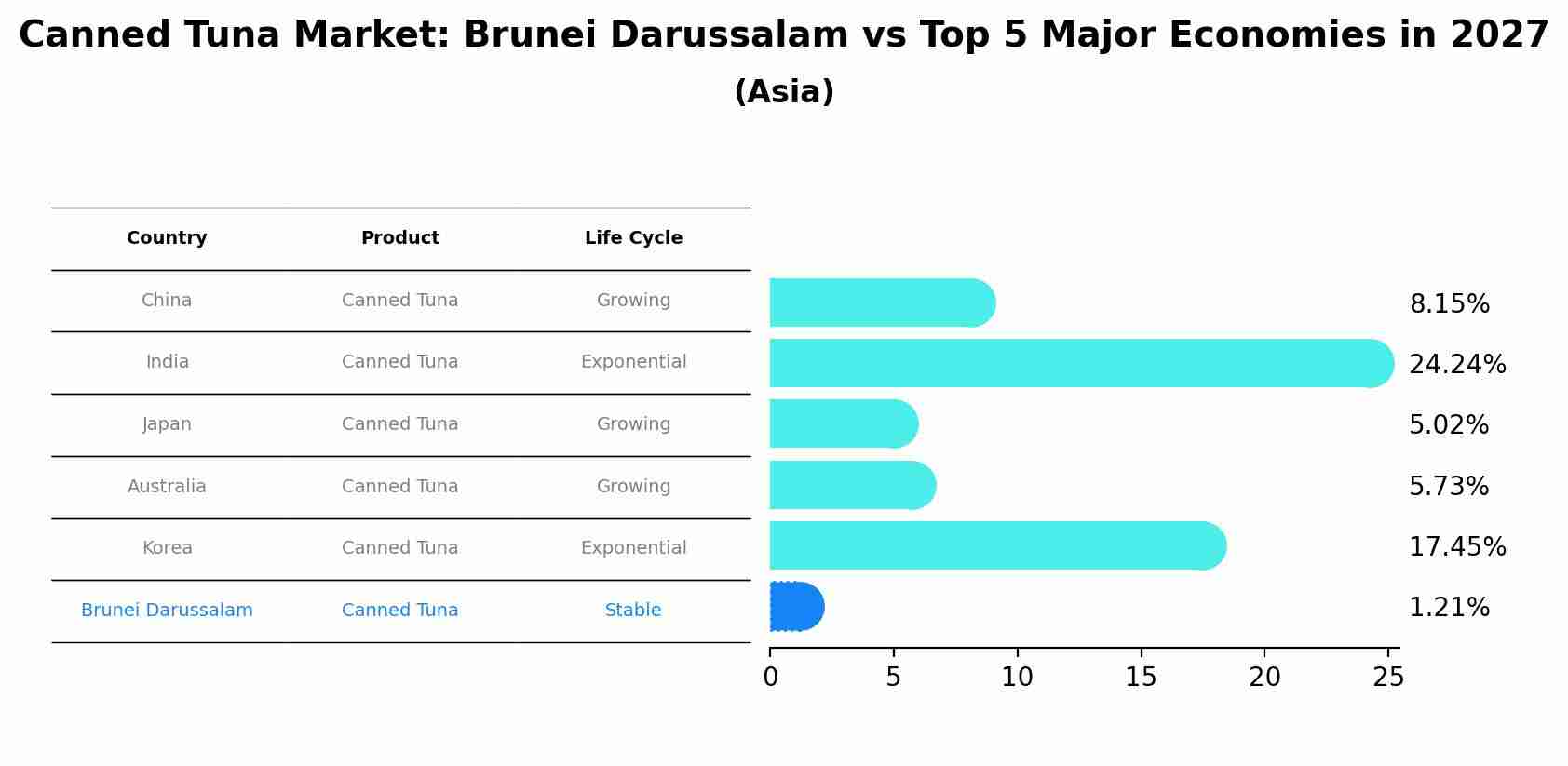
In the Asia region, the Canned Tuna market in Brunei Darussalam is projected to expand at a stable growth rate of 1.21% by 2027. The largest economy is China, followed by India, Japan, Australia and South Korea.
Brunei Canned Tuna Market Overview
The canned tuna market in Brunei is a key segment of the broader canned seafood market. Canned tuna is popular due to its convenience, nutritional value, and versatility in meal preparation. The market is driven by the demand for affordable and long-lasting protein sources, as well as the influence of global tuna consumption trends.
Drivers of the market
The Brunei canned tuna market is driven by the high demand for convenient, protein-rich food options. Tuna is a popular choice among health-conscious consumers due to its nutritional benefits, including high levels of omega-3 fatty acids. The growing preference for ready-to-eat and easy-to-store food products in urban areas also contributes to the markets growth.
Challenges of the market
The canned tuna market in Brunei encounters challenges related to sustainability concerns, with increasing scrutiny on tuna fishing practices. The market also faces competition from fresh and frozen tuna, as well as the need for effective marketing strategies to maintain consumer interest.
Government Policy of the market
The canned tuna market in Brunei is shaped by regulations focused on sustainable fishing practices and food safety. The government promotes responsible tuna fishing through policies that ensure the preservation of marine resources. Additionally, there are standards in place to guarantee the safety and quality of canned tuna products, with incentives for local processors who adhere to these guidelines.
Key Highlights of the Report:
- Brunei Canned Tuna Market Outlook
- Market Size of Brunei Canned Tuna Market, 2024
- Forecast of Brunei Canned Tuna Market, 2031
- Historical Data and Forecast of Brunei Canned Tuna Revenues & Volume for the Period 2021-2031
- Brunei Canned Tuna Market Trend Evolution
- Brunei Canned Tuna Market Drivers and Challenges
- Brunei Canned Tuna Price Trends
- Brunei Canned Tuna Porter`s Five Forces
- Brunei Canned Tuna Industry Life Cycle
- Historical Data and Forecast of Brunei Canned Tuna Market Revenues & Volume By Product for the Period 2021-2031
- Historical Data and Forecast of Brunei Canned Tuna Market Revenues & Volume By Skipjack for the Period 2021-2031
- Historical Data and Forecast of Brunei Canned Tuna Market Revenues & Volume By Yellowfin for the Period 2021-2031
- Historical Data and Forecast of Brunei Canned Tuna Market Revenues & Volume By Others for the Period 2021-2031
- Historical Data and Forecast of Brunei Canned Tuna Market Revenues & Volume By Distribution Channel for the Period 2021-2031
- Historical Data and Forecast of Brunei Canned Tuna Market Revenues & Volume By Hypermarket & Supermarket for the Period 2021-2031
- Historical Data and Forecast of Brunei Canned Tuna Market Revenues & Volume By Specialty Stores for the Period 2021-2031
- Historical Data and Forecast of Brunei Canned Tuna Market Revenues & Volume By Online for the Period 2021-2031
- Brunei Canned Tuna Import Export Trade Statistics
- Market Opportunity Assessment By Product
- Market Opportunity Assessment By Distribution Channel
- Brunei Canned Tuna Top Companies Market Share
- Brunei Canned Tuna Competitive Benchmarking By Technical and Operational Parameters
- Brunei Canned Tuna Company Profiles
- Brunei Canned Tuna Key Strategic Recommendations






































