Brunei Darussalam Cellulose Fiber Market Size Growth Rate
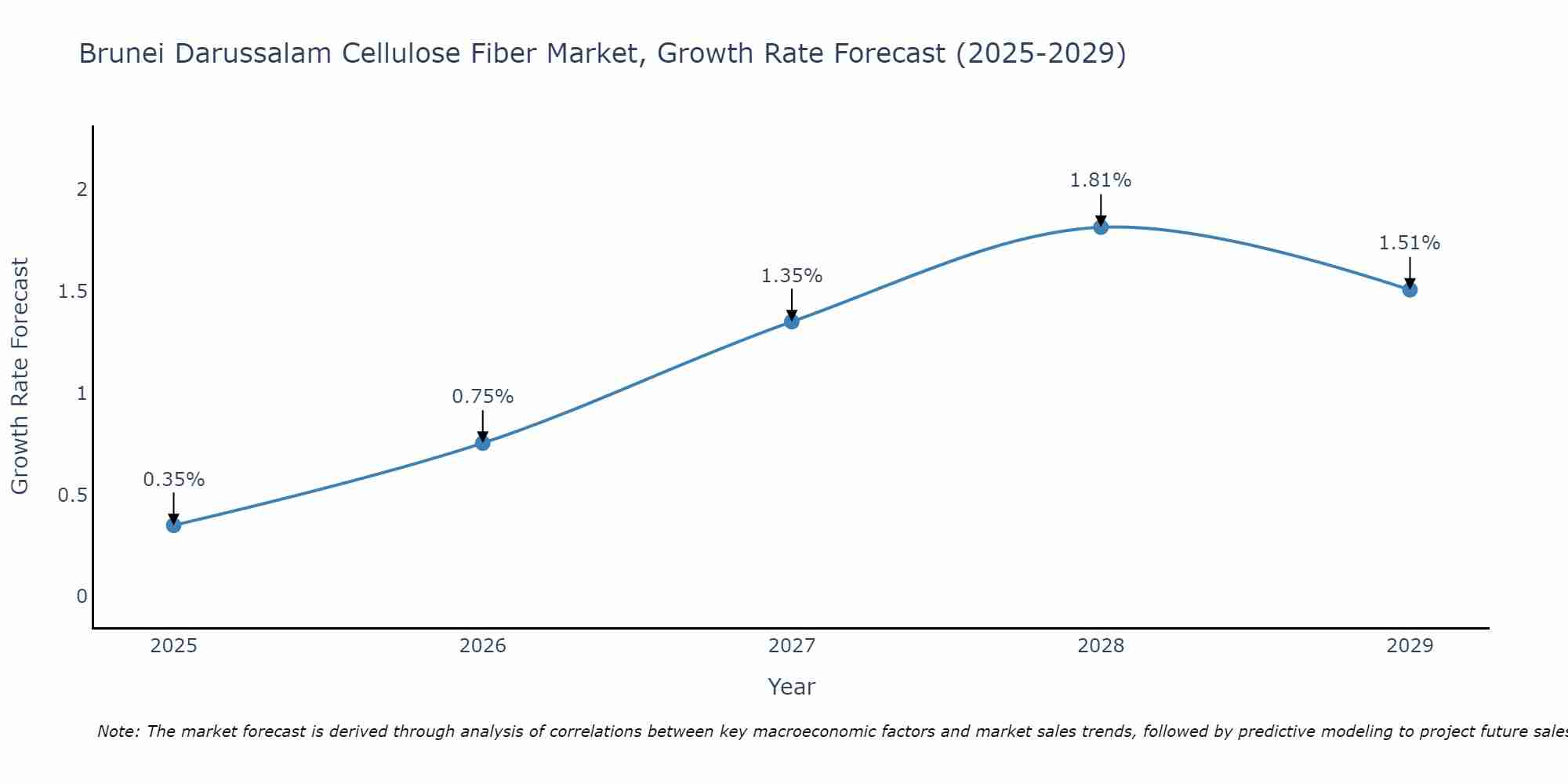
The Brunei Darussalam Cellulose Fiber Market is projected to witness mixed growth rate patterns during 2025 to 2029. Starting at 0.35% in 2025, the market peaks at 1.81% in 2028, and settles at 1.51% by 2029.
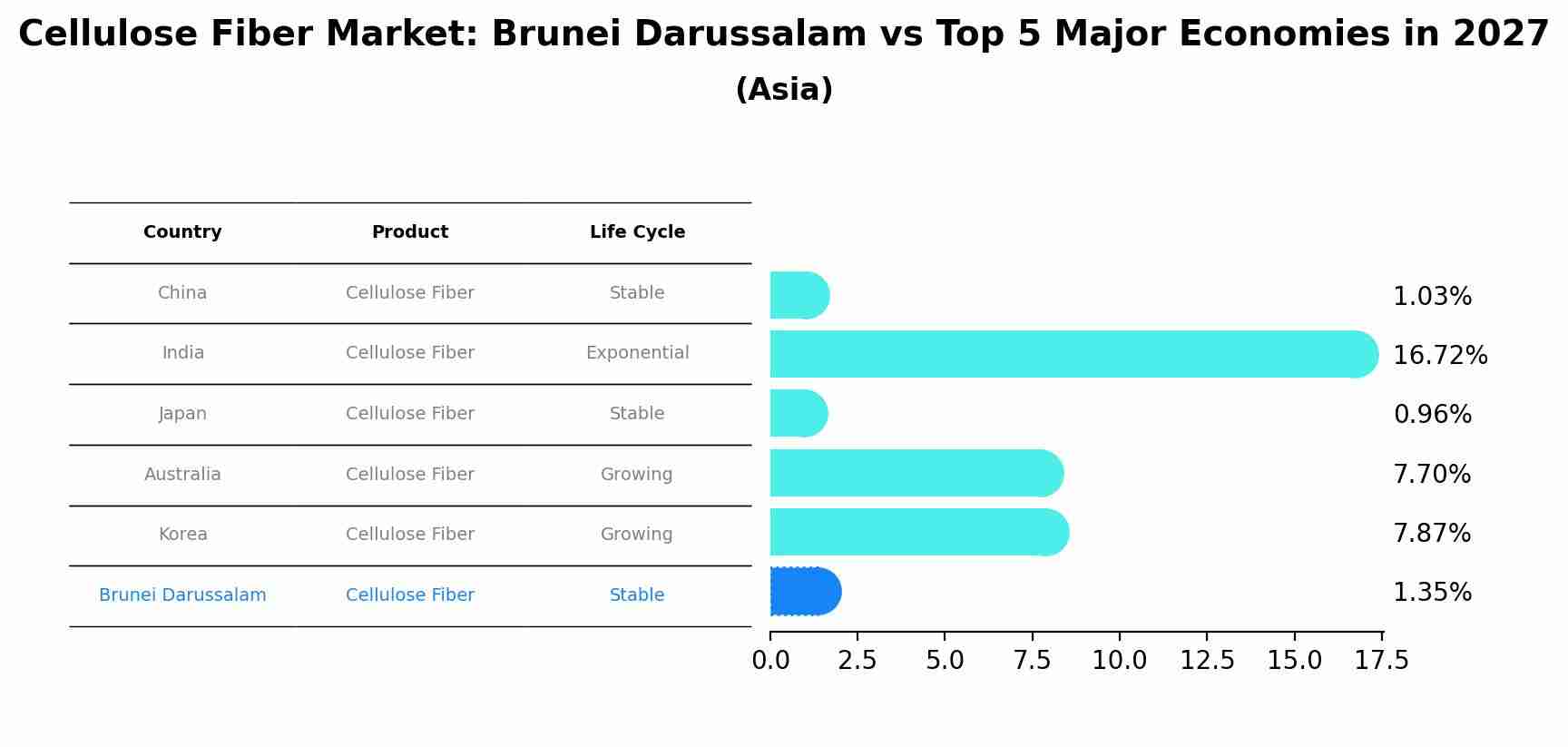
Cellulose Fiber Market: Brunei Darussalam vs Top 5 Major Economies in 2027 (Asia)
The Cellulose Fiber market in Brunei Darussalam is projected to grow at a stable growth rate of 1.35% by 2027, highlighting the country's increasing focus on advanced technologies within the Asia region, where China holds the dominant position, followed closely by India, Japan, Australia and South Korea, shaping overall regional demand.
Brunei Cellulose Fiber Market Overview
The cellulose fiber market in Brunei is growing, driven by the demand for sustainable, biodegradable materials in textiles, packaging, and hygiene products. The market is influenced by environmental concerns and the push towards eco-friendly alternatives to synthetic fibers. Innovations in fiber production and processing are expected to boost the market.
Drivers of the market
The cellulose fiber market in Brunei is driven by the rising demand for sustainable and biodegradable textiles, which are increasingly favored by environmentally conscious consumers. The growth of the textile and apparel industry in Brunei, along with the global trend towards sustainable fashion, contributes to market growth. Additionally, the material`s use in non-woven products, such as hygiene and medical supplies, further drives the demand for cellulose fibers.
Challenges of the market
The cellulose fiber market in Brunei encounters challenges such as limited demand and competition from synthetic fibers. The market for cellulose fibers in Brunei is small, restricting growth opportunities. Additionally, synthetic fibers, which are often cheaper and more readily available, pose significant competition, limiting the market share for cellulose fibers.
Government Policy of the market
Government policies in Brunei that support sustainable agriculture and eco-friendly products impact the cellulose fiber market. The government promotes the use of renewable materials and supports industries involved in producing cellulose fibers. Regulations ensure that cellulose fibers meet environmental and quality standards, aligning with Bruneis sustainability objectives.
Key Highlights of the Report:
- Brunei Cellulose Fiber Market Outlook
- Market Size of Brunei Cellulose Fiber Market, 2024
- Forecast of Brunei Cellulose Fiber Market, 2031
- Historical Data and Forecast of Brunei Cellulose Fiber Revenues & Volume for the Period 2021-2031
- Brunei Cellulose Fiber Market Trend Evolution
- Brunei Cellulose Fiber Market Drivers and Challenges
- Brunei Cellulose Fiber Price Trends
- Brunei Cellulose Fiber Porter`s Five Forces
- Brunei Cellulose Fiber Industry Life Cycle
- Historical Data and Forecast of Brunei Cellulose Fiber Market Revenues & Volume By Fiber Type for the Period 2021-2031
- Historical Data and Forecast of Brunei Cellulose Fiber Market Revenues & Volume By Introduction for the Period 2021-2031
- Historical Data and Forecast of Brunei Cellulose Fiber Market Revenues & Volume By Natural Cellulose Fibers for the Period 2021-2031
- Historical Data and Forecast of Brunei Cellulose Fiber Market Revenues & Volume By Man-made Cellulose Fibers for the Period 2021-2031
- Historical Data and Forecast of Brunei Cellulose Fiber Market Revenues & Volume By Others for the Period 2021-2031
- Historical Data and Forecast of Brunei Cellulose Fiber Market Revenues & Volume By Applications for the Period 2021-2031
- Historical Data and Forecast of Brunei Cellulose Fiber Market Revenues & Volume By Introduction for the Period 2021-2031
- Historical Data and Forecast of Brunei Cellulose Fiber Market Revenues & Volume By Apparel for the Period 2021-2031
- Historical Data and Forecast of Brunei Cellulose Fiber Market Revenues & Volume By Home Textile for the Period 2021-2031
- Historical Data and Forecast of Brunei Cellulose Fiber Market Revenues & Volume By Industrial for the Period 2021-2031
- Historical Data and Forecast of Brunei Cellulose Fiber Market Revenues & Volume By Others for the Period 2021-2031
- Brunei Cellulose Fiber Import Export Trade Statistics
- Market Opportunity Assessment By Fiber Type
- Market Opportunity Assessment By Applications
- Brunei Cellulose Fiber Top Companies Market Share
- Brunei Cellulose Fiber Competitive Benchmarking By Technical and Operational Parameters
- Brunei Cellulose Fiber Company Profiles
- Brunei Cellulose Fiber Key Strategic Recommendations






































