Brunei Electric Water Heater Market: Top 5 Importing Countries and Market Competition (HHI) Analysis
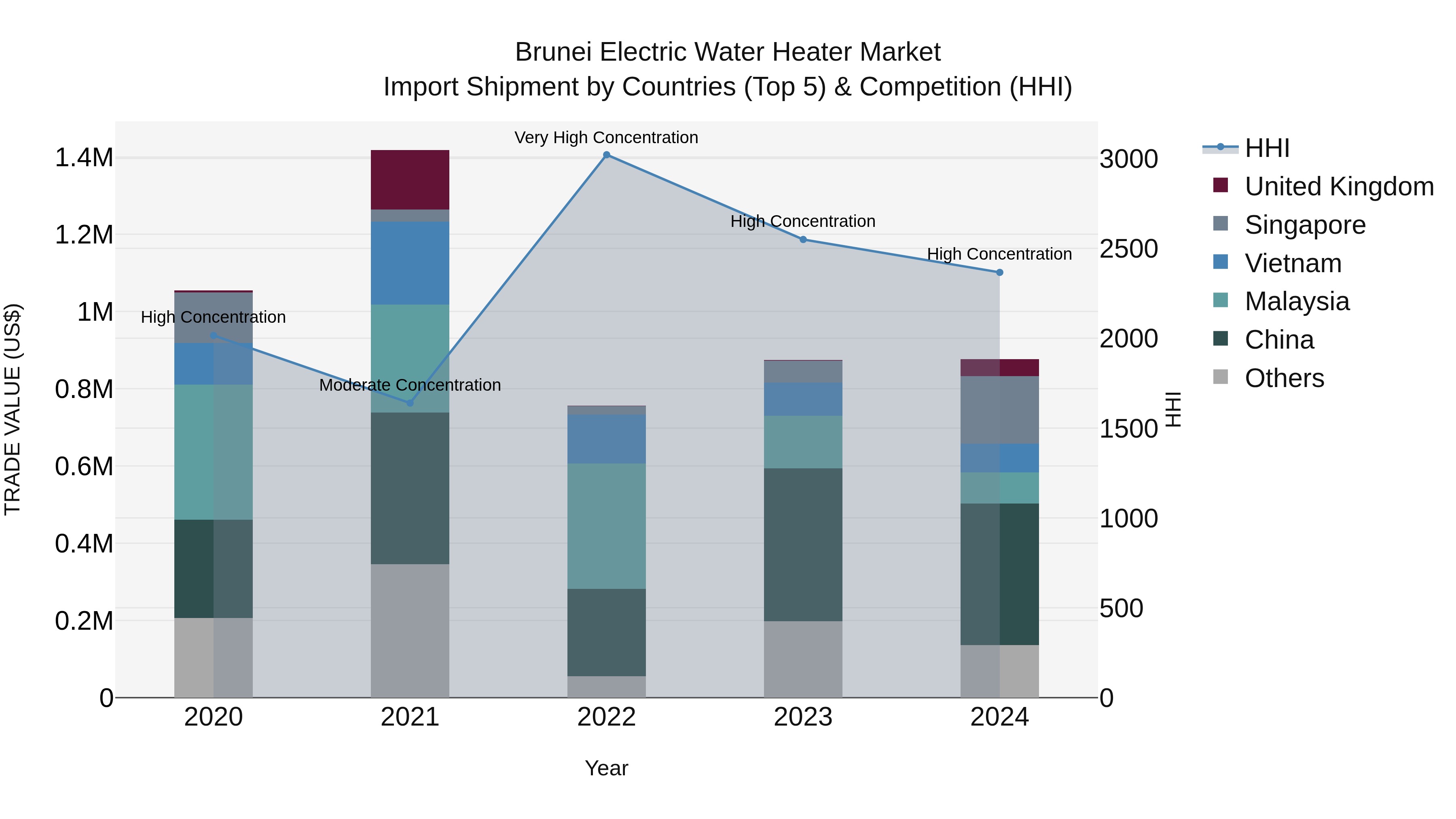
In 2024, Brunei continued to rely on China, Singapore, Malaysia, Vietnam, and Canada for its electric water heater imports, indicating a stable market presence. Despite a negative CAGR of -4.53% from 2020 to 2024, the industry showed slight growth with a 0.25% rate in 2023-24. The high HHI concentration in 2024 suggests a competitive landscape among the top exporting countries, potentially driving innovation and market strategies in the coming years.
Electric Water Heater Market: Brunei Darussalam vs Top 5 Major Economies in 2027 (Asia)
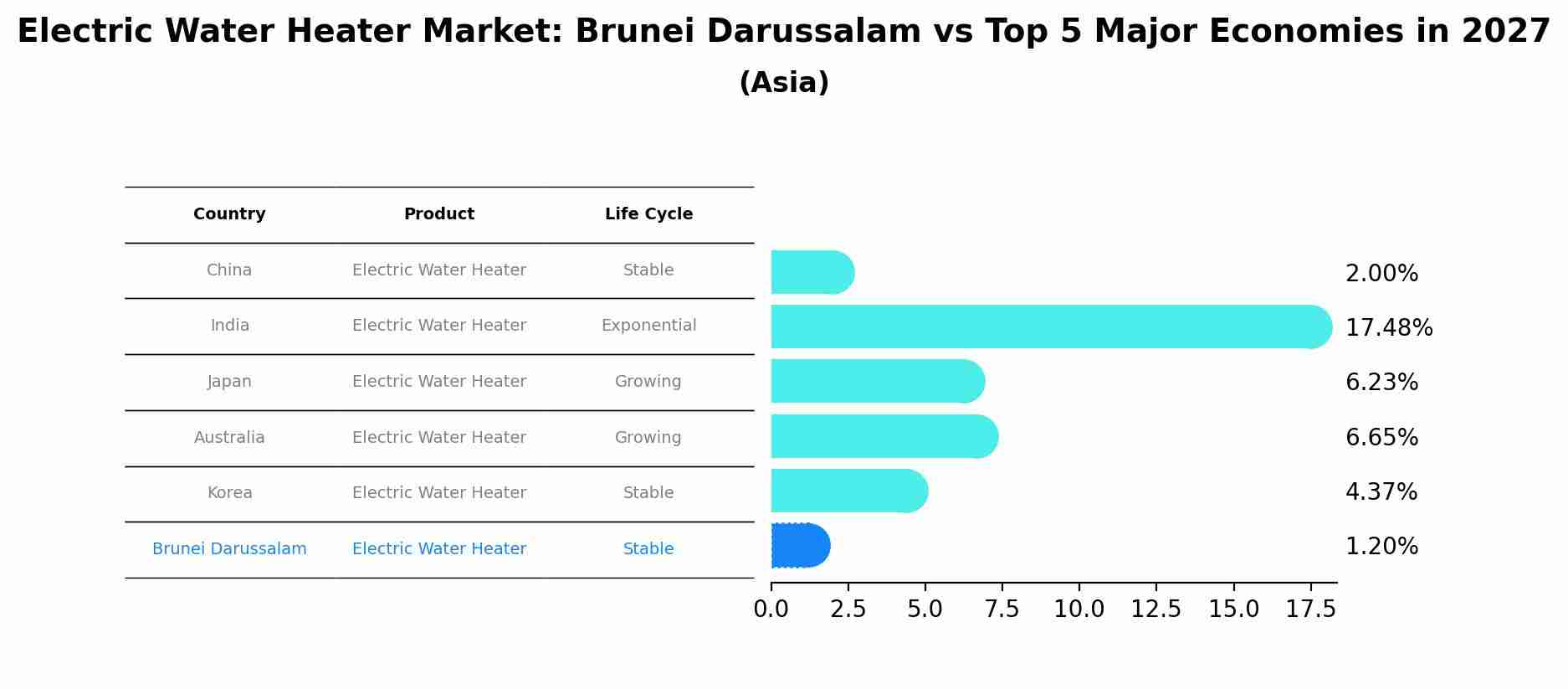
The Electric Water Heater market in Brunei Darussalam is projected to grow at a stable growth rate of 1.20% by 2027, highlighting the country's increasing focus on advanced technologies within the Asia region, where China holds the dominant position, followed closely by India, Japan, Australia and South Korea, shaping overall regional demand.
Brunei Electric Water Heater Market Overview
The electric water heater market in Brunei is expanding due to increasing demand for efficient and convenient water heating solutions. Electric water heaters offer advantages such as ease of installation, energy efficiency, and consistent performance. Market growth is influenced by rising standards of living, increased urbanization, and the demand for modern home appliances that provide comfort and convenience.
Drivers of the market
The electric water heater market in Brunei is expanding as consumers and businesses seek reliable and energy-efficient water heating solutions. Electric water heaters are widely used in residential, commercial, and industrial settings, offering the convenience of on-demand hot water. The market is driven by the increasing demand for hot water in households and businesses, the push towards energy-efficient appliances, and advancements in water heating technology that improve efficiency, reduce energy consumption, and offer features like smart controls and tankless designs.
Challenges of the market
The Electric Water Heater Market in Brunei is constrained by the small size of the residential and commercial sectors, which are the primary consumers of electric water heaters. The limited adoption of energy-efficient water heating technologies and the high cost of electric water heaters can further restrict market growth.
Government Policy of the market
The Brunei government indirectly influences the electric water heater market through its policies on energy efficiency and building regulations. These policies encourage the adoption of energy-efficient water heating systems in residential and commercial buildings. The government provides incentives for consumers and businesses to invest in electric water heaters that meet energy efficiency standards, contributing to the reduction of energy consumption. Additionally, there are efforts to promote the use of renewable energy sources, such as solar power, in conjunction with electric water heaters, further supporting the market`s growth.
Key Highlights of the Report:
- Brunei Electric Water Heater Market Outlook
- Market Size of Brunei Electric Water Heater Market, 2024
- Forecast of Brunei Electric Water Heater Market, 2031
- Historical Data and Forecast of Brunei Electric Water Heater Revenues & Volume for the Period 2021-2031
- Brunei Electric Water Heater Market Trend Evolution
- Brunei Electric Water Heater Market Drivers and Challenges
- Brunei Electric Water Heater Price Trends
- Brunei Electric Water Heater Porter`s Five Forces
- Brunei Electric Water Heater Industry Life Cycle
- Historical Data and Forecast of Brunei Electric Water Heater Market Revenues & Volume By Product Type for the Period 2021-2031
- Historical Data and Forecast of Brunei Electric Water Heater Market Revenues & Volume By Tankless Water Heater for the Period 2021-2031
- Historical Data and Forecast of Brunei Electric Water Heater Market Revenues & Volume By Storage Water Heater for the Period 2021-2031
- Historical Data and Forecast of Brunei Electric Water Heater Market Revenues & Volume By Application for the Period 2021-2031
- Historical Data and Forecast of Brunei Electric Water Heater Market Revenues & Volume By Residential for the Period 2021-2031
- Historical Data and Forecast of Brunei Electric Water Heater Market Revenues & Volume By Commercial for the Period 2021-2031
- Historical Data and Forecast of Brunei Electric Water Heater Market Revenues & Volume By Industrial for the Period 2021-2031
- Brunei Electric Water Heater Import Export Trade Statistics
- Market Opportunity Assessment By Product Type
- Market Opportunity Assessment By Application
- Brunei Electric Water Heater Top Companies Market Share
- Brunei Electric Water Heater Competitive Benchmarking By Technical and Operational Parameters
- Brunei Electric Water Heater Company Profiles
- Brunei Electric Water Heater Key Strategic Recommendations






































