Brunei Darussalam Narrow Woven Fabrics Market Growth Rate Analysis (2025 - 2031)
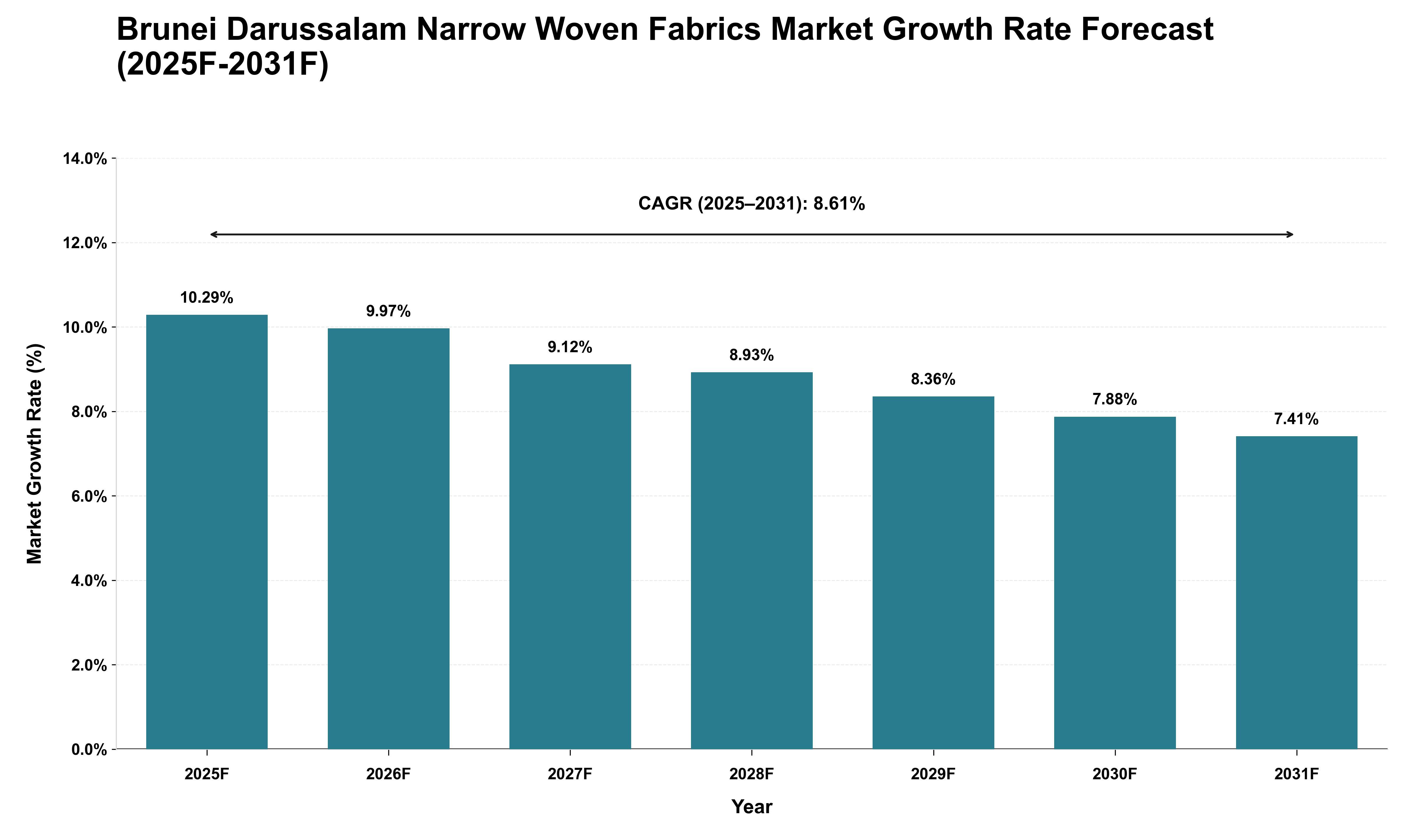
The Brunei Darussalam narrow woven fabrics market will experience a robust growth trajectory, driven by evolving supply chain dynamics and fluctuating input costs. As global demand for specialized textiles increases, the market is projected to expand at a CAGR of 8.61% from 2025 to 2031, with annual growth rates peaking at 10.29% in 2025 before gradually tapering off. This trend will be influenced by rising import dependencies as local production may struggle to meet the increasing demand for high-quality fabrics, leading to higher input costs due to international sourcing challenges. Additionally, cyclical trends in consumer preferences towards sustainable and innovative textile solutions will further shape the market landscape. As manufacturers adapt to these shifts, they will likely face pressures related to raw material availability and pricing volatility, which could impact profit margins despite overall revenue growth in this sector.
Key Highlights of the Report:
- Brunei Narrow Woven Fabrics Market Outlook
- Market Size of Brunei Narrow Woven Fabrics Market, 2024
- Forecast of Brunei Narrow Woven Fabrics Market, 2031
- Historical Data and Forecast of Brunei Narrow Woven Fabrics Revenues & Volume for the Period 2021-2031
- Brunei Narrow Woven Fabrics Market Trend Evolution
- Brunei Narrow Woven Fabrics Market Drivers and Challenges
- Brunei Narrow Woven Fabrics Price Trends
- Brunei Narrow Woven Fabrics Porter`s Five Forces
- Brunei Narrow Woven Fabrics Industry Life Cycle
- Historical Data and Forecast of Brunei Narrow Woven Fabrics Market Revenues & Volume By Type for the Period 2021-2031
- Historical Data and Forecast of Brunei Narrow Woven Fabrics Market Revenues & Volume By Polyester for the Period 2021-2031
- Historical Data and Forecast of Brunei Narrow Woven Fabrics Market Revenues & Volume By Nylon for the Period 2021-2031
- Historical Data and Forecast of Brunei Narrow Woven Fabrics Market Revenues & Volume By PP for the Period 2021-2031
- Historical Data and Forecast of Brunei Narrow Woven Fabrics Market Revenues & Volume By Applications for the Period 2021-2031
- Historical Data and Forecast of Brunei Narrow Woven Fabrics Market Revenues & Volume By Garments for the Period 2021-2031
- Historical Data and Forecast of Brunei Narrow Woven Fabrics Market Revenues & Volume By Home Furnishing for the Period 2021-2031
- Historical Data and Forecast of Brunei Narrow Woven Fabrics Market Revenues & Volume By Other for the Period 2021-2031
- Brunei Narrow Woven Fabrics Import Export Trade Statistics
- Market Opportunity Assessment By Type
- Market Opportunity Assessment By Applications
- Brunei Narrow Woven Fabrics Top Companies Market Share
- Brunei Narrow Woven Fabrics Competitive Benchmarking By Technical and Operational Parameters
- Brunei Narrow Woven Fabrics Company Profiles
- Brunei Narrow Woven Fabrics Key Strategic Recommendations






































