Brunei Darussalam Plastic Containers Market Growth Rate Analysis (2025 - 2031)
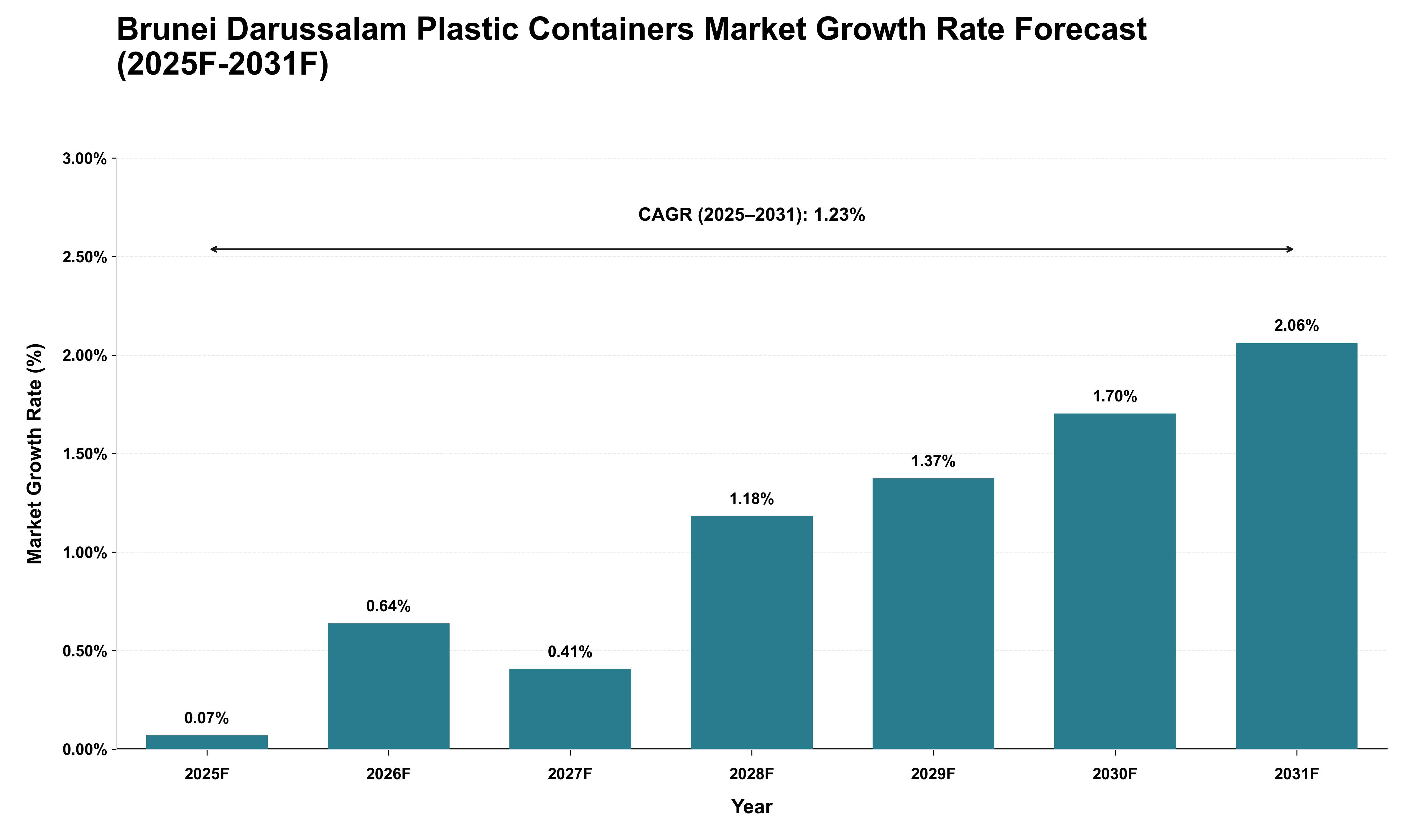
The projected growth trajectory for the Brunei Darussalam plastic containers market will exhibit a notable acceleration from 2025 to 2031, as indicated by the gradual increase in annual growth rates culminating in a 2.06% rise by 2031. This trend reflects an anticipated improvement in supply chain efficiencies and a potential reduction in input costs, driven by advancements in manufacturing technologies and logistics optimization. As global demand for sustainable packaging solutions intensifies, Brunei's reliance on imported raw materials may prompt local producers to seek cost-effective alternatives, thereby enhancing competitiveness. The initial years of modest growth (0.07% to 0.64%) suggest a period of adjustment where manufacturers align with evolving consumer preferences and regulatory frameworks. However, as operational efficiencies are realized and market dynamics shift towards higher-value applications, the compound annual growth rate of 1.23% will likely be supported by increasing domestic consumption and export opportunities within regional markets.
Key Highlights of the Report:
- Brunei Plastic Containers Market Outlook
- Market Size of Brunei Plastic Containers Market, 2024
- Forecast of Brunei Plastic Containers Market, 2031
- Historical Data and Forecast of Brunei Plastic Containers Revenues & Volume for the Period 2021-2031
- Brunei Plastic Containers Market Trend Evolution
- Brunei Plastic Containers Market Drivers and Challenges
- Brunei Plastic Containers Price Trends
- Brunei Plastic Containers Porter`s Five Forces
- Brunei Plastic Containers Industry Life Cycle
- Historical Data and Forecast of Brunei Plastic Containers Market Revenues & Volume By Material for the Period 2021-2031
- Historical Data and Forecast of Brunei Plastic Containers Market Revenues & Volume By PET for the Period 2021-2031
- Historical Data and Forecast of Brunei Plastic Containers Market Revenues & Volume By PP for the Period 2021-2031
- Historical Data and Forecast of Brunei Plastic Containers Market Revenues & Volume By HDPE for the Period 2021-2031
- Historical Data and Forecast of Brunei Plastic Containers Market Revenues & Volume By LDPE for the Period 2021-2031
- Historical Data and Forecast of Brunei Plastic Containers Market Revenues & Volume By Others for the Period 2021-2031
- Historical Data and Forecast of Brunei Plastic Containers Market Revenues & Volume By End-user for the Period 2021-2031
- Historical Data and Forecast of Brunei Plastic Containers Market Revenues & Volume By Beverages for the Period 2021-2031
- Historical Data and Forecast of Brunei Plastic Containers Market Revenues & Volume By Food for the Period 2021-2031
- Historical Data and Forecast of Brunei Plastic Containers Market Revenues & Volume By Pharmaceutical for the Period 2021-2031
- Historical Data and Forecast of Brunei Plastic Containers Market Revenues & Volume By Cosmetic for the Period 2021-2031
- Historical Data and Forecast of Brunei Plastic Containers Market Revenues & Volume By Household Care for the Period 2021-2031
- Historical Data and Forecast of Brunei Plastic Containers Market Revenues & Volume By Industrial for the Period 2021-2031
- Brunei Plastic Containers Import Export Trade Statistics
- Market Opportunity Assessment By Material
- Market Opportunity Assessment By End-user
- Brunei Plastic Containers Top Companies Market Share
- Brunei Plastic Containers Competitive Benchmarking By Technical and Operational Parameters
- Brunei Plastic Containers Company Profiles
- Brunei Plastic Containers Key Strategic Recommendations






































