Bulgaria Ferrochrome Market Size (2020-2030)
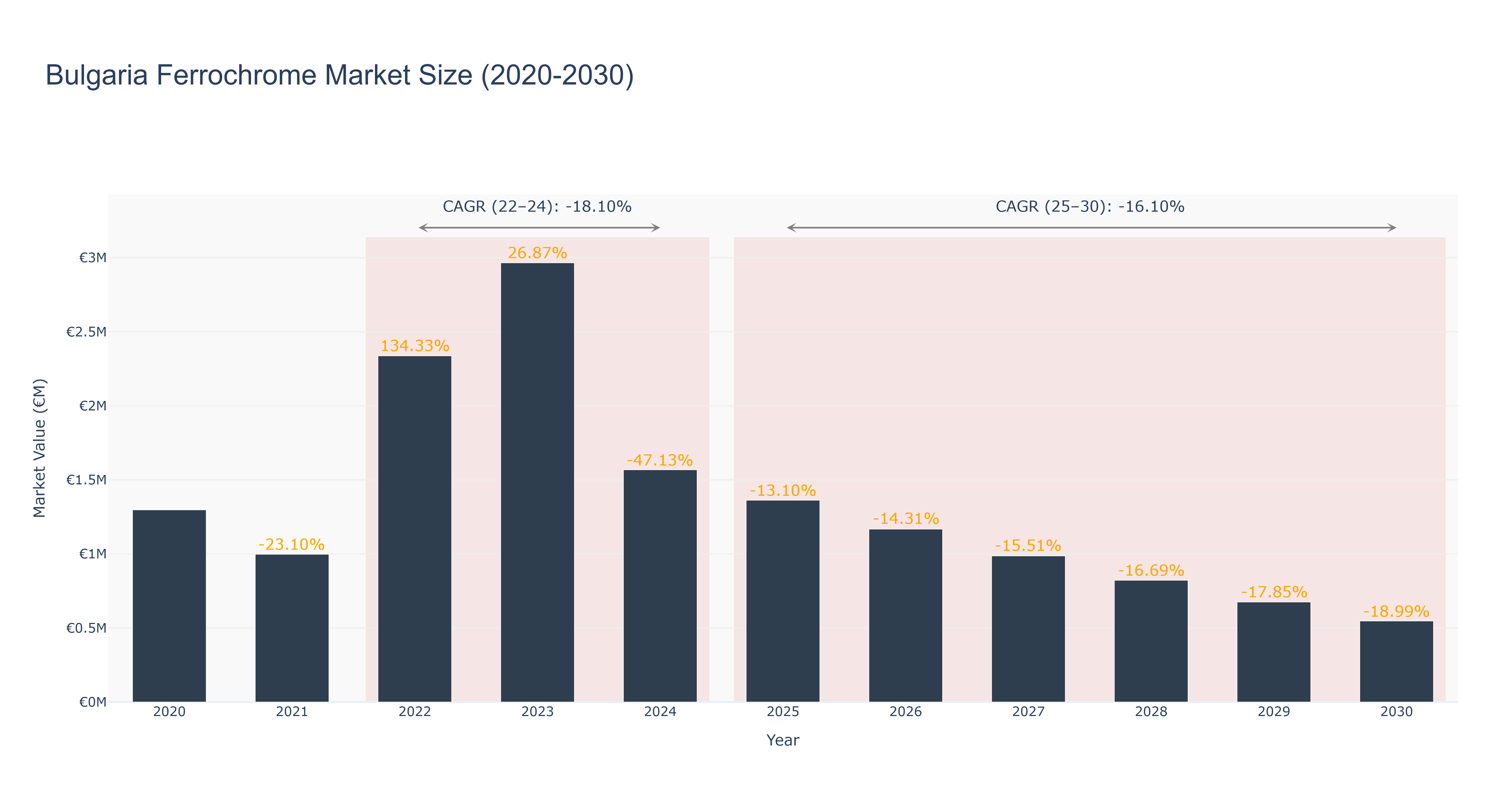
The Bulgaria Ferrochrome Market experienced a peak market size of €2.97 million in 2023, with a notable growth rate of 26.87%. However, the market saw a significant decline in subsequent years, reaching €1.17 million in 2026, showcasing a negative growth trend. The forecasted market size from 2025 to 2030 indicates a continuing downward trajectory, with a CAGR of -16.10% expected. The decline in market size can be attributed to various factors such as global economic uncertainties, fluctuating demand, and competitive pressures. Looking ahead, the market is focusing on enhancing operational efficiencies and exploring new technologies to drive growth. Additionally, upcoming infrastructure projects in the country aimed at boosting industrial development could potentially impact the market positively in the future.
Bulgaria Ferrochrome Market: Production & Trade Performance (2019-2025)
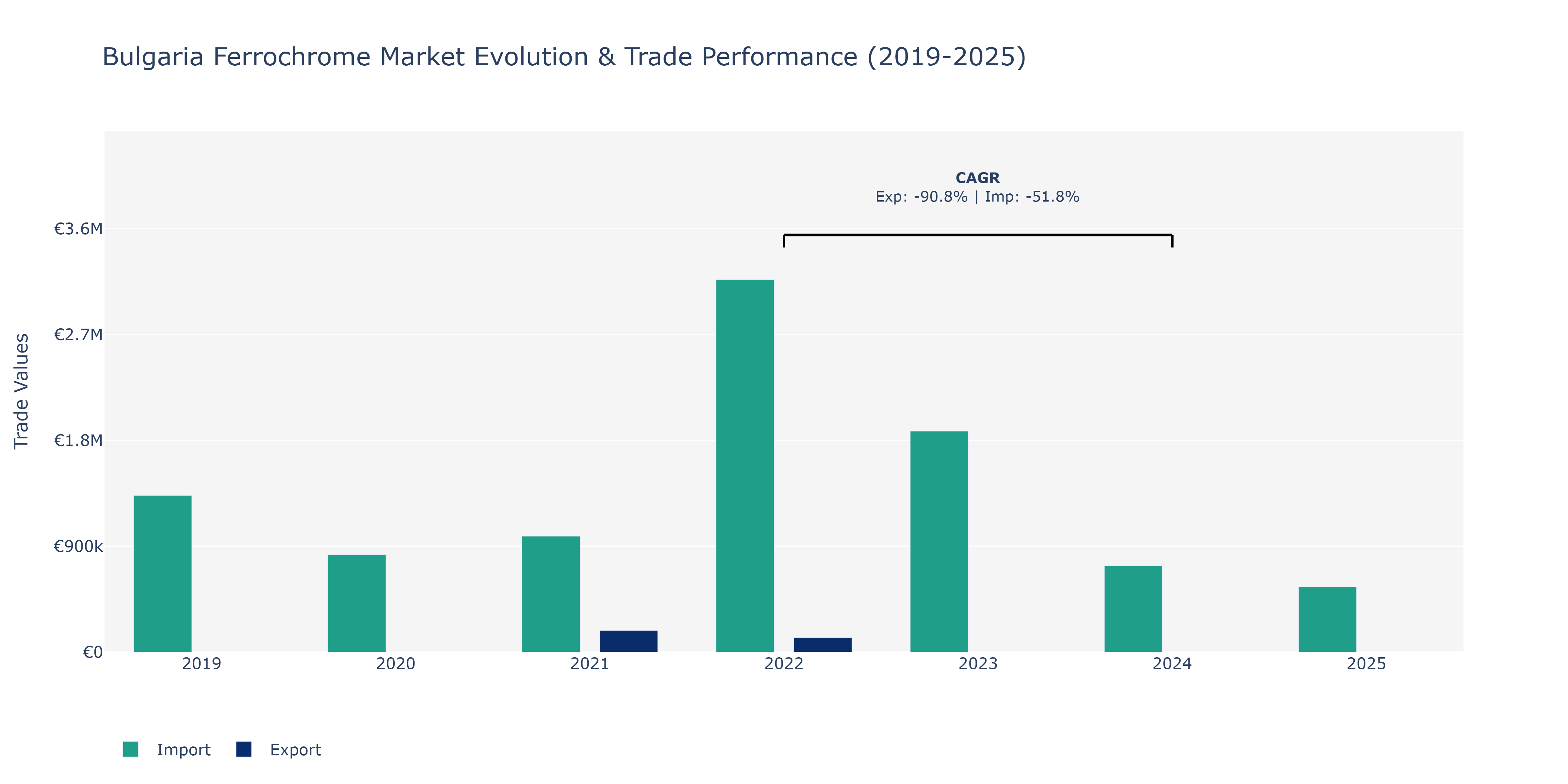
In the Bulgaria Ferrochrome Market, imports exhibited a fluctuating pattern over the years, starting at €1.33 million in 2019, decreasing notably to €830.18 thousand in 2020, before recording a substantial rise to €3.17 million in 2022. This surge could be attributed to increased demand for ferrochrome in various industries, reflecting economic growth and infrastructure projects. However, there was a decline in 2023 to €1.88 million, indicating potential shifts in market dynamics or regulatory changes impacting trade volumes. On the other hand, exports followed a more erratic trajectory, with values of €183.81 thousand in 2021, dropping sharply to €1.04 million in 2024. The decrease in exports might be linked to global market trends affecting demand for ferrochrome products. The slight uptick in 2025 to around €782 million could signal market stabilization or strategic adjustments in export activities by market players to address changing international demands. Through further exploration of market-specific factors such as competitive landscape changes and geopolitical trade relations, stakeholders can better position themselves in response to these trade dynamics.
Key Highlights of the Report:
- Bulgaria Ferrochrome Market Outlook
- Market Size of Bulgaria Ferrochrome Market, 2025
- Forecast of Bulgaria Ferrochrome Market, 2032
- Historical Data and Forecast of Bulgaria Ferrochrome Revenues & Volume for the Period 2022 - 2032F
- Bulgaria Ferrochrome Market Trend Evolution
- Bulgaria Ferrochrome Market Drivers and Challenges
- Bulgaria Ferrochrome Price Trends
- Bulgaria Ferrochrome Porter`s Five Forces
- Bulgaria Ferrochrome Industry Life Cycle
- Historical Data and Forecast of Bulgaria Ferrochrome Market Revenues & Volume By Type for the Period 2022 - 2032F
- Historical Data and Forecast of Bulgaria Ferrochrome Market Revenues & Volume By High carbon for the Period 2022 - 2032F
- Historical Data and Forecast of Bulgaria Ferrochrome Market Revenues & Volume By Medium carbon for the Period 2022 - 2032F
- Historical Data and Forecast of Bulgaria Ferrochrome Market Revenues & Volume By Low carbon for the Period 2022 - 2032F
- Historical Data and Forecast of Bulgaria Ferrochrome Market Revenues & Volume By Applications for the Period 2022 - 2032F
- Historical Data and Forecast of Bulgaria Ferrochrome Market Revenues & Volume By Stainless steel for the Period 2022 - 2032F
- Historical Data and Forecast of Bulgaria Ferrochrome Market Revenues & Volume By Other steels for the Period 2022 - 2032F
- Bulgaria Ferrochrome Import Export Trade Statistics
- Market Opportunity Assessment By Type
- Market Opportunity Assessment By Applications
- Bulgaria Ferrochrome Top Companies Market Share
- Bulgaria Ferrochrome Competitive Benchmarking By Technical and Operational Parameters
- Bulgaria Ferrochrome Company Profiles
- Bulgaria Ferrochrome Key Strategic Recommendations






































