New Zealand Ferrochrome Market Growth Rate Analysis (2025 - 2031)
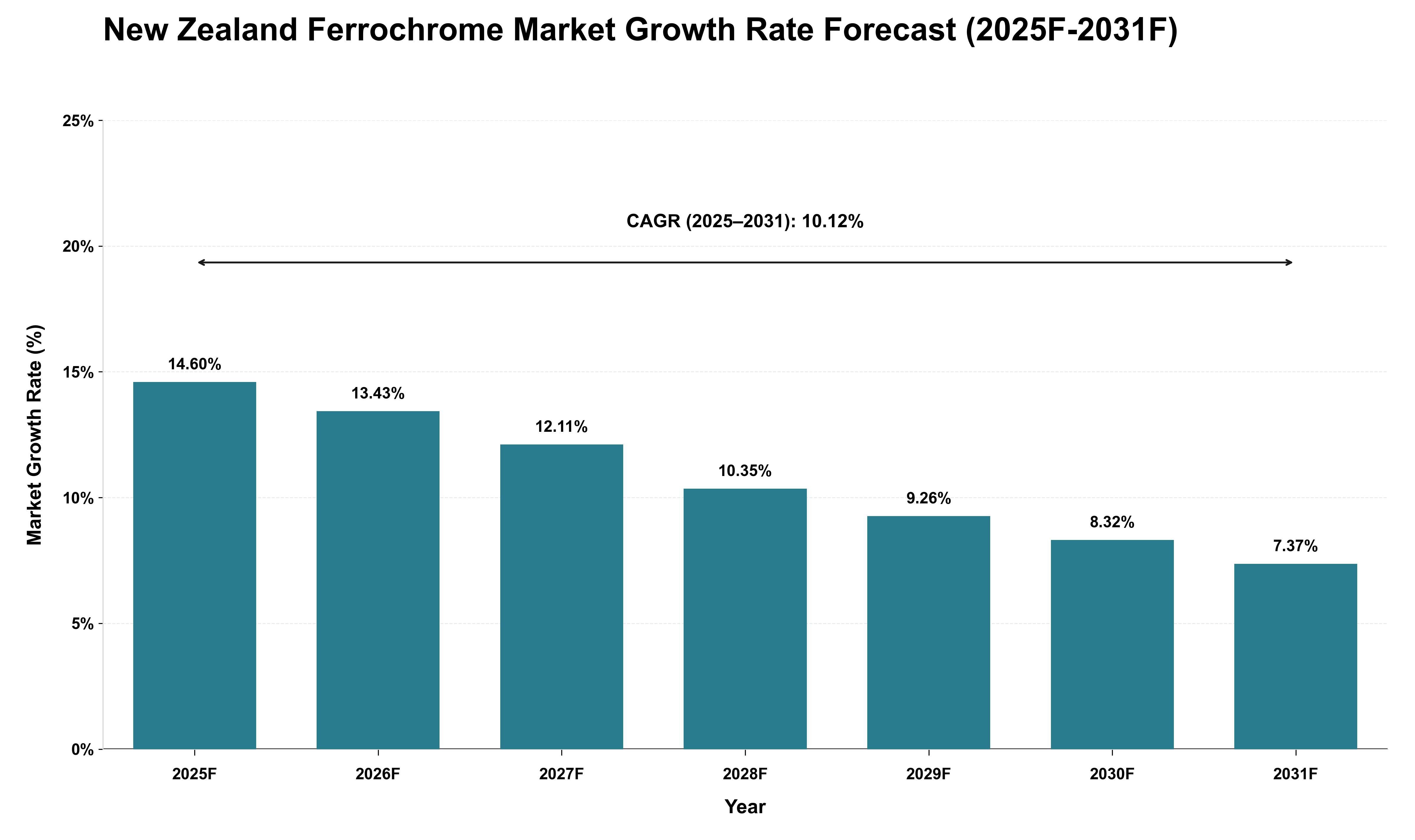
From 2025 onward, the New Zealand ferrochrome market is poised to experience robust growth, driven by increasing global demand for stainless steel and other alloys that utilize ferrochrome as a critical input. The projected compound annual growth rate (CAGR) of 10.12% reflects a strong upward trajectory, with annual growth rates peaking at 14.60% in 2025 and gradually tapering to 7.37% by 2031. This trend indicates an initial surge in import activities as manufacturers ramp up production capabilities to meet heightened international demand, particularly from Asia-Pacific markets where industrial expansion is anticipated. As trade flows evolve, New Zealand's reliance on imported raw materials may intensify, necessitating strategic partnerships and supply chain enhancements to ensure consistent quality and availability. Furthermore, cyclical trends in global commodity prices will likely influence export dynamics, impacting profitability margins for local producers throughout this forecast period.
Key Highlights of the Report:
- New Zealand Ferrochrome Market Outlook
- Market Size of New Zealand Ferrochrome Market, 2025
- Forecast of New Zealand Ferrochrome Market, 2032
- Historical Data and Forecast of New Zealand Ferrochrome Revenues & Volume for the Period 2022 - 2032F
- New Zealand Ferrochrome Market Trend Evolution
- New Zealand Ferrochrome Market Drivers and Challenges
- New Zealand Ferrochrome Price Trends
- New Zealand Ferrochrome Porter`s Five Forces
- New Zealand Ferrochrome Industry Life Cycle
- Historical Data and Forecast of New Zealand Ferrochrome Market Revenues & Volume By Type for the Period 2022 - 2032F
- Historical Data and Forecast of New Zealand Ferrochrome Market Revenues & Volume By High carbon for the Period 2022 - 2032F
- Historical Data and Forecast of New Zealand Ferrochrome Market Revenues & Volume By Medium carbon for the Period 2022 - 2032F
- Historical Data and Forecast of New Zealand Ferrochrome Market Revenues & Volume By Low carbon for the Period 2022 - 2032F
- Historical Data and Forecast of New Zealand Ferrochrome Market Revenues & Volume By Applications for the Period 2022 - 2032F
- Historical Data and Forecast of New Zealand Ferrochrome Market Revenues & Volume By Stainless steel for the Period 2022 - 2032F
- Historical Data and Forecast of New Zealand Ferrochrome Market Revenues & Volume By Other steels for the Period 2022 - 2032F
- New Zealand Ferrochrome Import Export Trade Statistics
- Market Opportunity Assessment By Type
- Market Opportunity Assessment By Applications
- New Zealand Ferrochrome Top Companies Market Share
- New Zealand Ferrochrome Competitive Benchmarking By Technical and Operational Parameters
- New Zealand Ferrochrome Company Profiles
- New Zealand Ferrochrome Key Strategic Recommendations






































