Burkina Faso Laboratory Freezers Market Top 5 Importing Countries and Market Competition (HHI) Analysis
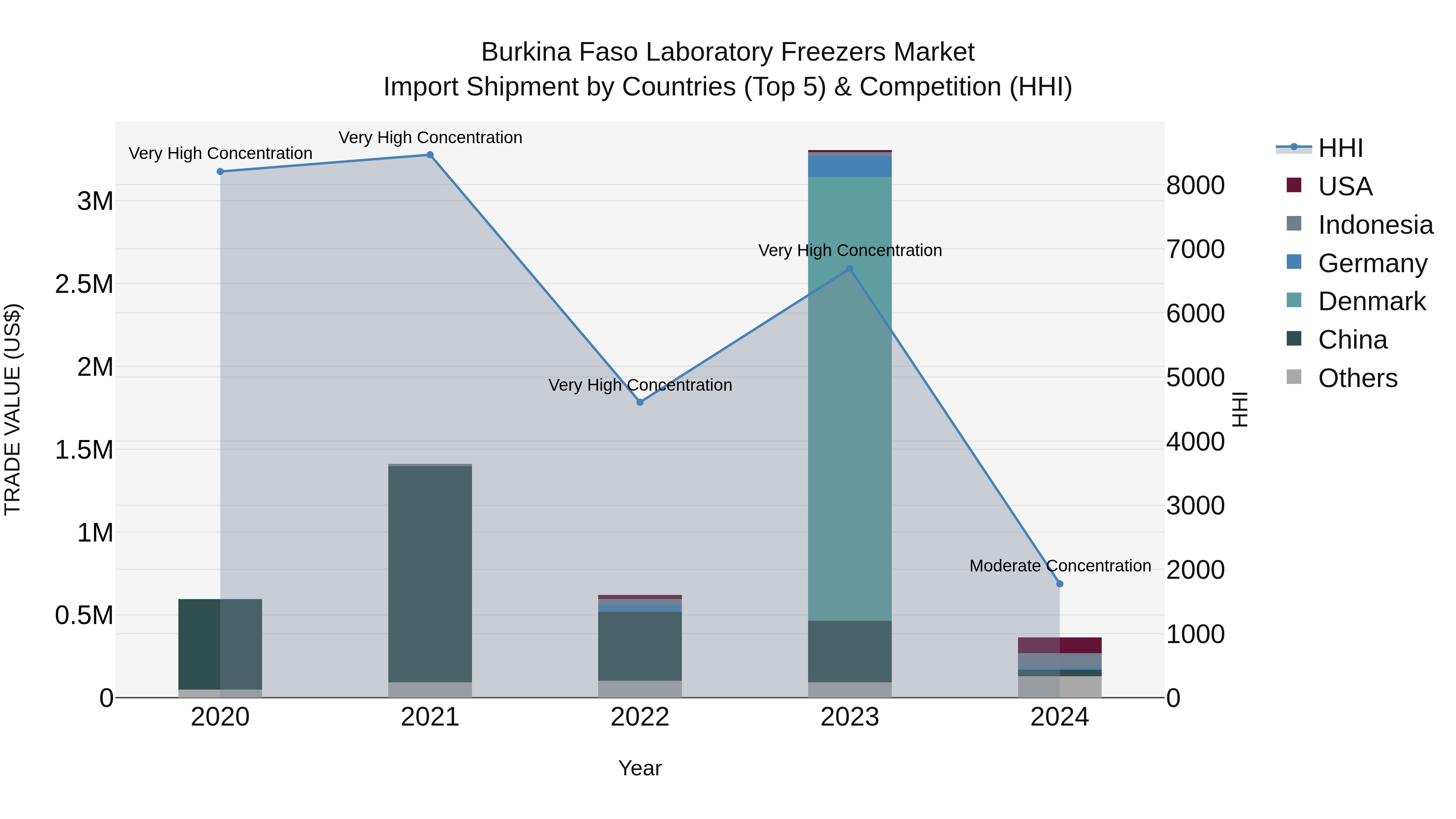
The Burkina Faso laboratory freezers import market saw a shift in concentration levels from very high in 2023 to moderate in 2024, indicating a more diversified import landscape. The top exporting countries to Burkina Faso in 2024 were the USA, Indonesia, UK, China, and Turkey. Despite a challenging CAGR of -11.56% from 2020 to 2024, the market experienced a drastic decline with a growth rate of -88.98% from 2023 to 2024. This suggests a significant decrease in import volume within the past year, highlighting potential fluctuations in demand or supply chain disruptions.
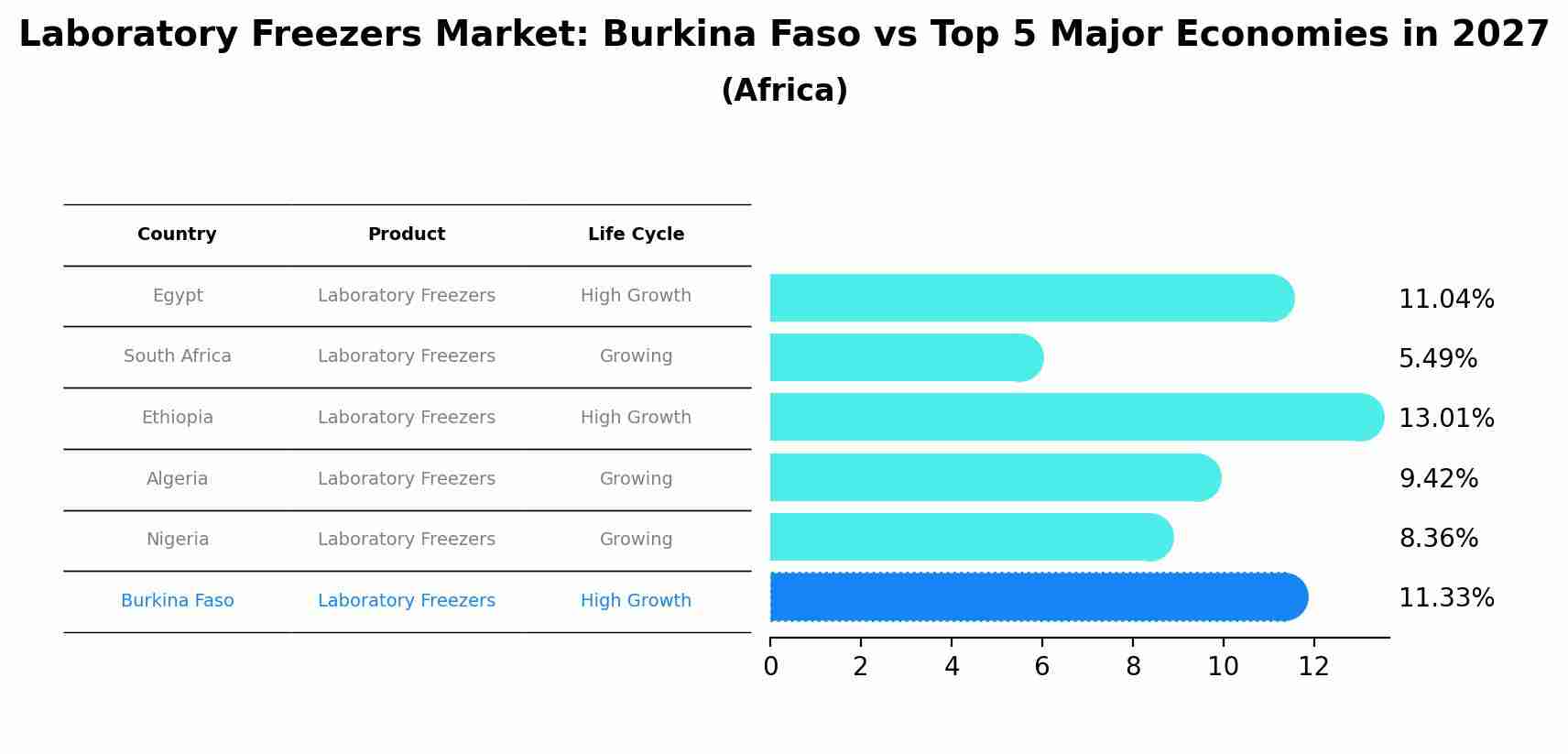
Laboratory Freezers Market: Burkina Faso vs Top 5 Major Economies in 2027 (Africa)
By 2027, Burkina Faso's Laboratory Freezers market is forecasted to achieve a high growth rate of 11.33%, with Egypt leading the Africa region, followed by South Africa, Ethiopia, Algeria and Nigeria.
Burkina Faso Laboratory Freezers Market Overview
The laboratory freezers market in Burkina Faso is expanding, driven by the growing need for cold storage solutions in the medical and research sectors. Laboratory freezers are essential for preserving biological samples, vaccines, and chemicals. The market is supported by investments in healthcare infrastructure, though it faces challenges related to the high cost of advanced freezers and inconsistent power supply.
Drivers of the market
The laboratory freezers market is driven by the need for reliable and precise temperature control for the storage of biological samples, pharmaceuticals, and research materials. Advances in freezer technology, including ultra-low temperature freezers and energy-efficient models, support market growth. The increasing focus on research and the expansion of biobanks and pharmaceutical companies contribute to demand.
Challenges of the market
Challenges in the laboratory freezers market in Burkina Faso include high import costs and limited local manufacturing capabilities. There is also a need for better distribution networks and technical support for maintaining and operating laboratory freezers. Increasing awareness about the importance of proper storage conditions for laboratory samples is essential for market growth.
Government Policy of the market
The Burkina Faso government supports the laboratory freezers market by promoting the availability and quality of refrigeration solutions essential for scientific research and medical storage. Policies may include incentives for local production, support for the adoption of advanced freezing technologies, and regulations to ensure the reliability and safety of laboratory freezers.
Key Highlights of the Report:
- Burkina Faso Laboratory Freezers Market Outlook
- Market Size of Burkina Faso Laboratory Freezers Market, 2024
- Forecast of Burkina Faso Laboratory Freezers Market, 2031
- Historical Data and Forecast of Burkina Faso Laboratory Freezers Revenues & Volume for the Period 2021-2031
- Burkina Faso Laboratory Freezers Market Trend Evolution
- Burkina Faso Laboratory Freezers Market Drivers and Challenges
- Burkina Faso Laboratory Freezers Price Trends
- Burkina Faso Laboratory Freezers Porter`s Five Forces
- Burkina Faso Laboratory Freezers Industry Life Cycle
- Historical Data and Forecast of Burkina Faso Laboratory Freezers Market Revenues & Volume By Product Type for the Period 2021-2031
- Historical Data and Forecast of Burkina Faso Laboratory Freezers Market Revenues & Volume By Cryopreservation Systems for the Period 2021-2031
- Historical Data and Forecast of Burkina Faso Laboratory Freezers Market Revenues & Volume By Refrigerators for the Period 2021-2031
- Historical Data and Forecast of Burkina Faso Laboratory Freezers Market Revenues & Volume By Freezers for the Period 2021-2031
- Historical Data and Forecast of Burkina Faso Laboratory Freezers Market Revenues & Volume By End User for the Period 2021-2031
- Historical Data and Forecast of Burkina Faso Laboratory Freezers Market Revenues & Volume By Blood Banks for the Period 2021-2031
- Historical Data and Forecast of Burkina Faso Laboratory Freezers Market Revenues & Volume By Pharmaceutical & Biotechnology Companies for the Period 2021-2031
- Historical Data and Forecast of Burkina Faso Laboratory Freezers Market Revenues & Volume By Academic & Research Institutes for the Period 2021-2031
- Historical Data and Forecast of Burkina Faso Laboratory Freezers Market Revenues & Volume By Medical Laboratories for the Period 2021-2031
- Historical Data and Forecast of Burkina Faso Laboratory Freezers Market Revenues & Volume By Hospitals for the Period 2021-2031
- Historical Data and Forecast of Burkina Faso Laboratory Freezers Market Revenues & Volume By Pharmacies for the Period 2021-2031
- Burkina Faso Laboratory Freezers Import Export Trade Statistics
- Market Opportunity Assessment By Product Type
- Market Opportunity Assessment By End User
- Burkina Faso Laboratory Freezers Top Companies Market Share
- Burkina Faso Laboratory Freezers Competitive Benchmarking By Technical and Operational Parameters
- Burkina Faso Laboratory Freezers Company Profiles
- Burkina Faso Laboratory Freezers Key Strategic Recommendations






































