Cambodia Apiculture Market: Import Trend Analysis
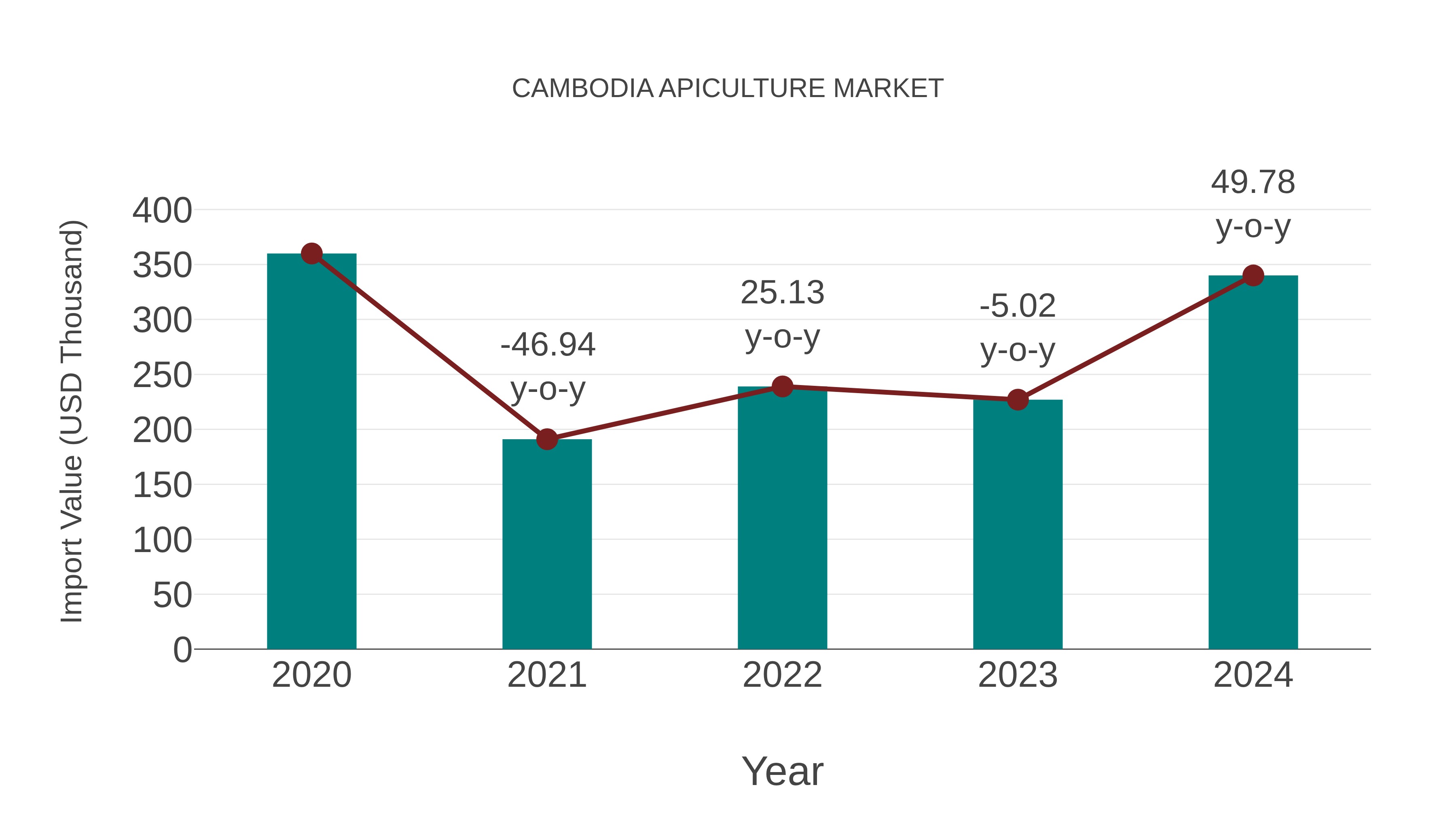
In the Cambodia apiculture market, the import trend exhibited significant growth from 2023 to 2024, with a notable 49.78% increase. However, the compound annual growth rate (CAGR) from 2020 to 2024 was -1.42%. This decline in CAGR may be attributed to fluctuating demand dynamics or evolving trade policies affecting market stability.
Cambodia Apiculture Market Synopsis
The Cambodia apiculture market is experiencing steady growth due to increasing demand for honey and other bee products. With favorable climate conditions and abundant floral resources, Cambodia provides a conducive environment for beekeeping activities. Local beekeepers are adopting modern techniques and equipment to improve honey production and quality. The market is predominantly made up of small-scale beekeeping operations, with some larger commercial enterprises also contributing to the industry. The government is supporting the apiculture sector through training programs and initiatives to promote sustainable beekeeping practices. As consumer awareness of the health benefits of honey continues to rise, the Cambodia apiculture market is expected to expand further, presenting opportunities for both local producers and potential investors.
Cambodia Apiculture Market Trends
The Cambodia Apiculture Market is experiencing growth driven by increasing consumer awareness and demand for natural and sustainable products. The market is witnessing a shift towards organic honey production, with beekeepers adopting environmentally friendly practices and certifications. There is also a rising interest in unique and specialty honey varieties, such as wildflower and acacia honey, leading to product differentiation and premium pricing. Additionally, the government`s support for beekeeping initiatives and the promotion of honey as a key export product are boosting the overall industry. However, challenges such as climate change, disease management, and lack of infrastructure remain significant hurdles for the market`s further expansion. Overall, the Cambodia Apiculture Market is poised for continued growth, driven by consumer preferences for healthy and high-quality honey products.
Cambodia Apiculture Market Challenges
In the Cambodia Apiculture Market, several challenges are faced by beekeepers and honey producers. These include limited access to modern beekeeping techniques and equipment, lack of proper training and education on best practices, insufficient infrastructure for honey processing and packaging, and difficulty in accessing markets both domestically and internationally. Additionally, climate change and deforestation pose threats to bee populations and affect honey production. Furthermore, there is a need for better regulation and enforcement to ensure product quality and safety standards are met. Overcoming these challenges will require collaboration between government agencies, industry stakeholders, and international organizations to support the growth and sustainability of the apiculture sector in Cambodia.
Cambodia Apiculture Market Investment Opportunities
The Cambodia apiculture market presents promising investment opportunities due to increasing global demand for honey and other bee products. With a rich biodiversity and favorable climate conditions, Cambodia has the potential to become a key player in the apiculture industry. Investors can explore opportunities in establishing bee farms, developing modern beekeeping techniques, and expanding honey processing and packaging facilities. Additionally, there is growing interest in organic and ethically sourced honey, providing a niche market for premium products. Collaborating with local beekeepers and farmers can also create sustainable partnerships and enhance the supply chain. Overall, investing in the Cambodia apiculture market offers the potential for long-term growth and profitability within the rapidly expanding global market for natural bee products.
Cambodia Apiculture Market Future Outlook
The future outlook for the Cambodia apiculture market appears positive, driven by increasing awareness of the health benefits of honey and other bee products. The growing demand for natural and organic products, coupled with rising disposable incomes, is expected to boost the consumption of locally-produced honey. Additionally, the government`s initiatives to promote beekeeping practices and provide support to small-scale beekeepers are likely to enhance the productivity and quality of honey in the country. With expanding opportunities for export and the potential for value-added products such as beeswax and royal jelly, the Cambodia apiculture market is poised for growth in the coming years, attracting both domestic and international investors looking to capitalize on the increasing popularity of bee products.
Key Highlights of the Report:
- Cambodia Apiculture Market Outlook
- Market Size of Cambodia Apiculture Market, 2025
- Forecast of Cambodia Apiculture Market, 2032
- Historical Data and Forecast of Cambodia Apiculture Revenues & Volume for the Period 2022 - 2032F
- Cambodia Apiculture Market Trend Evolution
- Cambodia Apiculture Market Drivers and Challenges
- Cambodia Apiculture Price Trends
- Cambodia Apiculture Porter's Five Forces
- Cambodia Apiculture Industry Life Cycle
- Historical Data and Forecast of Cambodia Apiculture Market Revenues & Volume By Product Type for the Period 2022 - 2032F
- Historical Data and Forecast of Cambodia Apiculture Market Revenues & Volume By Honey for the Period 2022 - 2032F
- Historical Data and Forecast of Cambodia Apiculture Market Revenues & Volume By Beeswax for the Period 2022 - 2032F
- Historical Data and Forecast of Cambodia Apiculture Market Revenues & Volume By Live-bees for the Period 2022 - 2032F
- Historical Data and Forecast of Cambodia Apiculture Market Revenues & Volume By Others for the Period 2022 - 2032F
- Historical Data and Forecast of Cambodia Apiculture Market Revenues & Volume By Application for the Period 2022 - 2032F
- Historical Data and Forecast of Cambodia Apiculture Market Revenues & Volume By Medical for the Period 2022 - 2032F
- Historical Data and Forecast of Cambodia Apiculture Market Revenues & Volume By Food Beverages for the Period 2022 - 2032F
- Historical Data and Forecast of Cambodia Apiculture Market Revenues & Volume By Cosmetics for the Period 2022 - 2032F
- Historical Data and Forecast of Cambodia Apiculture Market Revenues & Volume By Others for the Period 2022 - 2032F
- Cambodia Apiculture Import Export Trade Statistics
- Market Opportunity Assessment By Product Type
- Market Opportunity Assessment By Application
- Cambodia Apiculture Top Companies Market Share
- Cambodia Apiculture Competitive Benchmarking By Technical and Operational Parameters
- Cambodia Apiculture Company Profiles
- Cambodia Apiculture Key Strategic Recommendations






































